


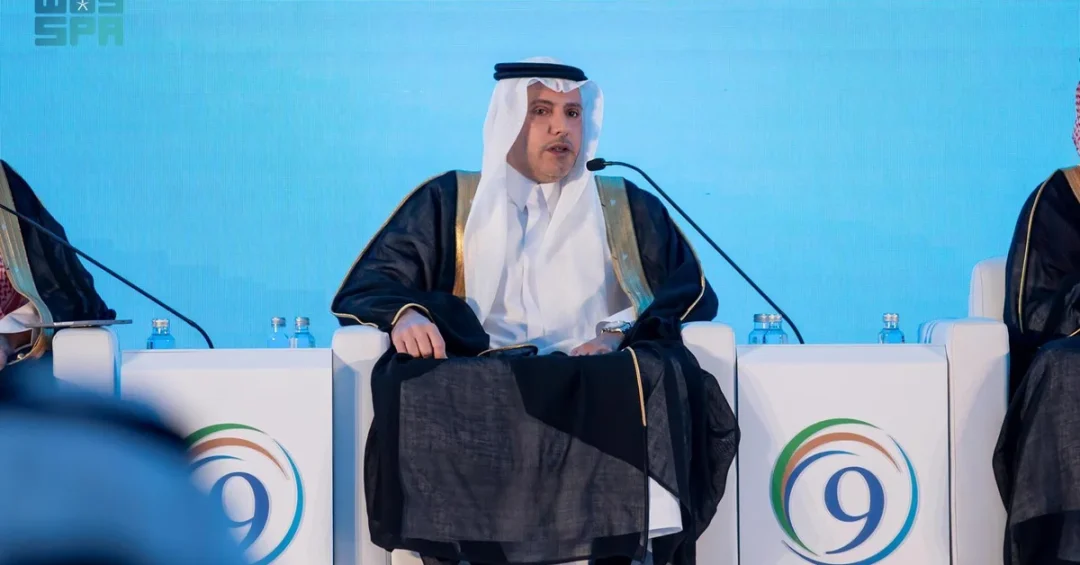
Global spending on artificial intelligence dedicated to improving operational efficiency exceeded $120 billion in 2023, according to International Data Corporation data cited by Dr. Esam bin Abdullah Al-Wagait, Director of the National Information Center at the Saudi Data and AI Authority (SDAIA), during the 9th National Quality Conference held at the Ritz-Carlton Hotel in Riyadh. The announcement, carried by the Saudi Press Agency, placed the Kingdom’s data and AI leadership at the center of a global conversation about how advanced technologies are reshaping the quality of products and services across every major industry.
Dr. Al-Wagait delivered the figures during the main session titled “The Role of Advanced Technologies in Ensuring the Quality of Services and Products,” a gathering that brought together quality professionals, technology specialists, and institutional leaders from across the Kingdom. His remarks drew on a series of internationally recognized studies, including the latest McKinsey Global Survey on AI, which sampled more than 1,300 organizations worldwide, and data from the International Federation of Robotics. Could any single statistic better capture how quickly artificial intelligence has moved from experimental pilot programs to the core of institutional strategy? The numbers suggest the shift is already well underway.
Context and Background
Is it any wonder that governments and corporations alike are racing to integrate AI into their daily operations? According to the findings presented in Riyadh, more than 72 percent of organizations now apply AI to achieve operational excellence in at least one area of their business. That figure, drawn from the McKinsey Global Survey, reflects a broad-based adoption curve that spans manufacturing, finance, healthcare, logistics, and public administration. The World Economic Forum has repeatedly noted that AI adoption tends to accelerate once organizations observe measurable gains in efficiency, and the Saudi data appears to confirm that pattern on a global scale.
The International Federation of Robotics reported that the number of industrial robots used in manufacturing operations surpassed four million units in 2023. That milestone matters because robotics and AI increasingly operate as a single integrated system: robots generate data, AI interprets it, and organizations adjust their production lines in near real time. For Saudi Arabia, which has invested heavily in industrial automation through the National Industrial Development and Logistics Program, the trend reinforces the Kingdom’s decision to treat data and AI as strategic national assets rather than peripheral technologies.
The 9th National Quality Conference itself forms part of a longer institutional tradition in the Kingdom, where quality assurance has been treated as a governance priority for decades. By inviting SDAIA’s National Information Center to headline a main session, the conference organizers signaled that data-driven quality management is now inseparable from national development planning. How else could a modern economy hope to compete if its quality frameworks ignored the very technologies transforming how products are designed, tested, and delivered?
Key Details from the SDAIA Address
Dr. Al-Wagait framed the global spending figures as evidence of a structural change in how leaders run their organizations. “Effective leadership in organizations is one of the pillars of operational excellence. AI is now a trusted partner for organizational leaders, providing them with accurate analytics and predictions that help them make impactful decisions,” he said. He described this emerging model as “AI-augmented leadership,” a phrase that captures the growing reliance on machine-generated insight to support executive judgment rather than replace it.
The SDAIA official also cited a study discussed during the 2024 Gartner IT Symposium/Xpo, which found that 97 percent of chief executive officers believe using AI has improved their performance, reduced their administrative burdens, and enhanced their ability to lead their organizations. That near-universal endorsement from the top of the corporate hierarchy is striking. It suggests that resistance to AI at the executive level has largely faded, replaced by a pragmatic recognition that leaders who ignore these tools risk falling behind competitors who embrace them.
Taken together, the three data points presented in Riyadh, the $120 billion in global AI spending, the 72 percent organizational adoption rate, and the four million industrial robots in operation, describe an ecosystem in which technology, leadership, and quality management have become mutually reinforcing. Dr. Al-Wagait’s address did not treat these as separate trends. Instead, he presented them as interlocking evidence that the pursuit of operational excellence now depends on the intelligent use of data at every level of an enterprise.
International and Regional Impact
Does the Kingdom’s voice in this debate carry weight beyond its borders? Saudi Arabia’s participation in global conversations about AI governance, quality standards, and data policy has grown steadily since the establishment of SDAIA in 2019. The authority has since represented the Kingdom at multilateral forums, signed cooperation agreements with international technology firms, and positioned Riyadh as a convening point for discussions about responsible AI development. When a Saudi official cites IDC, McKinsey, Gartner, and the International Federation of Robotics in a single address, it demonstrates fluency in the same evidence base that shapes boardroom decisions in New York, London, Tokyo, and Singapore.
Regionally, the figures carry particular resonance for Gulf economies pursuing diversification strategies. The United Arab Emirates, Qatar, and Bahrain have all launched national AI programs, and the broader Middle East has become a testing ground for smart city infrastructure, autonomous logistics, and digital government services. Saudi Arabia’s scale, population, and industrial base give it a distinctive role within that regional landscape. The Kingdom is not merely adopting technologies developed elsewhere; it is building domestic capacity through initiatives such as the Saudi Data and AI Authority’s training programs, the National Information Center’s data governance work, and partnerships with global research institutions.
Economic and Strategic Significance
What does $120 billion in global spending actually mean for national economies? It means that AI has become a capital allocation category in its own right, comparable in scale to major infrastructure sectors. For Saudi Arabia, the strategic significance lies in capturing a share of that value creation domestically. The Kingdom’s Public Investment Fund has backed technology ventures, data center projects, and cloud infrastructure designed to ensure that AI workloads generated inside the country can be processed inside the country. That approach supports both economic diversification and data sovereignty, two priorities that appear repeatedly in official Saudi planning documents.
The emphasis on operational excellence also connects directly to productivity, a metric that economists watch closely when assessing long-term growth potential. When 72 percent of organizations report using AI to improve at least one business area, the aggregate effect on national productivity can be substantial over time. Saudi Arabia’s own quality infrastructure, including the Saudi Standards, Metrology and Quality Organization, provides a framework through which AI-driven improvements can be measured, certified, and communicated to consumers and trading partners. Reliable quality signals, in turn, strengthen export competitiveness and attract foreign investment.
The leadership dimension highlighted by Dr. Al-Wagait deserves particular attention. His concept of AI-augmented leadership implies that executive education, public administration training, and corporate governance standards will need to evolve. Organizations that treat AI as a tool for analysts alone will miss the larger opportunity. The Gartner finding that 97 percent of CEOs report improved performance suggests that the most successful leaders are those who personally engage with these systems rather than delegating them entirely to technical departments.
Vision 2030 Alignment
How does a conference speech in Riyadh connect to the broader ambitions of Saudi Vision 2030? The link runs through the vision’s core themes: a diversified economy, a digital society, and a government that delivers services efficiently. SDAIA was created specifically to advance those themes, and the National Information Center serves as the operational engine for much of the Kingdom’s data governance work. When the center’s director presents global benchmarks at a national quality conference, he is effectively translating international best practice into a Saudi context, a form of knowledge transfer that Vision 2030 explicitly encourages.
The emphasis on quality of services and products also aligns with the vision’s quality-of-life objectives. Citizens and residents expect government services to be fast, accurate, and reliable, and AI-enabled systems can help meet those expectations at scale. From digital identity platforms to smart traffic management and predictive healthcare, the technologies discussed in Riyadh are already being deployed across Saudi cities. The Kingdom’s hosting of major international events, its expanding tourism sector, and its growing industrial base all depend on the kind of operational excellence that Dr. Al-Wagait described.
Looking ahead, the trajectory is clear. Global AI spending will continue to rise, organizational adoption will deepen, and the demand for skilled professionals who can manage data responsibly will intensify. Saudi Arabia has positioned itself to participate in that future not as a spectator but as a builder. The Kingdom’s investments in data infrastructure, its convening power in international forums, and its willingness to learn from global evidence all point in the same direction. As Vision 2030 enters its final phase, the integration of AI into the fabric of Saudi institutions will remain one of the most consequential stories of the decade, and the message delivered in Riyadh offers a clear indication of how seriously the Kingdom takes that responsibility.
20 Questions
Q1. What did Dr. Esam bin Abdullah Al-Wagait announce at the 9th National Quality Conference?
A1. He announced that global spending on AI to improve operational efficiency exceeded $120 billion in 2023, citing International Data Corporation data, and highlighted broader trends in organizational AI adoption worldwide.
Q2. Where was the 9th National Quality Conference held?
A2. The conference was held at the Ritz-Carlton Hotel in Riyadh, Saudi Arabia, bringing together quality professionals and technology leaders for discussions on advanced technologies and service quality.
Q3. What role does Dr. Al-Wagait hold at SDAIA?
A3. Dr. Esam bin Abdullah Al-Wagait serves as Director of the National Information Center at the Saudi Data and AI Authority, the national body responsible for data governance and AI development in the Kingdom.
Q4. What percentage of organizations apply AI to achieve operational excellence?
A4. More than 72 percent of organizations apply AI to achieve operational excellence in at least one area of their business, according to the latest McKinsey Global Survey on AI cited during the address.
Q5. How many organizations participated in the McKinsey Global Survey on AI?
A5. The survey was based on data from over 1,300 global organizations, providing a broad international sample that supports the adoption figures presented during the conference session in Riyadh.
Q6. How many industrial robots were used in manufacturing operations in 2023?
A6. The number of industrial robots used in manufacturing operations reached over four million robots in 2023, according to the International Federation of Robotics, reflecting rapid automation across global industry.
Q7. What is meant by the term AI-augmented leadership?
A7. AI-augmented leadership refers to organizational leaders using AI as a trusted partner that provides accurate analytics and predictions to support impactful decision-making, as described by Dr. Al-Wagait.
Q8. What did the 2024 Gartner IT Symposium/Xpo study find about CEOs and AI?
A8. The study found that 97 percent of CEOs believe using AI has improved their performance, reduced administrative burdens, and enhanced their ability to lead their organizations effectively.
Q9. What was the main session title at the 9th National Quality Conference?
A9. The main session was titled “The Role of Advanced Technologies in Ensuring the Quality of Services and Products,” focusing on how AI and related technologies improve institutional performance.
Q10. Why is AI considered important for product and service quality?
A10. AI enables organizations to analyze data, predict outcomes, and optimize processes, which directly improves the reliability, consistency, and quality of products and services across multiple sectors.
Q11. What is SDAIA and when was it established?
A11. The Saudi Data and AI Authority is the Kingdom’s national body for data and artificial intelligence, established in 2019 to advance Saudi Arabia’s digital economy and data governance frameworks.
Q12. What is the National Information Center’s role within SDAIA?
A12. The National Information Center oversees national data governance, information management, and data-driven decision support, serving as a core operational component of the Saudi Data and AI Authority.
Q13. How does AI adoption relate to Saudi Vision 2030?
A13. AI adoption supports Vision 2030 goals of economic diversification, digital government, and improved quality of life by enhancing productivity, service delivery, and innovation across Saudi institutions and industries.
Q14. What international sources were cited in Dr. Al-Wagait’s address?
A14. He cited the International Data Corporation, the McKinsey Global Survey on AI, the International Federation of Robotics, and a study from the 2024 Gartner IT Symposium/Xpo.
Q15. What does the $120 billion figure represent?
A15. The $120 billion figure represents global spending on artificial intelligence specifically aimed at improving operational efficiency, as reported by the International Data Corporation for the year 2023.
Q16. Why do organizations invest in AI for operational excellence?
A16. Organizations invest in AI to reduce costs, improve accuracy, accelerate decision-making, and maintain competitive advantage, with measurable gains reported across manufacturing, services, and public sector operations.
Q17. How does Saudi Arabia benefit from hosting quality-focused conferences?
A17. Hosting such conferences allows the Kingdom to share knowledge, showcase national progress, strengthen international partnerships, and align domestic institutions with global best practices in quality and technology.
Q18. What is the significance of four million industrial robots?
A18. The figure indicates the scale of global automation, showing that robotics has become mainstream in manufacturing and that AI increasingly coordinates these systems for efficiency and quality control.
Q19. How does AI-augmented leadership affect executive decision-making?
A19. It provides leaders with real-time analytics, predictive insights, and reduced administrative burdens, enabling faster and more informed decisions that improve organizational performance and strategic outcomes.
Q20. What does the future hold for AI investment globally?
A20. Global AI investment is expected to continue rising as more organizations adopt the technology, with Saudi Arabia positioned to participate through national strategies, infrastructure investment, and workforce development initiatives.
Reader Feedback
We value your thoughts. Please share your feedback on this article.
Your feedback helps us improve our coverage.
Related articles
 Ithra Prepares Four Saudi Teams for F1 in Schools World Finals
 SEC, KAUST Launch Carbon Capture Project at Rabigh
 Tuwaiq Academy Named Google Cloud Training Partner
 New Bat Species Discovered in Saudi Arabia
 Black Hat MEA 2024 Returns to Riyadh for Third Edition
 SBA Launches Saudi Radio+ App for Innovative Listening