


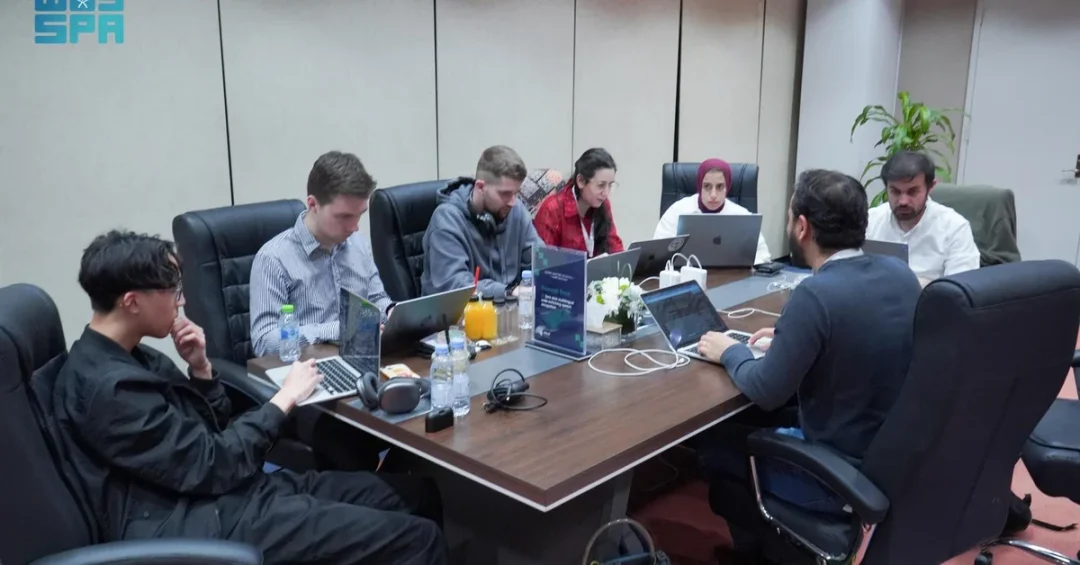
The SDAIA Winter School, a joint initiative by the Saudi Data and Artificial Intelligence Authority (SDAIA) and King Saud University, is bringing together more than 90 researchers, technical specialists, and speakers from 18 countries, including Saudi Arabia, for an intensive two-week program running from December 8 to 21, 2024, in Riyadh. The program, announced through official Saudi channels including the Saudi Press Agency (SPA), represents a significant step in the Kingdom’s efforts to cultivate world-class expertise in artificial intelligence, with a particular focus on advanced language models and Arabic speech processing technologies. Have you ever wondered how a nation transforms its digital ambitions into tangible human capability?
The first week of the Winter School concluded with a recognition ceremony led by Dr. Yaser Al-Onaizan, CEO of SDAIA’s National Center for AI, who honored participants for their contributions to lectures and workshops covering multimedia language models as well as speech recognition and generation in Arabic. The gathering of specialists from across the globe underscores Saudi Arabia’s growing role as a convening power in the global AI research community, and it signals the Kingdom’s determination to build indigenous talent pipelines that can support its long-term economic diversification goals. Isn’t it remarkable how a single initiative can connect researchers from 18 nations around a shared technological frontier?
Context and Background
What makes the SDAIA Winter School more than just another academic gathering? The answer lies in the broader context of Saudi Arabia’s rapid digital transformation. SDAIA, established in 2019 under the leadership of Crown Prince Mohammed bin Salman, serves as the national authority responsible for data and artificial intelligence strategy, regulation, and implementation. Its mandate extends across government entities, the private sector, and academic institutions, positioning it as a central pillar of the Kingdom’s technology ecosystem. The Winter School, organized in partnership with King Saud University — one of the nation’s oldest and most prestigious higher education institutions — exemplifies the collaborative model that SDAIA has championed since its founding.
The program’s focus on multimedia language models and Arabic speech recognition reflects a strategic priority: ensuring that AI technologies serve Arabic-speaking populations effectively. For decades, most advanced language models have been optimized for English and other widely spoken languages, leaving Arabic and its dialects underrepresented in global AI research. By dedicating an intensive two-week program to these topics, SDAIA and King Saud University are addressing a critical gap while simultaneously building a community of researchers capable of advancing the field. How often does a national initiative directly tackle the linguistic equity gap in artificial intelligence?
The Winter School also builds on Saudi Arabia’s broader investments in AI education and research. Initiatives such as the Saudi Data and AI Authority’s various training programs, the establishment of specialized research centers, and partnerships with international technology companies have created a foundation upon which the Winter School can deliver meaningful impact. Participants benefit not only from lectures and workshops but also from practical projects that allow them to apply AI solutions across multiple domains, from healthcare to education to government services.
Key Details
What exactly happens during the SDAIA Winter School? Over the course of two weeks, more than 90 participants engage in a structured curriculum that combines theoretical instruction with hands-on experimentation. The first week’s agenda centered on multimedia language models — systems capable of processing and generating text, images, and audio in an integrated manner — and speech recognition and generation in Arabic. These are among the most technically challenging areas of AI research, requiring expertise in linguistics, machine learning, signal processing, and software engineering. The recognition ceremony led by Dr. Yaser Al-Onaizan highlighted the contributions of participants who excelled in these workshops, reinforcing the program’s emphasis on active learning and peer collaboration.
The international composition of the cohort is a defining feature. With participants from 18 countries, the Winter School creates a microcosm of global AI research, enabling cross-cultural exchange and the formation of professional networks that extend well beyond the program’s duration. Speakers and researchers from renowned universities share their expertise, offering participants exposure to cutting-edge methodologies and diverse perspectives. This global focus aligns with SDAIA’s stated goal of positioning Saudi Arabia as a hub for AI innovation and collaboration. Could there be a more effective way to accelerate progress than by bringing together the world’s brightest minds in one place?
The program’s practical orientation is equally important. Participants are encouraged to develop projects that demonstrate how advanced language models and speech processing techniques can be applied in real-world scenarios. This approach not only deepens technical understanding but also cultivates an entrepreneurial mindset, preparing participants to contribute to Saudi Arabia’s growing technology sector. By the end of the two weeks, participants will have gained both theoretical knowledge and practical experience, along with connections to a global network of peers and mentors.
International and Regional Impact
How does a program like the SDAIA Winter School influence the broader Middle East and beyond? For regional neighbors, Saudi Arabia’s investment in AI education serves as a model for how countries can build domestic capacity in strategic technologies. The Kingdom’s willingness to invite researchers from 18 countries — including nations with advanced AI ecosystems — demonstrates a commitment to open collaboration rather than isolation. This approach strengthens Saudi Arabia’s diplomatic and scientific ties, creating goodwill and opportunities for future partnerships. In a region often characterized by geopolitical tensions, the Winter School offers a constructive example of technology-driven cooperation.
On the international stage, the program enhances Saudi Arabia’s reputation as a serious contributor to global AI research. By hosting a high-caliber event focused on Arabic language technologies, SDAIA addresses a topic of growing interest to researchers worldwide, particularly as multilingual AI systems become more sophisticated. The presence of speakers from renowned universities signals that Saudi Arabia is not merely a consumer of AI technology but an active participant in its development. This positioning is consistent with the Kingdom’s broader foreign policy objectives, which emphasize knowledge exchange, investment, and technological leadership. Isn’t it telling that a country traditionally known for energy exports is now making waves in artificial intelligence?
Economic and Strategic Significance
What does the SDAIA Winter School mean for Saudi Arabia’s economy? At its core, the program is an investment in human capital — the most valuable resource in the digital age. By training researchers and specialists in advanced AI techniques, SDAIA is helping to build a workforce capable of driving innovation across sectors. The knowledge and skills acquired during the Winter School can be applied to challenges in healthcare, finance, logistics, education, and government services, contributing to productivity gains and the creation of new industries. As the Kingdom continues its economic diversification journey, such initiatives are essential for reducing dependence on oil revenues and fostering a knowledge-based economy.
Strategically, the Winter School supports Saudi Arabia’s ambition to become a global leader in AI by 2030. The program’s focus on Arabic language models is particularly significant, as it positions the Kingdom as a custodian of the Arabic language in the digital realm. By developing AI systems that understand and generate Arabic accurately, Saudi Arabia can serve the needs of over 400 million Arabic speakers worldwide while also creating exportable technologies. The collaboration with King Saud University ensures that academic research feeds directly into national priorities, creating a virtuous cycle of innovation and application. How many countries can claim to be shaping the future of their language through artificial intelligence?
Vision 2030 Alignment
How does the SDAIA Winter School connect to Vision 2030? Saudi Arabia’s ambitious reform agenda, launched in 2016, aims to transform the Kingdom into a diversified, innovation-driven economy. Central to this vision is the development of digital infrastructure, the promotion of technology entrepreneurship, and the cultivation of a skilled workforce. SDAIA, as the national data and AI authority, plays a pivotal role in achieving these objectives. The Winter School directly supports Vision 2030 by enhancing human capabilities, fostering international collaboration, and advancing research in technologies that have broad economic and social benefits. It is a concrete example of how the Kingdom is turning its aspirations into action.
Looking ahead, the SDAIA Winter School is likely to become a recurring fixture on the global AI calendar, attracting even more participants and generating further breakthroughs in Arabic language technology. As participants return to their home countries, they carry with them not only new knowledge but also a positive impression of Saudi Arabia’s commitment to innovation and education. In this way, the program serves as both a capacity-building exercise and a soft power initiative, strengthening the Kingdom’s global standing. The future of AI will be shaped by those who invest in people and ideas today — and Saudi Arabia is clearly among them. Isn’t that the kind of leadership the world needs more of?
20 Questions
Q1. What is the SDAIA Winter School?
A1. The SDAIA Winter School is a joint initiative by the Saudi Data and Artificial Intelligence Authority (SDAIA) and King Saud University, bringing together over 90 researchers and specialists from 18 countries for a two-week program on advanced AI topics.
Q2. When and where does the SDAIA Winter School take place?
A2. The program runs from December 8 to 21, 2024, in Riyadh, Saudi Arabia, hosted by SDAIA in collaboration with King Saud University.
Q3. How many countries are represented at the Winter School?
A3. Participants come from 18 countries, including Saudi Arabia, reflecting the program’s global focus and commitment to international collaboration in AI research.
Q4. Who honored the participants in the first week?
A4. Dr. Yaser Al-Onaizan, CEO of SDAIA’s National Center for AI, honored participants for their contributions to lectures and workshops during the first week of the program.
Q5. What topics are covered in the Winter School?
A5. The curriculum focuses on multimedia language models, speech recognition, and speech generation in Arabic, with practical projects applying AI solutions across various fields.
Q6. Why is Arabic language processing important for AI?
A6. Arabic is spoken by over 400 million people but has been underrepresented in AI research. Developing accurate Arabic language models ensures technology serves Arabic-speaking populations effectively.
Q7. What is SDAIA’s role in Saudi Arabia?
A7. SDAIA is the national authority responsible for data and AI strategy, regulation, and implementation, driving the Kingdom’s digital transformation in line with Vision 2030.
Q8. How does the Winter School support Vision 2030?
A8. By building human capital in AI, fostering innovation, and promoting international collaboration, the program directly supports Vision 2030’s goals of economic diversification and technological leadership.
Q9. What is the significance of King Saud University’s involvement?
A9. King Saud University is one of Saudi Arabia’s oldest and most prestigious institutions. Its partnership with SDAIA ensures academic rigor and alignment with national priorities.
Q10. How many participants attend the Winter School?
A10. More than 90 researchers, technical specialists, and speakers are participating in the 2024 SDAIA Winter School.
Q11. What are multimedia language models?
A11. Multimedia language models are AI systems that process and generate text, images, and audio in an integrated manner, enabling more natural and versatile human-computer interaction.
Q12. What practical projects do participants work on?
A12. Participants apply AI solutions to real-world challenges in fields such as healthcare, education, and government services, gaining hands-on experience with advanced techniques.
Q13. How does the Winter School benefit Saudi Arabia’s economy?
A13. By developing skilled AI professionals, the program supports economic diversification, productivity gains, and the growth of knowledge-based industries in the Kingdom.
Q14. What is the global impact of the Winter School?
A14. It enhances Saudi Arabia’s reputation as a hub for AI innovation, strengthens international scientific ties, and contributes to global research on Arabic language technologies.
Q15. Who can participate in the SDAIA Winter School?
A15. The program targets researchers, technical specialists, and speakers from around the world, selected based on their expertise and contributions to AI-related fields.
Q16. What recognition did participants receive?
A16. Dr. Yaser Al-Onaizan honored participants for their outstanding contributions to lectures and workshops, acknowledging their dedication and active engagement.
Q17. How does the Winter School promote innovation?
A17. By encouraging practical projects and collaboration with leading experts, the program fosters creative problem-solving and the application of AI to diverse challenges.
Q18. What is the duration of the Winter School?
A18. The program spans two weeks, from December 8 to 21, 2024, allowing participants to immerse themselves in intensive learning and networking.
Q19. Why is international collaboration important in AI research?
A19. AI challenges are global in nature. Collaboration brings diverse perspectives, accelerates progress, and ensures that solutions are inclusive and widely applicable.
Q20. What is the future outlook for the SDAIA Winter School?
A20. The program is expected to become a recurring event, expanding its impact, attracting more participants, and further establishing Saudi Arabia as a leader in AI innovation.
Reader Feedback
We value your thoughts. Please share your feedback on this article.
Your feedback helps us improve our coverage.
Related articles
 CST Wins PMI-PMOGlobal Strategic Alignment Award
 Jeddah Astronomy Society: Last Quarter Moon Tonight
 KACST-KAU Trout Farming Breakthrough Boosts Saudi Food Security
 RDIA Launches Saudi Innovation Grants Program
 Tuwaiq Academy, Uptime Institute Launch Data Centre Boot Camps
 Cloud Computing Forum to Kick Off Tomorrow in Riyadh