


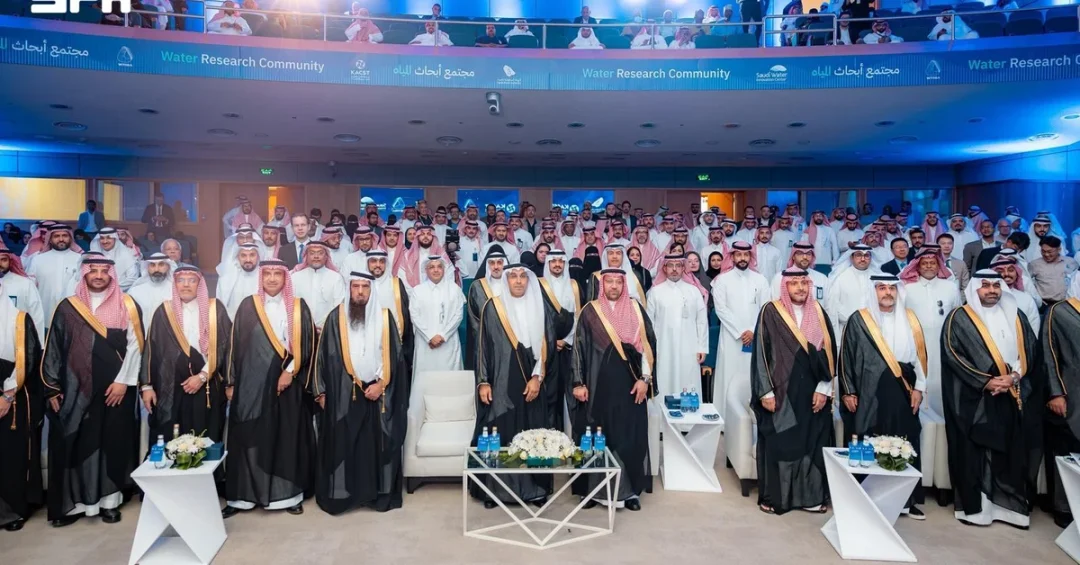
The Saudi Water Authority, represented by the Water Technologies Innovation Institute and Research Advancements, concluded the seventh edition of the Water Research Community event in Riyadh, recording 12 agreements and 130 research proposals. The event, reported by the Saudi Press Agency, brought together approximately 400 researchers, experts, and representatives of government entities, universities, research centers, and the industrial sector from within the Kingdom and abroad. Could this gathering mark a turning point in how the world approaches water innovation?
The Riyadh edition represents the latest chapter in a series that has steadily expanded since its inception, drawing participation from across Saudi Arabia and beyond. The program featured four specialized workshops covering sustainability and advanced materials, process innovation, clean and renewable energy, and the circular economy. An exhibition showcased more than 60 scientific posters addressing water technologies, AI-driven resource recovery, groundwater treatment, data center waste heat utilization, leak detection, and sustainable agriculture. The breadth of topics reflects Saudi Arabia’s comprehensive approach to one of the most pressing global challenges of the twenty-first century.
Context and Background
Why has water research become such a central pillar of Saudi Arabia’s national strategy? The answer lies in the Kingdom’s unique circumstances and its ambitious Vision 2030 framework. Saudi Arabia has long understood that water security is inseparable from economic security, and the Water Research Community was established to institutionalize collaboration between academia, industry, and government. Across seven editions held in Al-Khobar, Jeddah, Abu Dhabi, Tabuk, Dhahran, Manchester, and Riyadh, the community has brought together more than 1,900 researchers and experts, received over 470 proposals, and facilitated the signing of 47 strategic agreements.
The seventh edition builds on this legacy with clear targets: turning 15% of proposals into applied projects, publishing more than 250 scientific papers, registering 20 patents, funding over 15 projects, and establishing Saudi startups with a combined market value exceeding SAR300 million. The event also seeks to transition six to 10 technologies each year to commercial application, with an estimated annual economic impact of SAR3 billion. These are not abstract aspirations but measurable commitments that reflect the seriousness with which the Kingdom treats innovation.
The Water Technologies Innovation Institute and Research Advancements, operating under the Saudi Water Authority, has been the driving force behind this initiative. By creating a recurring platform for knowledge exchange, the Institute has ensured that research does not remain confined to laboratories but moves toward practical deployment. Isn’t that the essential test of any innovation ecosystem?
Key Details
What exactly did the seventh edition achieve? The numbers tell a compelling story. The 130 research proposals submitted represent a significant increase in engagement, while the 12 agreements signed demonstrate tangible commitment from partners across sectors. The event drew approximately 400 participants, a figure that underscores its growing reputation as a must-attend gathering for water professionals. The four workshops provided focused forums for deep discussion on sustainability and advanced materials, process innovation, clean and renewable energy, and the circular economy.
The exhibition of more than 60 scientific posters offered a window into the cutting edge of water research. Topics ranged from AI-driven resource recovery to groundwater treatment, from data center waste heat utilization to leak detection and sustainable agriculture. Each poster represented countless hours of research and a potential solution to real-world problems. The diversity of subjects reflects an understanding that water challenges cannot be solved through a single discipline but require integrated approaches that draw on engineering, data science, environmental studies, and economics.
The agreements signed at the event are expected to catalyze collaboration between government entities, universities, research centers, and the private sector. Such partnerships are essential for translating research into commercially viable technologies. By bringing together stakeholders from across the innovation spectrum, the Water Research Community ensures that ideas are not only generated but also tested, refined, and brought to market. How many groundbreaking technologies might emerge from these collaborations in the coming years?
International and Regional Impact
How does Saudi Arabia’s water research agenda resonate beyond its borders? The inclusion of international participants and the previous edition held in Manchester demonstrate that this is not a purely domestic endeavor. Water scarcity is a global challenge, and Saudi Arabia’s willingness to share knowledge and collaborate with international partners positions the Kingdom as a leader in the field. The event in Abu Dhabi further highlights the regional dimension, fostering cooperation among Gulf states that face similar environmental conditions.
The research areas covered—particularly AI-driven resource recovery and data center waste heat utilization—have implications far beyond the water sector. As the world grapples with the energy demands of digital infrastructure, innovations that repurpose waste heat for water treatment could offer dual benefits. Similarly, advances in leak detection and sustainable agriculture are directly relevant to food security and urban resilience. By tackling these interconnected issues, Saudi Arabia is contributing to global solutions while addressing its own needs. Could the Kingdom’s model become a blueprint for other arid regions?
The international dimension also enhances Saudi Arabia’s soft power. By hosting events that attract top researchers and experts, the Kingdom strengthens its reputation as a hub for innovation and a convener of global talent. This aligns with Vision 2030’s goal of transforming Saudi Arabia into a knowledge-based economy that exports ideas and expertise, not just resources.
Economic and Strategic Significance
Why does the economic impact matter so much? The projected annual economic impact of SAR3 billion from transitioning six to 10 technologies to commercial application is a striking figure. It underscores that water research is not merely an academic exercise but a driver of economic growth. The establishment of Saudi startups with a combined market value exceeding SAR300 million would create jobs, foster entrepreneurship, and diversify the economy away from oil dependence.
The funding of over 15 projects and the registration of 20 patents are concrete steps toward building a knowledge economy. Patents, in particular, represent intellectual property that can be licensed and commercialized, generating revenue and enhancing Saudi Arabia’s technological standing. The publication of more than 250 scientific papers will contribute to the global body of knowledge while raising the profile of Saudi researchers and institutions. These outcomes are mutually reinforcing: research leads to patents, patents attract investment, and investment fuels further research.
Strategically, water security is a matter of national resilience. Saudi Arabia’s population and economy depend on reliable access to water, and the Kingdom has invested heavily in desalination and water management. The Water Research Community complements these efforts by focusing on innovation that can reduce costs, improve efficiency, and create new sources of value. By turning research into applied projects, the Kingdom is building a sustainable water future that supports all other sectors of the economy.
Vision 2030 Alignment
How does the Water Research Community fit into Vision 2030? The alignment is direct and profound. Vision 2030 aims to diversify the economy, develop human capital, and improve quality of life. Water research contributes to all three. By fostering innovation, the initiative supports economic diversification and the growth of high-tech industries. By engaging researchers and experts, it develops human capital and positions Saudi Arabia as a talent magnet. By improving water management, it enhances quality of life and environmental sustainability.
Moreover, the event embodies the collaborative spirit that Vision 2030 champions. It brings together government, academia, and the private sector in a shared mission. The Saudi Water Authority, through the Water Technologies Innovation Institute and Research Advancements, has created a platform that turns Vision 2030 from a document into a living practice. As the Kingdom continues its transformation, initiatives like the Water Research Community will be essential in ensuring that progress is inclusive, sustainable, and driven by knowledge.
The seventh edition’s achievements—130 proposals, 12 agreements, and hundreds of participants—are not just numbers. They represent a collective commitment to solving one of humanity’s most critical challenges. Saudi Arabia is demonstrating that with vision, collaboration, and investment, even the most daunting problems can be addressed. The world will be watching as these proposals become projects, projects become technologies, and technologies become solutions that benefit millions.
20 Questions
Q1. What was the main outcome of the seventh Water Research Community event?
A1. The event concluded with 12 agreements signed and 130 research proposals submitted, bringing together approximately 400 researchers, experts, and representatives from government, universities, research centers, and industry.
Q2. Where was the seventh edition held?
A2. The seventh edition was held in Riyadh, Saudi Arabia, as reported by the Saudi Press Agency.
Q3. Which organization organized the event?
A3. The event was organized by the Saudi Water Authority, represented by the Water Technologies Innovation Institute and Research Advancements.
Q4. How many participants attended the event?
A4. Approximately 400 researchers, experts, and representatives attended the event from within Saudi Arabia and abroad.
Q5. What workshops were included in the program?
A5. The program featured four workshops on sustainability and advanced materials, process innovation, clean and renewable energy, and the circular economy.
Q6. What was showcased in the exhibition?
A6. The exhibition showcased more than 60 scientific posters covering water technologies, AI-driven resource recovery, groundwater treatment, data center waste heat utilization, leak detection, and sustainable agriculture.
Q7. What are the event’s targets for turning proposals into applied projects?
A7. The event aims to turn 15% of proposals into applied projects.
Q8. How many scientific papers does the event aim to publish?
A8. The event aims to publish more than 250 scientific papers.
Q9. How many patents does the event seek to register?
A9. The event seeks to register 20 patents.
Q10. How many projects does the event plan to fund?
A10. The event plans to fund over 15 projects.
Q11. What is the targeted combined market value of Saudi startups to be established?
A11. The event aims to establish Saudi startups with a combined market value exceeding SAR300 million.
Q12. How many technologies does the event seek to transition to commercial application each year?
A12. The event seeks to transition six to 10 technologies each year to commercial application.
Q13. What is the estimated annual economic impact of these efforts?
A13. The estimated annual economic impact is SAR3 billion.
Q14. Where have previous editions of the Water Research Community been held?
A14. Previous editions were held in Al-Khobar, Jeddah, Abu Dhabi, Tabuk, Dhahran, and Manchester.
Q15. How many researchers and experts have participated across all seven editions?
A15. More than 1,900 researchers and experts have participated across the seven editions.
Q16. How many research proposals have been received across all editions?
A16. Over 470 research proposals have been received across all seven editions.
Q17. How many strategic agreements have been signed across all editions?
A17. A total of 47 strategic agreements have been signed across the seven editions.
Q18. What is the role of the Water Technologies Innovation Institute and Research Advancements?
A18. The Institute, under the Saudi Water Authority, drives the Water Research Community initiative, fostering collaboration and innovation in water technologies.
Q19. How does the event support Saudi Vision 2030?
A19. The event supports Vision 2030 by promoting economic diversification, human capital development, and environmental sustainability through water innovation and collaboration.
Q20. What is the significance of the 12 agreements signed at the event?
A20. The agreements signify tangible commitments from partners across sectors to collaborate on water research and innovation, helping translate ideas into practical solutions.
Reader Feedback
We value your thoughts. Please share your feedback on this article.
Your feedback helps us improve our coverage.
Related articles
 NCW Maps Saudi Red Sea Seabed in High Resolution
 Qassim University, GFSA Launch Food Loss and Waste Hackathon
 Quail Spotted in Turaif During Annual Migration
 KAUST AI Model to Transform Saudi Mineral Exploration
 Saudi Arabia Strengthens Framework for Responsible AI Use
 Taibah University Registers US Patent in Satellite Engineering