


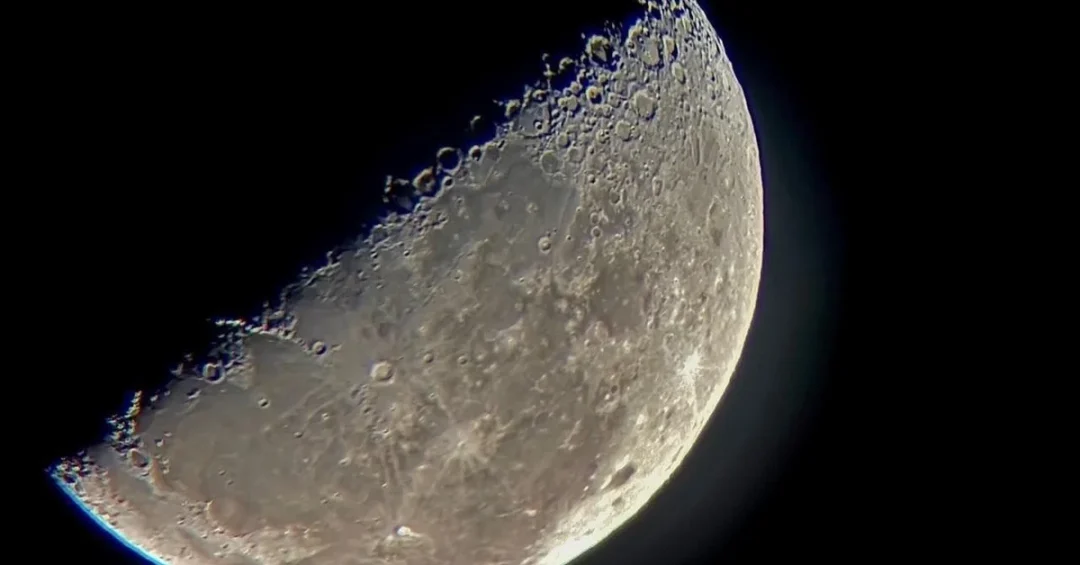
The Saudi Press Agency (SPA) has captured detailed astronomical views of the Moon over Rafha Governorate in the Northern Borders Region, coinciding with the global celebration of ‘International Observe the Moon Night’ on September 20, 2026. The annual event, dedicated to raising awareness of lunar science and exploration, saw participation from astronomy enthusiasts worldwide, with Saudi Arabia playing an active role in documenting the celestial phenomenon.
Context and Background
International Observe the Moon Night is a global initiative sponsored by NASA that encourages public engagement with lunar science and exploration. The event provides an opportunity for individuals and astronomy groups to observe the Moon’s craters, mountains, and slopes, fostering greater interest in space and astronomical sciences. In Saudi Arabia, the occasion aligns with the Kingdom’s growing focus on scientific advancement and space exploration, as part of its Vision 2030 goals.
The SPA’s coverage highlights the active participation of Saudi astronomy enthusiasts, such as Barjas Al-Fulaih, a member of the AFAQ Society for Astronomy, who shared insights with SPA about the significance of the event. He noted that the attention of astronomy enthusiasts worldwide was focused on the Moon, emphasizing the global unity in exploring lunar science.
Key Details
Al-Fulaih explained that the observation coincided with the Moon being near its first-quarter phase. During this phase, the angle of sunlight highlights surface details, while craters, mountains, and slopes cast long, distinct shadows that enhance topographical contrast, making these features clearly visible during the evening hours. He added that the Moon can be observed using various methods, ranging from the naked eye and binoculars to telescopes and photography. This phase, occurring a few days before the full moon, offers an excellent opportunity to examine the Moon’s surface features in greater detail.
The SPA’s capture of these views underscores the agency’s role in documenting and sharing significant scientific and cultural moments with the public. It also reflects the Kingdom’s commitment to promoting scientific literacy and engagement with space sciences, which are integral to its modernization efforts.
Implications and Impact
The event and SPA’s coverage contribute to raising awareness about lunar science and astronomy across Saudi Arabia and beyond. By participating in global initiatives like International Observe the Moon Night, the Kingdom demonstrates its dedication to scientific collaboration and education. This aligns with Saudi Arabia’s broader efforts to advance technology and innovation, as outlined in Vision 2030, and enhances its position in the global scientific community.
Furthermore, such activities inspire young Saudis to pursue careers in STEM fields, supporting the development of a knowledge-based economy. The Northern Borders Region, where Rafha is located, benefits from increased attention to its scientific and cultural contributions, promoting regional development and tourism.
Vision 2030 Alignment
Saudi Arabia’s participation in International Observe the Moon Night exemplifies the Kingdom’s commitment to fostering scientific curiosity and innovation, key pillars of Vision 2030. By encouraging public engagement with astronomy and space sciences, the Kingdom is nurturing a future generation of scientists and explorers who will contribute to its ambitious goals. As Saudi Arabia continues to expand its presence in space exploration, initiatives like this highlight its dedication to global scientific progress and its role as a leader in the region.
20 Questions
Q1. What is International Observe the Moon Night?
A1. International Observe the Moon Night is an annual global event sponsored by NASA that encourages public observation and awareness of lunar science and exploration. It brings together astronomy enthusiasts worldwide to appreciate the Moon’s features and learn about its characteristics.
Q2. When did the event take place in 2026?
A2. The event took place on September 20, 2026, as celebrated globally. The Saudi Press Agency captured views of the Moon over Rafha Governorate on that day, marking Saudi Arabia’s participation in this international occasion.
Q3. Where did SPA capture the lunar views?
A3. SPA captured the lunar views over Rafha Governorate in the Northern Borders Region of Saudi Arabia. This location provided a clear vantage point for observing the Moon’s surface features during the event.
Q4. Who is Barjas Al-Fulaih?
A4. Barjas Al-Fulaih is a member of the AFAQ Society for Astronomy in Saudi Arabia. He shared expert insights with SPA about the significance of the event and the best methods for observing the Moon’s surface.
Q5. What phase was the Moon in during the event?
A5. The Moon was near its first-quarter phase during the event. This phase offers enhanced visibility of surface details due to the angle of sunlight, making it ideal for observation and photography.
Q6. How can the Moon be observed according to Al-Fulaih?
A6. Al-Fulaih noted that the Moon can be observed using various methods, including the naked eye, binoculars, telescopes, and photography. This flexibility allows people of all ages and skill levels to participate in lunar observation.
Q7. Why is the first-quarter phase ideal for lunar observation?
A7. During the first-quarter phase, sunlight hits the Moon at an angle that casts long shadows, highlighting craters, mountains, and slopes. This enhances topographical contrast, making surface features clearly visible during evening hours.
Q8. What is the AFAQ Society for Astronomy?
A8. The AFAQ Society for Astronomy is a Saudi organization dedicated to promoting astronomy and space sciences. Its members, like Barjas Al-Fulaih, contribute to public education and engagement with celestial events.
Q9. How does this event align with Saudi Vision 2030?
A9. The event supports Vision 2030 by fostering scientific curiosity and innovation, particularly in space sciences. It encourages youth engagement in STEM fields, contributing to a knowledge-based economy and global scientific collaboration.
Q10. What is the significance of SPA’s coverage?
A10. SPA’s coverage documents a significant scientific and cultural moment, sharing it with the public. It highlights Saudi Arabia’s active role in global scientific initiatives and promotes awareness of astronomy across the Kingdom.
Q11. What are some features visible on the Moon during this phase?
A11. During the first-quarter phase, visible features include craters, mountains, and slopes. The shadows cast by these features enhance their visibility, allowing observers to study the Moon’s topography in detail.
Q12. How does this event promote international collaboration?
A12. By participating in a NASA-sponsored global event, Saudi Arabia joins other countries in a shared pursuit of lunar science. This fosters international cooperation and knowledge exchange in astronomy and space exploration.
Q13. What benefits does the event bring to the Northern Borders Region?
A13. The event brings attention to the Northern Borders Region, showcasing its potential for astronomical observation. It may also promote regional tourism and highlight the area’s contribution to scientific activities.
Q14. Can the Moon be observed without special equipment?
A14. Yes, the Moon can be observed with the naked eye, as noted by Al-Fulaih. Binoculars and telescopes offer more detailed views, but even simple observation allows appreciation of lunar features.
Q15. What is the role of NASA in this event?
A15. NASA sponsors International Observe the Moon Night as part of its efforts to engage the public in lunar science. The agency provides resources and encourages global participation to enhance understanding of the Moon.
Q16. How does this event inspire young Saudis?
A16. The event inspires young Saudis by exposing them to astronomy and space science, potentially sparking interest in STEM careers. It aligns with Vision 2030’s goal of developing a skilled, innovative workforce for the future.
Q17. What methods did Al-Fulaih suggest for lunar photography?
A17. Al-Fulaih mentioned photography as a method to capture the Moon’s surface. Using cameras with telephoto lenses or attaching cameras to telescopes can yield detailed images of lunar features.
Q18. Why is lunar observation important for science?
A18. Lunar observation helps scientists study the Moon’s geology, history, and potential resources. It also advances understanding of planetary science and supports future exploration missions.
Q19. How does Saudi Arabia benefit from participating in such events?
A19. Participation enhances Saudi Arabia’s scientific reputation, fosters education, and aligns with Vision 2030’s focus on innovation. It also strengthens international ties and promotes cultural exchange through science.
Q20. What future space initiatives is Saudi Arabia pursuing?
A20. Saudi Arabia is expanding its space sector through initiatives like the Saudi Space Commission and partnerships in satellite technology. These efforts support Vision 2030’s goals of economic diversification and technological leadership.
Reader Feedback
We value your thoughts. Please share your feedback on this article.
Your feedback helps us improve our coverage.