


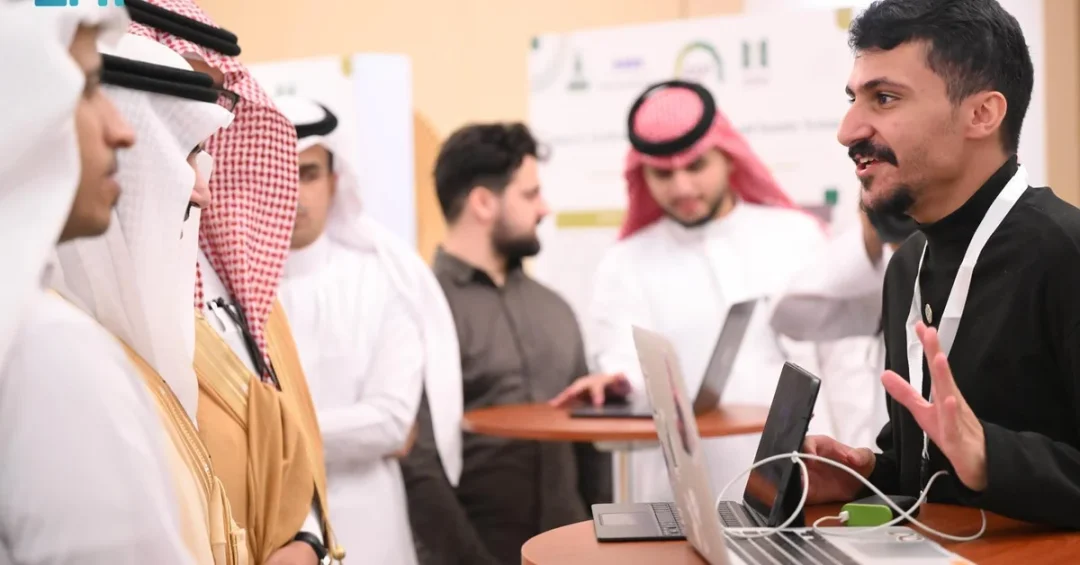
Students from the University of Tabuk presented a series of innovative graduation projects at the 4th International Conference on Computing and Information Technology (ICCIT 2025), drawing widespread acclaim from researchers and experts attending the event. The conference, organized by the University of Tabuk, featured a dedicated Project Expo in which both male and female students displayed technological solutions spanning smart agriculture, intelligent logistics, digital security, and immersive augmented reality. According to information released through official Saudi channels, the projects reflect the students’ awareness of the demands of digital transformation and the knowledge economy, and they were received with strong interest by the international academic community gathered in Tabuk.
The scale of student participation at ICCIT 2025 underlines how Saudi universities are increasingly positioning themselves as engines of applied research and technological innovation. The University of Tabuk said the students’ involvement represents the fruit of a stimulating academic and research environment that equips young people with innovative tools and strengthens their ability to connect theoretical knowledge with practical application. Why does this matter for a global audience? Because the projects on display offer a window into how the Kingdom is cultivating the technical talent that will underpin its next phase of development, and into the priorities shaping higher education across Saudi Arabia.
Context and Background
The International Conference on Computing and Information Technology has become a recurring fixture on the University of Tabuk’s academic calendar, and the 2025 edition marked the fourth gathering of its kind. The conference brings together researchers and experts from around the world to exchange insights on computing, information technology, and emerging digital disciplines, while the accompanying Project Expo gives students a platform to present original work to an international audience. Have you ever wondered how a regional university transforms itself into a hub for global technical dialogue? ICCIT offers one answer, pairing scholarly exchange with hands-on demonstrations of student achievement.
Established in the northwest of the Kingdom, the University of Tabuk serves a region with distinctive geographic and economic characteristics, including its proximity to major development corridors and its growing role in the national knowledge economy. The university’s emphasis on computing and information technology reflects a broader strategic recognition that digital skills are foundational to modern economies. By hosting an international conference in this field, the institution is signaling its ambition to contribute not only to local education but also to the wider scientific conversation taking place across the Kingdom and beyond.
The event also fits within a national trajectory in which Saudi higher education institutions are encouraged to align their research agendas with the requirements of the labor market and the goals of national transformation. The Project Expo is a practical expression of that alignment, since each graduation project is designed to address a real-world challenge or opportunity. For international observers, the conference provides a useful benchmark for understanding how Saudi universities are translating policy ambition into tangible academic output.
Key Details
The student projects unveiled at the Project Expo spanned an impressive range of technological domains. Among the highlights were smart irrigation systems designed to optimize water use, a priority of considerable importance in an arid region, and smart shelving technologies aimed at enhancing storage and supply efficiency for businesses and institutions. Students also presented intelligent applications serving diverse aspects of daily life, demonstrating how computing can be applied to practical problems rather than confined to the laboratory.
One of the most distinctive contributions was a project on virtual living in space, which used augmented reality technologies to simulate future environments. The project captured the imagination of attendees and illustrated the students’ willingness to explore ambitious, forward-looking concepts. In addition, students introduced initiatives to combat digital fraud, addressing a growing concern for consumers and organizations alike as digital transactions become more widespread. These creative solutions, taken together, reflect an awareness of both the opportunities and the risks inherent in rapid digital transformation.
According to the University of Tabuk, the breadth of the projects demonstrates the effectiveness of its academic environment in nurturing innovation. The university commended the projects as embodying its vision of preparing qualified national talents capable of contributing effectively to technological transformation and scientific research in the Kingdom. The participation of both male and female students was emphasized as a point of pride, highlighting the inclusive nature of the institution’s educational mission and the growing role of women in Saudi science and technology.
International and Regional Impact
The presence of researchers and experts from around the world at ICCIT 2025 gave the student projects an international stage, and the acclaim they received speaks to the quality of the work on display. For the University of Tabuk, hosting such an event strengthens its reputation as a center of computing research and creates opportunities for future collaboration with foreign institutions. What could be more valuable for a young researcher than direct engagement with the global scientific community? The conference provided precisely that setting, allowing students to test their ideas against the scrutiny and encouragement of experienced professionals.
At the regional level, the event contributes to a broader movement in which Saudi universities are building networks of academic cooperation across the Middle East and beyond. Such gatherings facilitate the exchange of knowledge, the sharing of best practices, and the formation of partnerships that can endure well beyond the conference itself. For the international audience, the conference offers evidence that Saudi Arabia’s investment in education and research is yielding a generation of technically adept graduates prepared to engage with global challenges.
Economic and Strategic Significance
The projects presented at the Expo address issues with direct economic relevance. Smart irrigation addresses water efficiency, a critical consideration for agricultural sustainability in the Kingdom. Smart shelving and supply optimization speak to the logistics and retail sectors, which are central to the growth of a diversified economy. Digital fraud prevention supports the integrity of an expanding digital marketplace. In each case, the students have identified a practical need and applied technical skill to meet it, which is precisely the kind of problem-solving that strengthens a national innovation ecosystem.
Strategically, the University of Tabuk’s emphasis on computing and information technology reflects the Kingdom’s wider determination to build a knowledge-based economy. The students whose work was showcased at ICCIT 2025 represent the human capital on which future industries will depend, from artificial intelligence and data science to advanced manufacturing and space-related research. By giving these young innovators a platform early in their careers, the university is helping to ensure that Saudi Arabia’s technological ambitions are matched by a capable and motivated workforce.
Vision 2030 Alignment
The University of Tabuk explicitly linked its students’ achievements to the objectives of Saudi Vision 2030, which aims to build an innovative knowledge-based society. This alignment is not merely rhetorical. Vision 2030 places education, research, and digital transformation at the heart of the Kingdom’s development strategy, and initiatives such as the ICCIT Project Expo demonstrate how those priorities are being implemented on the ground. How does a national vision become reality? Through institutions that translate broad goals into concrete opportunities for their students, and through young people who seize those opportunities with creativity and discipline.
Looking ahead, the success of the 2025 conference positions the University of Tabuk to deepen its role as a catalyst for innovation in the northwest of the Kingdom and as a contributor to the global computing community. The students who presented their work in Tabuk will carry those experiences into careers that will shape the Kingdom’s technological future. Their projects, from smart irrigation to virtual space environments, offer a glimpse of the ingenuity that Saudi Arabia is nurturing as it advances toward a diversified, knowledge-driven economy. The conference stands as a testament to the promise of Saudi youth and to the institutional commitment that supports them.
20 Questions
Q1. What was the main event where University of Tabuk students presented their innovative projects?
A1. Students presented their projects at the 4th International Conference on Computing and Information Technology (ICCIT 2025), organized by the University of Tabuk, through the accompanying Project Expo.
Q2. What types of projects did the students showcase at the conference?
A2. The projects included smart irrigation systems, smart shelving technologies, intelligent daily-life applications, a virtual living in space project using augmented reality, and initiatives to combat digital fraud.
Q3. Who organized the 4th International Conference on Computing and Information Technology?
A3. The conference was organized by the University of Tabuk, which hosted researchers and experts from around the world for the fourth edition of this computing and information technology gathering.
Q4. How did researchers and experts respond to the students’ projects?
A4. The projects received widespread acclaim from researchers and experts worldwide, reflecting the high quality of the work and the international interest it generated at the Project Expo.
Q5. What was notable about the virtual living in space project?
A5. The project used augmented reality technologies to simulate future space environments, demonstrating the students’ ambition and their imaginative application of immersive digital tools.
Q6. Why is the smart irrigation project significant for the region?
A6. Smart irrigation addresses water efficiency, a critical priority in an arid region, showing how student innovation can respond directly to environmental and agricultural sustainability challenges.
Q7. What did the University of Tabuk say about the students’ participation?
A7. The university said the participation represents the fruit of a stimulating academic and research environment that empowers students with innovative tools and enhances their practical application of knowledge.
Q8. How do the student projects relate to digital transformation?
A8. The projects reflect the students’ awareness of the demands of digital transformation and the knowledge economy, addressing practical needs such as digital fraud prevention and supply chain efficiency.
Q9. Did both male and female students participate in the Project Expo?
A9. Yes, the conference highlighted the contributions of both male and female students, whose exceptional participation was recognized and praised by the international attendees.
Q10. What are smart shelving technologies designed to do?
A10. Smart shelving technologies are designed to enhance storage and supply efficiency, helping businesses and institutions manage inventory and logistics more effectively through intelligent applications.
Q11. How does the conference benefit the University of Tabuk’s reputation?
A11. Hosting an international conference and showcasing acclaimed student work strengthens the university’s reputation as a center of computing research and creates opportunities for academic collaboration.
Q12. What role does the university say it plays in preparing talent?
A12. The university says it prepares qualified national talents to contribute effectively to supporting technological transformation and scientific research in the Kingdom.
Q13. What national strategy do the student projects align with?
A13. The projects align with Saudi Vision 2030, which aims to build an innovative knowledge-based society by investing in education, research, and digital transformation.
Q14. What was the conference’s significance for international academic exchange?
A14. The conference facilitated the exchange of knowledge between Saudi students and international researchers, enabling students to engage directly with the global scientific community.
Q15. What kind of digital fraud initiatives did students introduce?
A15. Students introduced initiatives aimed at combating digital fraud, addressing a growing concern for consumers and organizations as digital transactions become more widespread in daily life.
Q16. How many editions of the ICCIT have now been held?
A16. The 2025 gathering marked the fourth edition of the International Conference on Computing and Information Technology, hosted by the University of Tabuk.
Q17. Why is the University of Tabuk’s location relevant to its mission?
A17. Located in the northwest of the Kingdom, the university serves a region with distinctive geographic and economic characteristics and a growing role in the national knowledge economy.
Q18. What does the conference demonstrate about Saudi higher education?
A18. It shows that Saudi universities are aligning research agendas with labor market needs and national transformation goals, translating policy ambition into tangible academic output.
Q19. What fields did the student projects span?
A19. The projects spanned agriculture, logistics and retail, daily-life applications, space simulation, and cybersecurity, reflecting a broad range of applied computing disciplines.
Q20. What is the forward-looking significance of the students’ achievements?
A20. The achievements position the University of Tabuk as a catalyst for innovation and underscore the promise of Saudi youth in shaping the Kingdom’s technological future under Vision 2030.
Reader Feedback
We value your thoughts. Please share your feedback on this article.
Your feedback helps us improve our coverage.
Related articles
 Saudi University Wins Silver Medal at Geneva Inventions Exhibition
 Fifth GCF Annual Meeting Set for October 2025 in Riyadh
 Saudi Arabia Launches OceanQuest to Accelerate Ocean Discovery
 CST Launches Public Consultation on Global AI Hub Law
 JISR Conference at KSU Advances Mathematical Sciences
 Tabuk University Concludes ICCIT 2025 Computing Conference