


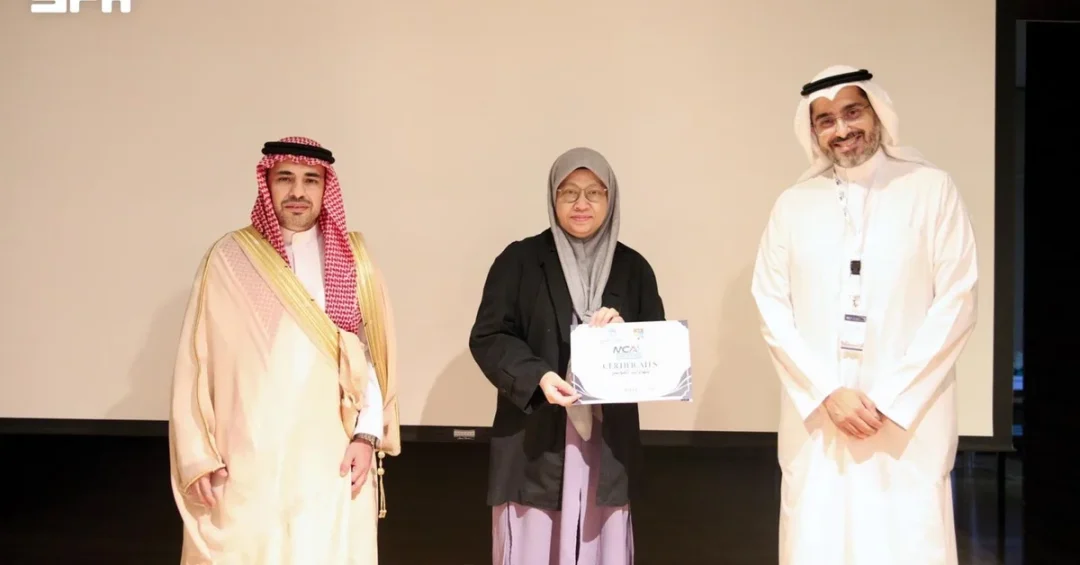
Taibah University in Madinah concluded the sixth International Multi-Conference on Artificial Intelligence Technology 2026 (MCAIT 2026) on November 6, 2026, following three days of scientific lectures and specialized research sessions that showcased the latest developments in artificial intelligence and related technologies. The conference, held under the auspices of Saudi Arabia’s academic and research institutions, brought together researchers, experts, and innovators from around the world to discuss advancements in AI and their applications across multiple sectors. The event underscored the Kingdom’s growing role as a hub for technological innovation and scientific collaboration.
The final day of MCAIT 2026 featured sessions dedicated to developing Arabic language models and AI applications in healthcare, education, cybersecurity, and smart cities. A specialized workshop and parallel research sessions, conducted both in person and virtually, allowed participants to present and discuss research models and findings across various fields. The conference highlighted the critical importance of AI in driving economic growth, improving public services, and achieving the goals of Saudi Vision 2030. As nations worldwide race to harness AI’s potential, Saudi Arabia’s investment in such conferences demonstrates its commitment to staying at the forefront of this transformative technology.
Context and Background
Why does a conference on artificial intelligence in Madinah matter to the global technology community? Taibah University, a prominent institution in Saudi Arabia’s higher education landscape, has been hosting the International Multi-Conference on Artificial Intelligence Technology since its inception, and the sixth edition continued this tradition of excellence. The conference serves as a platform for researchers to share their latest findings, foster collaborations, and address challenges in AI development and deployment. Over the years, MCAIT has grown in scope and reputation, attracting participants from across the globe and contributing to the global AI knowledge base.
The 2026 edition focused on several key areas, including Arabic language processing, healthcare diagnostics, educational tools, cybersecurity, and smart city infrastructure. These areas align with Saudi Arabia’s national priorities, particularly the Vision 2030 plan, which aims to diversify the economy and enhance public services through technology. The conference’s emphasis on Arabic language models is particularly significant, as it addresses a gap in AI research that has traditionally been dominated by English and other major languages. By supporting such research, Saudi Arabia is not only advancing its own technological capabilities but also contributing to the preservation and modernization of the Arabic language in the digital age.
The event also reflects the Kingdom’s broader strategy to become a global leader in AI. Saudi Arabia has launched several initiatives, such as the National Strategy for Data and AI, to accelerate the adoption of AI across industries. These efforts are designed to create a vibrant ecosystem that nurtures talent, attracts investment, and drives innovation. MCAIT 2026 is a testament to these ambitions, providing a forum where ideas can be exchanged and partnerships formed. As the conference concluded, participants left with new insights and a renewed sense of purpose in advancing AI for the benefit of society.
Key Details
What were the most significant research findings presented at MCAIT 2026? The final day’s sessions highlighted findings from scientific studies presented by researchers, including a notable study on the reliability of Arabic language models. Researcher Reem Altamimi analyzed 17 studies assessing the ability of AI models to process Modern Standard Arabic and various Arabic dialects. The findings revealed variations in the models’ ability to understand dialects and preserve meaning and cultural context. This research is crucial for developing AI systems that can effectively serve Arabic-speaking populations, which number over 400 million worldwide.
Altamimi’s study also proposed a framework for developing more comprehensive standards to evaluate the models’ performance and reliability. Such standards are essential for ensuring that AI applications in Arabic are accurate, culturally sensitive, and trustworthy. The research underscores the need for continued investment in Arabic language resources and the development of models that can handle the linguistic diversity of the Arab world. Other sessions explored AI’s role in healthcare, where machine learning algorithms are being used to improve diagnosis and treatment; in education, where personalized learning platforms are enhancing student outcomes; in cybersecurity, where AI is helping to detect and mitigate threats; and in smart cities, where AI is optimizing energy use, traffic flow, and public safety.
The conference also featured a specialized workshop that provided hands-on training in AI tools and techniques. Participants had the opportunity to engage with experts, ask questions, and collaborate on projects. The parallel research sessions allowed for in-depth discussions on specific topics, with presenters receiving feedback from their peers. The hybrid format, combining in-person and virtual participation, ensured that the conference was accessible to a wide audience, including those who could not travel to Madinah. This inclusive approach is characteristic of Saudi Arabia’s efforts to foster global collaboration in science and technology.
International and Regional Impact
How does a conference in Saudi Arabia influence the global AI landscape? The International Multi-Conference on Artificial Intelligence Technology has become a significant event on the calendar for AI researchers and practitioners. By bringing together experts from different countries, it facilitates the exchange of ideas and the formation of international partnerships. The research presented at MCAIT 2026, particularly on Arabic language models, addresses a critical need for linguistic diversity in AI. As AI systems become more integrated into daily life, it is essential that they can understand and respond to users in their native languages and dialects. The work presented at the conference contributes to making AI more inclusive and equitable.
Regionally, the conference reinforces Saudi Arabia’s position as a leader in technology and innovation in the Middle East. The Kingdom has been investing heavily in AI and other emerging technologies as part of its Vision 2030 plan. By hosting events like MCAIT, Saudi Arabia showcases its capabilities and attracts talent and investment. The presence of international researchers also helps to build bridges between Saudi institutions and global centers of excellence. This collaboration is vital for addressing common challenges, such as climate change, healthcare, and cybersecurity, which require coordinated global efforts. The conference thus serves as a catalyst for progress that extends beyond the immediate research findings.
Economic and Strategic Significance
Why is AI research economically and strategically important for Saudi Arabia? Artificial intelligence is poised to transform economies by increasing productivity, creating new industries, and improving the quality of life. Saudi Arabia recognizes this potential and has made AI a cornerstone of its economic diversification strategy. The National Strategy for Data and AI, launched in 2020, aims to position the Kingdom among the top countries in AI by 2030. Investments in AI research, such as those showcased at MCAIT 2026, are essential for building local expertise and developing solutions tailored to the region’s needs.
The economic benefits of AI are manifold. In healthcare, AI can reduce costs and improve patient outcomes. In education, it can personalize learning and enhance teacher effectiveness. In smart cities, it can optimize resource use and reduce environmental impact. By advancing AI research, Saudi Arabia is not only improving public services but also creating opportunities for startups and entrepreneurs. The conference provided a platform for researchers to present their work to potential investors and industry partners, facilitating the commercialization of innovative ideas. This aligns with the Vision 2030 goal of creating a vibrant private sector and reducing dependence on oil revenues.
Vision 2030 Alignment
How does MCAIT 2026 contribute to Saudi Vision 2030? The conference directly supports several objectives of Vision 2030, including the development of a digital economy, the enhancement of education and research, and the promotion of international collaboration. By focusing on AI applications in healthcare, education, cybersecurity, and smart cities, the conference addresses key pillars of the vision. The emphasis on Arabic language models also aligns with the cultural and linguistic goals of Vision 2030, which seeks to preserve and promote Arabic heritage while embracing modernity.
Furthermore, MCAIT 2026 exemplifies the Kingdom’s commitment to fostering a knowledge-based society. Through such events, Saudi Arabia is building a reputation as a destination for cutting-edge research and innovation. This attracts global talent and investment, which are essential for achieving the ambitious targets of Vision 2030. As the conference concluded, it was clear that the discussions and collaborations initiated there will have a lasting impact, driving forward Saudi Arabia’s journey toward a prosperous and sustainable future. The Kingdom remains dedicated to leveraging AI for the benefit of humanity, and MCAIT 2026 is a shining example of this commitment.
20 Questions
Q1. What was the main focus of MCAIT 2026?
A1. The conference focused on the latest developments in artificial intelligence, with sessions on Arabic language models, healthcare, education, cybersecurity, and smart cities.
Q2. Where and when did the conference take place?
A2. It was held at Taibah University in Madinah, Saudi Arabia, from November 4 to 6, 2026.
Q3. Who organized the International Multi-Conference on AI Technology?
A3. The conference was organized by Taibah University, a leading academic institution in Saudi Arabia.
Q4. What is the significance of Arabic language models in AI?
A4. Arabic language models are crucial for enabling AI systems to understand and process Arabic, serving over 400 million speakers and preserving cultural context.
Q5. What did researcher Reem Altamimi present at the conference?
A5. She presented a study analyzing 17 research papers on the reliability of AI models in processing Modern Standard Arabic and various dialects.
Q6. What were the key findings of Altamimi’s research?
A6. The study found variations in models’ ability to understand dialects and preserve meaning, and proposed a framework for comprehensive evaluation standards.
Q7. How does the conference support Saudi Vision 2030?
A7. It aligns with Vision 2030 by promoting digital transformation, education, research, and international collaboration in AI.
Q8. What sectors benefited from the AI applications discussed?
A8. Healthcare, education, cybersecurity, and smart cities were among the key sectors highlighted for AI applications.
Q9. Was the conference held in person or virtually?
A9. It was a hybrid event, with both in-person and virtual participation to ensure broad accessibility.
Q10. What is the National Strategy for Data and AI?
A10. It is a Saudi initiative launched in 2020 to make the Kingdom a global leader in AI by 2030.
Q11. How many editions of the conference have been held?
A11. The 2026 edition was the sixth International Multi-Conference on Artificial Intelligence Technology.
Q12. What workshop was offered at the conference?
A12. A specialized workshop provided hands-on training in AI tools and techniques, led by experts.
Q13. What role does AI play in smart cities?
A13. AI optimizes energy use, traffic flow, and public safety, contributing to sustainable and efficient urban environments.
Q14. How does AI improve healthcare?
A14. AI enhances diagnosis, treatment, and patient outcomes through machine learning and data analysis.
Q15. What is the economic impact of AI research in Saudi Arabia?
A15. It drives productivity, creates new industries, and supports economic diversification away from oil dependence.
Q16. Who attended the conference?
A16. Researchers, experts, and innovators from around the world, both in person and virtually.
Q17. What is the significance of the conference for Madinah?
A17. It reinforces Madinah’s status as a center of knowledge and innovation, attracting global attention.
Q18. How does the conference promote international collaboration?
A18. By bringing together global participants, it facilitates the exchange of ideas and partnerships in AI research.
Q19. What are the future plans for MCAIT?
A19. The conference is expected to continue annually, expanding its scope and impact in the AI field.
Q20. How can researchers participate in future conferences?
A20. They can submit research papers and register through Taibah University’s official channels when announcements are made.
Reader Feedback
We value your thoughts. Please share your feedback on this article.
Your feedback helps us improve our coverage.
Related articles
 KAUST Retains No. 1 Spot in THE Arab University Rankings 2027
 University of Hail Organizes Data Hackathon Under AI Pathways
 Taibah University AI Conference Draws Global Researchers
 AgentX Hackathon Launches in Riyadh to Foster AI Innovation
 MCIT Launches Second Edition of AI Bridge Program
 SGS Opens 150 Caves Across Saudi Arabia for Scientific Research