


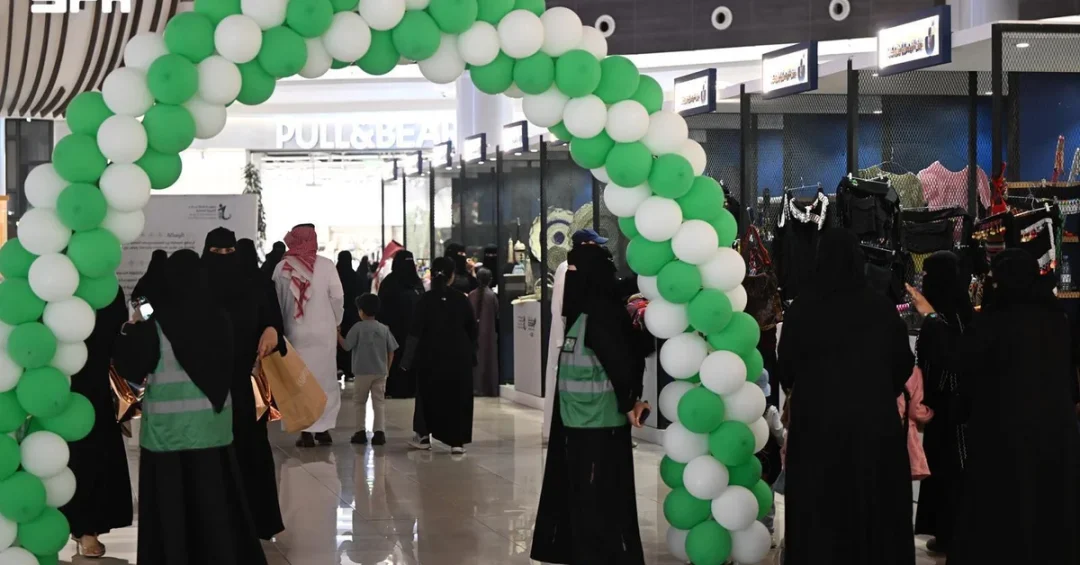
The King Khalid Women’s Charitable Association in Tabuk Region has launched the Al-Khair festival at Tabuk Park Mall, in cooperation with the Social Development Bank’s branch in the region, bringing together women artisans and their families to display and market traditional handicrafts including Sadu textiles, ceramics, and resin crafts. The initiative, announced via the Saudi Press Agency, provides a direct commercial platform for craftswomen supported by the association, enabling them to transform their skills into sustainable businesses and move toward self-employment.
The festival is not simply a seasonal market; it represents a deliberate step in a broader national effort to convert cultural heritage into economic opportunity. By connecting artisans with retail space, customers, and financial backing from the Social Development Bank, the initiative addresses one of the most persistent challenges facing home-based producers: access to markets. Have you ever considered how a single exhibition can shift a craft from a household tradition into a family income? For the women of Tabuk, the Al-Khair festival is precisely that kind of turning point, and it reflects a wider pattern of locally driven development across the Kingdom.
Context and Background
Tabuk Region, located in the northwest of Saudi Arabia, has long been associated with trade routes, historical crossroads, and a rich Bedouin heritage. Handicrafts such as Sadu weaving — a traditional textile art recognized by UNESCO as intangible cultural heritage — have been passed down through generations of women. The King Khalid Women’s Charitable Association has worked for years to support these artisans, offering training, raw materials, and now a public marketplace through the Al-Khair festival. The choice of Tabuk Park Mall as the venue is significant, placing heritage products in a modern commercial environment where they can reach a broad audience of residents and visitors.
The partnership with the Social Development Bank is equally important. The bank is a key national institution mandated to empower small enterprises and productive families, and its regional branch provides financing, business guidance, and follow-up support. Why does this combination — a charitable association, a development bank, and a retail venue — matter so much? Because it creates an ecosystem rather than a one-off event. Artisans are not left to navigate the market alone; they receive institutional backing at every stage, from product development to sales. This model aligns with the Kingdom’s broader push to diversify income sources and to ensure that economic growth reaches every region and every household.
Key Details of the Al-Khair Festival
According to the Saudi Press Agency, the festival features women artisans who receive support from the association, along with their families. Participants are displaying and marketing a range of products, including Sadu textiles, ceramics, resin crafts, and other handicrafts. The event is hosted at Tabuk Park Mall, a central retail destination in the region, which gives the products visibility among shoppers who might not otherwise encounter traditional crafts. The association’s support extends beyond the exhibition itself, encompassing training and preparation that help participants present their work professionally.
The Social Development Bank’s involvement adds a financial dimension. The bank’s branch in Tabuk works with beneficiaries to develop business plans, access microfinance, and build the skills needed to sustain production beyond the festival. This is not merely a display of culture; it is a business incubator in a public setting. How many talented craftswomen have been held back simply because they lacked a place to sell their goods? The Al-Khair festival directly answers that question by providing the missing link between production and market. Visitors to the mall can purchase authentic, handmade items while knowing that their spending supports local families and preserves heritage.
Empowering Women Through Heritage Crafts
The festival is part of a larger national conversation about women’s economic participation in Saudi Arabia. Under Vision 2030, the Kingdom has set ambitious targets to increase female participation in the labor force and to support women-led enterprises. Handicrafts offer a flexible pathway for women who may prefer to work from home or within their communities, allowing them to generate income while managing family responsibilities. The King Khalid Women’s Charitable Association has been a consistent advocate for this approach, and the Al-Khair festival gives its beneficiaries a public platform to showcase their progress.
What makes this initiative particularly effective is its respect for cultural continuity. Sadu weaving, ceramics, and resin crafts are not manufactured in factories; they carry the identity and stories of the region. By turning these crafts into marketable products, the festival helps ensure that traditional skills are not lost but instead passed on with renewed economic value. The presence of families at the festival reinforces the community aspect of the project, as artisans often learn their skills within family networks. This intergenerational dimension is central to the festival’s success and to its appeal among visitors seeking authentic Saudi experiences.
International and Regional Impact
For international observers, the Al-Khair festival is a clear example of how Saudi Arabia is integrating cultural preservation with economic development. The Kingdom has increasingly positioned itself as a destination for cultural tourism, and events like this contribute to that reputation. Visitors from neighboring Gulf countries and beyond who travel to Tabuk for its historical sites and natural landscapes can now also engage with its living craft traditions. The festival therefore supports the growth of regional tourism and adds depth to the visitor experience, complementing larger national projects such as NEOM and the Red Sea developments.
Regionally, the initiative strengthens the role of Tabuk as a hub in northwestern Saudi Arabia. By supporting local producers, it reduces dependence on imported goods and keeps economic value within the community. The cooperation between a charitable association and a national development bank also offers a model that can be replicated in other regions. Could this become a template for similar festivals across the Kingdom? The signs suggest yes, as more regions look for ways to activate local talent and heritage. The Al-Khair festival demonstrates that economic empowerment and cultural pride can advance together, a message that resonates well beyond Saudi borders.
Economic and Strategic Significance
From an economic standpoint, the festival contributes to the diversification of the local economy. Handicrafts may be small-scale, but collectively they represent a growing sector that creates jobs, generates income, and supports tourism. The Social Development Bank’s participation ensures that artisans can access financing to scale their operations, purchase better materials, and improve packaging and marketing. Over time, successful participants may formalize their businesses, hire assistants, and supply larger markets, including online platforms and retail chains. This progression is exactly what the Kingdom’s small and medium enterprise strategy aims to achieve.
Strategically, the festival reinforces the idea that development is not confined to major cities. Tabuk Region is a key part of Saudi Arabia’s geographic and economic landscape, and initiatives like this help balance growth across the country. By empowering women artisans, the project also taps into a pool of talent that has historically been underutilized. What could be more strategic than turning cultural heritage into a source of household income and national pride? The Al-Khair festival shows that when institutions cooperate — a charitable association, a development bank, and a commercial venue — the result is greater than the sum of its parts.
Vision 2030 Alignment
The Al-Khair festival aligns directly with several pillars of Saudi Vision 2030, particularly those focused on a vibrant society, a thriving economy, and an ambitious nation. By supporting women artisans and productive families, it contributes to the goal of increasing women’s participation in the workforce and expanding small enterprises. By promoting traditional crafts, it helps preserve the Kingdom’s cultural identity, a key element of the vision’s social dimension. And by working with the Social Development Bank, it connects beneficiaries to the financial infrastructure needed for long-term success.
Looking ahead, the initiative is expected to continue beyond the festival dates, with the association and the bank providing ongoing support to participants. This sustained approach reflects the vision’s emphasis on building capabilities rather than providing temporary relief. As Saudi Arabia continues its transformation, events like the Al-Khair festival will play an important role in showcasing the Kingdom’s heritage to the world while creating tangible opportunities at home. The women of Tabuk are not just displaying crafts; they are building businesses, supporting their families, and contributing to the nation’s broader progress. Their success is a testament to what Vision 2030 can achieve when local initiative meets national support.
20 Questions
Q1. What is the Al-Khair festival?
A1. The Al-Khair festival is an event launched by the King Khalid Women’s Charitable Association in Tabuk Region, in cooperation with the Social Development Bank’s regional branch, to display and market women’s handicrafts at Tabuk Park Mall.
Q2. Where is the Al-Khair festival being held?
A2. The festival is being held at Tabuk Park Mall in Tabuk Region, a central retail destination that gives artisans visibility among a broad audience of shoppers and visitors.
Q3. Who organized the Al-Khair festival?
A3. The festival was organized by the King Khalid Women’s Charitable Association in Tabuk Region, working in partnership with the Social Development Bank’s branch in the region.
Q4. What products are featured at the festival?
A4. The festival features Sadu textiles, ceramics, resin crafts, and other traditional handicrafts made by women artisans who receive support from the association.
Q5. Who benefits from the Al-Khair festival?
A5. Women artisans supported by the King Khalid Women’s Charitable Association and their families benefit, gaining a platform to sell their products and move toward self-employment.
Q6. What is the role of the Social Development Bank in the festival?
A6. The Social Development Bank’s Tabuk branch provides financial and business support, helping participants develop their crafts into sustainable enterprises and access microfinance opportunities.
Q7. How does the festival help women become self-employed?
A7. By providing a market for their products, the festival enables women to earn income, build customer bases, and gain the confidence and resources needed to establish independent businesses.
Q8. What is Sadu weaving?
A8. Sadu weaving is a traditional Bedouin textile craft practiced by women in Saudi Arabia and recognized by UNESCO as intangible cultural heritage, often featuring geometric patterns and natural dyes.
Q9. Why is Tabuk Region significant for this festival?
A9. Tabuk has a rich cultural heritage and a growing retail sector, making it an ideal location to showcase traditional crafts and support local economic development.
Q10. How does the festival support cultural preservation?
A10. By creating economic value for traditional crafts, the festival encourages artisans to continue practicing and passing on skills such as Sadu weaving, ceramics, and resin work to future generations.
Q11. What is the King Khalid Women’s Charitable Association?
A11. It is a charitable organization based in Tabuk Region that supports women and families through training, resources, and economic empowerment initiatives, including the Al-Khair festival.
Q12. How does the festival align with Vision 2030?
A12. It supports Vision 2030 goals of increasing women’s workforce participation, empowering small enterprises, preserving cultural heritage, and promoting balanced regional development across the Kingdom.
Q13. Can visitors purchase products at the festival?
A13. Yes, visitors to Tabuk Park Mall can purchase handmade products directly from the artisans, with proceeds supporting local families and community development.
Q14. What types of crafts are considered traditional Saudi handicrafts?
A14. Traditional Saudi handicrafts include Sadu textiles, pottery and ceramics, resin crafts, leatherwork, jewelry, and palm frond weaving, many of which are featured at the festival.
Q15. How does the festival help families?
A15. The festival provides income opportunities that benefit entire households, as artisans often share resources with their families and involve relatives in production and sales.
Q16. Is the Al-Khair festival a recurring event?
A16. The festival is part of ongoing efforts by the association and the Social Development Bank to support artisans, and similar initiatives may continue in the future to sustain economic empowerment.
Q17. What role do women play in Saudi Arabia’s economic development?
A17. Women are increasingly active in entrepreneurship, small business, and the workforce, contributing to national economic diversification and the goals of Vision 2030.
Q18. How can other regions replicate this model?
A18. Other regions can partner charitable associations with development banks and retail venues to create similar platforms that connect local artisans with markets and financial support.
Q19. What makes the Al-Khair festival unique?
A19. Its combination of cultural heritage, women’s empowerment, and institutional partnership creates a holistic model that supports artisans both commercially and socially.
Q20. What is the expected long-term impact of the festival?
A20. The festival is expected to help artisans build sustainable businesses, preserve traditional crafts, and contribute to local economic growth in Tabuk Region and beyond.
Reader Feedback
We value your thoughts. Please share your feedback on this article.
Your feedback helps us improve our coverage.
Related articles
 TVTC and King Abdulaziz Public Library Sign Strategic MoU
 Makkah Marks International Literacy Day with Adult Education Push
 King Saud University Partners with CIPD to Boost HR Development
 Saudi Cultural Mission Opens Global Careers for Students
 GOSI Hackathon: Young Saudis Design Life After Retirement Solutions
 Jazan University Signs MoU with Austria’s IMC Krems University