


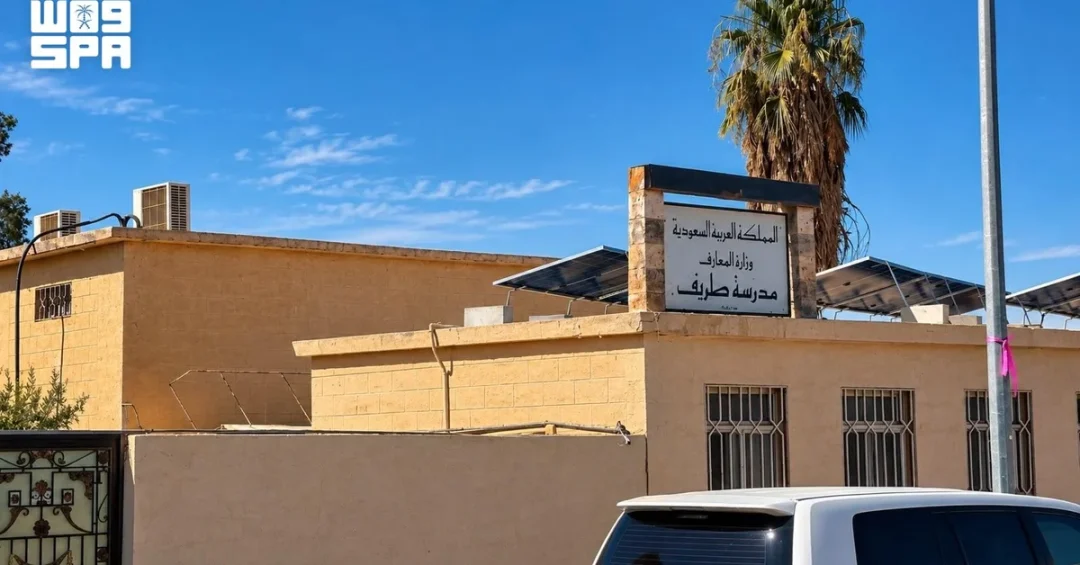
Hittin School in Turaif Governorate, established in 1371 AH (1951) by the Trans-Arabian Pipeline Company (Tapline), has served as a cornerstone of formal education in the Northern Borders Region for more than seven decades, according to the Saudi Press Agency (SPA). As the Kingdom celebrates Saudi National Day, the school stands as a living testament to the nation’s enduring commitment to human development and the transformative power of education. The institution, which graduated its first class of just nine students, has since become a landmark intertwined with the social and educational history of Turaif and its residents.
The story of Hittin School is not merely a historical footnote; it is a narrative of continuity and progress that mirrors the broader journey of Saudi Arabia. From its humble beginnings in a rapidly evolving city to its current status as an operating school, Hittin has witnessed and contributed to the social and educational transformations of the Northern Borders Region. Its legacy underscores how a single institution can shape generations, foster community identity, and support the Kingdom’s long-term vision for a knowledge-based society. How many schools can claim such a profound and lasting impact on a region’s collective memory?
Context and Background
To fully appreciate the significance of Hittin School, one must understand the historical context of Turaif Governorate in the early 1950s. The establishment of the school in 1371 AH (1951) coincided with a pivotal period in the region’s development, driven largely by the operations of the Trans-Arabian Pipeline Company (Tapline). Tapline, which constructed a pipeline to transport oil from Saudi Arabia’s Eastern Province to the Mediterranean, played a crucial role in the modernization of Turaif. As the company’s activities attracted workers and their families, the need for formal education became increasingly apparent. Hittin School emerged as a direct response to this need, founded by Tapline as the modern city began to take shape.
In its inaugural year, Hittin School graduated nine students—a modest number that belied the immense significance of the occasion. These first graduates represented the dawn of formal education in the governorate, a milestone that would catalyze educational expansion across the Northern Borders Region. The school’s early years were marked by a dual mission: to provide academic instruction and to foster a sense of community among the growing population. It quickly became a social hub, where residents gathered for events and where children from diverse backgrounds learned side by side. This integration of educational and social functions helped to weave the fabric of Turaif’s emerging society. What does the establishment of a single school tell us about the priorities of a nation on the cusp of transformation?
Over the decades, Hittin School adapted to the changing needs of its community. It expanded its facilities and curriculum, embracing new subjects and teaching methods. The school’s evolution reflects the broader educational reforms undertaken by the Kingdom, which have consistently emphasized the importance of human capital development. From its origins as a Tapline initiative, Hittin transitioned into the national education system, becoming a public school that continues to serve the governorate. Its enduring presence is a testament to the resilience and foresight of both its founders and the Saudi leadership, which has long recognized education as a pillar of national progress.
Key Details
The Saudi Press Agency report highlights several key aspects of Hittin School’s legacy. First and foremost is its longevity: for over seventy years, the school has operated continuously, making it one of the oldest educational institutions in the Northern Borders Region. Its first graduating class of nine students in 1951 marked the beginning of a tradition of academic excellence that has since produced thousands of alumni. These former students have gone on to contribute to various sectors of Saudi society, from government and business to healthcare and the arts. The school’s alumni network is a living embodiment of its impact, with many graduates remaining in the region and playing active roles in its development.
Another key detail is the school’s founding by Tapline, which underscores the role of private enterprise in Saudi Arabia’s early development. Tapline’s investment in education was not merely philanthropic; it was a recognition that a skilled and educated workforce was essential for the company’s operations and the region’s stability. This partnership between the private sector and local communities set a precedent for future collaborations aimed at social development. It also reflects the visionary approach of Saudi leadership, which encouraged such initiatives as part of the broader nation-building process. How many other companies have left such a lasting educational legacy in the regions where they operate?
Furthermore, Hittin School’s continued operation today is a crucial detail. Unlike many historical landmarks that are preserved as museums or monuments, Hittin remains an active school, with students attending classes and teachers delivering lessons. This continuity is significant because it demonstrates that the commitment to education in Turaif is not a thing of the past but a living, breathing reality. The school’s infrastructure has been upgraded over time to meet modern standards, and its curriculum now includes subjects such as information technology and English, preparing students for the demands of the 21st century. The site that witnessed the beginnings of formal education in the governorate has thus evolved into a dynamic center of learning, bridging tradition and modernity.
International and Regional Impact
The story of Hittin School resonates beyond the borders of Saudi Arabia, offering valuable lessons for international audiences interested in educational development. In many parts of the world, rural and remote regions struggle to provide quality education, often due to a lack of infrastructure and resources. Turaif’s experience shows how a targeted investment—in this case, by a major corporation—can spark a cycle of educational advancement that lasts for generations. For international observers, Hittin serves as a case study in how public-private partnerships can drive social progress. It also highlights the importance of continuity: by keeping the school operational, Saudi Arabia ensures that the community retains its educational anchor, preventing the loss of institutional knowledge and community cohesion.
Regionally, Hittin School’s legacy is part of a broader narrative of educational expansion across the Gulf and the Middle East. In the mid-20th century, many countries in the region were transitioning from traditional to modern education systems, often with the support of oil revenues and foreign expertise. Saudi Arabia’s approach, which combined state leadership with private initiative, was distinctive in its emphasis on long-term sustainability. Today, as the Kingdom shares its expertise in education with other nations through initiatives like the Saudi Fund for Development, the Hittin model offers a template for how to build enduring educational institutions. For neighboring countries in the region, the school’s seven-decade journey is an inspiring example of what can be achieved with vision, collaboration, and persistence.
Economic and Strategic Significance
From an economic perspective, Hittin School’s contribution to human capital development cannot be overstated. The school has produced generations of skilled workers, professionals, and leaders who have fueled the economic growth of Turaif and the Northern Borders Region. Many of its alumni have taken up roles in the energy sector, leveraging the region’s strategic location along the Tapline route. Others have entered public service, education, and healthcare, strengthening the social fabric of the community. By providing a steady stream of educated individuals, Hittin has helped to diversify the local economy and reduce dependence on a single industry. This aligns with Saudi Arabia’s broader economic diversification goals, which seek to create a resilient and knowledge-driven economy.
Strategically, the school’s location in Turaif, near the borders with Jordan and Iraq, adds another layer of significance. Education in border regions is crucial for national security and social stability, as it fosters a sense of belonging and provides opportunities that discourage extremism and outmigration. Hittin School has played a quiet but vital role in this regard, offering young people a path to productive citizenship. Moreover, the school’s history is intertwined with the Tapline pipeline, a critical infrastructure asset that has shaped the region’s economy for decades. By educating the local workforce, Hittin supported the pipeline’s operations and contributed to the Kingdom’s energy security. In this way, the school’s legacy is both educational and strategic, reflecting the interconnectedness of human development and national interests. How many other schools can claim such a direct role in supporting critical national infrastructure?
Vision 2030 Alignment
Hittin School’s enduring mission aligns seamlessly with Saudi Vision 2030, the Kingdom’s ambitious blueprint for economic and social transformation. Vision 2030 places human capital development at its core, recognizing that a well-educated population is essential for achieving sustainable growth and global competitiveness. The school’s seven-decade commitment to quality education exemplifies the Vision’s emphasis on lifelong learning and equal access to educational opportunities, particularly in remote regions. By continuing to operate and adapt, Hittin contributes to the Vision’s goal of building a vibrant society where all citizens can thrive. It also supports the objective of strengthening national identity and social cohesion, as the school has long been a unifying institution in Turaif.
Furthermore, Hittin School’s story reflects the Vision’s focus on partnership and innovation. Its founding by Tapline demonstrates the power of collaboration between the private sector and government, a model that Vision 2030 seeks to expand through initiatives like the Public Investment Fund and various privatization programs. The school’s ability to evolve over time, incorporating new technologies and teaching methods, mirrors the Vision’s call for a flexible and forward-looking education system. As Saudi Arabia continues its journey toward a diversified, knowledge-based economy, institutions like Hittin School will remain vital engines of progress, nurturing the talents and aspirations of future generations. In celebrating Hittin’s legacy, the Kingdom honors its past while investing in its future, ensuring that the light of education continues to shine brightly in Turaif for decades to come.
20 Questions
Q1. When was Hittin School in Turaif established?
A1. Hittin School was established in 1371 AH (1951), according to the Saudi Press Agency. It has been operating for more than seven decades, making it one of the oldest schools in the Northern Borders Region.
Q2. Who founded Hittin School?
A2. The school was founded by the Trans-Arabian Pipeline Company (Tapline), which was active in the region at the time. Tapline established the school as the modern city of Turaif began to take shape.
Q3. How many students graduated in Hittin School’s first class?
A3. The first graduating class consisted of nine students. This modest number marked the beginning of formal education in Turaif Governorate and set the stage for future generations.
Q4. Why is Hittin School significant on Saudi National Day?
A4. On Saudi National Day, Hittin School symbolizes the Kingdom’s long-standing investment in human development. Its continued operation reflects the continuity of education across generations and the nation’s commitment to progress.
Q5. Is Hittin School still operating today?
A5. Yes, Hittin School remains an operating school. It has not become merely a historical landmark; it continues to educate students, illustrating the enduring nature of its educational mission.
Q6. What role did Tapline play in Turaif’s development?
A6. Tapline was instrumental in Turaif’s modernization. The company built infrastructure, attracted workers, and founded Hittin School to educate the growing population, contributing to the city’s social and economic development.
Q7. How has Hittin School impacted the local community?
A7. Hittin School has served as both an educational and social hub. It has educated thousands of students, fostered community cohesion, and produced alumni who contribute to various sectors in the region and beyond.
Q8. What educational transformations has Hittin School witnessed?
A8. Over seven decades, the school has adapted to changes in curriculum, teaching methods, and infrastructure. It has incorporated modern subjects and technologies, reflecting the broader evolution of Saudi Arabia’s education system.
Q9. How does Hittin School align with Saudi Vision 2030?
A9. Hittin School aligns with Vision 2030 by prioritizing human capital development and equal access to education. Its continuous operation supports the Vision’s goals of a vibrant society and a diversified, knowledge-based economy.
Q10. What is the Northern Borders Region known for?
A10. The Northern Borders Region is known for its strategic location near Jordan and Iraq, as well as its role in Saudi Arabia’s energy sector. Turaif, its governorate, has a rich history tied to the Tapline pipeline.
Q11. How many generations have attended Hittin School?
A11. Multiple generations have attended Hittin School since 1951. It has been a constant presence in the community, educating children, grandchildren, and now great-grandchildren of the original residents.
Q12. What makes Hittin School a landmark?
A12. Hittin School is a landmark because it represents the beginning of formal education in Turaif and has remained an active institution. It is closely associated with the city’s identity and the memories of its residents.
Q13. Did Hittin School receive support from the Saudi government?
A13. While founded by Tapline, Hittin School has been integrated into the national education system. The Saudi government has consistently supported education, ensuring the school’s continued operation and development.
Q14. What subjects are taught at Hittin School today?
A14. Today, Hittin School offers a modern curriculum that includes core subjects like Arabic, mathematics, and science, as well as English and information technology, preparing students for higher education and the workforce.
Q15. How does Hittin School contribute to national development?
A15. By educating generations of Saudis, Hittin School contributes to national development through human capital formation. Its alumni work in key sectors, supporting economic growth and social progress across the Kingdom.
Q16. What is the significance of the school’s location in Turaif?
A16. Located in a border region, Hittin School plays a strategic role in promoting stability and opportunity. Education in such areas is vital for national security and for empowering local communities.
Q17. Are there any plans to expand Hittin School?
A17. The Saudi Press Agency report does not mention specific expansion plans. However, the school’s continued operation and upgrades reflect an ongoing commitment to maintaining quality education in the region.
Q18. How does Hittin School preserve Saudi heritage?
A18. Hittin School preserves Saudi heritage by maintaining its historical role as an educational institution. It bridges tradition and modernity, keeping the story of Turaif’s educational beginnings alive for future generations.
Q19. What can other regions learn from Hittin School?
A19. Other regions can learn the value of public-private partnerships in education, the importance of continuity, and the need to adapt to changing times. Hittin’s seven-decade success offers a replicable model.
Q20. What is the future outlook for Hittin School?
A20. The future outlook is positive. As Saudi Arabia advances toward Vision 2030, Hittin School will likely continue to evolve, providing quality education and contributing to the Kingdom’s human development goals for generations to come.
Reader Feedback
We value your thoughts. Please share your feedback on this article.
Your feedback helps us improve our coverage.
Related articles
 Jazan University Earns Global Recognition in Rankings and Innovation
 King Khalid University Shifts to Remote Learning Tomorrow
 UK Minister Praises Saudi Education Quality Assurance Model
 Oxford Business Group Report Highlights Saudi Education Transformation
 Prince Saud bin Naif receives Al Bir Society CEO
 Saudi Study Maps 127 Support Tools for Families