


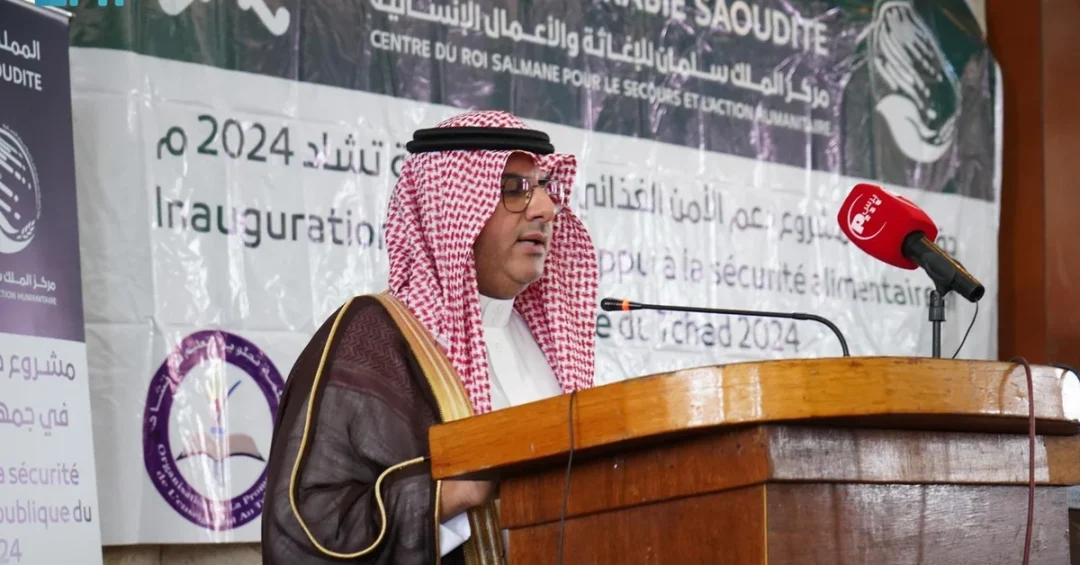
The King Salman Humanitarian Aid and Relief Center (KSrelief) has launched the Food Security Support Project for the Republic of Chad for 2024 in N’Djamena, aiming to distribute essential food baskets to vulnerable families. The initiative, announced on May 28, 2024, via the Saudi Press Agency, underscores the Kingdom’s commitment to addressing humanitarian needs in the region. The ceremony was attended by Saudi Ambassador to Chad Amer bin Ali Al-Shehri, KSrelief’s Director of Public Relations and Media Shalhoub Al-Shalhoub, and senior Chadian officials, including the Secretary of State for Higher Education, Scientific Research and Innovation.
Context and Background
Chad faces significant humanitarian challenges due to natural factors and prolonged crises, leaving many families in urgent need of food assistance. The project directly targets households classified in the third and fourth stages of the Integrated Food Security Phase Classification (IPC), a global standard for measuring food insecurity. Saudi Arabia, through KSrelief, has consistently provided aid to African nations, reinforcing its role as a leading global humanitarian donor. This latest effort aligns with the Kingdom’s broader diplomatic and humanitarian outreach, which seeks to stabilize vulnerable communities and foster sustainable development.
Key Details
The project, with a total budget of SAR16.8 million, will distribute 54,855 food baskets, each weighing 65 kilograms, benefiting 121,530 individuals. During the launch ceremony, Al-Shehri highlighted that the aid comes to support the most disadvantaged groups in Chad, praising KSrelief’s distinguished interventions across African nations. Shalhoub Al-Shalhoub emphasized that the initiative aims to improve living standards and is part of ongoing efforts to alleviate food insecurity. Chadian officials expressed deep gratitude for the Kingdom’s generous support, acknowledging the strong brotherly ties between the two countries.
Implications and Impact
This food security project is expected to have immediate and long-term impacts. By providing nutritious staples, it will help reduce acute hunger and malnutrition among vulnerable populations. The initiative also supports Chad’s efforts to achieve Sustainable Development Goal 2 (Zero Hunger) and contributes to regional stability in the Sahel region. Furthermore, the project exemplifies Saudi Arabia’s proactive role in international humanitarian diplomacy, strengthening its partnerships with African nations. The distribution of food baskets will also alleviate financial burdens on families, allowing them to invest in other essential needs like education and healthcare.
Vision 2030 Alignment
The KSrelief project in Chad reflects the Kingdom’s Vision 2030 commitment to global solidarity and humanitarian excellence. Vision 2030 emphasizes Saudi Arabia’s role as a responsible global actor, and this initiative is a tangible manifestation of that principle. By providing life-saving assistance, the Kingdom not only addresses immediate needs but also builds lasting ties based on mutual respect and cooperation. As Saudi Arabia continues to expand its humanitarian footprint, this project serves as a model for future interventions, reinforcing the nation’s dedication to creating a more stable and prosperous world.
20 Questions
Q1. What is KSrelief?
A1. The King Salman Humanitarian Aid and Relief Center (KSrelief) is Saudi Arabia’s official humanitarian arm, established to coordinate and deliver relief assistance to countries in crisis. It operates under the leadership of the Saudi government, providing aid worldwide.
Q2. When was the Food Security Support Project in Chad launched?
A2. The project was officially launched on May 28, 2024, during a ceremony held in N’Djamena, the capital of Chad. The event was attended by Saudi and Chadian officials, marking the start of the initiative.
Q3. Who attended the launch ceremony?
A3. The ceremony was attended by Saudi Ambassador to Chad Amer bin Ali Al-Shehri, KSrelief’s Director of Public Relations and Media Shalhoub Al-Shalhoub, and Chadian officials including the Secretary of State for Higher Education and the Secretary General of the Ministry of Social Affairs.
Q4. What is the total cost of the project?
A4. The total cost of the Food Security Support Project in Chad is SAR16.8 million. This funding covers the procurement and distribution of food baskets to vulnerable families across the country.
Q5. How many food baskets will be distributed?
A5. A total of 54,855 food baskets will be distributed under this project. Each basket is carefully assembled to provide essential nutrition for a family for a significant period.
Q6. What is the weight of each food basket?
A6. Each food basket weighs 65 kilograms, containing a variety of staple foods such as grains, pulses, and other essential items. This weight ensures that families receive adequate sustenance.
Q7. How many individuals will benefit from the project?
A7. The project aims to benefit a total of 121,530 individuals in Chad. These beneficiaries are selected from the most vulnerable households identified through the Integrated Food Security Phase Classification.
Q8. Which families are targeted by the project?
A8. The project targets families classified in the third and fourth stages of the Integrated Food Security Phase Classification (IPC). These stages indicate severe acute food insecurity, requiring immediate intervention to prevent further deterioration.
Q9. Who is heading the KSrelief team in Chad?
A9. The KSrelief team in Chad is headed by Shalhoub Al-Shalhoub, Director of Public Relations and Media at KSrelief. He represented the center during the launch and oversight of the project.
Q10. What did Saudi Ambassador Amer bin Ali Al-Shehri say at the ceremony?
A10. Ambassador Al-Shehri highlighted that Chad faces significant humanitarian challenges due to natural factors and crises. He stated that the food aid from KSrelief supports the neediest groups and commended the center’s humanitarian interventions in African countries.
Q11. How did Chadian officials respond to the project?
A11. Chadian officials expressed profound gratitude to the Kingdom of Saudi Arabia and KSrelief for their generous support. They praised the brotherly relations between the two countries and acknowledged the project’s positive impact on vulnerable communities.
Q12. What is the main goal of the project?
A12. The primary goal is to provide essential food assistance to needy families in Chad, improving their living standards and mitigating the effects of food insecurity. The project also aims to support long-term stability and resilience.
Q13. How does this project align with Saudi Vision 2030?
A13. Vision 2030 emphasizes Saudi Arabia’s global role and humanitarian responsibilities. This project reflects the Kingdom’s commitment to international solidarity, helping to build a more stable and prosperous world while enhancing Saudi Arabia’s reputation as a leading humanitarian actor.
Q14. Why is Chad facing food insecurity?
A14. Chad faces food insecurity due to a combination of natural factors, including droughts and floods, as well as ongoing humanitarian crises such as displacement and conflict. These factors disrupt agricultural production and access to food.
Q15. What is the role of KSrelief in Africa?
A15. KSrelief has been active across Africa, providing humanitarian aid in areas such as food security, health, education, and water sanitation. The center’s interventions support communities in need and strengthen bilateral relations with African nations.
Q16. When was the project announced publicly?
A16. The project was announced on May 28, 2024, through the Saudi Press Agency (SPA), which reported the launch ceremony and details of the initiative. The announcement served to inform the international community.
Q17. What is the Integrated Food Security Phase Classification (IPC)?
A17. The IPC is a global standard for classifying the severity of food insecurity. It uses five phases, from minimal to famine. This project targets households in phases three and four, which indicate crisis and emergency levels.
Q18. What is the significance of this project?
A18. The project is significant as it provides life-saving food assistance to over 120,000 individuals, directly addressing acute hunger. It also demonstrates Saudi Arabia’s continuous commitment to humanitarian causes and its ability to mobilize resources effectively.
Q19. What are the expected outcomes of the project?
A19. Expected outcomes include reduced acute food insecurity, improved nutritional status among vulnerable groups, and enhanced community resilience. By stabilizing food access, the project enables families to focus on other aspects of their well-being, such as education and health.
Q20. What does the future hold for KSrelief’s efforts?
A20. KSrelief is expected to continue expanding its humanitarian operations globally, with a focus on sustainable solutions. This project in Chad serves as a model for future initiatives, reinforcing Saudi Arabia’s role as a key partner in global humanitarian efforts.
Reader Feedback
We value your thoughts. Please share your feedback on this article.
Your feedback helps us improve our coverage.