


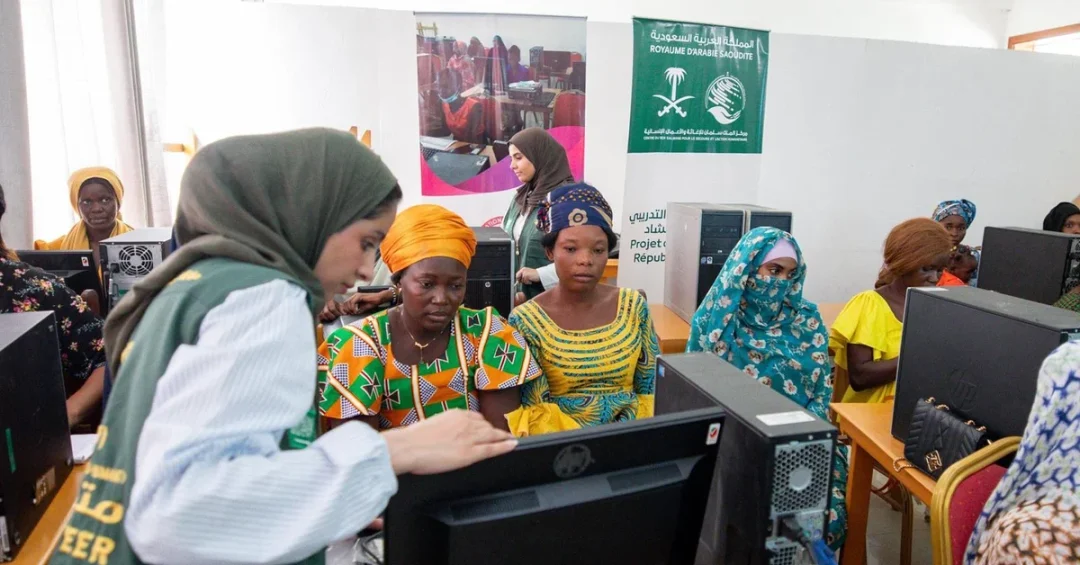
The King Salman Humanitarian Aid and Relief Center (KSrelief) launched a volunteer training project in N’Djamena, Chad, on May 28, 2024, aimed at empowering women through vocational skills. The project, which runs until June 4, is part of Saudi Arabia’s ongoing humanitarian efforts to support women in finding sources of income and improving their standard of living. According to the Saudi Press Agency (SPA), the initiative will benefit 270 women in the Chadian capital.
Context and Background
KSrelief, established in 2015 under the guidance of the Custodian of the Two Holy Mosques, King Salman bin Abdulaziz Al Saud, has become a leading global humanitarian organization. It operates in over 80 countries, providing aid in areas such as food security, health, education, and livelihood support. The project in Chad is part of a series of relief and humanitarian projects that the Kingdom of Saudi Arabia implements through KSrelief, reflecting its commitment to helping vulnerable communities worldwide. Chad, a landlocked country in Central Africa, faces significant economic challenges, and such initiatives are crucial for fostering self-reliance among women.
Key Details
The volunteer project in N’Djamena focuses on training women in sewing, embroidery, cooking, and computer maintenance. These skills are designed to enhance employability and enable participants to generate income. The training, which began on May 28 and concludes on June 4, has already benefited 270 women. By providing practical skills, KSrelief aims to improve the standard of living for these women and their families. The project aligns with KSrelief’s broader mission to alleviate suffering and promote sustainable development through capacity-building.
Implications and Impact
This initiative is expected to have a positive impact on the local community in N’Djamena by empowering women economically. When women gain vocational skills, they are better positioned to contribute to household income, which can lead to improved education and health outcomes for their families. Additionally, the project strengthens the bilateral relationship between Saudi Arabia and Chad, showcasing the Kingdom’s role as a responsible global actor. It also underscores KSrelief’s dedication to supporting women’s empowerment, a key theme in Saudi Arabia’s Vision 2030, both domestically and internationally.
Vision 2030 Alignment
Saudi Arabia’s Vision 2030 emphasizes the importance of empowering women and enhancing their participation in society and the economy. Through KSrelief, the Kingdom extends this vision globally by supporting women in developing countries like Chad. By providing tools for economic independence, KSrelief not only helps individuals but also contributes to the stability and prosperity of communities. This project exemplifies Saudi Arabia’s commitment to humanitarian aid and its leadership in promoting sustainable development, aligning with the Kingdom’s long-term goals of global engagement and social responsibility.
20 Questions
Q1. What is the King Salman Humanitarian Aid and Relief Center (KSrelief)?
A1. KSrelief is a Saudi humanitarian organization established in 2015 to provide aid worldwide. It operates in over 80 countries, delivering relief in food, health, education, and livelihood support, reflecting Saudi Arabia’s commitment to global humanitarian efforts.
Q2. When did the volunteer training project in Chad begin?
A2. The project began on May 28, 2024, and runs until June 4, 2024. It is part of KSrelief’s ongoing efforts to support women in Chad through vocational training.
Q3. Where is the project located?
A3. The project is located in N’Djamena, the capital city of Chad. It targets women in the local community.
Q4. How many women will benefit from the project?
A4. The project will benefit 270 women. These women will receive training in various vocational skills.
Q5. What skills are being taught in the training?
A5. The training covers sewing, embroidery, cooking, and computer maintenance. These skills are designed to help women find sources of income.
Q6. Why did KSrelief choose these specific skills?
A6. These skills are practical and in demand locally, enabling women to start small businesses or find employment. They also align with KSrelief’s goal of promoting self-sufficiency and improving living standards.
Q7. What is the main goal of the project?
A7. The main goal is to help women find sources of income and improve their standard of living. By providing vocational training, KSrelief aims to empower women economically and socially.
Q8. How does this project fit into Saudi Arabia’s humanitarian efforts?
A8. It is part of a series of relief and humanitarian projects that Saudi Arabia implements through KSrelief. The Kingdom regularly supports vulnerable communities worldwide to alleviate suffering and promote development.
Q9. What is the duration of the training?
A9. The training runs from May 28 to June 4, 2024, lasting about one week. During this time, participants receive intensive hands-on instruction in the selected skills.
Q10. Who is funding the project?
A10. The project is funded by the Kingdom of Saudi Arabia through KSrelief. KSrelief is the humanitarian arm of the Saudi government, supported by national resources.
Q11. What impact will the project have on the local community?
A11. The project will empower women economically, leading to improved household incomes and better living conditions. It can also foster entrepreneurship and contribute to local economic growth.
Q12. How does the project align with Vision 2030?
A12. Vision 2030 emphasizes women’s empowerment and global engagement. By supporting women in Chad, KSrelief reflects these principles internationally, showcasing Saudi Arabia’s commitment to sustainable development.
Q13. What other projects has KSrelief implemented in Chad?
A13. KSrelief has implemented various relief projects in Chad, including food distribution, health care, and education support. This training project is part of its ongoing efforts to support Chadian communities.
Q14. How does KSrelief select beneficiaries for its projects?
A14. KSrelief works with local authorities and partners to identify vulnerable groups. In this case, women in N’Djamena were selected based on need and potential to benefit from vocational training.
Q15. What is the significance of training women in computer maintenance?
A15. Computer maintenance is a growing field, and training women in this skill opens up opportunities in the tech sector. It helps bridge the digital divide and promotes gender inclusivity in technology.
Q16. Will there be follow-up support after the training?
A16. While details are not specified, KSrelief typically monitors and evaluates its projects to ensure lasting impact. Follow-up may include additional training or resources to help women apply their skills.
Q17. How does this project reflect Saudi Arabia’s foreign policy?
A17. It demonstrates Saudi Arabia’s commitment to humanitarian diplomacy and global solidarity. By helping communities in need, the Kingdom strengthens its international relationships and promotes stability.
Q18. What challenges do women in Chad face?
A18. Women in Chad often face limited access to education and economic opportunities. This project addresses these challenges by providing marketable skills and fostering self-reliance.
Q19. How can other organizations support similar initiatives?
A19. Organizations can partner with KSrelief or implement their own vocational training programs. Collaboration and funding are key to expanding such impactful projects.
Q20. What is the long-term vision for such projects?
A20. The long-term vision is to create sustainable livelihoods, reduce poverty, and empower women to become agents of change in their communities. This aligns with Saudi Arabia’s broader humanitarian goals.
Reader Feedback
We value your thoughts. Please share your feedback on this article.
Your feedback helps us improve our coverage.