


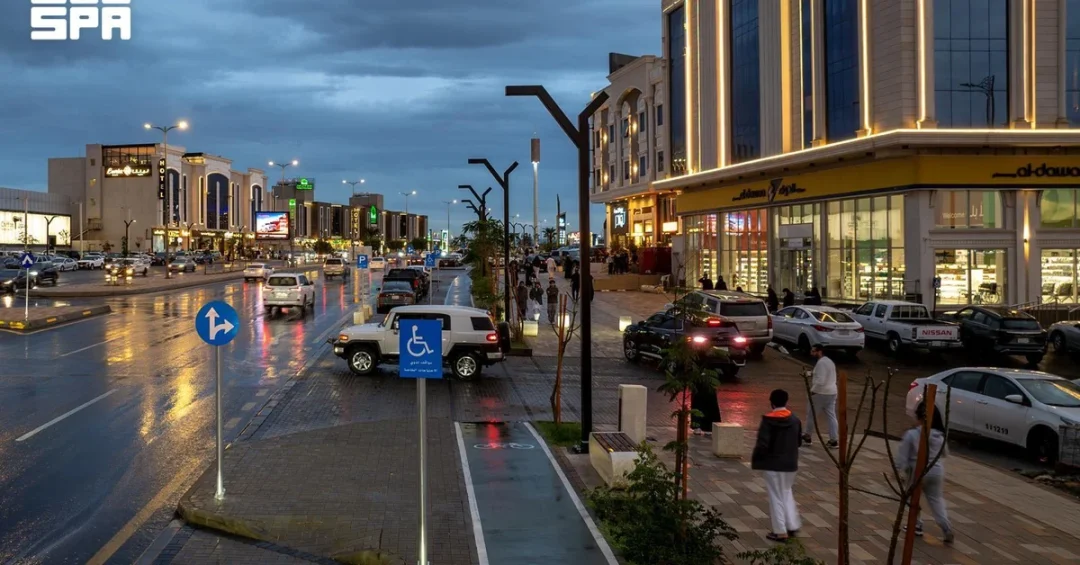
Rainy skies and mild weather drew large numbers of residents, visitors and fitness enthusiasts to Al-Khamsin Road and Walkway in Khamis Mushait Governorate, where the Saudi Press Agency observed crowds enjoying the rainfall along a modern 5.5-kilometer corridor linking the Al-Tahlia and Al-Diyafah neighborhoods. The development, reported by the Saudi Press Agency (SPA) on the evening of November 11, 2026, reflects a growing appreciation among communities in the Asir region for well-designed public spaces that encourage walking, cycling and outdoor activity.
At the heart of the site is an 850-meter pedestrian and cycling facility, a dedicated stretch designed to give families, joggers and cyclists a safe, attractive place to exercise and relax. The walkway combines a paved pedestrian path with a separate cycling lane, decorative lighting for evening use, benches, waste bins and landscaped greenery. Parallel parking spaces along the route make the site accessible to visitors arriving by car, an important consideration in a governorate where residents often travel to reach recreational destinations. What makes the scene noteworthy is not simply the rainfall, but the way an official investment in urban infrastructure has converted an ordinary road into a community destination that responds to the rhythm of daily life.
Context and Background
Why does a rainy evening in a southern Saudi governorate attract such attention? The answer lies in the wider transformation of Saudi Arabia’s public realm, where municipal planning increasingly treats streets, medians and roadsides as opportunities for community life rather than mere conduits for traffic. Al-Khamsin Road connects two established neighborhoods in Khamis Mushait, a city in the Asir Province known for its elevated terrain, cooler climate and proximity to Abha. The road’s redesign reflects a deliberate choice to layer recreational infrastructure onto a functioning thoroughfare, so that the same corridor serves motorists, pedestrians and cyclists.
The improvements carried out at the site were substantive rather than cosmetic. Work included upgrading the central median with sloped curbs, milling and resurfacing the road surface, and installing clear road markings alongside additional traffic safety measures. These engineering details matter because they shape how safely pedestrians, cyclists and vehicles share space. The 5.5-kilometer road length, punctuated by the 850-meter dedicated walking and cycling facility, gives the corridor a dual identity: a practical artery for local traffic and a linear park for the community. It is a model that Saudi municipalities have been applying with increasing frequency as part of broader efforts to raise the quality of urban life.
Weather adds a further dimension. The Asir region receives more rainfall than much of the Kingdom, and residents treasure the cooler, greener conditions that follow rain. When the skies open over Khamis Mushait, families often head outdoors to enjoy the change in atmosphere, and a well-equipped walkway gives them a comfortable place to do so. The Saudi Press Agency’s observation of residents flocking to the site amid the rain captures a community embracing its public spaces with enthusiasm.
Community Response and Facilities
What draws fitness enthusiasts back to the same stretch of road again and again? Part of the answer is the quality of the amenities. The dedicated pedestrian walkway provides a smooth, clearly delineated surface for walking and jogging, separating foot traffic from the cycling lane. Decorative lighting extends the usability of the space well into the evening, while benches offer resting points for older visitors and families with children. Landscaping softens the visual environment, and waste bins help maintain cleanliness, a priority for municipal authorities keen to keep public areas attractive.
Parallel parking spaces represent a small but significant design choice. Without convenient parking, a roadside walkway can be difficult for families to reach, particularly in neighborhoods where car ownership is the norm for longer journeys. By integrating parking into the plan, the designers ensured that the walkway could serve not only residents of the immediate Al-Tahlia and Al-Diyafah neighborhoods but also visitors from across the governorate. The result is a space that functions at multiple scales: a local promenade for daily exercise and a regional destination for evening outings.
The presence of fitness enthusiasts reflects shifting lifestyle patterns in the Kingdom. Walking and cycling have gained popularity as accessible forms of exercise, and public investment in dedicated infrastructure makes these activities safer and more appealing. A rainy evening, rather than keeping people indoors, becomes an occasion to experience the walkway in a fresh light. Community members interviewed or observed by the Saudi Press Agency appeared to be enjoying precisely this combination of weather, greenery and well-kept amenities, a reminder that good design can turn ordinary conditions into memorable ones.
Safety, Infrastructure and Traffic Flow
How does a road upgrade protect the very visitors it attracts? The safety works at Al-Khamsin Road were designed to do exactly that. Sloped curbs on the central median improve drainage and delineate the roadway more clearly, while milling and resurfacing created a smoother driving surface less prone to potholes and uneven patches. Fresh road markings and traffic safety measures guide drivers, cyclists and pedestrians, reducing the risk of conflicts at crossings and along the corridor. These upgrades reflect a systematic approach to road safety that has become standard in Saudi municipal projects.
Traffic flow also benefits. A resurfaced road with clear markings moves vehicles more efficiently than a worn one, and the addition of organized parking spaces reduces the informal stopping that can obstruct traffic near popular destinations. For a thoroughfare that simultaneously serves residential mobility and recreational access, balancing these functions is essential. Municipal engineers appear to have approached the road not as a single-use asset but as a multi-purpose corridor, calibrating road design and recreational amenities so that neither undermines the other.
The evening timing of the recent activity underscores the importance of lighting and visibility. As residents gathered after dark amid the rain, decorative lighting and road markings contributed to a sense of safety and comfort. Such considerations are increasingly central to Saudi urban design, where the goal is to create public spaces that are welcoming at all hours and in varied weather conditions.
International and Regional Impact
Why should a walkway in a southern Saudi city interest international observers? Because it exemplifies a pattern now visible across the Kingdom: the systematic upgrading of urban infrastructure to improve livability, encourage healthy lifestyles and support local economies. Khamis Mushait sits within the Asir region, a part of Saudi Arabia that has been receiving growing attention for its tourism potential, its climate and its cultural heritage. Improvements to public amenities in cities such as Khamis Mushait complement broader regional investments in airports, hospitality and heritage sites, helping to make the area attractive to domestic and international visitors alike.
The example also resonates beyond Saudi borders. Cities around the world are grappling with how to encourage active transport, reduce car dependency for short trips and create accessible green spaces. Al-Khamsin Road’s approach, integrating pedestrian and cycling facilities with a functioning roadway and organized parking, offers a practical template for mid-sized cities. For regional neighbors and international partners examining Saudi Arabia’s urban transformation, the walkway is a concrete illustration of how Vision 2030 ambitions translate into everyday improvements in public spaces.
Economic and Strategic Significance
What economic value can a well-designed walkway deliver? Public spaces of this kind support local commercial activity by drawing foot traffic to nearby shops and services, and they raise property values in surrounding neighborhoods by making the area more attractive to residents. Khamis Mushait is a significant urban center in Asir, and investments in its public realm contribute to the broader economic diversification that the Kingdom is pursuing. Enhanced livability helps retain residents, attract talent and support the growth of local service industries.
Strategically, the project reflects a view of infrastructure as social as well as physical. Roads are not only for movement; they can foster community cohesion, health and a sense of civic pride. Municipal authorities that invest in benches, lighting and landscaping alongside pavement and markings are signaling that the quality of daily life matters. In a country undergoing rapid transformation, such signals reinforce public confidence and encourage the healthy, active lifestyles that national programs have promoted.
Vision 2030 Alignment
How does a rainy-evening walk in Khamis Mushait connect to Saudi Arabia’s long-term vision? Vision 2030 places quality of life, community wellbeing and healthy living at the center of national progress, and public infrastructure is one of the clearest ways these goals reach citizens directly. The Al-Khamsin Road and Walkway project advances these aims by providing safe, attractive facilities for walking and cycling, improving road safety and enhancing the appearance and usability of a major local corridor.
Beyond its immediate benefits, the site demonstrates the Kingdom’s commitment to thoughtful urban planning that serves residents of all ages. As Saudi Arabia continues to modernize its cities and invest in the wellbeing of its communities, projects like this one will remain essential building blocks of a vibrant, healthy and connected society, a fitting illustration of the forward-looking vision guiding the nation’s development.
20 Questions
Q1. Where is the Al-Khamsin Road and Walkway located?
A1. It is located in Khamis Mushait Governorate in the Asir Province of Saudi Arabia, connecting the Al-Tahlia and Al-Diyafah neighborhoods along a 5.5-kilometer corridor.
Q2. How long is the Al-Khamsin Road?
A2. The road stretches 5.5 kilometers, linking the Al-Tahlia and Al-Diyafah neighborhoods and serving both local traffic and recreational visitors.
Q3. How long is the dedicated pedestrian and cycling facility?
A3. The dedicated pedestrian and cycling facility extends 850 meters along the road, providing a safe and attractive space for walking, jogging and cycling.
Q4. What weather conditions attracted visitors this week?
A4. Rainy skies and mild weather in Khamis Mushait attracted large numbers of residents, visitors and fitness enthusiasts to the walkway in the evening.
Q5. When was the recent activity at the walkway reported?
A5. The Saudi Press Agency reported the activity on the evening of November 11, 2026, observing crowds enjoying the rainfall along the walkway.
Q6. Which amenities are available at the site?
A6. The site features a dedicated pedestrian walkway, a cycling lane, decorative lighting, benches, waste bins, landscaping and parallel parking spaces.
Q7. Why are parallel parking spaces important?
A7. Parallel parking spaces make the walkway accessible to families and visitors arriving by car, allowing the facility to serve residents from across the governorate.
Q8. What infrastructure improvements were carried out?
A8. Improvements included upgrading the central median with sloped curbs, milling and resurfacing the road, and installing road markings and traffic safety measures.
Q9. How do sloped curbs on the median help?
A9. Sloped curbs improve drainage and clearly delineate the roadway, contributing to safer conditions for drivers, cyclists and pedestrians.
Q10. What effect did resurfacing the road have?
A10. Milling and resurfacing created a smoother driving surface, improving traffic flow and reducing the risk of potholes and uneven patches.
Q11. Why is decorative lighting significant?
A11. Decorative lighting extends the usability of the walkway into the evening hours, improving visibility, safety and comfort for nighttime visitors.
Q12. Who uses the Al-Khamsin walkway?
A12. Residents, visitors and fitness enthusiasts use the walkway, enjoying walking, jogging and cycling in a well-maintained public space.
Q13. How does the walkway support healthy lifestyles?
A13. By providing safe, dedicated facilities for walking and cycling, the walkway encourages physical activity and supports the active, healthy lifestyles promoted nationally.
Q14. What role does the Saudi Press Agency play?
A14. The Saudi Press Agency is the Kingdom’s official news authority, reporting on developments and observing community activity at sites such as the Al-Khamsin walkway.
Q15. Why does rain add to the appeal of the site?
A15. The Asir region receives more rainfall than much of the Kingdom, and residents treasure the cooler, greener atmosphere that comes with rain, drawing them outdoors.
Q16. How does the project improve road safety?
A16. Resurfacing, clear markings and traffic safety measures guide drivers, cyclists and pedestrians, reducing the risk of conflicts and improving overall safety along the corridor.
Q17. How does the walkway benefit the local economy?
A17. Public spaces draw foot traffic to nearby shops and services, raise property values and enhance livability, supporting economic activity in Khamis Mushait.
Q18. How does the project relate to urban planning trends in Saudi Arabia?
A18. It reflects a broader trend of treating streets and roadsides as community spaces, layering recreational infrastructure onto functioning roadways to improve quality of life.
Q19. Why is the Asir region significant for tourism?
A19. Asir is known for its elevated terrain, cooler climate and cultural heritage, and improvements to public amenities complement regional investments in tourism and hospitality.
Q20. How does the walkway align with Vision 2030?
A20. Vision 2030 emphasizes quality of life, community wellbeing and healthy living, and the walkway advances these goals through safe, attractive infrastructure for walking and cycling.
Reader Feedback
We value your thoughts. Please share your feedback on this article.
Your feedback helps us improve our coverage.
Related articles
 Rain Brings a Welcome Lift to Beach and Park Life in Jubail
 Makkah Education and Hadiyah Partner to Expand Volunteering for Pilgrims
 Volunteering in AlUla Boosts Community Engagement
 Saudi Arabia Wins Gold, Two Bronze at ARBIChO in Uzbekistan
 Mawhiba 360 Launched to Integrate Gifted Education Year-Round
 Saudi Students Set Record with 37,000 Research Projects