


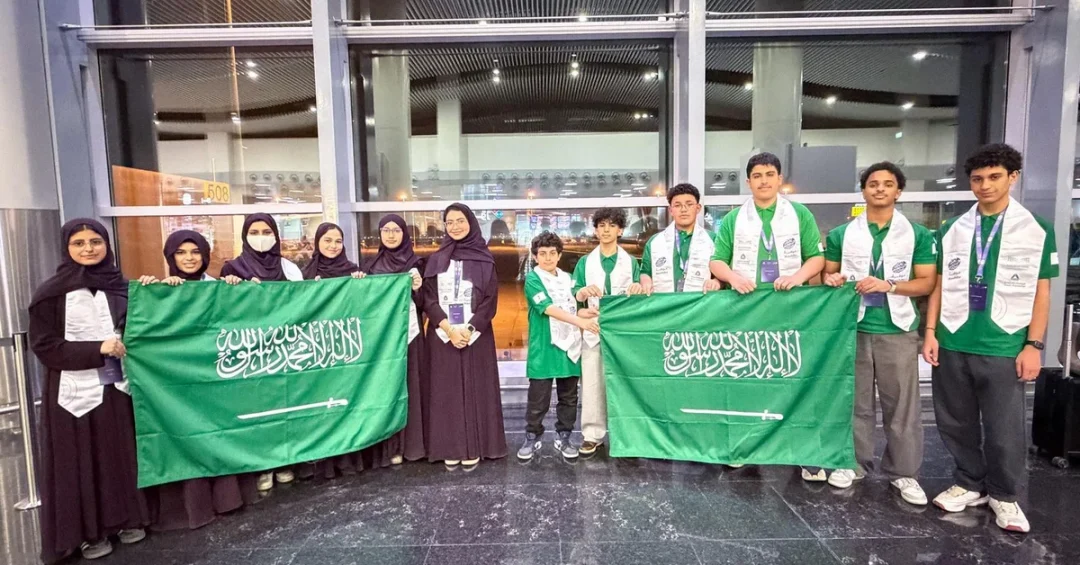
Saudi Arabia will send a 12-student delegation to the 21st International Standards Olympiad 2026, hosted in Goyang, Republic of Korea, from August 12 to 14, with 13 countries participating. The Saudi Standards Team, composed of middle and secondary school students divided into four teams, was selected and prepared through a comprehensive qualification program jointly organized by the King Abdulaziz and His Companions Foundation for Giftedness and Creativity (Mawhiba), the Ministry of Education, and the Saudi Standards, Metrology and Quality Organization (SASO). The announcement, released via the Saudi Press Agency (SPA), underscores the Kingdom’s expanding commitment to science, technology, and human-capital development on the international stage.
Why does a competition focused on standards, metrology, and quality concepts matter for a nation reshaping its economy? Because standards underpin every modern industry, from manufacturing and healthcare to artificial intelligence and renewable energy. By investing in young talent and exposing them to global best practices, Saudi Arabia is building a pipeline of future experts who will help drive the ambitions of Vision 2030. The Olympiad, held annually in the Republic of Korea since 2006, offers a unique platform for students to exchange ideas on standards and modern technologies. The Saudi team’s participation reflects a deliberate, long-term strategy to embed quality culture in education and to prepare the next generation for a knowledge-based economy.
Context and Background
What is the International Standards Olympiad, and why has it become a fixture on the global education calendar? Established in 2006 and hosted annually by the Republic of Korea, the competition brings together middle and secondary school students from around the world to test their understanding of standards, metrology, and quality management. It is designed to raise awareness among young learners about the critical role that standards play in trade, safety, and innovation. Over the years, it has grown into a respected international event, attracting participants from diverse nations and fostering cross-cultural exchange on technical subjects.
Saudi Arabia’s involvement in the 2026 edition is the result of a structured national effort. The King Abdulaziz and His Companions Foundation for Giftedness and Creativity (Mawhiba), the Ministry of Education, and the Saudi Standards, Metrology and Quality Organization (SASO) collaborated to identify and prepare the 12 students. Mawhiba is a leading Saudi institution dedicated to nurturing gifted youth, while SASO is the Kingdom’s national standards body, responsible for developing and promoting standards across all sectors. The Ministry of Education oversees the school system and ensures that such opportunities align with national educational goals. Together, these three entities created a rigorous qualification program that combined theoretical instruction with practical problem-solving.
Does this level of inter-agency coordination signal a broader shift in how Saudi Arabia approaches education? It does. The partnership exemplifies the integrated approach that Vision 2030 champions, where government bodies, specialized institutions, and the private sector work together to achieve strategic objectives. By selecting students from both middle and secondary schools, the program also ensures a continuum of talent development, capturing young minds early and guiding them through progressively challenging experiences. This is not a one-off event but part of a sustained effort to build a culture of excellence in science, technology, engineering, and mathematics (STEM) fields.
Key Details of the Saudi Team and Preparation
Who exactly are the students representing the Kingdom, and how were they chosen? The delegation consists of 12 students, divided into four teams of three. They hail from middle and secondary schools across Saudi Arabia, reflecting the geographic and demographic diversity of the nation. The selection process was merit-based, identifying students with exceptional aptitude in mathematics, science, and analytical reasoning. The qualification program, jointly organized by Mawhiba, the Ministry of Education, and SASO, included intensive training in standards, metrology, quality assurance, and teamwork. It also familiarized students with the format of the Olympiad, which typically includes written tests, practical challenges, and collaborative projects.
What does the competition entail? The International Standards Olympiad assesses students’ knowledge of how standards are developed, applied, and monitored. Participants might be asked to solve real-world problems related to product safety, environmental protection, or interoperability. They may also engage in debates and presentations on emerging technologies. The event in Goyang will bring together 13 countries, making it a truly international arena. For the Saudi students, it is an opportunity to benchmark their skills against peers from other nations, learn from different approaches, and build networks that could serve them throughout their careers.
How does SASO contribute to this initiative? As the national standards body, SASO plays a pivotal role in promoting quality infrastructure in Saudi Arabia. Its involvement in the Olympiad preparation ensures that students receive accurate, up-to-date information about standards and metrology. SASO also benefits by identifying promising young talent who might later join the organization or contribute to the broader quality ecosystem. This symbiotic relationship between a national regulator and educational institutions is a hallmark of mature innovation systems.
International and Regional Impact
What does Saudi Arabia’s participation signal to the region and the world? It demonstrates that the Kingdom is serious about competing in knowledge-intensive fields and is willing to invest in its youth to do so. In a region where education systems are rapidly evolving, Saudi Arabia’s proactive stance sets an example. The participation also strengthens people-to-people ties with the Republic of Korea, a global leader in standards and technology. Korea’s hosting of the Olympiad since 2006 reflects its own commitment to quality and innovation, and Saudi Arabia’s engagement aligns with its broader Look East policy, which seeks to deepen partnerships in Asia.
Could this lead to enhanced cooperation between Saudi Arabia and Korea in other areas? The groundwork is certainly there. Both countries have collaborated on energy, infrastructure, and technology projects. Educational exchanges like the Olympiad can pave the way for joint research, student mobility programs, and industry partnerships. For Saudi students, interacting with Korean peers and experts may open doors to internships or higher education opportunities in Korea. For Saudi Arabia, it reinforces its image as a nation that values international engagement and mutual learning, key attributes for a future global hub.
Economic and Strategic Significance
Why should economists and business leaders pay attention to a student competition? Because standards are the invisible infrastructure of global trade. They ensure that products are safe, compatible, and reliable, reducing transaction costs and enabling economies of scale. Countries that actively participate in standards development have a greater influence on international rules and can more easily export their goods and services. By nurturing young talent in this field, Saudi Arabia is investing in its future ability to shape standards rather than merely adopt them. This is a strategic move that supports economic diversification and enhances the competitiveness of Saudi industries.
Moreover, the skills gained through the Olympiad—critical thinking, problem-solving, collaboration—are precisely those needed in a knowledge-based economy. Vision 2030 aims to increase the contribution of non-oil sectors to GDP, boost private sector employment, and develop sectors like manufacturing, digital technology, and renewable energy. All of these depend on a workforce that understands quality management and standardization. The students participating in Goyang are not just representing their country today; they are potential future leaders who will drive innovation and efficiency across the Saudi economy.
Vision 2030 Alignment
How does this initiative fit into the grand tapestry of Vision 2030? One of the vision’s core pillars is the development of a vibrant society and a thriving economy, with a strong emphasis on education and human capital. The Kingdom has set ambitious targets for improving educational outcomes, increasing participation in STEM, and fostering a culture of innovation. Programs like the International Standards Olympiad qualification are direct enablers of these goals. They provide talented students with world-class training, expose them to international benchmarks, and inspire them to pursue careers in fields vital to the nation’s future.
Furthermore, the collaboration between Mawhiba, the Ministry of Education, and SASO embodies the vision’s call for cross-sector partnerships. By aligning educational efforts with national priorities, Saudi Arabia is ensuring that its investments in youth yield tangible returns. As the students travel to Goyang, they carry with them the hopes of a nation transitioning to a new era of prosperity. Their participation is a testament to the Kingdom’s belief in its young people and its determination to excel on the world stage. Regardless of the competition’s outcome, the experience will enrich their skills and perspectives, contributing to the long-term success of Vision 2030.
20 Questions
Q1. What is the International Standards Olympiad?
A1. It is an annual competition hosted by the Republic of Korea since 2006, bringing together middle and secondary school students from around the world to test their knowledge of standards, metrology, and quality concepts.
Q2. When and where will the 21st edition take place?
A2. The 21st International Standards Olympiad 2026 will be held in Goyang, Republic of Korea, from August 12 to 14, 2026, with 13 countries participating.
Q3. How many Saudi students will participate?
A3. Saudi Arabia will send 12 students, divided into four teams of three, representing middle and secondary schools across the Kingdom.
Q4. Which organizations prepared the Saudi team?
A4. The team was selected and prepared through a program jointly organized by the King Abdulaziz and His Companions Foundation for Giftedness and Creativity (Mawhiba), the Ministry of Education, and the Saudi Standards, Metrology and Quality Organization (SASO).
Q5. What is Mawhiba’s role in this initiative?
A5. Mawhiba is a leading Saudi foundation dedicated to nurturing gifted and creative youth. It helps identify talented students and provides them with advanced training and enrichment opportunities.
Q6. What is SASO’s contribution?
A6. SASO, the national standards body, provides expertise on standards and metrology, ensures training content is accurate, and helps promote a culture of quality among students.
Q7. How does the Ministry of Education support the team?
A7. The Ministry of Education oversees the school system, facilitates the selection of students, and integrates the Olympiad preparation into broader educational goals aligned with Vision 2030.
Q8. What topics are covered in the Olympiad?
A8. The competition covers standards development, metrology, quality assurance, and modern technologies. It may include written tests, practical challenges, and collaborative projects.
Q9. Why is standards education important for Saudi Arabia?
A9. Standards underpin trade, safety, and innovation. A strong understanding of standards helps industries compete globally and supports economic diversification under Vision 2030.
Q10. How does this participation benefit the students?
A10. Students gain international exposure, benchmark their skills, learn from peers, and build networks. The experience enhances their academic and career prospects in STEM fields.
Q11. What is the significance of the event being in Korea?
A11. Korea is a global leader in standards and technology. Participating there strengthens Saudi-Korean educational ties and aligns with Saudi Arabia’s Look East policy.
Q12. How many countries are participating in 2026?
A12. Thirteen countries will take part in the 21st International Standards Olympiad, making it a diverse and competitive event.
Q13. What is the format of the competition?
A13. The Olympiad typically includes individual and team challenges that test theoretical knowledge and practical application of standards and metrology concepts.
Q14. Does Saudi Arabia have a history in this Olympiad?
A14. Saudi Arabia has participated in previous editions, demonstrating its ongoing commitment to excellence in standards education and youth development.
Q15. How does this align with Vision 2030?
A15. Vision 2030 emphasizes education, human capital development, and economic diversification. This initiative directly supports those goals by preparing youth for knowledge-based careers.
Q16. What skills do students develop through preparation?
A16. They develop critical thinking, problem-solving, teamwork, and technical knowledge related to standards, metrology, and quality management.
Q17. Can this lead to career opportunities?
A17. Yes. Participants may pursue careers in standards, engineering, quality assurance, research, and other fields essential to Saudi Arabia’s economic transformation.
Q18. How does the competition raise awareness of standards?
A18. By engaging students in practical challenges, it highlights how standards ensure safety, interoperability, and efficiency in products and services worldwide.
Q19. What is the role of SPA in this announcement?
A19. The Saudi Press Agency (SPA) released the official announcement, providing reliable information about the team’s participation and the supporting organizations.
Q20. What does this mean for Saudi Arabia’s global standing?
A20. It showcases the Kingdom’s investment in youth and education, reinforcing its image as a forward-looking nation committed to international cooperation and innovation.
Reader Feedback
We value your thoughts. Please share your feedback on this article.
Your feedback helps us improve our coverage.
Related articles
 Saudi Education Commission Signs Accreditation Deal
 Northern Border University Launches Master of Special Education
 Tabuk Launches Summer Facilities Initiative
 Saudi Charities Sign Deal to Renovate Vulnerable Homes
 PNU Women’s Leadership Center Reports Year of Achievements
 Princess Nourah University Center Highlights Year of Women’s Empowerment