


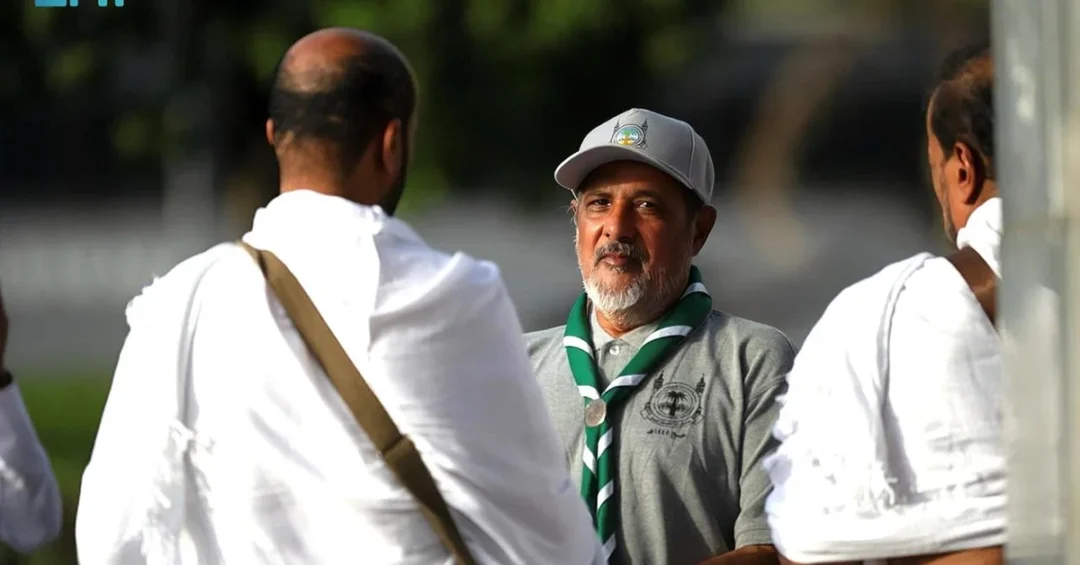
A 70-year-old Saudi scout leader, Abdulwahed bin Abdulmalik Khayyat, has become a beacon of dedication at the Al-Aziziyah Camp in Makkah, where he has volunteered for over 25 years to assist Hajj pilgrims using his fluency in six languages: English, Hausa, Urdu, Indonesian, Persian, and Arabic. His selfless service exemplifies the spirit of volunteerism that defines the Hajj season, bridging communication gaps and embodying the international scout motto, “Scout of one day, Scout of eternity.”
Context and Background
The Hajj pilgrimage, one of the Five Pillars of Islam, draws millions of Muslims from around the world to Makkah each year. The success of this massive undertaking relies heavily on the efforts of dedicated volunteers who ensure the safety, comfort, and spiritual well-being of pilgrims. Among these volunteers, Abdulwahed bin Abdulmalik Khayyat stands out for his exceptional commitment and linguistic abilities. For more than a quarter-century, Khayyat has been a fixture at the Al-Aziziyah Camp, where his language skills have enabled him to assist pilgrims from diverse backgrounds, many of whom speak little to no Arabic. His service reflects the core values of the Saudi scout movement, which emphasizes community service, responsibility, and lifelong dedication.
Key Details
Khayyat’s fluency in six languages—English, Hausa, Urdu, Indonesian, Persian, and Arabic—allows him to communicate effectively with pilgrims from Nigeria, Pakistan, India, Indonesia, Iran, and beyond. This linguistic versatility is particularly valuable during Hajj, when pilgrims often require assistance with navigation, health emergencies, or understanding rituals. Khayyat believes that serving pilgrims strengthens the spirit of community and fosters a sense of responsibility among volunteers. “Seeing older members share the honor with them motivates young scouts,” he says. “Their sincerity and enthusiasm push them to offer exceptional service, seeking reward from Allah.” His dedication demonstrates that age is no barrier to meaningful contribution, and his presence inspires younger scouts to uphold the tradition of service.
Implications and Impact
Khayyat’s story underscores the vital role of volunteers in the successful execution of Hajj, which is a major logistical and humanitarian operation. His ability to bridge language barriers enhances the pilgrimage experience for thousands of non-Arabic-speaking pilgrims, ensuring they can fully participate in the spiritual journey without hindrance. Moreover, his example highlights the inclusivity and compassion that characterize Saudi Arabia’s approach to hosting the Hajj. By fostering understanding and providing assistance, volunteers like Khayyat contribute to the global reputation of the Kingdom as a gracious host and a leader in intercultural dialogue. His work also reinforces the importance of volunteerism in Saudi society, aligning with national efforts to promote social responsibility and civic engagement.
Vision 2030 Alignment
Khayyat’s volunteerism and linguistic skills are a testament to the values championed by Saudi Vision 2030, particularly in the areas of social development, quality of life, and global engagement. Vision 2030 aims to increase volunteer participation to one million volunteers by 2030, and Khayyat serves as an inspiring role model for this ambitious goal. His dedication not only enhances the Hajj experience for pilgrims but also showcases Saudi Arabia’s commitment to hospitality, service, and international cooperation. As the Kingdom continues to modernize and open up to the world, the contributions of individuals like Khayyat will remain essential in demonstrating the true spirit of Saudi generosity and the enduring strength of its cultural heritage.
20 Questions
Q1. Who is Abdulwahed bin Abdulmalik Khayyat?
A1. Abdulwahed bin Abdulmalik Khayyat is a 70-year-old Saudi scout leader who has volunteered at the Al-Aziziyah Camp in Makkah for over 25 years, assisting Hajj pilgrims using his fluency in six languages.
Q2. What languages does Abdulwahed Khayyat speak?
A2. He speaks six languages: English, Hausa, Urdu, Indonesian, Persian, and Arabic. This allows him to communicate with pilgrims from various countries, including Nigeria, Pakistan, Indonesia, and Iran.
Q3. Where does Abdulwahed Khayyat volunteer during Hajj?
A3. He volunteers at the Al-Aziziyah Camp in Makkah, where he has served for over 25 years, helping pilgrims with navigation, rituals, and other needs during the Hajj season.
Q4. What is the international scout motto?
A4. The international scout motto is “Scout of one day, Scout of eternity,” which emphasizes lifelong commitment to service. Khayyat embodies this motto through his decades of volunteer work.
Q5. How does Abdulwahed Khayyat help Hajj pilgrims?
A5. He bridges communication gaps by translating and assisting non-Arabic speakers, ensuring they can perform Hajj rituals correctly. He also provides guidance and support, enhancing their spiritual journey.
Q6. Why is speaking multiple languages important for Hajj volunteers?
A6. Hajj attracts millions of pilgrims from diverse linguistic backgrounds. Volunteers who speak multiple languages can effectively assist those who do not speak Arabic, ensuring a smoother and more fulfilling pilgrimage experience.
Q7. How long has Abdulwahed Khayyat been a scout leader?
A7. He has been involved in scouting for many years, but specifically, he has volunteered at the Al-Aziziyah Camp for over 25 years, serving pilgrims during the Hajj season.
Q8. What motivates Abdulwahed Khayyat to continue volunteering?
A8. He believes serving pilgrims strengthens community spirit and fosters responsibility. He is inspired by the sincerity of young scouts and seeks reward from Allah through his service.
Q9. How does Khayyat inspire young scouts?
A9. By continuing to serve at age 70, Khayyat shows young scouts that age is no barrier to service. His dedication and enthusiasm motivate them to offer exceptional service during Hajj.
Q10. What is the significance of the Al-Aziziyah Camp?
A10. The Al-Aziziyah Camp in Makkah is a key location where pilgrims gather and receive assistance during Hajj. Volunteers like Khayyat provide essential support services there, helping pilgrims navigate the rituals.
Q11. How does volunteerism align with Saudi Vision 2030?
A11. Saudi Vision 2030 aims to increase volunteer participation to one million volunteers by 2030. Khayyat’s service exemplifies this goal, promoting social responsibility and civic engagement across the Kingdom.
Q12. What impact does Khayyat’s work have on pilgrims?
A12. His language skills and assistance enable non-Arabic-speaking pilgrims to fully participate in Hajj, reducing confusion and enhancing their spiritual experience. His kindness also leaves a positive impression of Saudi hospitality.
Q13. What is the Hajj season?
A13. The Hajj season is the annual Islamic pilgrimage to Makkah, which all able-bodied Muslims are required to perform at least once in their lifetime. It occurs during the month of Dhul-Hijjah.
Q14. How many languages are spoken by pilgrims during Hajj?
A14. Pilgrims come from over 180 countries and speak hundreds of languages and dialects. Volunteers with multilingual skills are crucial for effective communication and assistance.
Q15. What role do scouts play during Hajj?
A15. Saudi scouts volunteer during Hajj to assist pilgrims with various tasks, including crowd management, translation, first aid, and guiding them to rituals. Their service is vital for the smooth operation of Hajj.
Q16. How does Khayyat’s service reflect Saudi hospitality?
A16. His dedication and multilingual assistance embody the traditional Saudi values of generosity and care for guests. It showcases the Kingdom’s commitment to ensuring a safe and spiritual Hajj for all.
Q17. What is the significance of the phrase “Scout of one day, Scout of eternity”?
A17. It means that once a scout, always a scout, emphasizing lifelong commitment to service and community. Khayyat lives by this motto, continuing to serve despite his age.
Q18. How can others follow Khayyat’s example?
A18. Others can volunteer with Saudi scout groups or Hajj service organizations, learn languages to help diverse pilgrims, and commit to community service, regardless of age.
Q19. What recognition has Khayyat received for his service?
A19. While specific awards are not mentioned, his story was highlighted by the Saudi Press Agency, bringing national recognition to his dedication. His service is appreciated by pilgrims and fellow volunteers.
Q20. What is the overall message of Khayyat’s story?
A20. His story demonstrates that age is no barrier to meaningful contribution and that volunteerism, especially during Hajj, strengthens communities and showcases Saudi Arabia’s welcoming spirit to the world.
Reader Feedback
We value your thoughts. Please share your feedback on this article.
Your feedback helps us improve our coverage.