


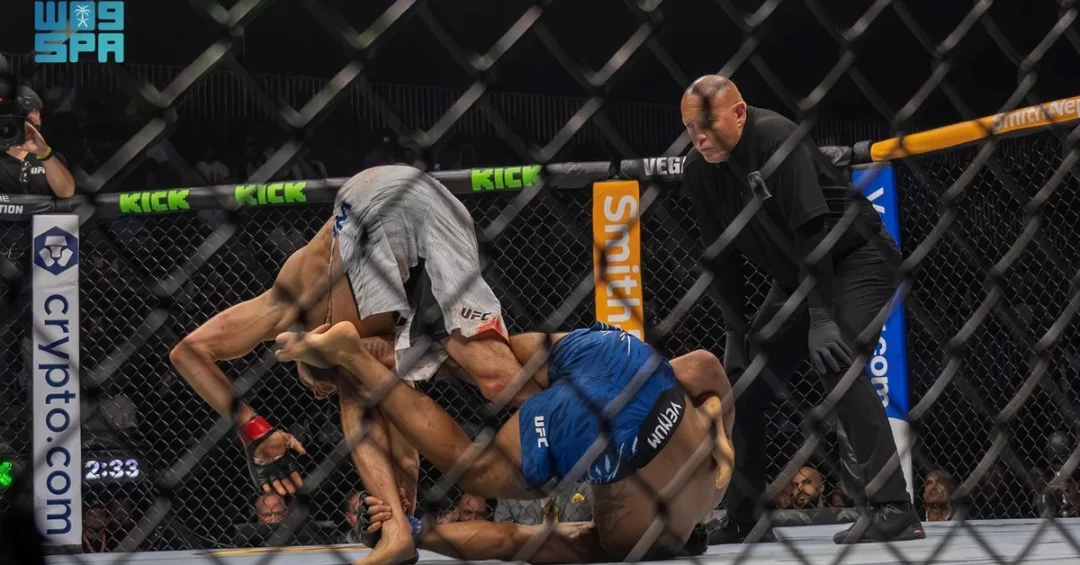
French middleweight Nassourdine Imavov, ranked fourth in the world, delivered a stunning second-round knockout victory over New Zealand’s Israel Adesanya at the Riyadh Season UFC Fight Night held at the anb Arena in Riyadh on Saturday night. The main event, attended by Turki Alalshikh, Chairman of Saudi Arabia’s General Entertainment Authority, ended just 30 seconds into the second round when Imavov unleashed a barrage of powerful punches that forced Adesanya to surrender. The result marks one of the most significant upsets of the 2025 UFC calendar and further cements Riyadh’s status as a premier destination for world-class combat sports.
The event, staged under the banner of Riyadh Season, the Kingdom’s flagship entertainment initiative, drew an international audience and underscored Saudi Arabia’s growing influence in global sports. Imavov’s victory not only elevates his standing in the UFC middleweight division but also adds another memorable chapter to the Kingdom’s expanding portfolio of elite athletic events. How did a single night in Riyadh reshape the trajectory of two fighters and reinforce the city’s reputation as a global sports hub?
Context and Background
Riyadh Season has become a cornerstone of Saudi Arabia’s entertainment and tourism strategy, attracting millions of visitors and generating significant economic activity. Since its inception, the initiative has hosted a diverse array of events, from concerts and cultural festivals to international sporting competitions. The UFC Fight Night at the anb Arena is the latest example of how the Kingdom is leveraging sports to drive Vision 2030 objectives, including economic diversification and global engagement. The presence of Turki Alalshikh, a key architect of Saudi Arabia’s entertainment transformation, signals the high-level commitment to making Riyadh a must-visit destination for sports fans worldwide.
Israel Adesanya, a former two-time UFC middleweight champion, entered the bout as a seasoned veteran with a reputation for striking excellence and showmanship. His opponent, Nassourdine Imavov, had been steadily climbing the rankings with impressive performances, but few predicted such a decisive outcome against a fighter of Adesanya’s caliber. The matchup was billed as a test of youth versus experience, and the French fighter’s explosive finish validated the hype surrounding his potential. What does this victory reveal about the depth of talent in the UFC’s middleweight division, and how might it influence future matchmaking?
The anb Arena, a state-of-the-art venue in the heart of Riyadh, provided a fitting stage for the event. Its modern facilities and capacity to host large crowds reflect the Kingdom’s investment in sports infrastructure as part of its broader development plan. The event was broadcast globally, reaching millions of viewers and showcasing Riyadh’s ability to host world-class productions. For Saudi Arabia, such events are not merely entertainment; they are strategic tools for enhancing soft power and attracting international visitors.
Key Details of the Fight Night
The main event began with a cautious first round, as both fighters probed each other’s defenses. Adesanya, known for his elusive style, attempted to establish range with leg kicks and jabs, while Imavov countered with aggressive combinations. Midway through the round, Imavov landed a clean right hand that appeared to stun Adesanya, giving him a slight edge. The momentum shifted decisively in the second round when Imavov stormed out of his corner and connected with a series of unanswered punches. Adesanya, unable to recover, was forced to surrender just 30 seconds into the round, prompting the referee to stop the contest. The victory marked Imavov’s most significant career win and handed Adesanya his third consecutive loss.
In the co-main event, British fighter Michael “Venom” Page showcased his superior tactics and speed to earn a unanimous decision victory over Russian opponent Shara Magomedov. Page, a veteran of the sport known for his unconventional striking, maintained dominance throughout the three rounds with quick maneuvers and precise strikes. The win delivered Magomedov his first career loss, a significant setback for the previously undefeated Russian. Page’s performance highlighted the technical depth of the UFC roster and added another thrilling chapter to the night’s proceedings. How does Page’s victory impact his standing in the welterweight division, and what challenges lie ahead for Magomedov?
In the women’s flyweight bout, Canadian Jasmine Jasudavicius dominated Brazilian Mayra Bueno Silva, securing a unanimous decision victory. Jasudavicius displayed exceptional tactical performance and remarkable grappling ability, maintaining control throughout the three rounds. Her win further solidifies her position as a rising contender in the division and underscores the global reach of the UFC, with athletes from Canada, Brazil, Russia, the United Kingdom, France, and New Zealand competing on the same card. The diversity of the fighters reflects the international appeal of the sport and Riyadh’s ability to bring together top talent from around the world.
International and Regional Impact
The Riyadh Season UFC Fight Night attracted global attention, with media outlets from North America, Europe, Asia, and the Middle East covering the event. For Saudi Arabia, hosting such a high-profile combat sports event reinforces its position as a leading destination for international sports and entertainment. The Kingdom has previously hosted major boxing matches, Formula 1 races, and football tournaments, and the UFC event adds to this impressive portfolio. The presence of Turki Alalshikh and the General Entertainment Authority’s involvement demonstrate the strategic alignment between sports, entertainment, and tourism under Vision 2030. What message does this send to the international community about Saudi Arabia’s capabilities and ambitions?
Regionally, the event strengthens Riyadh’s rivalry with other Gulf cities vying for sports tourism. By securing exclusive UFC events, Saudi Arabia distinguishes itself as a premier host and attracts fans from neighboring countries. The economic impact extends beyond the arena, benefiting hotels, restaurants, and retail sectors. The event also provides a platform for cultural exchange, as international visitors experience Saudi hospitality and the Kingdom’s modern entertainment offerings. The positive coverage generated by such events helps counter misconceptions and showcases the nation’s progress.
Economic and Strategic Significance
The economic benefits of hosting UFC Fight Night are substantial. Riyadh Season events generate millions of riyals in revenue through ticket sales, sponsorships, and ancillary spending. The anb Arena was filled to capacity, with fans traveling from across the globe. The event also creates jobs and supports local businesses, aligning with Vision 2030’s goal of diversifying the economy away from oil. Furthermore, the global broadcast rights and media exposure provide invaluable marketing for Saudi Arabia as a tourist destination. The Kingdom’s investment in sports is a long-term strategy to build a sustainable entertainment sector and enhance its international image.
Strategically, the event reinforces Saudi Arabia’s soft power. By hosting world-class athletes and delivering unforgettable experiences, the Kingdom builds goodwill and strengthens diplomatic ties. Sports diplomacy has become a key tool in Saudi Arabia’s foreign policy, fostering people-to-people connections and projecting an image of a modern, open society. The UFC partnership is part of a broader effort to attract major international events, including the 2034 FIFA World Cup, which Saudi Arabia is set to host. Each successful event builds credibility and momentum toward these larger goals.
Vision 2030 Alignment
The Riyadh Season UFC Fight Night exemplifies the objectives of Saudi Vision 2030, the comprehensive reform plan launched by Crown Prince Mohammed bin Salman. The vision aims to diversify the economy, promote tourism, and improve quality of life for citizens and residents. By hosting premier sporting events, the Kingdom attracts visitors, creates jobs, and stimulates economic growth. The General Entertainment Authority, under Turki Alalshikh’s leadership, has been instrumental in transforming Riyadh into a global entertainment capital. The UFC event is a testament to the Kingdom’s ability to execute large-scale, high-profile initiatives that resonate with international audiences.
Looking ahead, Saudi Arabia is poised to host even more marquee events, further solidifying its status as a hub for sports and entertainment. The success of the UFC Fight Night will encourage other global sports organizations to partner with the Kingdom. As Vision 2030 progresses, the world can expect to see Saudi Arabia play an increasingly prominent role on the global stage, using sports as a bridge to connect cultures and drive prosperity. The knockout victory by Nassourdine Imavov will be remembered not only for its athletic brilliance but also as another milestone in Saudi Arabia’s remarkable journey of transformation.
20 Questions
Q1. Who won the main event at the Riyadh Season UFC Fight Night?
A1. French fighter Nassourdine Imavov secured a knockout victory over New Zealand’s Israel Adesanya in the second round, marking a significant upset in the UFC middleweight division.
Q2. How did the main event end?
A2. Imavov unleashed a barrage of powerful punches 30 seconds into the second round, forcing Adesanya to surrender and prompting the referee to stop the fight.
Q3. Who attended the event as a notable guest?
A3. Turki Alalshikh, Chairman of Saudi Arabia’s General Entertainment Authority, attended the event, highlighting the Kingdom’s commitment to hosting world-class sports.
Q4. Where was the UFC Fight Night held?
A4. The event took place at the anb Arena in Riyadh, a state-of-the-art venue that reflects Saudi Arabia’s investment in sports infrastructure.
Q5. What was the co-main event result?
A5. British fighter Michael “Venom” Page earned a unanimous decision victory over Russian Shara Magomedov, handing Magomedov his first career loss.
Q6. How did Michael Page win his fight?
A6. Page utilized superior tactics and speed, maintaining dominance throughout the three rounds with quick maneuvers and precise strikes.
Q7. Who won the women’s fight?
A7. Canadian Jasmine Jasudavicius dominated Brazilian Mayra Bueno Silva, securing a unanimous decision victory with exceptional tactical performance.
Q8. What was significant about Imavov’s victory?
A8. It was Imavov’s most significant career win, elevating his standing in the UFC middleweight division and handing Adesanya his third consecutive loss.
Q9. How did the first round unfold?
A9. Adesanya and Imavov engaged in a back-and-forth exchange, with Imavov slightly gaining the upper hand after landing a clean right hand.
Q10. What does the event signify for Saudi Arabia?
A10. It reinforces Riyadh’s status as a premier destination for global sports and entertainment, aligning with Vision 2030 goals of economic diversification and tourism.
Q11. How does the event align with Vision 2030?
A11. It supports economic diversification, attracts international visitors, and enhances Saudi Arabia’s global image as a modern, open society.
Q12. What impact does the event have on Riyadh Season?
A12. It adds another high-profile success to Riyadh Season, boosting its reputation as a must-attend entertainment initiative and attracting more visitors.
Q13. Who is Turki Alalshikh?
A13. Turki Alalshikh is the Chairman of the General Entertainment Authority, a key figure driving Saudi Arabia’s entertainment transformation under Vision 2030.
Q14. What was the outcome for Shara Magomedov?
A14. Magomedov suffered his first career loss, a significant setback for the previously undefeated Russian fighter.
Q15. How did Jasmine Jasudavicius perform?
A15. Jasudavicius showcased exceptional tactical performance and grappling ability, maintaining control throughout the three rounds to secure a unanimous decision.
Q16. What is the significance of hosting UFC events in Saudi Arabia?
A16. It demonstrates the Kingdom’s capability to host world-class events, boosts sports tourism, and strengthens soft power and international engagement.
Q17. How does the event benefit the local economy?
A17. It generates revenue through ticket sales, sponsorships, and ancillary spending, creates jobs, and supports local businesses in Riyadh.
Q18. What message does the event send internationally?
A18. It showcases Saudi Arabia’s modern infrastructure, hospitality, and commitment to global sports, countering misconceptions and attracting future events.
Q19. What can we expect next for Saudi Arabia’s sports ambitions?
A19. The Kingdom is poised to host more marquee events, including the 2034 FIFA World Cup, further solidifying its role as a global sports hub.
Q20. How does this event contribute to Saudi Arabia’s global role?
A20. It enhances the Kingdom’s soft power, fosters cultural exchange, and reinforces its position as a leader in entertainment and sports under Vision 2030.
Reader Feedback
We value your thoughts. Please share your feedback on this article.
Your feedback helps us improve our coverage.
Related articles
 Saudi Border Guard Team Wins Hail Toyota International Rally 2025
 FIFA Club World Cup 2025 Trophy Tour Arrives in Riyadh
 Saudi Arabia’s Al Hayyan Clinches Historic Gold at Asian Track Championships
 Diriyah Company, Saudi Tennis Federation Sign MoU to Advance Tennis
 Saudi Arabia Tops AFC Club Ranking
 AlUla Ramadan Football Tournament 2025 Kicks Off