


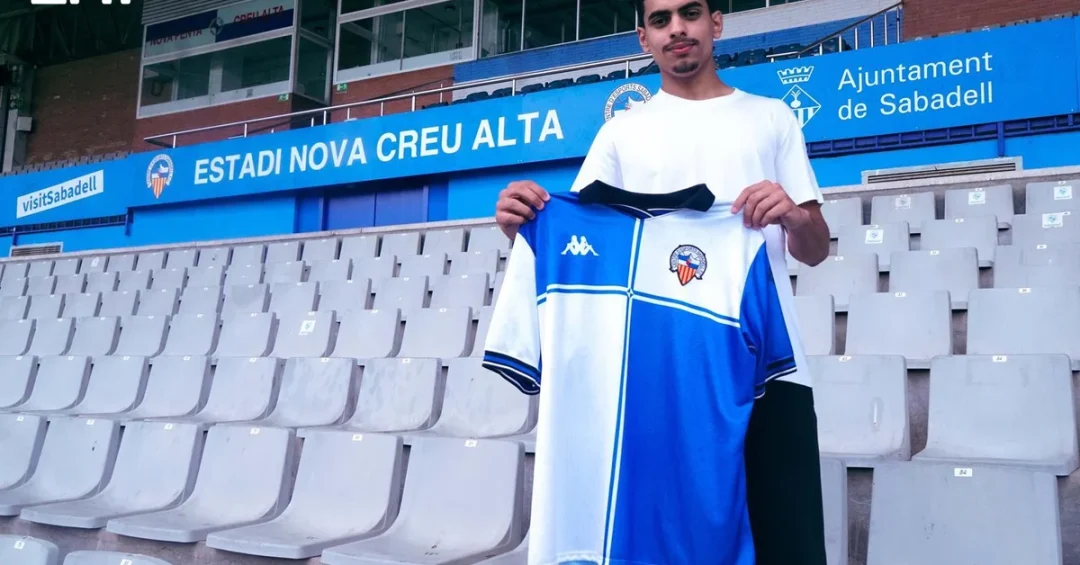
Two Saudi footballers developed at Mahd Sports Academy, Nawaf Al-Eid and Turki Al-Harthi, have signed one-year contracts with Spanish club CE Sabadell for the 2026–2027 season, according to an announcement released through the Saudi Press Agency. Both players were born in 2008 and progressed through the Kingdom’s flagship talent-development pathway before earning their first professional opportunities in European football. The agreement with the Catalan club represents the next stage in a carefully structured international progression that began with a full season in Italy. For Saudi sport, the signings mark another concrete step in a broader national effort to build world-class athletes at home and place them in competitive environments abroad. How often does a nation of footballing ambition see two of its teenagers take the same European pathway together? The answer, in Saudi Arabia’s case, reflects deliberate planning rather than chance.
The move to Spain follows a complete season spent in Italy, described by officials as the players’ first international development phase. That campaign provided intensive training, regular competitive match play, and tactical exposure to different footballing methodologies. During their time in Italy, Al-Eid and Al-Harthi faced youth squads from leading clubs including Juventus, Inter Milan, Fiorentina, and Udinese, strengthening their technical capabilities and competitive readiness ahead of their transition to Spanish football. The experience was designed not simply to test the players, but to prepare them for the demands of professional football in Europe. Their arrival at CE Sabadell therefore builds on measurable progress rather than promise alone.
Context and Background
Why does a signing at a Spanish club matter so much to Saudi football’s long-term plans? The answer lies in how Mahd Sports Academy was conceived. Established as a national talent-development institution, the academy exists to identify, train, and develop Saudi sports talent and to facilitate pathways to international competition and professional careers in global leagues. Its work sits within a wider national effort to strengthen sport at every level, from grassroots participation to elite performance. The academy’s mission is not limited to football; it spans multiple disciplines, but football carries particular weight given the sport’s popularity across the Kingdom.
Mahd Sports Academy’s approach combines domestic scouting, structured coaching, and international placements. Young players are evaluated over time, then given opportunities to train and compete abroad where the intensity and tactical demands are different from those at home. The one-year contracts signed by Al-Eid and Al-Harthi with CE Sabadell follow that model precisely. The players are not arriving in Spain as unknowns; they arrive after a full Italian season that exposed them to some of the strongest youth setups in Europe. That sequence—Italy first, Spain next—suggests a deliberate strategy of gradual adaptation rather than a single leap into the unknown.
The background also includes the broader transformation of Saudi sport. Investment in academies, coaching education, and competitive structures has accelerated in recent years, and the results are increasingly visible in the number of Saudi players earning opportunities abroad. The pathway from a national academy to a European club is no longer exceptional; it is becoming an established route. For families and young athletes across the Kingdom, that matters. It shows that a professional career in football is achievable through structured development, not only through luck or early fame.
Key Details of the Sabadell Signings
What exactly have Al-Eid and Al-Harthi agreed to? According to the announcement carried by the Saudi Press Agency, both players have signed one-year contracts with CE Sabadell for the 2026–2027 season. The club is based in Catalonia, Spain, and competes within the Spanish football pyramid. For young players, a one-year agreement is a common and practical arrangement: it gives the club a focused period to assess and develop the players, and it gives the players a clear window to prove themselves in a new competitive environment. The contracts are described as a major milestone in their professional development within European football.
The players’ Italian season provides important context for what Sabadell can expect. Competing against youth squads from Juventus, Inter Milan, Fiorentina, and Udinese exposed Al-Eid and Al-Harthi to a range of playing styles, from possession-based systems to high-pressing approaches. That variety is valuable. Young players who face only one style of opposition can develop narrow habits; those who encounter multiple systems learn to adapt. The Italian experience also involved the daily discipline of professional training: nutrition, recovery, tactical analysis, and match preparation. These are the unseen elements that separate academy prospects from professional players.
Both players were born in 2008, which places them at an age where development accelerates quickly if the environment is right. At this stage, the priority is consistent training and regular match minutes. A move to Spain offers a different footballing culture—technically oriented, tactically nuanced, and highly competitive at youth level. The step from Italy to Spain is not a sideways move; it is a progression into another of Europe’s most respected football environments. For Mahd Sports Academy, the signings validate its scouting and preparation methods. For the players, they represent an opportunity to convert potential into performance.
International and Regional Impact
How does this development resonate beyond the two players involved? Saudi Arabia’s growing presence in international football is not limited to hosting major events or attracting global stars to domestic leagues. It also includes the quieter, more structural work of developing homegrown talent and placing it in competitive leagues abroad. When Saudi players sign with European clubs, they become ambassadors for the Kingdom’s footballing progress. Their performances influence perceptions of Saudi football’s depth and competitiveness. Each successful placement makes it easier for the next young player to be taken seriously by international clubs and coaches.
Regionally, the signings add to a broader trend across the Gulf and the wider Middle East, where investment in youth sport is increasing. Saudi Arabia’s approach is distinctive in its scale and organization, with a national academy system designed to produce consistent results over time. For neighboring countries and for international observers, the Mahd Sports Academy model offers a case study in how to build pathways from local talent identification to global competition. The fact that two players from the same cohort have moved together to Spain also highlights the value of group progression: players who transition abroad alongside a teammate often adapt faster and perform more consistently.
Economic and Strategic Significance
What does this mean for Saudi football’s economy and strategy? Developing elite players at home reduces reliance on importing talent and creates long-term value. A player who emerges through a national academy and succeeds abroad can later return to strengthen domestic clubs, contribute to the national team, and inspire younger generations. That cycle—identify, develop, export, and eventually reinvest—is central to a sustainable football economy. The signings of Al-Eid and Al-Harthi are early examples of that cycle in motion. They also demonstrate that Saudi investment in sport is producing athletes, not just events.
Strategically, international placements build networks. When Saudi players train and compete in Italy and Spain, they create relationships with coaches, clubs, and federations that can benefit Saudi football for years. These relationships support future exchanges, coaching development, and youth tournaments. They also provide valuable data: what works in player preparation, what needs improvement, and how Saudi academies compare with European counterparts. That feedback loop is essential for continuous improvement. The move to CE Sabadell is therefore not only a player development decision; it is part of a wider strategy to integrate Saudi football into the global game at every level.
Vision 2030 Alignment
How does this fit into Saudi Arabia’s long-term national vision? Vision 2030 places strong emphasis on empowering young people, promoting healthy and active lifestyles, and developing world-class talent across all fields. Sport is a key part of that agenda, both as a source of national pride and as an economic sector with growing potential. Mahd Sports Academy’s work directly supports these goals by giving young Saudis a structured path to excellence. The signings of Nawaf Al-Eid and Turki Al-Harthi with CE Sabadell show that the pathway is functioning and that international clubs recognize the quality of Saudi-developed players.
The broader significance is about opportunity. When young athletes see peers earning professional contracts in Europe, they see what is possible through dedication and the right support system. That visibility encourages participation, raises standards, and strengthens the talent pool. For the Kingdom, each international success story contributes to the reputation of Saudi sport and to the objectives of Vision 2030. The coming season in Spain will be a test and an opportunity. If Al-Eid and Al-Harthi continue to develop, they will not only advance their own careers; they will help establish a durable model for Saudi football’s future.
20 Questions
Q1. Who are the two Saudi players who signed with CE Sabadell?
A1. Nawaf Al-Eid and Turki Al-Harthi, both born in 2008 and developed at Mahd Sports Academy, signed one-year contracts with Spanish club CE Sabadell for the 2026–2027 season, according to the Saudi Press Agency.
Q2. What club did they sign with and for which season?
A2. They signed with CE Sabadell, a Spanish club based in Catalonia, for the 2026–2027 season. The contracts are one-year agreements, as announced through official Saudi channels.
Q3. Where did the players develop before turning professional?
A3. Both players were developed at Mahd Sports Academy, Saudi Arabia’s national talent-development institution, which identifies, trains, and prepares young athletes for international competition and professional careers.
Q4. What did the players do before moving to Spain?
A4. They spent a full season in Italy, described as their first international development phase, which provided intensive training, competitive match play, and tactical exposure to diverse footballing methodologies.
Q5. Which Italian clubs did they compete against?
A5. During their season in Italy, they competed against youth squads from Juventus, Inter Milan, Fiorentina, and Udinese, gaining valuable experience against some of Europe’s strongest youth setups.
Q6. Why is the move to Spain significant for their development?
A6. Spain offers a technically oriented and tactically demanding football environment. The move represents a progression from their Italian season and a chance to continue developing in one of Europe’s most respected football cultures.
Q7. What is Mahd Sports Academy’s mission?
A7. Its mission is to identify, train, and develop national sports talent, facilitating pathways to international competition and professional careers in global leagues, in line with Saudi Arabia’s broader sporting ambitions.
Q8. How does this signing reflect Saudi Arabia’s football strategy?
A8. It reflects a strategy of developing homegrown talent and placing it in competitive European leagues. This approach builds sustainable value, strengthens the national team, and reduces reliance on imported players over time.
Q9. What is the duration of the contracts?
A9. The contracts are one-year agreements covering the 2026–2027 season. Such short-term deals are common for young players and allow both club and player to assess progress and fit.
Q10. What benefits do Saudi players gain from playing in Europe?
A10. They gain exposure to different playing styles, higher competitive intensity, professional training methods, and tactical education. They also build networks and experience that can benefit Saudi football when they return or progress further.
Q11. How does this news affect young Saudi athletes?
A11. It provides visible proof that structured development through national academies can lead to professional opportunities abroad. This encourages participation, raises standards, and motivates young athletes to pursue elite pathways.
Q12. What does CE Sabadell gain from signing these players?
A12. The club gains two young players with international youth experience in Italy, including matches against top Italian academies. It also strengthens its connection to Saudi football and its developing talent pipeline.
Q13. Is this the first time Mahd Academy players have moved abroad?
A13. The announcement describes the Italy season as the players’ first international development phase, followed by the move to Spain. It reflects the academy’s growing practice of placing players in European environments.
Q14. What role did the Saudi Press Agency play in this announcement?
A14. The Saudi Press Agency, the Kingdom’s official news agency, released the announcement, providing verified information about the signings and the players’ development pathway through Mahd Sports Academy.
Q15. How does this align with Vision 2030?
A15. Vision 2030 emphasizes empowering youth, promoting active lifestyles, and developing world-class talent. The signings support these goals by demonstrating that Saudi Arabia’s investment in sport is producing internationally recognized players.
Q16. What challenges might the players face in Spain?
A16. They will need to adapt to a new language, culture, and playing style, while competing for places in a demanding environment. Their previous season in Italy should help them manage these transitions more effectively.
Q17. What does this mean for Saudi football’s international reputation?
A17. It enhances the Kingdom’s reputation as a producer of talent, not only a host of major events. Successful placements abroad signal that Saudi football’s development systems are maturing and delivering results.
Q18. How can fans follow the players’ progress?
A18. Fans can follow official club announcements, Saudi football media, and updates from Mahd Sports Academy. The Saudi Press Agency and recognized Saudi sports outlets typically report on players’ progress abroad.
Q19. What is the broader significance of two players moving together?
A19. Moving together can ease adaptation, as teammates can support each other in a new environment. It also highlights the academy’s cohort-based approach, where groups of players progress through development stages together.
Q20. What comes next for Al-Eid and Al-Harthi?
A20. They will join CE Sabadell for the 2026–2027 season, aiming to train consistently, earn match minutes, and continue their professional development in Spain. Their progress will be monitored by Saudi football officials.
Reader Feedback
We value your thoughts. Please share your feedback on this article.
Your feedback helps us improve our coverage.
Related articles
 Saudi Olympic Camel Cup Begins with SAR10M Prizes
 Riyadh Weigh-In Success Sets Stage for Mexico vs. The World
 Tuwaiq Reserve Hosts First Round of Saudi Mountain Bike League
 Al-Shabab Crushes Al-Ahli 6-1 in Saudi Pro League
 Saudi Camel Cup Rotates Across Three Cities to Boost Investment
 NEOM Defeats Diriyah 2-1 in Saudi Pro League