


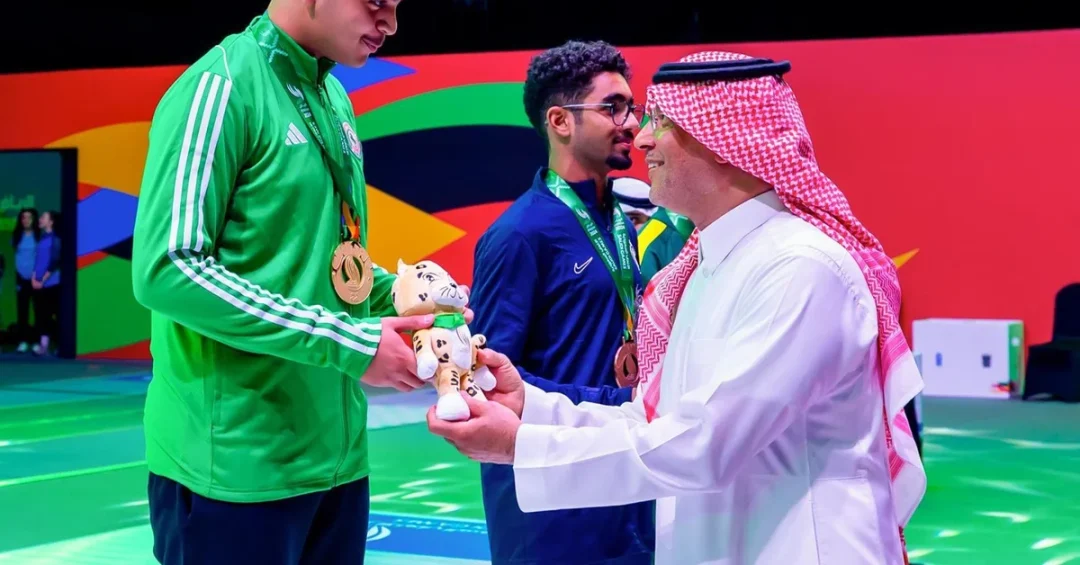
Princess Delayel bint Nahar, Executive Director of the Saudi Games, awarded the fencing champions at the third edition of the Saudi Games, held at Boulevard 3 in Riyadh. The event, which concluded on Saturday, showcased the Kingdom’s growing prowess in the sport and highlighted the role of women in Saudi athletics. The President of the Saudi Fencing Federation, Ahmed Al-Sabban, attended the ceremony.
Context and Background
The Saudi Games, a flagship national multi-sport event, was launched to promote athletic excellence and align with the Kingdom’s Vision 2030 objectives of enhancing quality of life and fostering a vibrant society. The third edition featured a record number of participants across various disciplines, with fencing drawing particular attention for its competitive depth and emerging talents.
Fencing has gained momentum in Saudi Arabia, with increased investment in training facilities and coaching. The Saudi Fencing Federation has been instrumental in nurturing talent, organizing national competitions, and facilitating international exposure for athletes. This year’s games served as a platform for both seasoned fencers and promising newcomers to demonstrate their skills.
Key Details
In the youth Epée event, Ahmed Hazazi of Al-Hilal Club clinched the gold medal, while Saif Al-Din Mohammed of Al-Sawari Club secured silver. Youssef Al-Bannaali of Al-Hilal Club and Abdulaziz Al-Fada of Al-Nasr Club earned bronze medals.
The Foil competition saw Mohamed Ragheb of Al-Ittihad Club win gold, with Rakan Al-Ghanim of Al-Nasr Club taking silver. Bronze medals were awarded to Abdulaziz Al-Muqayrin of Al-Nasr Club and Mohamed Al-Hajji of Al-Khaleej Club.
In the women’s Sabre event, Nada Abed from Al-Kholood Club claimed gold, while Dai Al-Omari of Al-Nahda Club won silver. Fawzia Al-Khaibari from AlUla Club and Shooq Al-Jazzar from Al-Ahli Club received bronze medals.
Additionally, Munira Al-Akouz of Al-Hilal Club secured gold in the women’s youth Epée category, with Al-Sanoni of Al-Hilal taking silver. Sidra Lahham from Al-Omran Club and Dhilal Abdulrahman from Okaz Club were awarded bronze medals.
Princess Delayel bint Nahar, in her remarks, praised the athletes’ dedication and the federation’s efforts in promoting fencing across the Kingdom. She emphasized the importance of such events in discovering and nurturing talent, aligning with the Saudi Games’ mission to inspire a new generation of sportsmen and sportswomen.
Implications and Impact
The success of the fencing competitions underscores the Kingdom’s commitment to diversifying sports and providing equal opportunities for women. The achievements of female fencers like Nada Abed and Munira Al-Akouz reflect the progress made in women’s sports, a key aspect of social reform under Vision 2030.
Moreover, the participation of clubs from various regions, such as AlUla and Al-Khaleej, demonstrates the nationwide reach of the sport and the growing competitive landscape. This bodes well for Saudi Arabia’s ambition to compete on the international stage in fencing and other sports.
Internationally, the event signals Saudi Arabia’s emergence as a hub for sporting events, attracting attention and contributing to the Kingdom’s soft power and diplomatic outreach. The Saudi Games serve as a testament to the nation’s capacity to host major competitions and its dedication to athletic excellence.
Vision 2030 Alignment
The third Saudi Games and the fencing competitions exemplify Vision 2030’s goal of creating a vibrant society where citizens enjoy a high quality of life and have access to diverse sporting opportunities. By empowering athletes, especially women, and promoting national pride, the Kingdom continues to advance its transformative agenda, fostering a prosperous and dynamic future.
20 Questions
Q1. Who awarded the fencing champions at the third Saudi Games?
A1. Princess Delayel bint Nahar, Executive Director of the Saudi Games, awarded the fencing champions at the third Saudi Games, which concluded on Saturday at Boulevard 3 in Riyadh.
Q2. Where was the third edition of the Saudi Games held?
A2. The third Saudi Games were held at Boulevard 3 in Riyadh, a premier venue that hosted various competitions and showcased the Kingdom’s ability to organize large-scale sporting events.
Q3. Who won the gold medal in the youth Epée event?
A3. Ahmed Hazazi of Al-Hilal Club won the gold medal in the youth Epée event at the third Saudi Games, demonstrating exceptional skill and determination in the competition.
Q4. Which club did Saif Al-Din Mohammed represent?
A4. Saif Al-Din Mohammed represented Al-Sawari Club and won the silver medal in the youth Epée event, contributing to his club’s success in the tournament.
Q5. Who were the bronze medalists in the youth Epée event?
A5. Youssef Al-Bannaali of Al-Hilal Club and Abdulaziz Al-Fada of Al-Nasr Club were awarded bronze medals in the youth Epée event, highlighting the depth of talent in the competition.
Q6. Who won the gold medal in the Foil event?
A6. Mohamed Ragheb of Al-Ittihad Club won the gold medal in the Foil event, showcasing his mastery in this fencing discipline at the third Saudi Games.
Q7. Which club did Rakan Al-Ghanim represent?
A7. Rakan Al-Ghanim represented Al-Nasr Club and secured the silver medal in the Foil event, adding to his club’s medal tally in the fencing competitions.
Q8. Who were the bronze medalists in the Foil event?
A8. Abdulaziz Al-Muqayrin of Al-Nasr Club and Mohamed Al-Hajji of Al-Khaleej Club received bronze medals in the Foil event, reflecting their competitive performance.
Q9. Who won the gold medal in the women’s Sabre event?
A9. Nada Abed from Al-Kholood Club secured the gold medal in the women’s Sabre event, marking a significant achievement for women’s fencing in Saudi Arabia.
Q10. Which club did Dai Al-Omari represent?
A10. Dai Al-Omari represented Al-Nahda Club and won the silver medal in the women’s Sabre event, demonstrating her fencing prowess at the national level.
Q11. Who were the bronze medalists in the women’s Sabre event?
A11. Fawzia Al-Khaibari from AlUla Club and Shooq Al-Jazzar from Al-Ahli Club were awarded bronze medals in the women’s Sabre event, contributing to the event’s competitive spirit.
Q12. Who won the gold medal in the women’s youth Epée event?
A12. Munira Al-Akouz of Al-Hilal Club claimed the gold medal in the women’s youth Epée event, showcasing her talent and hard work in the competition.
Q13. Which club did Al-Sanoni represent?
A13. Al-Sanoni represented Al-Hilal Club and took the silver medal in the women’s youth Epée event, adding to Al-Hilal’s success in the fencing competitions.
Q14. Who were the bronze medalists in the women’s youth Epée event?
A14. Sidra Lahham from Al-Omran Club and Dhilal Abdulrahman from Okaz Club received bronze medals in the women’s youth Epée event, highlighting their skills and determination.
Q15. Who is the President of the Saudi Fencing Federation?
A15. Ahmed Al-Sabban is the President of the Saudi Fencing Federation and attended the awarding ceremony, supporting the athletes and the development of fencing in Saudi Arabia.
Q16. What is the significance of the Saudi Games for Vision 2030?
A16. The Saudi Games support Vision 2030 by promoting sports participation, enhancing quality of life, and empowering youth and women, aligning with the goals of a vibrant society and a thriving economy.
Q17. How many editions of the Saudi Games have been held?
A17. The third edition of the Saudi Games was held, indicating that there have been three editions so far, each building on the success of the previous ones in promoting athletic excellence.
Q18. Which clubs were represented in the fencing competitions?
A18. Clubs such as Al-Hilal, Al-Nasr, Al-Ittihad, Al-Sawari, Al-Khaleej, Al-Kholood, Al-Nahda, AlUla, Al-Ahli, Al-Omran, and Okaz were represented, showcasing nationwide participation.
Q19. What does the success of female fencers indicate about Saudi sports?
A19. The success of female fencers like Nada Abed and Munira Al-Akouz indicates growing opportunities for women in Saudi sports, reflecting the Kingdom’s commitment to gender equality and empowerment under Vision 2030.
Q20. How does the Saudi Games contribute to the Kingdom’s international image?
A20. The Saudi Games contribute to the Kingdom’s international image by demonstrating its capability to host major sporting events, promoting cultural exchange, and showcasing the talents of Saudi athletes on a global stage.
Reader Feedback
We value your thoughts. Please share your feedback on this article.
Your feedback helps us improve our coverage.
Related articles
 Tunisian Olympic Committee President Visits Saudi Sports Arbitration Center
 Saudi Aikido Committee Shines at 14th International Summit in Japan
 French Golfer Celine Boutier Secures Victory at Aramco Team Series in Shenzhen
 Saudi Special Olympics Sailing Team Wins Gold in Dubai
 Saudi National Team Prepares for Japan World Cup Qualifier
 Saudi Arabia to Host Italian Super Cup for Fifth Time in Riyadh