


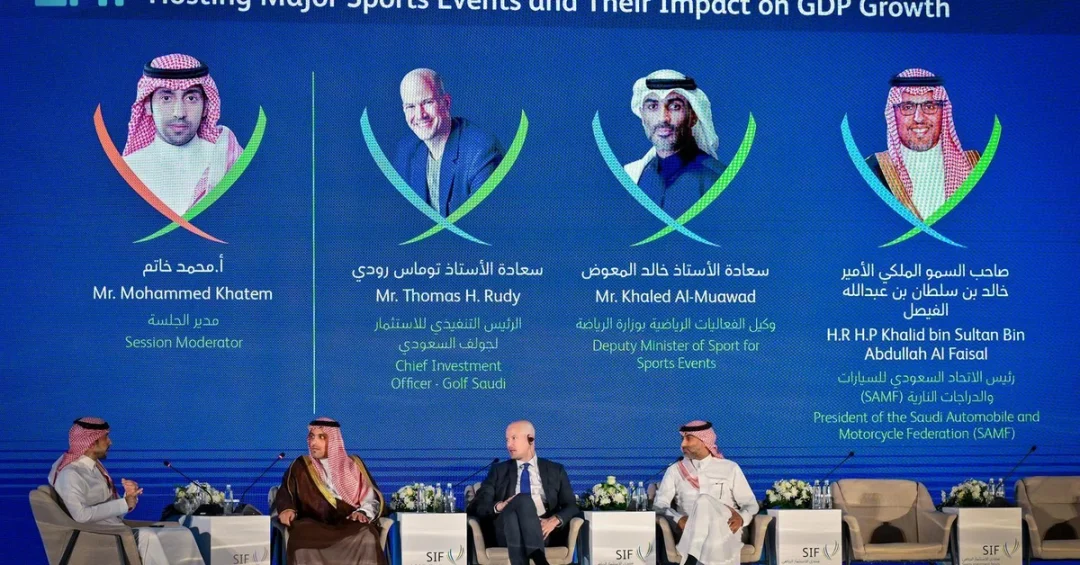
Chairman of the Saudi Automobile and Motorcycle Federation (SAMF) Prince Khalid bin Sultan bin Abdullah bin Faisal has affirmed that hosting major sporting events is a powerful catalyst for attracting leading global companies and investors to the Kingdom of Saudi Arabia, citing the vast investment opportunities emerging across the nation’s rapidly expanding sports sector. The remarks were delivered during a panel discussion titled “Hosting Major Sporting Events and Their Impact on GDP Growth,” held as part of the three-day Sports Investment Forum in Riyadh, according to the Saudi Press Agency (SPA). The forum convened government officials, industry leaders, and international stakeholders to explore how sport has become a central pillar of the Kingdom’s economic diversification strategy under Vision 2030.
Prince Khalid emphasized that the Kingdom’s leadership has provided unwavering support for the sports sector, enabling Saudi Arabia to host events and tournaments that reflect both the nation’s aspirations and its growing global stature. Could there be a clearer signal that Saudi Arabia’s sports ambitions are about far more than spectacle? His comments underscored a broader truth: each international tournament hosted on Saudi soil serves as a gateway for foreign direct investment, corporate partnerships, and infrastructural development that extends well beyond the stadium. The Sports Investment Forum, a three-day gathering in the capital, has become a key platform for articulating how athletic excellence and economic growth are being deliberately intertwined in the Kingdom’s modernization journey.
Context and Background
Why has Saudi Arabia placed sports at the heart of its economic transformation? The answer lies in a decade-long strategic push to diversify revenue streams away from hydrocarbons, a core objective of Vision 2030. Since the launch of the Vision in 2016, the Kingdom has invested heavily in sporting infrastructure, from state-of-the-art stadiums to world-class racing circuits, while securing hosting rights for a remarkable array of global events. These include Formula 1’s Saudi Arabian Grand Prix, the Dakar Rally, the Spanish and Italian Super Cups, heavyweight boxing championships, and the upcoming 2034 FIFA World Cup. Each event has drawn millions of visitors and generated significant media exposure, reinforcing Saudi Arabia’s position as a premier destination for international sport.
The Saudi Automobile and Motorcycle Federation, led by Prince Khalid, has been instrumental in this endeavor, particularly in motorsport. Under his chairmanship, the SAMF has overseen the successful delivery of the Formula 1 Saudi Arabian Grand Prix in Jeddah and the Dakar Rally, among other high-profile competitions. These events have not only entertained millions but also demonstrated the Kingdom’s capacity to execute complex logistical operations at the highest international standards. The Sports Investment Forum builds on this momentum, bringing together policymakers, investors, and sports executives to chart the next phase of growth. As Prince Khalid noted, all sectors of government and society work in concert to create the right environment, enabling the Ministry of Sport to organize events that resonate globally.
Key Details
What specific mechanisms allow sporting events to attract corporate investment? Prince Khalid explained that hosting major events provides a showcase for the Kingdom’s business-friendly environment, drawing the attention of multinational corporations seeking to associate their brands with world-class competitions. The panel discussion highlighted that sporting events now cater to all segments of society, fostering community engagement and creating a virtuous cycle of participation and consumption. The SAMF Chairman pointed out that the sector has gained extensive experience from hosting major sports events, thanks to highly capable local expertise, which has contributed to the success of every event held in the Kingdom. This accumulated know-how is itself an asset, making Saudi Arabia a trusted partner for international sports federations and promoters.
The Sports Investment Forum, held in Riyadh, featured a series of panels and workshops focused on the intersection of sport, finance, and development. Participants discussed topics such as infrastructure financing, sponsorship models, and the role of sports in boosting tourism and hospitality. Prince Khalid’s panel specifically addressed the impact of major events on GDP growth, a metric that has become increasingly important as the Kingdom tracks its economic diversification progress. The presence of leading companies and investors at the forum underscored the private sector’s eagerness to tap into a market that is projected to grow substantially in the coming years. With each new event, new opportunities arise for construction, event management, broadcasting, merchandise, and ancillary services.
International and Regional Impact
How does Saudi Arabia’s sports investment strategy ripple across the region and beyond? The Kingdom’s emergence as a global sports hub has reshaped the Middle East’s entertainment landscape, encouraging neighboring countries to accelerate their own event-hosting ambitions. For international audiences, Saudi Arabia is increasingly viewed not only as a cultural and historical destination but also as a dynamic center for live sport. This shift has profound implications for tourism, with visitors extending their stays to explore attractions such as AlUla, Diriyah, and the Red Sea coast. Airlines, hotels, and retail businesses all benefit from the influx of travelers, creating jobs and stimulating local economies.
On the diplomatic front, hosting major events provides opportunities for cultural exchange and soft power projection. Saudi Arabia has welcomed athletes, journalists, and fans from every continent, showcasing its hospitality and modern infrastructure. The Kingdom’s successful bids for events like the 2034 FIFA World Cup and the 2029 Asian Winter Games in Trojena signal long-term commitment. These platforms allow Saudi Arabia to share its story of transformation with the world, countering outdated perceptions and building bridges of understanding. As Prince Khalid implied, the world is taking notice, and the investment community is responding with confidence.
Economic and Strategic Significance
What does the influx of companies and investors mean for Saudi Arabia’s long-term economic goals? The sports sector is a key component of the Kingdom’s non-oil GDP, contributing through event-related spending, media rights, and the development of sports-related industries. According to official projections, the sports economy is expected to grow significantly by 2030, supported by continued government investment and private-sector participation. The Public Investment Fund (PIF) has been a major driver, establishing companies such as SURJ Sports Investment to catalyze opportunities and attract global partners. These efforts align with the broader objective of increasing the private sector’s contribution to GDP to 65 percent.
Beyond direct financial returns, the strategic value of sports investment lies in its ability to diversify the economy, create employment, and enhance the Kingdom’s global image. The SAMF Chairman’s remarks highlight that the sector has matured to a point where it can reliably deliver world-class events, thanks to local expertise and integrated planning. This reliability is a magnet for investors who seek predictable, high-quality returns. Moreover, the focus on grassroots participation ensures that the benefits of sports extend to all citizens and residents, promoting healthier lifestyles and social cohesion. As more events are added to the calendar, the ecosystem becomes more robust, attracting further investment in facilities, training academies, and sports technology.
Vision 2030 Alignment
How does the sports investment drive fit into the broader Vision 2030 framework? Sport is explicitly recognized as a catalyst for economic growth, social development, and international engagement. The Vision’s Quality of Life Program aims to increase sports participation and host international events, while the National Transformation Program supports the necessary infrastructure and regulatory reforms. By attracting major companies and investors, Saudi Arabia is not only building a vibrant sports industry but also reinforcing its position as a global leader in entertainment and tourism. The Kingdom’s leadership has consistently emphasized that these efforts are for the long term, creating lasting legacies for future generations.
As Prince Khalid bin Sultan bin Abdullah bin Faisal concluded, the collaborative spirit across all sectors ensures that Saudi Arabia remains on a trajectory of success. The Sports Investment Forum in Riyadh served as a testament to that collective ambition, bringing together the minds that will shape the next decade of growth. With each tournament, each partnership, and each new investor, the Kingdom moves closer to realizing its Vision 2030 goals. The world is watching, and Saudi Arabia is ready to welcome it.
20 Questions
Q1. What did the SAMF Chairman say about hosting sports events?
A1. Prince Khalid bin Sultan bin Abdullah bin Faisal stated that hosting major sporting events plays a significant role in attracting leading companies and investors to Saudi Arabia, emphasizing the vast investment opportunities in the sports sector.
Q2. Where did the SAMF Chairman make these remarks?
A2. He made the remarks during a panel discussion titled “Hosting Major Sporting Events and Their Impact on GDP Growth” at the three-day Sports Investment Forum in Riyadh.
Q3. What is the Saudi Automobile and Motorcycle Federation (SAMF)?
A3. The SAMF is the national governing body for automobile and motorcycle sports in Saudi Arabia, responsible for organizing and promoting motorsport events and activities across the Kingdom.
Q4. How does hosting sports events attract investors?
A4. Hosting major events showcases Saudi Arabia’s business-friendly environment and infrastructure, drawing multinational corporations seeking brand exposure and partnership opportunities in a growing market.
Q5. What role does the Saudi leadership play in the sports sector?
A5. The Kingdom’s leadership provides comprehensive support for the sports sector, enabling the hosting of events that reflect Saudi Arabia’s aspirations and global status.
Q6. How do all sectors collaborate to support sports events?
A6. According to Prince Khalid, all sectors work together to create the right environment and enable the Ministry of Sport to organize successful sports events and activities.
Q7. What experience has Saudi Arabia gained from hosting major sports events?
A7. The Kingdom has gained extensive experience, thanks to highly capable local expertise, which has contributed to the success of every event held in the country.
Q8. Do sporting events cater to all segments of society?
A8. Yes, Prince Khalid noted that sporting events now cater to all segments of society, promoting inclusivity and community engagement across the Kingdom.
Q9. What is the Sports Investment Forum?
A9. The Sports Investment Forum is a three-day event held in Riyadh that brings together officials, investors, and sports executives to discuss the economic impact of sports and explore investment opportunities.
Q10. How do sports events impact GDP growth?
A10. Major sports events stimulate economic activity through tourism, job creation, infrastructure development, and increased spending in hospitality, retail, and related sectors, thereby boosting GDP.
Q11. Which major events has Saudi Arabia hosted recently?
A11. Saudi Arabia has hosted Formula 1’s Saudi Arabian Grand Prix, the Dakar Rally, boxing championships, and various football tournaments, with the 2034 FIFA World Cup on the horizon.
Q12. What is Vision 2030’s role in sports development?
A12. Vision 2030 recognizes sports as a catalyst for economic diversification, social development, and international engagement, with programs aimed at increasing participation and hosting global events.
Q13. How does sports tourism benefit Saudi Arabia?
A13. Sports tourism attracts international visitors who spend on hotels, dining, and attractions, creating jobs and showcasing the Kingdom’s cultural and natural heritage.
Q14. What investment opportunities exist in the sports sector?
A14. Opportunities span event management, infrastructure, broadcasting, sponsorship, sports technology, training academies, and merchandise, among other areas.
Q15. How does the SAMF contribute to motorsport in Saudi Arabia?
A15. The SAMF organizes and promotes motorsport events, oversees regulatory standards, and supports the development of local talent and infrastructure in automobile and motorcycle racing.
Q16. What makes Saudi Arabia an attractive destination for sports events?
A16. Its modern infrastructure, strategic location, supportive government policies, and proven track record of successfully hosting complex international events make it highly attractive.
Q17. How do sports events enhance Saudi Arabia’s global image?
A17. They showcase the Kingdom’s modernization, hospitality, and organizational capabilities, helping to shift perceptions and build soft power on the world stage.
Q18. What is the expected economic impact of the 2034 FIFA World Cup?
A18. The tournament is expected to generate significant revenue, create jobs, and accelerate infrastructure development, leaving a lasting legacy for the Kingdom.
Q19. How can local businesses benefit from sports events?
A19. Local businesses can benefit through supply contracts, hospitality services, retail opportunities, and increased foot traffic during events, contributing to economic growth.
Q20. What is the long-term vision for Saudi Arabia’s sports sector?
A20. The long-term vision is to establish Saudi Arabia as a global sports hub, driving economic diversification, fostering social development, and inspiring future generations through world-class events and participation.
Reader Feedback
We value your thoughts. Please share your feedback on this article.
Your feedback helps us improve our coverage.
Related articles
 Sports Investment Forum Explores Privatization Impact on Saudi Clubs
 Saudi Esports Leadership Shines at Sports Investment Forum
 Saudi Arabia Drawn in Group C for FIBA Asia Cup 2025
 Al-Taawoun Secures Valuable Win Over Sharjah in AFC Semifinal
 Al-Hilal, Al-Nassr Affirm Sports Quality Raises Club Value
 Women’s Sports Take Center Stage at Riyadh Investment Forum