


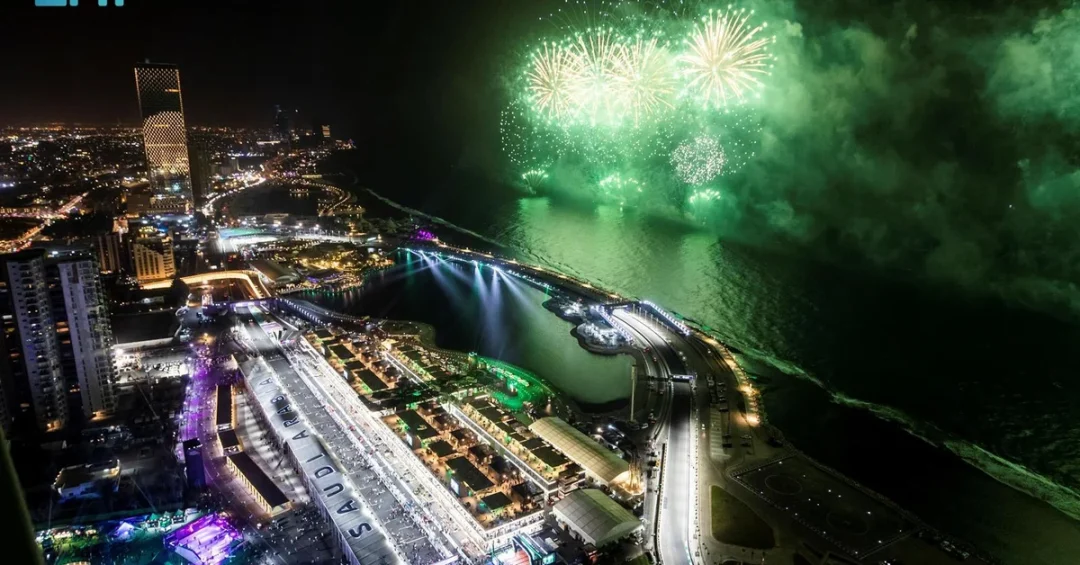
Saudi Arabia has firmly established itself as a premier destination for Formula 1 champions since first hosting the Formula 1 stc Saudi Arabian Grand Prix in 2021, with the Jeddah Corniche Circuit delivering unforgettable excitement and attracting the world’s top drivers. The race, held annually on the world’s fastest street circuit, has become a cornerstone of the Kingdom’s sporting calendar, drawing massive audiences and showcasing Saudi Arabia’s growing role as a global hub for elite motorsport.
Since its inaugural edition, the event has seen legendary drivers like Lewis Hamilton, Max Verstappen, and Sergio Pérez battle for supremacy, creating lasting memories for fans worldwide. As the Kingdom prepares for its fifth hosting, anticipation is building for another thrilling chapter in this remarkable sporting story. The race not only highlights Saudi Arabia’s capability to host world-class events but also underscores its commitment to Vision 2030, which aims to diversify the economy and enhance the quality of life for citizens and visitors alike.
Context and Background
How did Saudi Arabia transform into a magnet for Formula 1’s biggest stars in just a few years? The journey began in 2021 when the Kingdom first welcomed the Formula 1 stc Saudi Arabian Grand Prix to the Jeddah Corniche Circuit, a state-of-the-art facility that quickly gained a reputation for its high-speed thrills and challenging layout. This inaugural race set the stage for what would become a highly anticipated annual event, with the 2021 edition witnessing British Mercedes driver Lewis Hamilton emerge victorious after a fierce contest with Dutchman Max Verstappen of Red Bull, while Mercedes’ Valtteri Bottas took third place.
The race’s immediate success was no accident. It was the result of extensive planning and investment by Saudi authorities, including the Ministry of Sport and the Saudi Automobile and Motorcycle Federation, who worked tirelessly to bring Formula 1 to the Kingdom. The event aligned perfectly with Vision 2030’s goals of promoting tourism, creating jobs, and positioning Saudi Arabia as a top global destination for sports and entertainment. From the outset, the Jeddah Corniche Circuit was designed to be a spectacle, with its 27 corners and average speeds exceeding 250 km/h, making it one of the fastest and most demanding tracks on the calendar.
Moreover, the race has consistently attracted a diverse international audience, with fans traveling from across the globe to witness the action live. The presence of world-class teams like Red Bull, Mercedes, and Ferrari has further elevated the event’s prestige, ensuring that the Saudi Arabian Grand Prix remains a must-watch for motorsport enthusiasts. As the Kingdom gears up for the fifth edition, the legacy of the race is already evident in the increased global attention and the growing number of visitors exploring Saudi Arabia’s rich culture and heritage.
Key Details
What makes the Saudi Arabian Grand Prix so special that champions keep returning for more? The answer lies in the unique combination of a challenging circuit, passionate fans, and the warm hospitality of the Kingdom. In 2022, Max Verstappen secured his first victory in Jeddah, outpacing Ferrari’s Charles Leclerc and Carlos Sainz, who finished second and third respectively. The 2023 race saw Sergio Pérez claim first place, with Verstappen climbing from 15th to second, and George Russell of Mercedes taking third. Most recently, in 2024, Verstappen clinched his second Jeddah title, followed by Pérez and Leclerc, cementing his affinity for the circuit.
The competition among top teams has been a core element of the race’s excitement. Red Bull, since entering Formula 1 in 2005, has achieved 6 world titles, 122 wins, 103 pole positions, and 99 fastest laps. Mercedes, with roots dating back to 1954, boasts 8 world titles, 129 wins, 141 pole positions, and 109 fastest laps. Ferrari, the oldest and most storied team, has garnered 16 titles, 248 wins, 253 pole positions, and 263 fastest laps since 1950. These statistics underscore the caliber of teams that compete in Jeddah, making every race a battle of giants.
Beyond the on-track action, the event features a range of entertainment options, including concerts, fan zones, and cultural exhibits, ensuring that visitors of all ages have an unforgettable experience. The Saudi Arabian Grand Prix has also become a platform for showcasing local talent and businesses, with many SMEs benefiting from the influx of tourists. The race weekend typically generates significant economic activity, from hotel bookings to dining and retail, further demonstrating its positive impact on the local economy.
International and Regional Impact
How does hosting Formula 1 elevate Saudi Arabia’s standing on the world stage? The presence of the Saudi Arabian Grand Prix on the Formula 1 calendar has significantly boosted the Kingdom’s international profile, positioning it alongside established motorsport destinations like Monaco and Silverstone. The race is broadcast to millions of viewers worldwide, providing unparalleled exposure for Saudi Arabia’s modernization efforts and its ambitious Vision 2030 agenda. This global spotlight helps attract foreign investment and tourism, as visitors discover the Kingdom’s rich heritage and rapidly developing infrastructure.
Regionally, the event has fostered greater engagement with neighboring countries, with fans from across the Gulf and the wider Middle East traveling to Jeddah to attend. It has also inspired a new generation of Saudi motorsport enthusiasts, with grassroots programs and youth initiatives aimed at developing local talent. The race serves as a catalyst for regional sports tourism, encouraging other nations to invest in similar events and contributing to the Middle East’s emergence as a hub for major international competitions. Furthermore, the successful hosting of Formula 1 demonstrates Saudi Arabia’s capability to manage large-scale events, enhancing its bid to host other global spectacles such as the FIFA World Cup.
Economic and Strategic Significance
What economic benefits does the Saudi Arabian Grand Prix bring to the Kingdom? The race is a major driver of economic activity, generating revenue across multiple sectors. According to official estimates, the event contributes hundreds of millions of riyals to the local economy each year, supporting thousands of jobs in hospitality, tourism, and event management. The influx of international visitors during race week boosts hotel occupancy, restaurant patronage, and retail sales, while also promoting longer stays as tourists explore attractions like the historic Al-Balad district and the Red Sea coastline.
Strategically, the race aligns with Vision 2030’s objective of diversifying the economy away from oil dependence. By attracting global events, Saudi Arabia showcases its non-oil sectors and creates opportunities for partnerships and investments. The Kingdom’s investment in sports infrastructure, including the Jeddah Corniche Circuit, is part of a broader strategy to develop world-class facilities that can host a variety of events year-round. This not only enhances the quality of life for residents but also positions Saudi Arabia as a leading destination for sports, entertainment, and business.
Vision 2030 Alignment
How does the Saudi Arabian Grand Prix embody the spirit of Vision 2030? The race is a shining example of the Kingdom’s transformation under Vision 2030, which seeks to create a vibrant society, a thriving economy, and an ambitious nation. By hosting Formula 1, Saudi Arabia demonstrates its openness to the world, its commitment to excellence, and its ability to deliver world-class experiences. The event also promotes social reforms, such as increased women’s participation in sports and entertainment, reflecting the progressive values of the new Saudi Arabia.
Looking ahead, the Kingdom’s continued hosting of the Saudi Arabian Grand Prix will further cement its status as a premier destination for global sporting events. As the fifth edition approaches, fans can expect another spectacular showcase of speed, skill, and Saudi hospitality. The race not only celebrates the achievements of Formula 1 champions but also symbolizes Saudi Arabia’s own journey towards a prosperous and dynamic future, driven by the vision of its leadership and the passion of its people.
20 Questions
Q1. When did Saudi Arabia first host the Formula 1 Saudi Arabian Grand Prix?
A1. Saudi Arabia first hosted the Formula 1 stc Saudi Arabian Grand Prix in 2021 at the Jeddah Corniche Circuit. The inaugural race was won by Lewis Hamilton, marking the beginning of the Kingdom’s annual tradition of hosting this prestigious event.
Q2. Who won the first Saudi Arabian Grand Prix in 2021?
A2. British driver Lewis Hamilton of Mercedes won the first Saudi Arabian Grand Prix in 2021, after a thrilling contest with Max Verstappen of Red Bull, who finished second. Valtteri Bottas, also of Mercedes, took third place.
Q3. Which driver has won the most Saudi Arabian Grand Prix titles?
A3. Max Verstappen has won the Saudi Arabian Grand Prix twice, in 2022 and 2024. His victories have cemented his status as a favorite at the Jeddah Corniche Circuit, where he has consistently performed at the highest level.
Q4. What is the name of the circuit that hosts the Saudi Arabian Grand Prix?
A4. The race is held at the Jeddah Corniche Circuit, which is known as the world’s fastest street circuit. Its challenging layout and high-speed corners make it a favorite among drivers and fans alike.
Q5. How many times has Saudi Arabia hosted the Formula 1 Grand Prix as of 2024?
A5. As of 2024, Saudi Arabia has hosted the Formula 1 stc Saudi Arabian Grand Prix four times, in 2021, 2022, 2023, and 2024. The fifth edition is highly anticipated and will further solidify the Kingdom’s reputation as a premier motorsport destination.
Q6. Which teams have dominated the Saudi Arabian Grand Prix?
A6. Red Bull, Mercedes, and Ferrari have been the dominant teams at the Saudi Arabian Grand Prix. Red Bull has secured multiple wins with Verstappen and Pérez, while Mercedes and Ferrari have also claimed podium finishes, showcasing the high level of competition.
Q7. What is the significance of the Saudi Arabian Grand Prix for Vision 2030?
A7. The race aligns with Vision 2030 by promoting tourism, creating jobs, and showcasing Saudi Arabia’s ability to host world-class events. It contributes to economic diversification and enhances the Kingdom’s global image as a modern and open society.
Q8. How does the Jeddah Corniche Circuit compare to other Formula 1 tracks?
A8. The Jeddah Corniche Circuit is unique for being the fastest street circuit in Formula 1, with average speeds over 250 km/h. Its 27 corners and narrow layout provide an exhilarating challenge for drivers, often leading to dramatic races.
Q9. What economic impact does the Saudi Arabian Grand Prix have on Jeddah?
A9. The race generates significant economic activity, boosting hospitality, tourism, and retail sectors. It attracts thousands of international visitors, creates jobs, and stimulates local businesses, contributing hundreds of millions of riyals to the economy annually.
Q10. Which driver climbed from 15th to second place in the 2023 Saudi Arabian Grand Prix?
A10. Max Verstappen climbed from 15th place to finish second in the 2023 Saudi Arabian Grand Prix, demonstrating his exceptional driving skills. Sergio Pérez won the race, with George Russell finishing third.
Q11. How many world titles has Ferrari won in Formula 1 history?
A11. Ferrari has won 16 world titles since joining Formula 1 in 1950. The team also holds records for 248 wins, 253 pole positions, and 263 fastest laps, solidifying its status as a legendary frontrunner in the sport.
Q12. What entertainment options are available at the Saudi Arabian Grand Prix?
A12. The event offers a range of entertainment, including concerts, fan zones, and cultural exhibits. These activities cater to diverse audiences, ensuring a festive atmosphere that complements the on-track action and enhances the overall experience for visitors.
Q13. How has the Saudi Arabian Grand Prix influenced motorsport in the region?
A13. The race has inspired a new generation of motorsport enthusiasts in Saudi Arabia and the wider Middle East. It has spurred grassroots programs and youth initiatives, encouraging local talent and fostering a culture of motorsport in the region.
Q14. What is the attendance like at the Saudi Arabian Grand Prix?
A14. The Saudi Arabian Grand Prix attracts massive audiences, with tens of thousands of fans attending each year. The event draws a diverse international crowd, contributing to a vibrant atmosphere and showcasing Saudi Arabia’s hospitality to the world.
Q15. Which driver won the 2023 Saudi Arabian Grand Prix?
A15. Mexican driver Sergio Pérez of Red Bull won the 2023 Saudi Arabian Grand Prix. His teammate Max Verstappen finished second, and George Russell of Mercedes took third place, highlighting the competitive nature of the race.
Q16. How does Saudi Arabia ensure the safety of drivers and spectators at the race?
A16. Saudi authorities implement rigorous safety measures, including track design, medical facilities, and crowd management. The Jeddah Corniche Circuit meets international safety standards, ensuring a secure environment for all participants and attendees.
Q17. What role does the Ministry of Sport play in the Saudi Arabian Grand Prix?
A17. The Ministry of Sport oversees the organization and promotion of the Saudi Arabian Grand Prix, working with international partners to ensure its success. It also leverages the event to advance Vision 2030 goals and promote sports tourism.
Q18. How many wins has Mercedes achieved in Formula 1?
A18. Mercedes has achieved 129 wins since its Formula 1 roots in 1954. The team has also secured 8 world titles, 141 pole positions, and 109 fastest laps, consistently placing them among the top contenders in the sport.
Q19. What makes Max Verstappen so successful at the Jeddah Corniche Circuit?
A19. Max Verstappen’s success at Jeddah stems from his exceptional skill in high-speed street circuits and his ability to adapt quickly. His two wins and a second-place finish demonstrate his mastery of the challenging track.
Q20. What can fans expect from the fifth Saudi Arabian Grand Prix?
A20. Fans can expect another thrilling race with top drivers competing for victory. The fifth edition will feature enhanced entertainment, cultural activities, and a festive atmosphere, further solidifying Saudi Arabia’s status as a premier destination for Formula 1.
Reader Feedback
We value your thoughts. Please share your feedback on this article.
Your feedback helps us improve our coverage.
Related articles
 Jeddah Governor Inspects Corniche Circuit Ahead of F1 Saudi Arabian Grand Prix
 Formula 1 stc Grand Prix Cars Arrive at Jeddah Corniche Circuit
 Saudi Runner Hakeem Adds Second Gold at Asian U18 Championships
 Al-Baha to Host Fourth Saudi Cycling Championship Tomorrow
 European Rowing Championships in Plovdiv Draw Global Media Interest
 Jeddah Announces Road Closures for F1 Saudi Arabian Grand Prix