


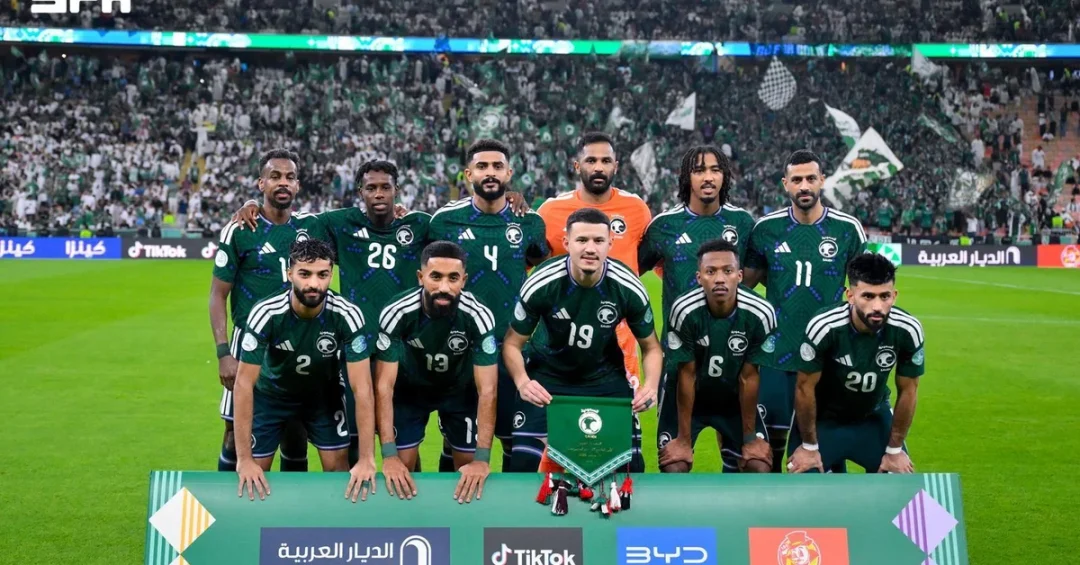
Saudi Arabia defeated Iraq 2-0 at King Abdullah Sports City Stadium in Jeddah on September 29, 2026, securing top spot in Group A of the Khaleeji 27 Arabian Gulf Cup with a perfect record of three wins from three matches. The Saudi national football team, competing under the guidance of the Saudi Arabian Football Federation, delivered a composed and dominant performance in front of a passionate home crowd, confirming their status as one of the tournament’s leading contenders. After a tightly contested goalless first half, Abdullah Al-Salem broke the deadlock in the 54th minute, before Abdullah Al-Hamdan doubled the advantage in the 69th minute to seal a convincing victory.
The result means Saudi Arabia finished the group stage with nine points, three clear of their nearest challengers, while Iraq exited the tournament on four points after Oman advanced to the semifinals on the fair-play criterion, with both sides level on points and goal difference. Kuwait also departed the competition as Saudi Arabia and Oman progressed from Group A. The win extends the Kingdom’s impressive run in the regional competition and reinforces the team’s ambition to reclaim the Arabian Gulf Cup title on home soil, a prospect that has energized supporters across the nation and added further momentum to Saudi Arabia’s broader sporting transformation.
Context and Background
What does a perfect group-stage record reveal about the trajectory of Saudi football on the regional and continental stage? The Khaleeji 27 Arabian Gulf Cup, organized under the auspices of the Arab Gulf Cup Football Federation, brings together the national teams of the Gulf Cooperation Council states in one of the region’s most storied and closely followed competitions. For Saudi Arabia, the tournament represents both a prestigious prize and a valuable platform for testing squad depth, tactical cohesion, and big-match temperament ahead of wider international commitments. The Green Falcons entered the competition with clear objectives: to compete for the title, to give emerging players meaningful minutes, and to strengthen the connection between the national team and its supporters.
The match against Iraq carried particular weight, as it determined the final standings in Group A. Saudi Arabia had already secured victories in their opening two fixtures, but the encounter with a resilient Iraqi side offered a stern test of concentration and discipline. Iraq, a historically formidable opponent with a proud footballing tradition, needed a result to keep their hopes alive, while Saudi Arabia sought to preserve momentum and confirm their superiority in the group. The Saudi Arabian Football Federation has invested steadily in coaching, sports science, and youth development in recent years, and the performance in Jeddah reflected that long-term commitment.
The atmosphere at King Abdullah Sports City Stadium underscored the growing culture of live sport in the Kingdom. The venue, one of Saudi Arabia’s flagship sporting arenas, has hosted major international fixtures and concerts, and its full stands on matchday demonstrated the public’s appetite for top-level football. For the players, playing before a home crowd in a decisive group fixture added both pressure and inspiration, and the team’s ability to manage that occasion speaks to the maturity of the current squad.
Key Details
How did Saudi Arabia convert territorial control into a decisive two-goal advantage after a scoreless first half? The opening 45 minutes were characterized by cautious probing from both sides, with Iraq defending in compact blocks and looking to frustrate the hosts. Saudi Arabia circulated the ball patiently, probed the flanks, and tested the Iraqi goalkeeper without finding the breakthrough. The halftime interval allowed the coaching staff to adjust the attacking patterns, and the impact was immediate after the restart. In the 54th minute, Abdullah Al-Salem found space in the penalty area and finished clinically to give Saudi Arabia the lead, rewarding the team’s persistence and igniting the home support.
Fifteen minutes later, Abdullah Al-Hamdan doubled the advantage with a well-taken goal in the 69th minute, effectively settling the contest. From that point, Saudi Arabia managed the game with composure, controlling possession, limiting Iraqi opportunities, and maintaining defensive discipline until the final whistle. The clean sheet was a further source of satisfaction, reflecting the organization of the back line and the concentration of the entire team. The victory was Saudi Arabia’s third consecutive win of the tournament, a sequence that highlights consistency across the group stage and the squad’s ability to deliver results in different match scenarios.
Elsewhere in Group A, Oman secured their place in the semifinals alongside Saudi Arabia. Iraq and Oman finished level on points and goal difference, and the fair-play criterion ultimately determined the second qualifier, with Oman advancing. Kuwait also exited the competition. The fine margins illustrate the competitiveness of the group and the importance of discipline and sportsmanship across all fixtures. For Saudi Arabia, the outcome confirmed their position at the summit of the group and set up a semifinal encounter with added confidence and a clear sense of purpose.
International and Regional Impact
What does Saudi Arabia’s group-stage dominance signal to the wider football community? The Khaleeji 27 Arabian Gulf Cup is followed closely across the Gulf region and beyond, and the Kingdom’s perfect record reinforces its reputation as a competitive force in Asian football. Regional tournaments of this kind serve as important showcases for national teams, offering exposure to international scouts, broadcasters, and fans. Saudi Arabia’s performances contribute to the growing global visibility of Gulf football, which has attracted increased investment, media attention, and commercial interest in recent years.
For Iraq, the group-stage exit will be a disappointment, but the margins were exceptionally narrow, and the team’s competitive displays throughout the group phase underline the depth of talent in the region. Oman’s progression on the fair-play criterion is a reminder that discipline and conduct are integral to tournament football. The semifinal lineup now promises compelling matchups, and Saudi Arabia’s presence in the last four ensures continued regional interest. The tournament also provides a platform for cultural exchange and regional unity, with supporters traveling between host cities and celebrating a shared passion for the game.
The result carries additional significance for Saudi Arabia’s international standing in sport. The Kingdom has become a major hub for global sporting events, from football and motorsport to tennis, boxing, and esports. Success on the pitch complements these broader efforts, demonstrating that investment in sport is producing tangible results at the national-team level. The Green Falcons’ progress in the Arabian Gulf Cup therefore resonates beyond the tournament itself, contributing to the narrative of a dynamic, forward-looking Saudi Arabia.
Economic and Strategic Significance
How does national-team success connect to Saudi Arabia’s broader economic and strategic ambitions? Sport has become a central pillar of the Kingdom’s diversification agenda, generating jobs, attracting visitors, and stimulating sectors such as tourism, hospitality, and media. Major sporting events draw international audiences and showcase Saudi Arabia’s modern infrastructure, from world-class stadiums to advanced transport networks. The Khaleeji 27 tournament, hosted in part on Saudi soil, exemplifies this approach, bringing visitors to Jeddah and highlighting the city’s capacity to stage high-profile competitions.
The Saudi Arabian Football Federation’s investment in youth academies, coaching education, and sports science forms part of a longer-term strategy to build a sustainable football ecosystem. A successful national team inspires participation at the grassroots level, encourages investment in clubs and facilities, and strengthens the domestic league’s appeal. The presence of Saudi clubs in continental competitions and the recruitment of international stars have further raised the profile of Saudi football, creating a virtuous cycle of interest and investment. Results such as the 2-0 win over Iraq validate these efforts and provide momentum for continued development.
From a strategic perspective, sport also serves as a tool of soft power and international engagement. By hosting and competing in major events, Saudi Arabia strengthens diplomatic and commercial ties, fosters people-to-people connections, and projects an image of openness and ambition. The Kingdom’s sporting calendar, which includes football, Formula 1, and other global properties, supports the objectives of Vision 2030 by diversifying revenue streams and enhancing the country’s global brand. The national team’s performances are an integral part of this wider story.
Vision 2030 Alignment
How does a victory in the Arabian Gulf Cup reflect the aspirations of Saudi Vision 2030? Vision 2030, the Kingdom’s comprehensive reform program launched under the leadership of Crown Prince Mohammed bin Salman, seeks to diversify the economy, empower citizens, and enhance quality of life. Sport is explicitly recognized as a catalyst for achieving these goals, promoting healthier lifestyles, creating economic opportunities, and fostering national pride. The Saudi national team’s success in the Khaleeji 27 tournament embodies these principles, uniting citizens and residents behind a shared achievement and demonstrating the Kingdom’s growing capabilities on the regional and world stage.
The Ministry of Sport, under the guidance of the Saudi leadership, has worked to expand access to sport for all segments of society, including women and youth, while also attracting major international events. These efforts align with Vision 2030’s Human Capability Development Program, which aims to build a vibrant society and a thriving economy. The Green Falcons’ perfect group-stage record is therefore more than a sporting statistic; it is a visible expression of the Kingdom’s determination to excel, to compete globally, and to inspire the next generation. As Saudi Arabia prepares for the semifinals, the nation’s ambitions on and off the pitch continue to advance in parallel, reinforcing the Kingdom’s position as a rising global sports destination.
20 Questions
Q1. What was the final score of the Saudi Arabia versus Iraq match in Khaleeji 27?
A1. Saudi Arabia defeated Iraq 2-0 in the third and final round of Group A at the Khaleeji 27 Arabian Gulf Cup, played at King Abdullah Sports City Stadium in Jeddah on September 29, 2026.
Q2. Who scored Saudi Arabia’s goals in the victory over Iraq?
A2. Abdullah Al-Salem opened the scoring in the 54th minute, and Abdullah Al-Hamdan doubled the lead in the 69th minute, securing the 2-0 win for Saudi Arabia.
Q3. How many points did Saudi Arabia finish with in Group A?
A3. Saudi Arabia finished the group stage with nine points from three matches, topping Group A with a perfect record of three consecutive victories in the tournament.
Q4. How many wins did Saudi Arabia achieve in the group stage?
A4. Saudi Arabia won all three of their group-stage matches, defeating each opponent to secure maximum points and confirm their place at the top of Group A.
Q5. Which teams advanced to the semifinals from Group A?
A5. Saudi Arabia and Oman advanced to the semifinals from Group A. Oman progressed on the fair-play criterion after finishing level on points and goal difference with Iraq.
Q6. Which teams were eliminated from Group A?
A6. Iraq and Kuwait exited the tournament at the group stage. Iraq finished on four points, while Kuwait also failed to progress to the semifinals of the competition.
Q7. Where was the Saudi Arabia versus Iraq match played?
A7. The match was played at King Abdullah Sports City Stadium in Jeddah, one of Saudi Arabia’s premier sporting venues, which hosted a passionate home crowd for the decisive group fixture.
Q8. When did Abdullah Al-Salem score his goal?
A8. Abdullah Al-Salem scored in the 54th minute, breaking the deadlock after a goalless first half and giving Saudi Arabia a crucial lead in the decisive Group A encounter.
Q9. When did Abdullah Al-Hamdan score Saudi Arabia’s second goal?
A9. Abdullah Al-Hamdan scored in the 69th minute, doubling Saudi Arabia’s advantage and effectively securing the victory over Iraq in the final group-stage match.
Q10. What was the score at halftime?
A10. The score was 0-0 at halftime. Both sides were cautious in the opening period before Saudi Arabia accelerated in the second half to claim a convincing 2-0 win.
Q11. How did Oman qualify for the semifinals ahead of Iraq?
A11. Oman advanced on the fair-play criterion after finishing level on points and goal difference with Iraq. The tiebreaker rewarded Oman’s superior disciplinary record across the group stage.
Q12. What competition is Khaleeji 27?
A12. Khaleeji 27 is the 27th edition of the Arabian Gulf Cup, a regional football tournament featuring national teams from the Gulf Cooperation Council states, organized under the Arab Gulf Cup Football Federation.
Q13. How does this result affect Saudi Arabia’s tournament prospects?
A13. The victory confirms Saudi Arabia as Group A winners with momentum and confidence heading into the semifinals, reinforcing their status as leading contenders for the Khaleeji 27 title.
Q14. What does the win mean for Saudi football development?
A14. The result reflects the Saudi Arabian Football Federation’s sustained investment in coaching, youth development, and sports science, validating long-term efforts to build a competitive national team.
Q15. Who organizes the Arabian Gulf Cup?
A15. The Arabian Gulf Cup is organized under the auspices of the Arab Gulf Cup Football Federation, bringing together national teams from the Gulf region in one of the area’s most popular competitions.
Q16. How did the home crowd influence the match?
A16. The passionate home support at King Abdullah Sports City Stadium provided inspiration and energy for the Saudi players, who managed the occasion maturely and delivered a composed performance.
Q17. What was significant about Saudi Arabia’s clean sheet?
A17. The clean sheet reflected the team’s defensive organization and discipline, limiting Iraq’s scoring opportunities and demonstrating the squad’s ability to control matches from front to back.
Q18. How does this victory align with Vision 2030?
A18. The win supports Vision 2030 goals by promoting sport, national pride, and quality of life, while showcasing Saudi Arabia’s growing capabilities as a host and competitor in global sport.
Q19. What happens next for Saudi Arabia in the tournament?
A19. Saudi Arabia advances to the semifinals of Khaleeji 27, where they will face a qualifier from another group, aiming to continue their winning run and compete for the title.
Q20. Why is the Khaleeji 27 tournament important for the region?
A20. The tournament promotes regional unity, cultural exchange, and sporting excellence, drawing passionate support across the Gulf and highlighting the growing profile of football in the region.
Reader Feedback
We value your thoughts. Please share your feedback on this article.
Your feedback helps us improve our coverage.