


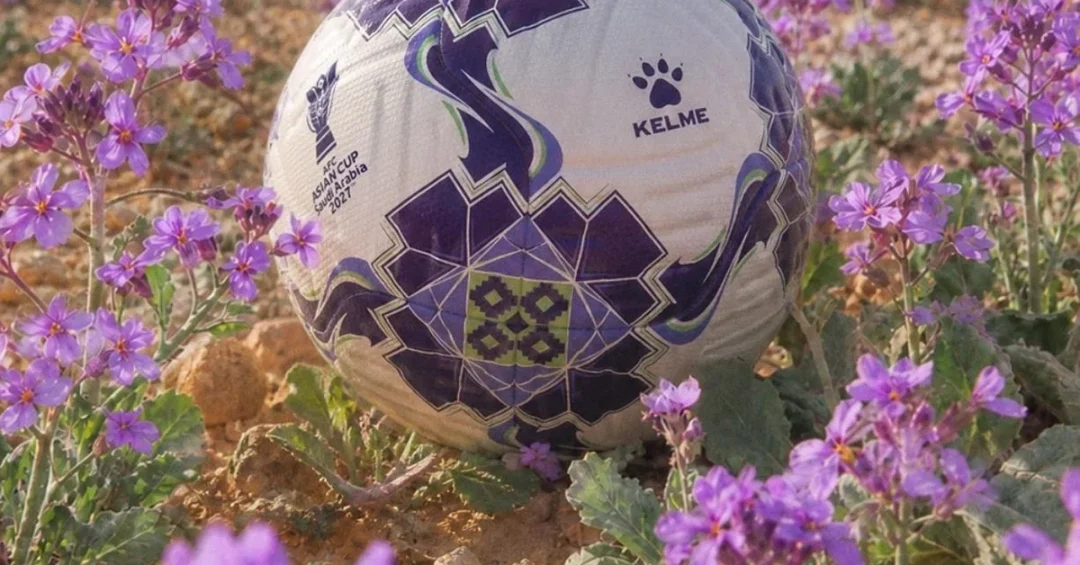
The Asian Football Confederation (AFC) has unveiled “Khuzama” as the official match ball for the AFC Asian Cup Saudi Arabia 2027, marking the 100-day countdown to a tournament set to run from January 7 to February 5, 2027. The announcement, released through official Saudi channels including the Saudi Press Agency (SPA), confirms that the ball was developed in partnership with the sportswear manufacturer Kelme and draws its identity from the natural and architectural heritage of the Kingdom.
The unveiling represents far more than a piece of sporting equipment. It is the latest milestone in Saudi Arabia’s preparations to host the AFC Asian Cup for the first time in its history, a tournament that will bring 24 national teams to Riyadh, Jeddah, and Al-Khobar. With just over three months until kickoff, the Khuzama ball serves as a symbol of Saudi Arabia’s readiness, its cultural confidence, and its growing role as a global hub for major sporting events. Could a single match ball carry the weight of a nation’s ambition? In this case, the answer appears to be a resounding yes.
Context and Background
How does a football become a national statement? The name “Khuzama” is derived from the wild lavender plant that grows across the Kingdom of Saudi Arabia, a fragrant and resilient species that flourishes in the desert landscape. By choosing this name, the AFC and its Saudi partners have rooted the tournament’s most visible object in the Kingdom’s natural environment. The purple color of the ball reflects hospitality and welcome, values that Saudi Arabia has placed at the center of its international outreach.
The design also incorporates geometric patterns inspired by “The Portal” element of the tournament’s official identity. This element is derived from traditional Najdi architectural doorways, the ornate entrances that have graced homes in the central Arabian region for centuries. The ball’s palette of deep purple, green, and sand evokes both the lavender fields and the desert dunes, creating a visual identity that is unmistakably Saudi. For international audiences, the ball offers an accessible entry point into the Kingdom’s cultural heritage.
Saudi Arabia’s hosting of the AFC Asian Cup is the culmination of years of investment in sports infrastructure and event management. The Kingdom has already staged major international events, from Formula 1 races to world championship boxing, but the Asian Cup represents a different scale of responsibility. It is the continent’s premier football tournament, and hosting it requires coordination across three cities, multiple stadiums, and a vast logistical network. The Khuzama ball is a reminder that the clock is now ticking toward a historic moment.
Key Details of the Khuzama Ball
What makes a match ball worthy of a continental championship? According to the official announcement, Khuzama has been designed to meet match performance requirements set by the AFC. It incorporates contrasting purple and white panels to enhance visibility for players, referees, and fans, both in daylight and under floodlights. This dual-visibility feature is particularly important for a tournament that will be played in January and February, when some matches may kick off in the late afternoon or evening.
The ball’s construction reflects the latest advances in sports engineering. While the official release did not disclose specific materials or testing protocols, the emphasis on performance standards indicates that Khuzama has undergone rigorous evaluation. Kelme, the Spanish sportswear brand founded in 1963, has a long history of producing football equipment and has partnered with numerous clubs and national teams. Its collaboration with the AFC on this project underscores the international confidence in Saudi Arabia’s ability to deliver a world-class tournament.
The visual design of Khuzama is also a nod to the tournament’s broader branding. “The Portal” concept, which appears across official merchandise, stadium decor, and broadcast graphics, uses the geometry of Najdi doorways to symbolize an opening to the world. In a sense, the ball itself becomes a portal, connecting the local heritage of central Arabia with the global audience that will tune in from across Asia and beyond. The deep purple, green, and sand tones are not arbitrary; they are a deliberate palette that speaks to land, tradition, and modernity.
International and Regional Impact
What does it mean for Asia to have its premier football tournament hosted in the Kingdom? The AFC Asian Cup Saudi Arabia 2027 will feature 24 teams, expanded from previous editions, and will be staged in three major cities: Riyadh, Jeddah, and Al-Khobar. This geographic spread will allow visitors to experience different regions of the Kingdom, from the capital’s bustling modernity to the Red Sea coastline and the Eastern Province’s industrial and cultural heritage. The tournament is expected to attract hundreds of thousands of fans from across Asia, many of whom will be visiting Saudi Arabia for the first time.
For the AFC, the choice of Saudi Arabia as host reflects the Kingdom’s growing influence in Asian football. Saudi clubs have consistently performed well in the AFC Champions League, and the national team, the Green Falcons, has a proud history of World Cup appearances. The 2027 Asian Cup will provide a platform for the next generation of Saudi players to shine on home soil. It will also strengthen the AFC’s commercial and broadcast reach, as Saudi Arabia’s global media infrastructure ensures that matches will be delivered to audiences with high production standards.
Regionally, the tournament is an opportunity for Saudi Arabia to showcase its capacity for hospitality and organization. The Kingdom has invested heavily in tourism infrastructure as part of Vision 2030, including new hotels, transport links, and entertainment districts. The Asian Cup will serve as a live test of these investments, and a successful tournament could pave the way for future bids, including a potential FIFA World Cup. The Khuzama ball, with its message of welcome, is a small but meaningful part of that larger story.
Economic and Strategic Significance
How does a football tournament translate into economic value? The AFC Asian Cup is expected to generate significant revenue through broadcasting rights, sponsorship, ticket sales, and tourism. Saudi Arabia’s hosting of the event aligns with the Vision 2030 goal of diversifying the economy away from oil dependence. Sports tourism is a key pillar of that strategy, and major events like the Asian Cup attract high-spending visitors who also explore cultural and heritage sites. The 100-day countdown, marked by the Khuzama unveiling, signals that the commercial machinery is now in full motion.
The partnership with Kelme also highlights the role of international brands in Saudi Arabia’s sports ecosystem. By working with a European manufacturer, the AFC and Saudi organizers are blending global expertise with local identity. This approach mirrors the broader Vision 2030 philosophy of attracting foreign investment and know-how while retaining and celebrating Saudi culture. The Khuzama ball is therefore not just a product; it is a symbol of the collaborative, outward-looking economy that the Kingdom is building.
Beyond the tournament itself, the infrastructure developed for the Asian Cup will have a lasting legacy. Stadium upgrades, transportation improvements, and hospitality training programs will benefit residents and future events. The three host cities are already major urban centers, but the tournament will accelerate their integration into global sports circuits. For Saudi youth, seeing world-class football on home soil can inspire participation in sports and healthy lifestyles, contributing to the quality-of-life goals of Vision 2030.
Vision 2030 Alignment
How does the unveiling of a match ball connect to a national transformation plan? Saudi Arabia’s Vision 2030, launched in 2016 under the leadership of Crown Prince Mohammed bin Salman, seeks to create a vibrant society, a thriving economy, and an ambitious nation. Hosting the AFC Asian Cup directly supports the vibrant society pillar by promoting sports, entertainment, and cultural exchange. The tournament also advances the thriving economy pillar by boosting tourism, creating jobs, and attracting international attention to Saudi Arabia’s non-oil sectors.
The Khuzama ball, with its name drawn from native lavender and its design inspired by Najdi architecture, embodies the Vision 2030 commitment to celebrating Saudi heritage while engaging with the world. It is a tangible reminder that the Kingdom’s modernization is not about erasing tradition but about building on it. As the 100-day countdown continues, Saudi Arabia stands ready to welcome Asia and the world to a tournament that promises to be a landmark event in the history of football. The journey to January 7, 2027, has begun, and Khuzama will be at the center of every kick, pass, and goal.
20 Questions
Q1. What is the name of the official match ball for the AFC Asian Cup Saudi Arabia 2027?
A1. The official match ball is named “Khuzama.” The name is derived from the wild lavender plant found across the Kingdom of Saudi Arabia, symbolizing the natural heritage and hospitality of the host nation.
Q2. Who partnered with the AFC to create the Khuzama ball?
A2. The Asian Football Confederation partnered with Kelme, a Spanish sportswear manufacturer founded in 1963, to design and produce the official match ball for the tournament.
Q3. What is the significance of the ball’s purple color?
A3. The purple color reflects hospitality and welcome, values that Saudi Arabia emphasizes in its international outreach. It also mirrors the lavender plant from which the ball takes its name.
Q4. When will the AFC Asian Cup Saudi Arabia 2027 take place?
A4. The tournament is scheduled to run from January 7 to February 5, 2027. The unveiling of the Khuzama ball marks the 100-day countdown to the opening match.
Q5. Which cities in Saudi Arabia will host the tournament?
A5. The matches will be held across three major cities: Riyadh, Jeddah, and Al-Khobar. This geographic spread allows visitors to experience different regions of the Kingdom.
Q6. How many teams will compete in the AFC Asian Cup 2027?
A6. A total of 24 national teams will compete in the tournament. This represents an expanded format that increases the number of matches and the breadth of Asian football representation.
Q7. What inspired the geometric patterns on the Khuzama ball?
A7. The patterns are inspired by “The Portal” element of the tournament’s official identity, which is derived from traditional Najdi architectural doorways found in central Saudi Arabia.
Q8. What colors are featured on the Khuzama ball?
A8. The ball features shades of deep purple, green, and sand. These colors evoke the lavender fields, desert dunes, and natural landscapes of Saudi Arabia.
Q9. How does the ball enhance visibility during matches?
A9. The ball incorporates contrasting purple and white panels designed to enhance visibility for players, referees, and fans in both daylight and under floodlights.
Q10. Is this the first time Saudi Arabia is hosting the AFC Asian Cup?
A10. Yes, Saudi Arabia will host the AFC Asian Cup for the first time in its history. The Kingdom has previously hosted other major sporting events, but this is its first Asian Cup.
Q11. What does the name “Khuzama” mean in the context of Saudi culture?
A11. Khuzama refers to the wild lavender plant that grows across Saudi Arabia. It is a symbol of resilience and natural beauty, reflecting the Kingdom’s diverse flora and its connection to the land.
Q12. How does the tournament align with Saudi Vision 2030?
A12. The tournament supports Vision 2030 by promoting sports tourism, creating economic opportunities, and showcasing Saudi Arabia’s cultural heritage and modern infrastructure to a global audience.
Q13. What role does Kelme play in the production of the ball?
A13. Kelme, as the official partner, designed and manufactured the Khuzama ball to meet the AFC’s match performance requirements, ensuring it meets professional standards for international competition.
Q14. What is “The Portal” in the tournament’s identity?
A14. “The Portal” is a design element based on traditional Najdi doorways. It symbolizes an opening to the world and is used across the tournament’s branding, including on the official ball.
Q15. How many days remain until the tournament kicks off?
A15. As of the unveiling, 100 days remain until the opening match on January 7, 2027. The countdown marks a critical phase of preparation and anticipation.
Q16. What economic benefits does hosting the Asian Cup bring to Saudi Arabia?
A16. Hosting the tournament is expected to boost tourism, generate revenue from broadcasting and sponsorship, create jobs, and accelerate infrastructure development in the host cities.
Q17. Will the Khuzama ball be used in all matches of the tournament?
A17. Yes, as the official match ball, Khuzama will be used in all matches of the AFC Asian Cup Saudi Arabia 2027, ensuring consistency across the competition.
Q18. How does the ball reflect Saudi Arabia’s modernization efforts?
A18. The ball blends traditional Najdi design with modern performance technology, symbolizing Saudi Arabia’s ability to honor its heritage while embracing innovation and global engagement.
Q19. What legacy will the tournament leave for Saudi youth?
A19. The tournament is expected to inspire Saudi youth to participate in sports, promote healthy lifestyles, and provide role models, contributing to the quality-of-life goals of Vision 2030.
Q20. Where can international fans find official information about the tournament?
A20. Official information is released through the Asian Football Confederation and Saudi government channels, including the Saudi Press Agency, which provide updates on tickets, schedules, and host city details.
Reader Feedback
We value your thoughts. Please share your feedback on this article.
Your feedback helps us improve our coverage.