


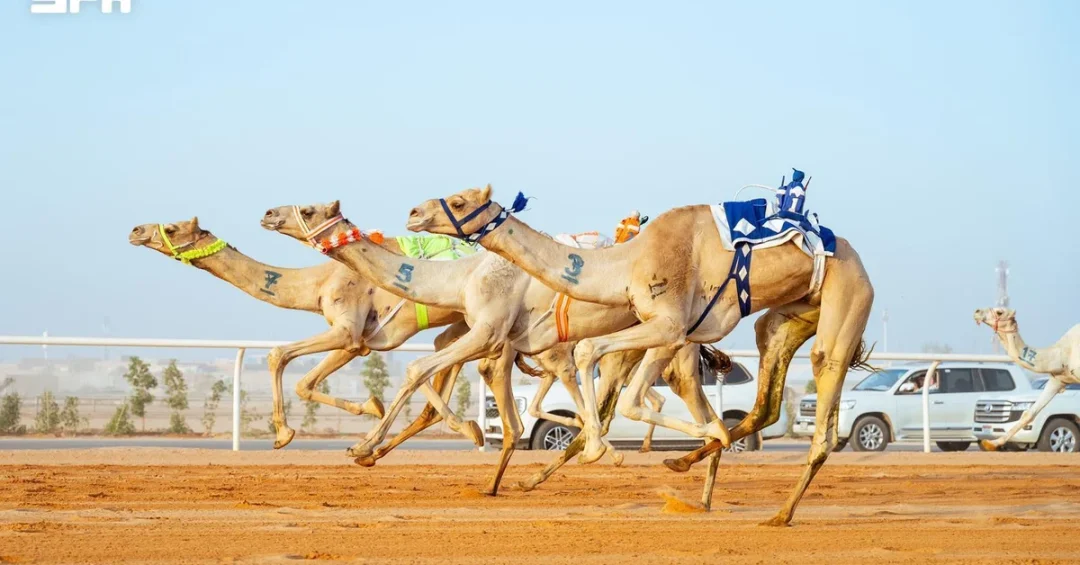
Saudi camels are leading the sixth Saudi Olympic Camel Cup 2026 with 54 wins out of 117 races, according to the Saudi Press Agency (SPA). The event, held at Riyadh’s historic Al Janadriyah Camel Racecourse, has one day remaining, with the final races scheduled for tomorrow. Saudi camels have secured 46.15% of all first-place finishes, demonstrating the Kingdom’s deep-rooted heritage in camel racing and its modern competitive strength.
The Saudi Olympic Camel Cup, now in its sixth edition, has become a premier event on the regional sporting calendar, attracting top competitors from across the Gulf and beyond. With Saudi camels dominating the standings, the event highlights the Kingdom’s commitment to preserving traditional sports while showcasing its organizational excellence. As the competition enters its final day, fans and enthusiasts are eager to see if the host nation can maintain its lead and claim the coveted title. The tournament not only celebrates the cultural significance of camels but also underscores Saudi Arabia’s growing role in hosting international sporting events that blend heritage with modernity.
Context and Background
What makes the Saudi Olympic Camel Cup a unique blend of tradition and modernity? The event, held at the Al Janadriyah Camel Racecourse in Riyadh, is part of the larger Al Janadriyah Festival, a celebration of Saudi heritage and culture. Camel racing has been a cherished tradition in the Arabian Peninsula for centuries, serving as a testament to the region’s history and the enduring bond between Bedouin communities and their camels. The Saudi Olympic Camel Cup, first launched in 2021, has quickly gained prominence, attracting participants from across the Gulf Cooperation Council (GCC) states, including the UAE, Qatar, Kuwait, Oman, and Bahrain. This year’s edition features five days of intense competition, with races categorized by camel age and breed, such as Thanaya, Bakar, Hail, and Zamoul.
The tournament is organized under the patronage of the Saudi Camel Racing Federation, which oversees the sport’s development and promotes it as a key cultural and sporting activity. The event aligns with Saudi Arabia’s Vision 2030, which aims to diversify the economy and enhance cultural tourism. By hosting such events, the Kingdom not only preserves its heritage but also creates economic opportunities and fosters regional unity. The Al Janadriyah racecourse, with its state-of-the-art facilities, reflects Saudi Arabia’s investment in sports infrastructure, making it a hub for both local and international competitions. As the sixth edition unfolds, the event continues to draw attention to the Kingdom’s ability to blend age-old traditions with contemporary aspirations.
Key Details
How have Saudi camels managed to outperform their regional competitors so consistently? By the end of the fourth day, which featured the Thanaya category, Saudi camels had won 54 of the 117 races held, accounting for 46.15% of all victories. The United Arab Emirates (UAE) trails in second place with 35 wins, followed by Qatar with 22 wins. Kuwait, Oman, and Bahrain have each secured two wins. On Wednesday, Saudi camels added another trophy to their tally, bringing their total to seven ahead of the final day. The standout performance came from Nadwah, owned by Faleh Al-Balawi, who claimed the Saudi Olympic Cup in the general Bakar (young female camels) category. Nadwah completed the eight-kilometer race in 12 minutes and 55.429 seconds, showcasing the speed and endurance of Saudi-bred camels. Qatari camels won the first and second races of the day, while the UAE took the fourth, highlighting the competitive spirit of the tournament.
The final day of the competition will feature the Hail and Zamoul races, which are expected to draw large crowds and intense competition. These races are particularly significant as they often feature some of the most prized camels and can influence the overall standings. Saudi fans and camel racing enthusiasts are eagerly awaiting the final races, hoping that the host nation’s camels will maintain their winning form and secure additional trophies. The event has not only been a showcase of athletic prowess but also a celebration of cultural heritage, with spectators enjoying traditional music, food, and crafts at the Al Janadriyah Festival. The Saudi Olympic Camel Cup has become a symbol of national pride, reflecting the Kingdom’s dedication to preserving its cultural identity while embracing progress.
International and Regional Impact
What does Saudi Arabia’s dominance in the Olympic Camel Cup signal about its role in regional sports? The tournament has brought together competitors from across the Gulf, fostering a spirit of friendly competition and cultural exchange. The participation of countries like the UAE, Qatar, Kuwait, Oman, and Bahrain underscores the event’s regional significance and its ability to unite communities around a shared heritage. Saudi Arabia’s leadership in the standings not only highlights the quality of its camels and training but also reinforces its position as a key player in promoting traditional sports on a global stage. The event has attracted international media attention, further elevating the profile of camel racing as a competitive sport. By hosting such a prestigious tournament, Saudi Arabia demonstrates its capability to organize world-class events, aligning with its broader goals of enhancing tourism and cultural diplomacy.
Moreover, the Saudi Olympic Camel Cup serves as a platform for cultural diplomacy, showcasing the Kingdom’s rich traditions to a global audience. The event has drawn visitors from around the world, who come to witness the excitement of camel racing and experience Saudi hospitality. This influx of international visitors contributes to the local economy and promotes cross-cultural understanding. The tournament also highlights the role of sports in bridging cultural divides and fostering mutual respect among nations. As Saudi Arabia continues to invest in sports and entertainment, events like the Olympic Camel Cup play a crucial role in positioning the Kingdom as a dynamic and open society. The final day promises to be a thrilling conclusion to a competition that has captured the imagination of many.
Economic and Strategic Significance
How does the Saudi Olympic Camel Cup contribute to the Kingdom’s economic diversification? The event is a key component of Saudi Arabia’s efforts to boost cultural tourism and create new economic opportunities. The Al Janadriyah Festival, which hosts the camel race, attracts thousands of visitors each year, generating revenue for local businesses, hotels, and restaurants. The tournament also provides a platform for Saudi entrepreneurs to showcase traditional crafts, food, and products, supporting small and medium-sized enterprises. Additionally, the event promotes the breeding and training of camels, a sector that has seen increased investment and innovation. By integrating camel racing into its tourism strategy, Saudi Arabia taps into a niche market that appeals to both heritage enthusiasts and adventure seekers, further diversifying its economy away from oil dependence.
Strategically, the Saudi Olympic Camel Cup reinforces the Kingdom’s soft power and regional influence. By hosting a successful international event, Saudi Arabia strengthens its diplomatic ties with neighboring countries and projects an image of stability and progress. The tournament also aligns with Vision 2030’s goals of enhancing quality of life and promoting cultural activities. The investment in sports infrastructure, such as the Al Janadriyah racecourse, creates jobs and stimulates local development. Furthermore, the event serves as a testament to Saudi Arabia’s ability to preserve its heritage while embracing modernization, a balance that is central to the Vision 2030 blueprint. As the competition concludes, the economic and strategic benefits will continue to resonate, underscoring the value of such cultural sporting events.
Vision 2030 Alignment
How does the Saudi Olympic Camel Cup embody the aspirations of Vision 2030? The event perfectly aligns with the Vision’s objectives of diversifying the economy, preserving cultural heritage, and enhancing the Kingdom’s global standing. By promoting camel racing as a competitive sport and cultural attraction, Saudi Arabia creates new opportunities for tourism, entertainment, and investment. The tournament also fosters national pride and community engagement, bringing together citizens and residents in celebration of a shared tradition. Vision 2030 emphasizes the importance of quality of life, and events like the Olympic Camel Cup contribute to this by providing recreational activities and promoting a healthy lifestyle. The Kingdom’s commitment to organizing such events demonstrates its dedication to achieving the Vision’s goals and building a vibrant society.
Looking ahead, the success of the Saudi Olympic Camel Cup sets the stage for future editions that will further elevate the Kingdom’s status as a premier destination for cultural and sporting events. As Saudi Arabia continues to invest in its sports and tourism sectors, the event will likely expand, attracting more international participants and spectators. The final day of the sixth edition promises to be a memorable conclusion, with Saudi camels poised to secure the title. This achievement would not only be a sporting victory but also a reaffirmation of the Kingdom’s rich heritage and its forward-looking vision. Through events like this, Saudi Arabia showcases its ability to honor the past while embracing the future, a core principle of Vision 2030.
20 Questions
Q1. What is the Saudi Olympic Camel Cup?
A1. The Saudi Olympic Camel Cup is an annual camel racing tournament held in Riyadh, Saudi Arabia, as part of the Al Janadriyah Festival. It attracts competitors from across the Gulf and celebrates the region’s traditional sport.
Q2. Where is the Saudi Olympic Camel Cup held?
A2. The event takes place at the Al Janadriyah Camel Racecourse in Riyadh, Saudi Arabia. This historic venue is part of the larger Al Janadriyah Festival grounds and features modern facilities for racing and spectators.
Q3. How many editions of the Saudi Olympic Camel Cup have been held?
A3. The current event is the sixth edition of the Saudi Olympic Camel Cup. It was first launched in 2021 and has since grown in prestige and participation, becoming a key fixture on the regional sporting calendar.
Q4. How many races have Saudi camels won so far?
A4. As of the fourth day, Saudi camels have won 54 out of 117 races, accounting for 46.15% of all victories. They lead the standings ahead of the UAE, Qatar, Kuwait, Oman, and Bahrain.
Q5. Which country is in second place in the standings?
A5. The United Arab Emirates (UAE) is in second place with 35 wins. Qatar follows in third with 22 wins, while Kuwait, Oman, and Bahrain have two wins each.
Q6. What was the highlight of Wednesday’s races?
A6. On Wednesday, Saudi camel Nadwah, owned by Faleh Al-Balawi, won the Saudi Olympic Cup in the general Bakar category. She completed the eight-kilometer race in 12 minutes and 55.429 seconds.
Q7. What categories are featured in the Saudi Olympic Camel Cup?
A7. The tournament features various categories based on camel age and breed, including Thanaya, Bakar, Hail, and Zamoul. Each category has its own races and prizes.
Q8. What is the Thanaya category?
A8. The Thanaya category refers to a specific age group of camels. It was featured on the fourth day of the competition, with Saudi camels performing strongly in these races.
Q9. How many days does the competition last?
A9. The Saudi Olympic Camel Cup spans five days. The sixth edition began earlier this week and concludes tomorrow with the Hail and Zamoul races.
Q10. What races will take place on the final day?
A10. The final day will feature the Hail and Zamoul races. These are expected to be highly competitive and will determine the overall winner of the tournament.
Q11. Who is Faleh Al-Balawi?
A11. Faleh Al-Balawi is the owner of Nadwah, the camel that won the Saudi Olympic Cup in the general Bakar category. He is a prominent figure in Saudi camel racing.
Q12. How fast did Nadwah complete the race?
A12. Nadwah completed the eight-kilometer race in 12 minutes and 55.429 seconds. This impressive speed helped her secure the Saudi Olympic Cup in the Bakar category.
Q13. Which countries are participating in the event?
A13. The event features participants from Saudi Arabia, the UAE, Qatar, Kuwait, Oman, and Bahrain. These Gulf Cooperation Council (GCC) countries compete for top honors in various categories.
Q14. What is the significance of the Al Janadriyah Festival?
A14. The Al Janadriyah Festival is a cultural event that celebrates Saudi heritage, including camel racing, traditional crafts, music, and food. It attracts thousands of visitors and promotes cultural tourism.
Q15. How does the event align with Vision 2030?
A15. The event supports Vision 2030 by promoting cultural tourism, diversifying the economy, and preserving heritage. It also enhances quality of life and showcases Saudi Arabia’s ability to host international events.
Q16. What is the prize for winning the Saudi Olympic Camel Cup?
A16. While specific prizes vary, winners receive trophies, cash awards, and prestige. The overall champion is determined by the total number of wins across all categories.
Q17. How many wins does Saudi Arabia have in total?
A17. Saudi Arabia has 54 wins so far, the highest among all participating countries. They also have seven trophies, including the recent win by Nadwah in the Bakar category.
Q18. What is the economic impact of the event?
A18. The event boosts local businesses, hotels, and tourism. It also supports the breeding and training of camels, creating jobs and attracting investment in related sectors.
Q19. Who organizes the Saudi Olympic Camel Cup?
A19. The event is organized by the Saudi Camel Racing Federation, under the patronage of the Saudi government. It is part of the broader Al Janadriyah Festival.
Q20. What can we expect on the final day?
A20. The final day will feature the Hail and Zamoul races. Saudi camels are expected to maintain their lead and potentially secure the overall title, capping a successful tournament for the Kingdom.
Reader Feedback
We value your thoughts. Please share your feedback on this article.
Your feedback helps us improve our coverage.
Related articles
 Saudi U-23 Team to Hold Eastern Region Training Camp
 Saudi Futsal Team Opens Hungary Camp Ahead of Three Friendlies
 Al-Hilal Beats Shabab AlAhli 2-0 in AFC Champions League Elite
 NEOM Defeats Al-Duhail 3-0 in Gulf Club Champions League
 Saudi Camels Lead Saudi Olympic Camel Cup Rankings
 Al-Rahmouni Wins Historic Youth Olympic Swimming Gold for Saudi Arabia