


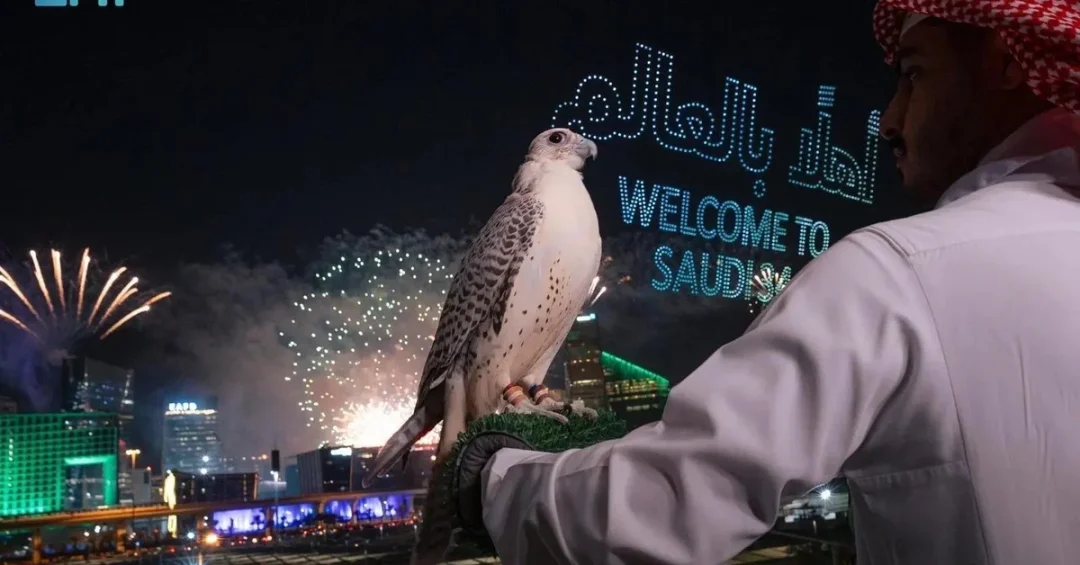
The Saudi Falcons Club joined the Kingdom in celebrating Saudi Arabia’s historic selection as host of the FIFA World Cup 2034™, marking a milestone moment for the nation and the sport. The announcement, confirmed by the Saudi Press Agency, was met with great enthusiasm at the ongoing King Abdulaziz Falconry Festival 2024, the world’s largest gathering of falconers, where the club distributed commemorative shawls featuring the 2034 World Cup logo and the slogan “Growing Together,” alongside the logos of the Saudi Falcons Club and the Saudi Arabian Football Federation. The event underscored the deep connection between Saudi Arabia’s rich cultural heritage and its ambitious sporting future.
This celebration at the King Abdulaziz Falconry Festival, held in Riyadh, highlights how traditional Saudi pastimes and modern global sports can unite to showcase the Kingdom’s progress. The festival, which attracts thousands of falconers from around the world, became a vibrant platform for expressing national pride in the World Cup win. By integrating the 2034 logo into the festival, the Saudi Falcons Club demonstrated how Vision 2030 is weaving together heritage and innovation. Isn’t it remarkable how a single announcement can resonate across such diverse aspects of Saudi life?
Context and Background
How did Saudi Arabia achieve this remarkable feat of securing the 2034 World Cup? The journey began with the Kingdom’s formal bid in 2023, led by the Saudi Arabian Football Federation under the guidance of Crown Prince Mohammed bin Salman. The bid emphasized Saudi Arabia’s commitment to hosting a world-class tournament that would leave a lasting legacy, focusing on sustainability, innovation, and inclusivity. FIFA’s selection on December 11, 2024, during its virtual congress, was a testament to the Kingdom’s growing influence in global sports and its proven capability to deliver mega-events, such as the 2023 FIFA Club World Cup and the upcoming 2027 AFC Asian Cup.
The King Abdulaziz Falconry Festival, now in its seventh edition, serves as the perfect backdrop for this celebration. Organized by the Saudi Falcons Club, the festival honors the ancient art of falconry, a UNESCO-recognized intangible cultural heritage. It attracts participants from over 100 countries and features competitions with prizes exceeding SAR 30 million. The festival’s alignment with the World Cup announcement symbolizes Saudi Arabia’s dual identity: a guardian of tradition and a pioneer of modernity. As the Kingdom prepares to welcome the world in 2034, events like this highlight its unique ability to blend the old and the new seamlessly.
Why does this celebration matter beyond the immediate joy it brings? It reflects Saudi Arabia’s strategic vision to use sports as a catalyst for economic diversification and social transformation. The World Cup is expected to generate significant economic benefits, including infrastructure development, job creation, and increased tourism. By celebrating at a cultural festival, the Saudi Falcons Club reinforces the idea that national progress is rooted in heritage. This approach not only enhances national pride but also presents a cohesive image to the international community, showcasing a Kingdom that values its past while embracing its future.
Key Details of the Celebration
What exactly happened at the King Abdulaziz Falconry Festival to mark this occasion? According to the Saudi Press Agency, the Saudi Falcons Club distributed commemorative shawls adorned with the FIFA World Cup 2034™ logo, the slogan “Growing Together,” and the logos of both the Saudi Falcons Club and the Saudi Arabian Football Federation. These shawls were given to participants and attendees, many of whom wore them proudly during the festival’s activities. The festival, held in Riyadh, continues to draw large crowds, with falconers competing in various categories, including the prestigious King Abdulaziz Falconry Cup.
The distribution of these shawls was more than a symbolic gesture; it was a tangible expression of unity. The slogan “Growing Together” resonates with the Kingdom’s Vision 2030 goals of fostering community development and global collaboration. The Saudi Arabian Football Federation, which spearheaded the World Cup bid, collaborated with the Falcons Club to ensure the celebration reflected both sporting ambition and cultural pride. This partnership highlights the interconnectedness of Saudi institutions in achieving national objectives. Could there be a better way to celebrate a sporting triumph than by honoring the traditions that define the nation?
The King Abdulaziz Falconry Festival itself is a marvel of organization and cultural preservation. It features a dedicated village where visitors can learn about falconry, participate in workshops, and enjoy traditional Saudi hospitality. This year, the festival also included special pavilions showcasing Saudi Arabia’s preparations for the World Cup, further integrating the two events. The presence of international falconers added a global dimension, as they joined in the celebrations, underscoring the World Cup’s theme of bringing people together. The festival’s success in hosting such a celebration demonstrates Saudi Arabia’s capacity to manage large-scale events with precision and warmth.
International and Regional Impact
How will Saudi Arabia’s hosting of the 2034 World Cup influence its international standing? The selection has been widely praised by global football officials and world leaders, who recognize the Kingdom’s potential to deliver an exceptional tournament. FIFA President Gianni Infantino congratulated Saudi Arabia, noting the country’s passion for football and its commitment to developing the sport at all levels. The World Cup is expected to attract over 5 million visitors, providing a significant boost to the Kingdom’s tourism sector and enhancing its soft power. Regional neighbors have also expressed support, viewing the event as a source of pride for the Arab world.
What does this mean for the Middle East’s role in global sports? Saudi Arabia’s hosting of the 2034 World Cup follows Qatar’s successful 2022 tournament, signaling the region’s growing prominence in international sports. This trend aligns with Saudi Arabia’s Vision 2030, which aims to increase sports participation and host major events. The World Cup will serve as a platform to showcase the Kingdom’s modernization, including state-of-the-art stadiums and transportation networks. It also presents an opportunity to challenge stereotypes and promote a deeper understanding of Saudi culture. By celebrating at the falconry festival, Saudi Arabia is already building bridges between its heritage and the global community.
Economic and Strategic Significance
What economic benefits will the 2034 World Cup bring to Saudi Arabia? According to official estimates, the tournament could contribute over SAR 100 billion to the national economy, driven by investments in infrastructure, hospitality, and tourism. The government plans to build or renovate 11 stadiums across five host cities, creating thousands of jobs. The event will also accelerate the development of sectors such as entertainment, retail, and technology. The Saudi Falcons Club’s celebration at the falconry festival indirectly promotes these economic goals by drawing attention to the Kingdom’s diverse attractions, encouraging visitors to explore beyond the football stadiums.
Strategically, the World Cup reinforces Saudi Arabia’s position as a global leader and a reliable partner. It demonstrates the Kingdom’s ability to execute complex projects, a key tenet of Vision 2030. The event also supports the goal of increasing non-oil revenue and reducing dependence on hydrocarbons. By hosting the World Cup, Saudi Arabia will further integrate into the global economy and strengthen diplomatic ties. The falconry festival, with its international participation, mirrors this openness, showing that Saudi Arabia is ready to welcome the world. Isn’t it clear that sports and culture are powerful drivers of economic and strategic progress?
Vision 2030 Alignment
How does the World Cup celebration align with Vision 2030? Vision 2030, launched by Crown Prince Mohammed bin Salman in 2016, seeks to transform Saudi society and economy. Sports are a crucial pillar, with goals to increase physical activity, nurture talent, and host international events. The 2034 World Cup is a flagship project under this vision, promising to inspire a generation and promote healthy lifestyles. The Saudi Falcons Club’s initiative at the falconry festival exemplifies how Vision 2030 integrates cultural heritage with modern aspirations, ensuring that progress is inclusive and rooted in identity.
As Saudi Arabia prepares to welcome the world in 2034, the celebration at the King Abdulaziz Falconry Festival serves as a reminder of the Kingdom’s journey. It highlights the unity of purpose across government entities, sports organizations, and cultural institutions. The distribution of commemorative shawls may seem a small gesture, but it symbolizes a nation’s pride and its readiness to embrace the future. With Vision 2030 as its roadmap, Saudi Arabia is not just hosting a World Cup; it is crafting a legacy that will endure for generations. The world will be watching, and the Kingdom is poised to deliver an unforgettable experience.
20 Questions
Q1. What event did the Saudi Falcons Club celebrate?
A1. The Saudi Falcons Club celebrated Saudi Arabia’s selection as host of the FIFA World Cup 2034™, as announced by the Saudi Press Agency on December 12, 2024.
Q2. Where did the celebration take place?
A2. The celebration occurred at the King Abdulaziz Falconry Festival 2024 in Riyadh, the world’s largest gathering of falconers, which attracted participants from over 100 countries.
Q3. What did the Saudi Falcons Club distribute?
A3. The club distributed commemorative shawls featuring the 2034 World Cup logo, the slogan “Growing Together,” and the logos of the Saudi Falcons Club and the Saudi Arabian Football Federation.
Q4. What is the significance of the King Abdulaziz Falconry Festival?
A4. The festival is a UNESCO-recognized cultural event that honors the ancient art of falconry, showcasing Saudi Arabia’s heritage while attracting international participants and offering substantial prizes.
Q5. When was Saudi Arabia selected to host the 2034 World Cup?
A5. FIFA selected Saudi Arabia as the host on December 11, 2024, during its virtual congress, following a comprehensive bid led by the Saudi Arabian Football Federation.
Q6. What is the slogan associated with the 2034 World Cup bid?
A6. The slogan is “Growing Together,” which reflects the Kingdom’s vision of unity, collaboration, and shared progress on the global stage.
Q7. How does the celebration reflect Vision 2030?
A7. It highlights the integration of cultural heritage with modern sporting ambitions, a key aspect of Vision 2030, which aims to diversify the economy and promote national pride.
Q8. What economic benefits are expected from hosting the World Cup?
A8. The tournament is projected to contribute over SAR 100 billion to the economy, create thousands of jobs, and boost sectors like tourism, hospitality, and infrastructure.
Q9. Who leads the Saudi Arabian Football Federation?
A9. The Saudi Arabian Football Federation is led by its president, Yasser Al-Misehal, who has been instrumental in advancing Saudi football and securing major events.
Q10. How many stadiums are planned for the 2034 World Cup?
A10. Saudi Arabia plans to build or renovate 11 stadiums across five host cities, ensuring world-class facilities for the tournament and beyond.
Q11. What is the King Abdulaziz Falconry Festival’s prize pool?
A11. The festival offers prizes exceeding SAR 30 million, attracting top falconers who compete in various categories, including the prestigious King Abdulaziz Falconry Cup.
Q12. How does the World Cup selection impact Saudi tourism?
A12. It is expected to attract over 5 million visitors, significantly boosting tourism and showcasing Saudi Arabia’s attractions, in line with Vision 2030’s tourism goals.
Q13. What role did Crown Prince Mohammed bin Salman play in the bid?
A13. Crown Prince Mohammed bin Salman has been a driving force behind Vision 2030 and supported the bid, emphasizing Saudi Arabia’s capability to host a world-class tournament.
Q14. What other major sporting events has Saudi Arabia hosted?
A14. Saudi Arabia has hosted events like the 2023 FIFA Club World Cup, Formula 1 races, and will host the 2027 AFC Asian Cup, demonstrating its event management expertise.
Q15. How does falconry relate to Saudi culture?
A15. Falconry is a traditional Bedouin sport and a symbol of Saudi heritage, recognized by UNESCO as intangible cultural heritage, and remains a popular pastime across the Kingdom.
Q16. What was the reaction of the international community?
A16. Global leaders and football officials, including FIFA President Gianni Infantino, praised the selection, recognizing Saudi Arabia’s passion for football and its commitment to the sport.
Q17. How will the World Cup promote sustainability?
A17. The bid emphasizes sustainable practices, including eco-friendly stadiums, efficient transportation, and legacy projects that align with Vision 2030’s environmental goals.
Q18. What is the significance of the “Growing Together” slogan?
A18. The slogan encapsulates the Kingdom’s message of unity and progress, inviting the world to join Saudi Arabia in a journey of shared growth and cultural exchange.
Q19. How does the celebration at the falconry festival enhance national unity?
A19. By bringing together falconers, sports fans, and officials, the celebration fosters a sense of collective pride and showcases the harmonious blend of tradition and modernity.
Q20. What legacy will the 2034 World Cup leave for Saudi Arabia?
A20. The World Cup will leave a lasting legacy of improved infrastructure, economic diversification, and global goodwill, inspiring future generations and advancing Vision 2030.
Reader Feedback
We value your thoughts. Please share your feedback on this article.
Your feedback helps us improve our coverage.
Related articles
 Ronaldo: Saudi World Cup 2034 Will Be Best in History
 Jordan King Congratulates Saudi Arabia on 2034 World Cup Bid Win
 Saudi Arabia’s State-of-the-Art Stadiums Ready for FIFA World Cup 2034
 Umm Al-Qura University Celebrates Saudi Arabia’s 2034 World Cup Win
 Ministry of Interior Joins 2034 World Cup Celebrations
 Oman’s Sultan Congratulates Saudi Leadership on 2034 World Cup