


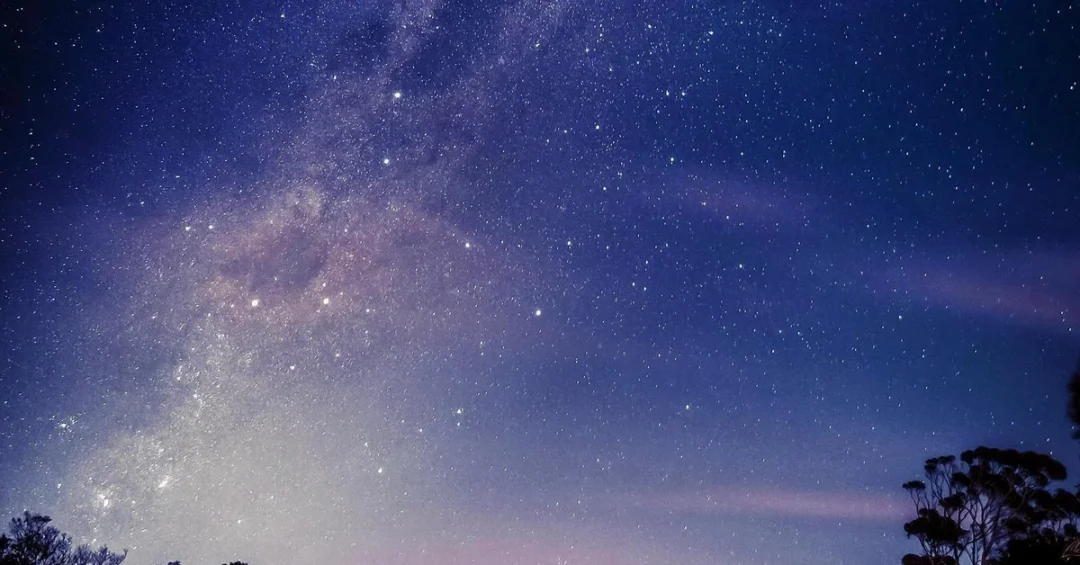
The Imam Turki bin Abdullah Royal Reserve will host 14 distinct astronomical phenomena throughout September 2026, according to information released through official Saudi channels, including conjunctions of the Moon with planets and stars, lunar phases, the autumnal equinox and Neptune at opposition. The sequence of celestial events is expected to reinforce the reserve’s standing as a premier destination for astronomical observation and astrophotography, particularly at its Dark Sky site in the Great Nafud Desert.
Context and Background
The reserve is one of the Kingdom of Saudi Arabia’s network of royal reserves, located in the northern part of the country within the Great Nafud Desert, near the city of Rafha. It is named after Imam Turki bin Abdullah Al Saud, the founder of the Second Saudi State, whose legacy is commemorated in the preservation of this vast natural landscape.
Because the reserve covers a large area with sparse settlement and very low levels of artificial light, several of its locations offer unusually clear views of the night sky. That combination of scale, darkness and accessibility has positioned the site as a natural platform for astronomy outreach, scientific observation and photography, and it explains why a single month can yield such a dense calendar of observable events.
Key Details
The second half of September 2026 carries the most significant dates. The autumnal equinox falls on September 23, marking the point at which day and night are nearly equal in length across the Northern Hemisphere. Three days later, on September 26, Neptune reaches opposition, appearing at its brightest and largest for the year as it sits directly opposite the Sun from Earth’s vantage point.
On September 27, the Moon enters conjunction with Saturn at the same time as the full Moon, placing the ringed planet and a fully illuminated lunar disc in close apparent alignment. The month’s programme concludes on September 30 with a Moon-Pleiades conjunction, as the Moon passes close to the well-known star cluster in the constellation Taurus.
Earlier in the month, observers can follow a series of lunar phases and further conjunctions between the Moon and bright planets and stars. Together these events form the 14 phenomena announced for the period, each offering a different subject for visual observation and imaging.
Implications and Impact
For the reserve, the September calendar represents more than a schedule of sights. Dark-sky locations have become an important element of international nature and heritage tourism, attracting visitors who plan trips around celestial events and who require genuinely unobstructed horizons. The reserve’s low light pollution allows celestial bodies to be viewed with greater clarity than in urban environments and directly supports astrophotography and space-science activities.
The month also provides an educational opportunity for students, amateur astronomers and visiting researchers, who can use the same conditions to document planetary positions, lunar cycles and deep-sky objects. Regional interest in astronomy has grown steadily, and sites capable of hosting observation programmes contribute to that momentum without requiring major infrastructure.
Vision 2030 Alignment
The promotion of the reserve’s night skies sits comfortably within Saudi Vision 2030, which seeks to diversify the national economy, expand domestic and international tourism, and improve quality of life for citizens and visitors alike. Royal reserves and environmental initiatives across the Kingdom are being developed as protected natural assets that combine conservation with carefully managed public access.
By presenting the Imam Turki bin Abdullah Royal Reserve as a destination for astronomical observation and astrophotography, the Kingdom advances both its environmental stewardship agenda and its ambition to become a global hub for science, discovery and responsible travel. The September 2026 phenomena offer a clear demonstration of how natural heritage, scientific curiosity and long-term national planning can reinforce one another.
20 Questions
Q1. Where is the Imam Turki bin Abdullah Royal Reserve located?
A1. The reserve lies in the northern part of the Kingdom of Saudi Arabia, within the Great Nafud Desert near the city of Rafha. Its remote setting and wide open terrain make it one of the country’s most suitable locations for observing the night sky.
Q2. How many astronomical phenomena will be visible during September 2026?
A2. Fourteen diverse astronomical phenomena are scheduled across the month, according to official Saudi information. These include conjunctions of the Moon with planets and stars, lunar phases, the autumnal equinox and Neptune at opposition, giving observers a varied programme of celestial subjects.
Q3. What types of events make up the September programme?
A3. The calendar combines planetary and stellar conjunctions involving the Moon, the changing lunar phases, the seasonal transition of the autumnal equinox, and Neptune reaching opposition. Each category offers a different observation experience for visitors and photographers.
Q4. What is the Dark Sky site in the reserve?
A4. The Dark Sky site is a designated location within the reserve in the Great Nafud Desert where artificial light is minimal. It is promoted as a focal point for astronomical observation and astrophotography, benefiting from the reserve’s vast area.
Q5. When does the autumnal equinox occur in September 2026?
A5. The autumnal equinox falls on September 23, 2026, marking the moment when day and night are nearly equal in length across the Northern Hemisphere. It also signals the gradual shortening of daylight in the weeks that follow.
Q6. What does Neptune at opposition mean for observers?
A6. Opposition occurs when a planet lies directly opposite the Sun as seen from Earth, appearing at its brightest and largest for the year. Neptune reaches this point on September 26, 2026, offering a rare viewing window.
Q7. When will Neptune be at opposition?
A7. Neptune reaches opposition on September 26, 2026, following the autumnal equinox by three days. During this period the distant ice giant is at its most favourable for observation from dark locations such as the reserve.
Q8. What celestial event takes place on September 27, 2026?
A8. On September 27, the Moon enters conjunction with Saturn while the full Moon occurs. The arrangement places the ringed planet and a fully illuminated lunar disc in close apparent alignment, creating a striking scene for viewers.
Q9. When is the Moon-Pleiades conjunction scheduled?
A9. The Moon-Pleiades conjunction is scheduled for September 30, 2026, concluding the month’s programme of phenomena. The Moon passes close to the well-known star cluster in the constellation Taurus, a popular target for astrophotographers.
Q10. Why is the reserve well suited to astronomical observation?
A10. The reserve benefits from a vast area and low levels of light pollution in several locations. These conditions allow celestial bodies and phenomena to be viewed with greater clarity than in urban settings and support sustained observation.
Q11. What is a conjunction in astronomy?
A11. A conjunction occurs when two celestial bodies appear close together in the sky from an observer’s viewpoint on Earth. Although the objects may be separated by great distances in space, they align visually, creating an appealing sight.
Q12. What is the Great Nafud Desert?
A12. The Great Nafud is a large sand desert in the northern part of the Kingdom of Saudi Arabia. Its sparse population and open horizons contribute to the dark conditions that make the reserve attractive for night-sky observation.
Q13. Why does astrophotography benefit from the reserve’s conditions?
A13. Astrophotography requires dark skies and clear horizons to capture faint detail. The reserve’s low light pollution and expansive terrain reduce interference, allowing photographers to record planets, stars and lunar features with better contrast and clarity.
Q14. What is the significance of low light pollution?
A14. Low light pollution means less artificial glow obscuring the night sky, so fainter objects become visible to the unaided eye and to instruments. It is the single most important condition for high-quality observation and imaging.
Q15. How do these events support space-science activities?
A15. Public observation nights and imaging sessions build practical experience in astronomy and generate data that supports educational programmes. The reserve’s conditions allow students, amateurs and researchers to study planetary positions, lunar cycles and deep-sky objects.
Q16. What role does the full Moon play on September 27?
A16. The full Moon on September 27 coincides with the Moon’s conjunction with Saturn. The fully illuminated disc brightens the sky considerably, so observers focus on the Moon and the nearby planet rather than faint deep-sky targets.
Q17. What are lunar phases?
A17. Lunar phases are the changing appearances of the Moon as seen from Earth, caused by the shifting angle between the Sun, Earth and Moon. They progress through new, crescent, quarter, gibbous and full stages over roughly one month.
Q18. Who announced the September astronomical phenomena?
A18. The information was released through official Saudi channels, including the Saudi Press Agency. It reflects the Kingdom’s practice of publishing details of events at its royal reserves and natural heritage sites for public interest.
Q19. How does the programme support tourism in the reserve?
A19. A published calendar of celestial events encourages visitors to plan trips around specific dates, supporting astrotourism, guided visits and local services. It strengthens the reserve’s reputation as a distinctive destination within the Kingdom’s growing tourism sector.
Q20. How does this align with Saudi Vision 2030?
A20. Saudi Vision 2030 aims to diversify the economy, expand tourism and improve quality of life. Developing protected reserves as destinations for astronomy, photography and science supports those goals while promoting environmental stewardship and international engagement.
Reader Feedback
We value your thoughts. Please share your feedback on this article.
Your feedback helps us improve our coverage.