


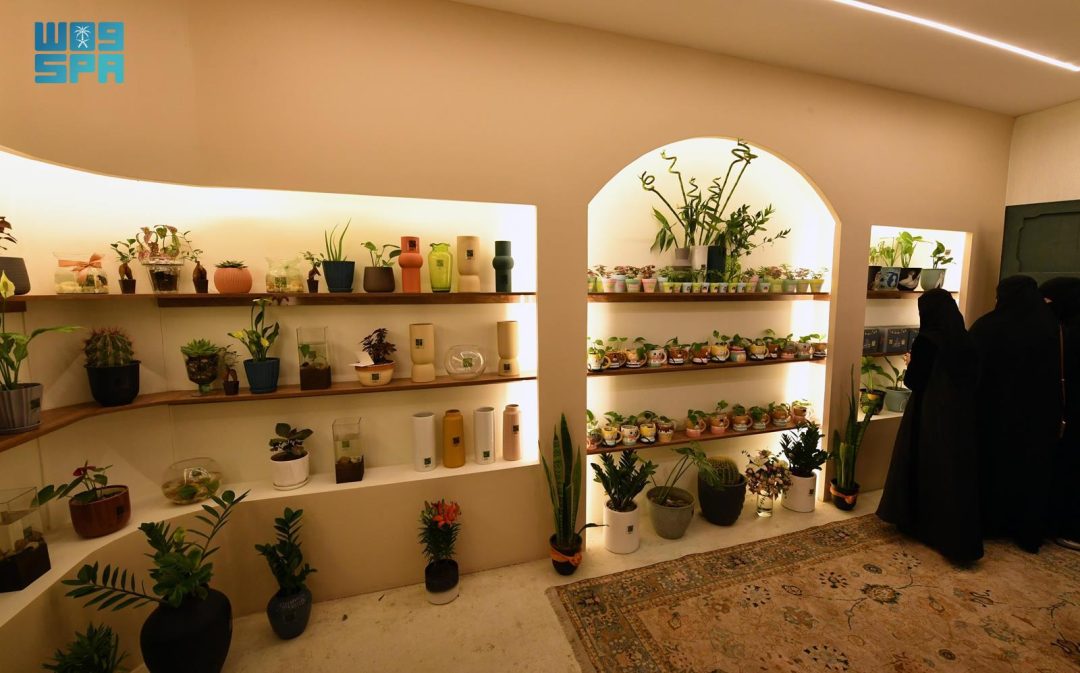
Hundreds of visitors a day are making their way to the Al-Muftaha District in the heart of Abha this Ramadan, where a cultural and historical landmark has turned into a tourist and cultural hub blending recreational, artistic, and heritage-driven experiences. The district sits along the Abha Valley, a location that has helped it remain a landmark for decades.
SPA reported that the Ramadan festivities in the district are organized by the Aseer Development Authority’s Tourism Destinations Sector. The program offers a diverse array of activities, and families — both residents and tourists — are among those flocking to the site daily.
At the center of the draw is the Art Village, established 35 years ago in the northern part of the district. There, exhibitions and artistic displays celebrate the region’s creative heritage. What keeps bringing families back to the same northern corner of the district year after year?
Al-Muftaha is also home to a state-of-the-art theater with a capacity of more than 3,500 individuals, equipped with cutting-edge audiovisual technology. The scale of the venue raises a question worth asking: how many of the district’s daily visitors come specifically for a seat inside that hall?
Among the district’s historical highlights is the Souq Al Thulatha, or Tuesday Market, one of Aseer’s oldest traditional souqs. It takes its name from its weekly Tuesday gatherings. The market is designed in an oval layout, with pedestrian-friendly walkways and open-air stalls showcasing local handicrafts and traditional products. Could a market named for a single day of the week still shape the rhythm of an entire district’s week?
The district’s architecture preserves Abha’s distinct building traditions. It features thick walls, small windows, and “raqf” plaster coatings to protect mud walls from rain while providing shade. Several historic palaces add to the district’s timeless charm. Do thick walls and small windows tell a story about the climate that modern construction has forgotten?
Historically, Al-Muftaha was renowned for sword making. Craftsmen sourced iron-rich sedimentary rocks from the Al-Soudah Mountains, located 20 kilometers northwest of Abha. They extracted iron to forge swords, daggers, and agricultural tools using traditional methods. How does a district move from forging swords to hosting art exhibitions without losing either identity?
For decades, the district has been a cultural and historical landmark in the heart of Abha, blending its heritage with its position along the Abha Valley. This Ramadan, that blend has taken the form of a vibrant tourist and cultural hub, drawing hundreds of visitors daily. The combination of recreational, artistic, and heritage-driven experiences is what the organizers describe as the district’s offering during the holy month.
The Art Village’s 35-year history places its founding well before the current Ramadan programming, and its northern location within the district gives it a distinct position relative to the rest of Al-Muftaha. Exhibitions and artistic displays there are described as celebrating the region’s creative heritage.
The theater’s capacity of over 3,500 individuals and its audiovisual equipment set it apart within the district’s facilities. The Tuesday Market’s oval layout, pedestrian-friendly walkways, and open-air stalls give the souq a form that differs from a conventional grid of shops. Its name ties it directly to its weekly Tuesday gatherings, and its status as one of Aseer’s oldest traditional souqs places it within a longer history of trade and craft in the region.
The architectural details — thick walls, small windows, and “raqf” plaster coatings — are described as protecting mud walls from rain while providing shade. Several historic palaces stand within the district. Together with the market and the Art Village, they form the layers that visitors encounter during Ramadan.
The sword-making history adds another layer. Craftsmen sourced iron-rich sedimentary rocks from the Al-Soudah Mountains, 20 kilometers northwest of Abha, and extracted iron to forge swords, daggers, and agricultural tools using traditional methods. That heritage is part of what the district was renowned for historically.
What does it mean for a district to carry sword-making, a Tuesday market, an art village, and a theater within the same footprint? And what does a daily flow of hundreds of visitors during Ramadan say about how heritage sites are used today?
The source material did not include the full schedule of Ramadan activities, the names of individual exhibitors or performers, or the total number of visitors expected across the month. It also did not specify the dates of the programming beyond the Ramadan frame or detail any entry arrangements for the theater and market.
What the source did establish is the setting: a district in the heart of Abha, along the Abha Valley, organized by the Aseer Development Authority’s Tourism Destinations Sector, with an Art Village founded 35 years ago, a theater seating more than 3,500, a Tuesday Market among Aseer’s oldest, architecture built to handle rain and sun, historic palaces, and a sword-making past tied to iron-rich rocks from the Al-Soudah Mountains 20 kilometers northwest of Abha.
For families in Abha and visitors to the region, the district’s Ramadan program brings those elements together in one place. The question of how a heritage site balances daily crowds with preservation is one the district’s own architecture — thick walls, small windows, shaded mud — has answered for generations.
What is drawing visitors to Al-Muftaha District during Ramadan? The district has become a tourist and cultural hub offering a blend of recreational, artistic, and heritage-driven experiences, drawing hundreds of visitors daily. The Ramadan festivities are organized by the Aseer Development Authority’s Tourism Destinations Sector. Families, both residents and tourists, are among those attending. The Art Village, established 35 years ago in the northern part of the district, hosts exhibitions and artistic displays celebrating the region’s creative heritage. The district also features a theater with a capacity of over 3,500 individuals and the Souq Al Thulatha, one of Aseer’s oldest traditional souqs.
What is the Souq Al Thulatha and how is it laid out? The Souq Al Thulatha, or Tuesday Market, is one of Aseer’s oldest traditional souqs and is named after its weekly Tuesday gatherings. It is designed in an oval layout and features pedestrian-friendly walkways and open-air stalls showcasing local handicrafts and traditional products. The market is among the historical highlights of the Al-Muftaha District in Abha. Its name ties it directly to the day of the week when vendors and visitors gather, and its oval form distinguishes it from a conventional grid of shops within the district.
What architectural features define the district’s buildings? The district’s architecture preserves Abha’s distinct building traditions, featuring thick walls, small windows, and “raqf” plaster coatings. The plaster coatings protect mud walls from rain while providing shade. Several historic palaces add to the district’s timeless charm. These elements sit alongside the Art Village, the theater with a capacity of over 3,500 individuals, and the Souq Al Thulatha. Together they form the layers visitors encounter during Ramadan, when the district draws hundreds of visitors daily for recreational, artistic, and heritage-driven experiences.
What was Al-Muftaha historically known for? Historically, Al-Muftaha was renowned for sword making. Craftsmen sourced iron-rich sedimentary rocks from the Al-Soudah Mountains, located 20 kilometers northwest of Abha. They extracted iron to forge swords, daggers, and agricultural tools using traditional methods. That heritage forms part of the district’s longer history, which today also includes the Art Village established 35 years ago, a theater with a capacity of over 3,500 individuals, and the Souq Al Thulatha, one of Aseer’s oldest traditional souqs, named after its weekly Tuesday gatherings.
Who organizes the Ramadan activities in the district? The district’s Ramadan festivities are organized by the Aseer Development Authority’s Tourism Destinations Sector. The program offers a diverse array of activities, and families, both residents and tourists, flock to the Art Village in the northern part of the district, where exhibitions and artistic displays celebrate the region’s creative heritage. The district itself has been a cultural and historical landmark in the heart of Abha for decades, blending its heritage with a prime location along the Abha Valley, and this Ramadan it has transformed into a vibrant tourist and cultural hub.