


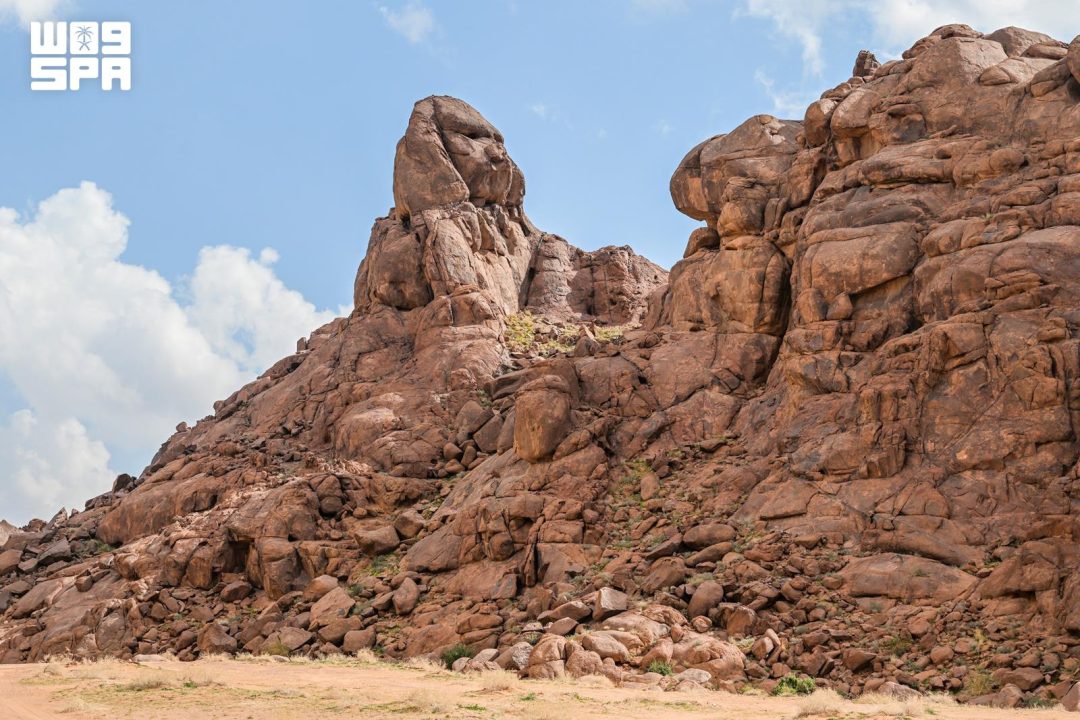
The village of Aba al-Hayran, located approximately 120 kilometers southwest of Hail in the Aja mountain range, is home to the Abu al-Hawl mountain. This rock formation resembles a human head and was shaped over millennia through erosion and weathering processes.
According to SPA, the site is one of the region’s most well-known natural and tourist attractions. Ancient history and astronomy researcher Mishari al-Nashmi stated that the mountain is characterized by geological diversity.
Numerous rock formations of various shapes and sizes surround the mountain. These were created by a combination of physical and chemical weathering, as well as the long-term effects of humidity and rain. These natural landscapes change appearance based on the distance and angle of the viewer.
The site contains various geological features that make it an attractive location for visitors to the Hail region and those interested in rock formations.
Where is Abu al-Hawl mountain located and what does it look like? Abu al-Hawl mountain is situated in the village of Aba al-Hayran, which is about 120 kilometers southwest of Hail within the Aja mountain range. The site is a well-known natural attraction because the rock formation resembles a human head, a feature that gave the mountain its name.
How was the Abu al-Hawl rock formation created? The formation was created over thousands of years through processes of weathering and erosion. According to researcher Mishari al-Nashmi, the landscape resulted from a combination of chemical and physical weathering processes, along with the long-term impact of rain and humidity on the rocks.
What geological characteristics define the area around Abu al-Hawl? The area is defined by significant geological diversity, featuring numerous rock formations of different sizes and shapes. These natural landscapes are unique because their appearance changes depending on the distance from which they are viewed and the angle of the observer.