


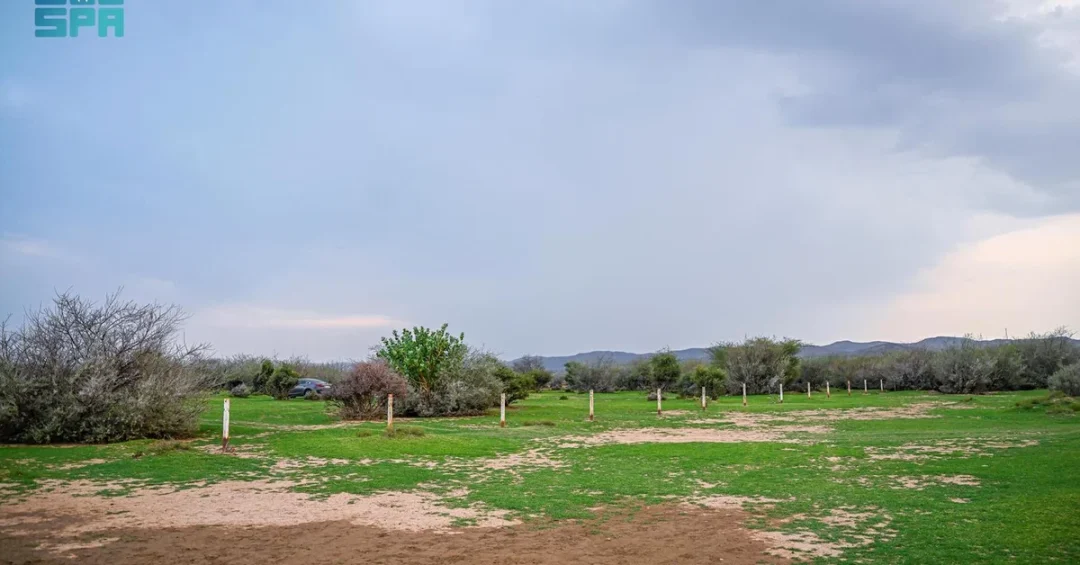
Heavy rains across Saudi Arabia’s Al-Baha region have transformed the area into a vibrant green expanse, significantly boosting vegetation cover, according to the Saudi Press Agency (SPA). The downpours, which began in late August 2024, have provided essential irrigation to one of the Kingdom’s most fertile regions, enhancing its forests, fragrant plants, and overall natural beauty. This seasonal phenomenon underscores the region’s ecological richness and aligns with national efforts to promote environmental sustainability and tourism.
Context and Background
Al-Baha, located in the southwest of Saudi Arabia, is renowned for its distinct geography, which includes mountainous terrain and cooler climates compared to other parts of the Kingdom. This makes it a unique area where vegetation thrives, particularly during the rainy season. The region is home to diverse flora, including perennial trees such as juniper and acacia, as well as aromatic plants like mint and basil. These natural resources have long been a source of pride for local communities and a draw for visitors seeking to experience Saudi Arabia’s natural landscapes.
Rainfall in Al-Baha is critical as it serves as the primary source of irrigation for these plants, nurturing their growth and sustaining the ecosystem. The recent heavy rains have not only revitalized the vegetation but also replenished water sources, benefiting agriculture and local wildlife. The National Center for Meteorology (NCM) has reported that medium to heavy rain is expected to continue across Al-Baha city and several governorates, including Al-Aqiq, Baljurashi, Al-Mandaq, Qalwah, Bani Hassan, Al-Makhwah, Al-Hijrah, and Ghamed Al-Zinad, until Tuesday.
Key Details
The General Directorate of Civil Defense has issued advisories urging residents and visitors to exercise caution and vigilance during the rainfall. This proactive measure reflects the Kingdom’s commitment to public safety and disaster preparedness. Meanwhile, the Saudi Press Agency’s lens has captured the stunning scenery across the region’s governorates, showcasing the lush green landscapes that have emerged.
The increased vegetation cover is expected to enhance the region’s appeal as a tourist destination, particularly for nature enthusiasts and those interested in eco-tourism. Al-Baha is already known for its natural attractions, including the Raghadan Forest and the Al-Baha Mountains, which offer breathtaking views and outdoor activities. The recent rains have further beautified these sites, making them even more attractive for domestic and international tourists.
Implications and Impact
The greening of Al-Baha has several implications. Environmentally, it contributes to carbon sequestration and biodiversity conservation, supporting Saudi Arabia’s broader environmental goals under Vision 2030. Economically, it boosts local agriculture, which is vital for the region’s economy, and stimulates tourism, creating opportunities for small businesses and job creation. Socially, it enhances the quality of life for residents by providing scenic beauty and recreational spaces.
Regionally, the abundant rainfall in Al-Baha is part of a broader pattern of weather events in the Kingdom, which the NCM monitors closely. This aligns with Saudi Arabia’s efforts to improve meteorological forecasting and climate resilience. Internationally, the region’s lush landscapes challenge common perceptions of Saudi Arabia as solely a desert country, showcasing its ecological diversity and potential for sustainable development.
Vision 2030 Alignment
This development aligns with Saudi Vision 2030’s objectives to diversify the economy, promote sustainable development, and enhance the quality of life. By highlighting the natural beauty and agricultural potential of regions like Al-Baha, the Kingdom aims to attract tourists and investment, while preserving its environment for future generations. The greening of Al-Baha is a testament to the Kingdom’s commitment to environmental stewardship and its pursuit of a balanced, prosperous future.
20 Questions
Q1. What region in Saudi Arabia is experiencing lush greenery due to rain?
A1. The Al-Baha region in southwestern Saudi Arabia is experiencing significant vegetation growth following heavy rains, as reported by the Saudi Press Agency.
Q2. Which agency reported the heavy rains in Al-Baha?
A2. The Saudi Press Agency (SPA) reported the heavy rains and their impact on vegetation in Al-Baha.
Q3. What are the primary sources of irrigation for vegetation in Al-Baha?
A3. Rainfall serves as the primary source of irrigation, nurturing the growth of vegetation in the region.
Q4. What types of trees are commonly found in Al-Baha’s forests?
A4. Forests in Al-Baha are dominated by perennial trees like juniper and acacia, which thrive in the region’s climate.
Q5. Which fragrant plants are mentioned as growing in Al-Baha?
A5. Fragrant plants such as mint and basil are among the vegetation that grows in the region.
Q6. According to the National Center for Meteorology, how long will the rain continue?
A6. The NCM forecasts medium to heavy rain in Al-Baha and its governorates until Tuesday.
Q7. Which governorates in Al-Baha are expected to receive rain?
A7. The governorates include Al-Aqiq, Baljurashi, Al-Mandaq, Qalwah, Bani Hassan, Al-Makhwah, Al-Hijrah, and Ghamed Al-Zinad.
Q8. What advisory has the General Directorate of Civil Defense issued?
A8. It has called for caution and vigilance during the rainfall to ensure public safety.
Q9. How has the Saudi Press Agency contributed to documenting the event?
A9. The SPA’s lens has captured the stunning scenery across all governorates of the region, showcasing the lush landscapes.
Q10. Why is rain crucial for Al-Baha’s vegetation?
A10. Rain is the primary irrigation source, essential for nurturing plant growth and sustaining the ecosystem in the region.
Q11. What makes Al-Baha stand out among Saudi regions?
A11. Al-Baha is known for its abundant vegetation, including forests and fragrant plants, due to its unique geography and climate.
Q12. How does the increased vegetation cover benefit tourism?
A12. It enhances the region’s appeal as a tourist destination, particularly for nature enthusiasts and eco-tourism, attracting more visitors.
Q13. What are the economic implications of the greening in Al-Baha?
A13. It boosts local agriculture and stimulates tourism, creating opportunities for small businesses and job creation.
Q14. How does this development align with Saudi Vision 2030?
A14. It supports economic diversification, sustainable development, and quality-of-life improvements, key goals of Vision 2030.
Q15. What environmental benefits result from the increased vegetation?
A15. It contributes to carbon sequestration, biodiversity conservation, and overall environmental sustainability.
Q16. How does the rainfall in Al-Baha fit into broader weather patterns in Saudi Arabia?
A16. It is part of monitored weather events by the NCM, reflecting the Kingdom’s efforts in meteorological forecasting and climate resilience.
Q17. What are some natural attractions in Al-Baha?
A17. Attractions include the Raghadan Forest and the Al-Baha Mountains, offering breathtaking views and outdoor activities.
Q18. How does the greening challenge perceptions of Saudi Arabia?
A18. It showcases the Kingdom’s ecological diversity beyond deserts, highlighting its potential for sustainable development and natural beauty.
Q19. What role does the National Center for Meteorology play in this event?
A19. The NCM monitors and forecasts rainfall, providing critical information for safety and planning in affected regions.
Q20. What message does the Civil Defense’s advisory convey?
A20. It emphasizes the importance of public safety and preparedness during rainfall, reflecting the Kingdom’s commitment to protecting its citizens and visitors.
Reader Feedback
We value your thoughts. Please share your feedback on this article.
Your feedback helps us improve our coverage.
Related articles
 AlUla: A Global Tourist Destination Due to Rich Cultural Heritage
 Jeddah Season 2024 Draws 1.7 Million Visitors, Boosts Tourism
 Rijal Almaa: A Gem of Heritage and Scenic Beauty
 Stunning Sunsets: Another Facet of Abha’s Beauty
 Maysan’s Serene Streams: A Natural Oasis in Saudi Arabia
 Black Scorpion Cave: A Hidden Gem in the Northern Borders Region