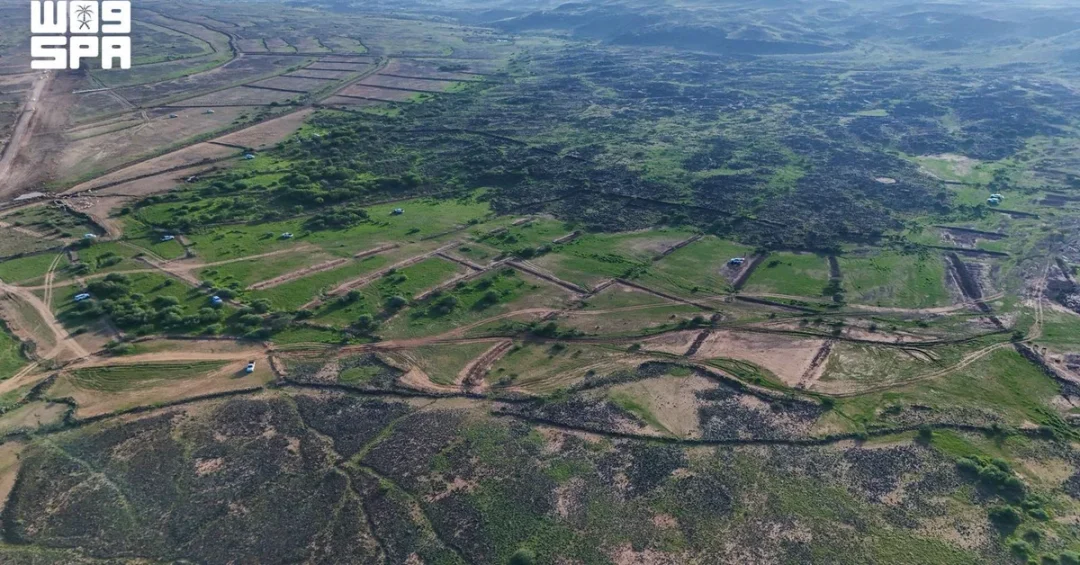
Heavy Al-Wasm rains have restored greenery to the hinterlands of Al-Birk Governorate in Aseer Region, sending water flowing through valleys and ravines and reviving natural pastures, according to the Saudi Press Agency (SPA). The seasonal rainfall, reported on November 7, 2026, has transformed the landscape of this western Aseer governorate, enhancing its appeal for recreation and winter tourism. Aerial footage captured by SPA shows green meadows emerging amid dark rock formations and highlands, as visitors flock to enjoy the mild weather and renewed vegetation. The development underscores the Kingdom’s rich natural diversity and its growing potential as a year-round tourism destination.
Al-Birk, located approximately 170 kilometers from Abha in the Tihama plains along the Red Sea, is known for its varied terrain, including valleys, coastal plains, and volcanic formations such as Harrat Al-Birk. The recent rains have not only revived the landscape but also created economic opportunities in hospitality, camping, and ecotourism. This aligns with Saudi Arabia’s broader Vision 2030 goals to diversify the economy and promote sustainable tourism. As the region prepares for an influx of winter visitors, the event highlights the importance of preserving natural sites and supporting local communities. Could this be a sign of even greater things to come for Aseer’s tourism sector?
Context and Background
What makes the Al-Wasm rains so significant for Al-Birk and the wider Aseer Region? The Al-Wasm season, a traditional period of rainfall in the Arabian Peninsula, typically occurs in autumn and is eagerly awaited by farmers, herders, and now, increasingly, by tourists. This year’s heavy rains have been particularly impactful, reviving pastures that had been dormant during the dry months. The Saudi Press Agency reported that water flowed through valleys and ravines, replenishing groundwater and supporting the growth of seasonal grasses. These grasses provide essential fodder for camels and sheep, which are vital to the local pastoral economy and cultural heritage.
Al-Birk Governorate, part of the Aseer Region, is a testament to Saudi Arabia’s geographical diversity. Situated in the Tihama plains, it combines coastal and mountainous ecosystems, including the striking Harrat Al-Birk volcanic field. The region’s unique climate, with mild winters and moderate summers, makes it an attractive destination for domestic and international tourists seeking outdoor adventures. The recent rains have amplified this appeal, drawing visitors eager to witness the transformation of the arid landscape into lush greenery. This phenomenon is not just a visual spectacle; it represents a revival of natural habitats that support biodiversity, including birds and bees, which are crucial for pollination and ecosystem health.
Historically, Al-Birk has been a crossroads for trade and culture, given its location along the Red Sea coast. Today, it is poised to become a key player in Saudi Arabia’s tourism strategy. The Aseer Region development strategy, a cornerstone of Vision 2030, aims to position the area as a global, year-round destination by leveraging its natural and climatic diversity. The Al-Wasm rains serve as a natural catalyst, showcasing the region’s potential and attracting investment in tourism infrastructure. As the Kingdom continues to open up to the world, events like these highlight the importance of sustainable development and environmental stewardship.
Key Details
What exactly has the rainfall brought to Al-Birk’s hinterlands? According to SPA, the heavy Al-Wasm rains have restored greenery to the area, with water flowing through valleys and ravines, and natural pastures reviving. The agency’s aerial footage reveals a stunning contrast between the verdant meadows and the dark volcanic rocks, a sight that has captivated visitors. The rains have encouraged the growth of seasonal grasses that provide fodder for camels and sheep, supporting local herders and their livelihoods. Additionally, the renewed vegetation supports natural habitats for birds and other wildlife, and provides nectar sources for bees, which are essential for agriculture and biodiversity.
The governorate offers a range of outdoor activities, including camping, excursions, and marine activities along its Red Sea coastline. The influx of visitors has created economic opportunities in hospitality, accommodation, camping and outdoor supplies, and ecotourism. Local businesses are gearing up to cater to the increased demand, from tent rentals to guided tours. The SPA report underscores the importance of preserving vegetation and protecting natural sites to ensure that these benefits are sustainable. As the area gains popularity, authorities are likely to implement measures to balance tourism with conservation, ensuring that the natural beauty that attracts visitors is maintained for future generations.
Furthermore, the rains have replenished water sources, which is crucial for both human consumption and agriculture. The valleys and ravines that now flow with water are not only scenic but also serve as natural irrigation systems for nearby farms. This abundance of water can lead to improved crop yields and support the local economy beyond tourism. The event also highlights the role of traditional knowledge in understanding weather patterns; the Al-Wasm season is deeply embedded in local culture, and its timely arrival is celebrated by communities. As Saudi Arabia invests in modern technologies for water management and agriculture, such natural events complement these efforts, contributing to food security and rural development.
International and Regional Impact
How does the revival of Al-Birk’s hinterlands resonate beyond Saudi Arabia’s borders? The transformation of the landscape into a winter tourism hotspot could attract international visitors seeking unique natural experiences. The Kingdom’s efforts to diversify its tourism offerings beyond religious and cultural sites are bearing fruit, as regions like Aseer showcase the country’s lesser-known beauty. This aligns with the National Tourism Strategy, which aims to increase international tourist arrivals and contributions to GDP. The positive portrayal of Saudi Arabia’s natural wonders in international media can enhance its image as a welcoming and diverse destination, countering stereotypes and fostering cultural exchange.
Regionally, the event underscores the shared climatic patterns of the Arabian Peninsula. The Al-Wasm rains are a phenomenon that affects not only Saudi Arabia but also neighboring countries. The revival of pastures and water sources can have spillover effects, such as supporting migratory wildlife and promoting regional cooperation on environmental issues. Moreover, the success of Al-Birk as a tourism destination could inspire similar initiatives in other parts of the Kingdom and the Gulf, fostering healthy competition and collaboration in the tourism sector. As Saudi Arabia positions itself as a leader in sustainable tourism, its experiences can serve as a model for other nations in the region.
Economic and Strategic Significance
What economic benefits can be expected from the Al-Wasm rains? The immediate impact is the boost to local businesses in Al-Birk and surrounding areas. Hotels, campsites, and restaurants are likely to see increased bookings, while suppliers of outdoor gear and services benefit from heightened demand. The SPA report highlights the creation of economic opportunities in hospitality, accommodation, camping and outdoor supplies, and ecotourism. This influx of visitors generates income for local communities, creates jobs, and stimulates entrepreneurship. In the long term, the development of tourism infrastructure can attract further investment, leading to a more diversified local economy that is less dependent on traditional sectors.
Strategically, the revival of Al-Birk aligns with Vision 2030’s goal to increase the tourism sector’s contribution to the GDP from 3% to 10% by 2030. The Aseer Region development strategy, which includes projects worth billions of riyals, aims to transform the area into a global destination. The Al-Wasm rains provide a natural asset that can be marketed to tourists seeking authentic experiences. Furthermore, the event highlights the importance of environmental sustainability; by protecting natural sites, Saudi Arabia ensures that its tourism assets remain viable for the future. This balance between development and conservation is a key pillar of the Kingdom’s strategic vision, demonstrating responsible stewardship of natural resources.
Vision 2030 Alignment
How does the Al-Birk development fit into Saudi Arabia’s long-term vision? Vision 2030, launched by Crown Prince Mohammed bin Salman, seeks to diversify the economy, empower citizens, and enhance quality of life. The tourism sector is a critical component, with targets to attract 100 million visitors annually by 2030. The Aseer Region development strategy, part of this vision, focuses on leveraging the region’s natural and cultural assets to create a sustainable tourism ecosystem. The Al-Wasm rains have provided a timely boost, showcasing the potential of Al-Birk to become a year-round destination. This aligns with the broader goal of promoting domestic tourism and attracting international visitors, thereby creating jobs and fostering economic growth.
Moreover, the emphasis on preserving vegetation and protecting natural sites reflects the vision’s commitment to environmental sustainability. Saudi Arabia has launched several initiatives, such as the Saudi Green Initiative and the Middle East Green Initiative, to combat climate change and protect biodiversity. The revival of Al-Birk’s hinterlands is a microcosm of these efforts, demonstrating how natural events can be harnessed for the benefit of both people and the planet. As the Kingdom continues to invest in sustainable tourism, Al-Birk stands as a shining example of how Vision 2030 is translating into tangible results on the ground, enhancing the nation’s global standing and improving the lives of its citizens.
20 Questions
Q1. What are the Al-Wasm rains?
A1. The Al-Wasm rains are a traditional seasonal rainfall pattern in the Arabian Peninsula, typically occurring in autumn. They are crucial for reviving pastures and replenishing water sources, supporting agriculture and herding.
Q2. Where is Al-Birk Governorate located?
A2. Al-Birk Governorate is in the western part of Aseer Region, approximately 170 kilometers from Abha. It lies in the Tihama plains along the Red Sea and features diverse terrain including valleys and volcanic formations.
Q3. How have the rains affected Al-Birk’s landscape?
A3. The heavy rains have restored greenery, sending water through valleys and ravines. They have revived natural pastures and encouraged the growth of seasonal grasses, transforming the arid landscape into lush meadows.
Q4. What is Harrat Al-Birk?
A4. Harrat Al-Birk is a volcanic field located in Al-Birk Governorate. It is one of the most notable geological features of the area, characterized by dark rock formations that contrast with the new greenery.
Q5. How does the rainfall benefit local wildlife?
A5. The rains support natural habitats for birds and other wildlife by providing food and water. They also create nectar sources for bees, which are essential for pollination and ecosystem health.
Q6. What economic opportunities arise from the rains?
A6. The rains boost tourism, creating opportunities in hospitality, accommodation, camping, outdoor supplies, and ecotourism. Local businesses benefit from increased visitor numbers, generating income and jobs.
Q7. What activities can visitors enjoy in Al-Birk?
A7. Visitors can enjoy outdoor recreation such as camping, excursions, and marine activities along the Red Sea. The mild winter weather and greenery make it ideal for hiking and nature exploration.
Q8. How does this align with Saudi Vision 2030?
A8. It aligns with Vision 2030’s goal to diversify the economy and promote tourism. The Aseer Region development strategy aims to make the area a global destination, leveraging natural assets like those in Al-Birk.
Q9. What is the Aseer Region development strategy?
A9. It is a comprehensive plan to transform Aseer into a year-round tourism destination. It leverages the region’s natural and climatic diversity, investing in infrastructure and promoting sustainable development.
Q10. How does the rainfall support local herders?
A10. The rains revive pastures that provide fodder for camels and sheep. This supports the livelihoods of local herders and maintains traditional pastoral practices that are part of the region’s heritage.
Q11. What is the significance of the SPA report?
A11. The Saudi Press Agency report provides official documentation of the rains’ impact. It highlights the revival of greenery and the resulting tourism potential, reinforcing the Kingdom’s transparency and promotion of natural assets.
Q12. How can sustainable tourism be ensured in Al-Birk?
A12. Sustainable tourism can be ensured by preserving vegetation and protecting natural sites. Authorities may implement regulations to balance visitor numbers with conservation, ensuring long-term benefits.
Q13. What is the climate like in Al-Birk?
A13. Al-Birk has a mild winter climate, making it attractive for winter tourism. Summers are moderate compared to other regions, and the coastal location provides pleasant sea breezes.
Q14. How does the rainfall affect water sources?
A14. The rains replenish groundwater and cause water to flow through valleys and ravines. This supports agriculture and provides water for local communities and wildlife.
Q15. What role does Al-Birk play in Saudi Arabia’s tourism goals?
A15. Al-Birk contributes to Saudi Arabia’s goal of attracting 100 million visitors annually by 2030. Its natural beauty and recreational activities diversify the tourism offerings beyond traditional sites.
Q16. Are there any cultural events associated with the Al-Wasm rains?
A16. The Al-Wasm season is celebrated in local culture as a time of renewal. Communities may hold gatherings and express gratitude for the rains, which are vital for their livelihoods.
Q17. How can international tourists reach Al-Birk?
A17. International tourists can fly to Abha International Airport and drive approximately 170 kilometers to Al-Birk. The region is accessible via modern roads, and tour operators offer guided trips.
Q18. What is the significance of the volcanic formations in Al-Birk?
A18. The volcanic formations, such as Harrat Al-Birk, add unique geological interest. They attract geologists and adventure tourists, contributing to the area’s appeal as a diverse destination.
Q19. How does the rainfall impact agriculture in the region?
A19. The rains improve soil moisture and support crop growth, benefiting local farmers. They also replenish water sources for irrigation, enhancing agricultural productivity and food security.
Q20. What future developments are planned for Al-Birk?
A20. Future developments include enhanced tourism infrastructure, such as hotels and campsites, under the Aseer development strategy. These aim to accommodate more visitors while preserving the natural environment.
Reader Feedback
We value your thoughts. Please share your feedback on this article.
Your feedback helps us improve our coverage.