


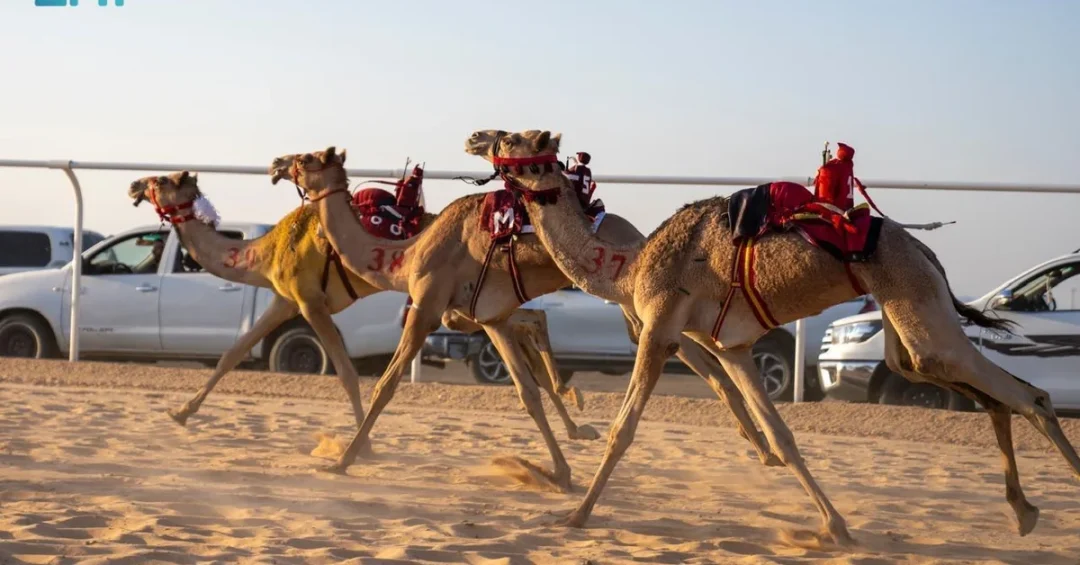
The Royal Commission for AlUla (RCU), in partnership with the Saudi Camel Federation, has confirmed that AlUla Camel Racecourse will serve as a central venue for the ongoing camel racing season, reinforcing the ancient city’s emergence as the region’s premier destination for heritage sports. The announcement, released through official Saudi channels, positions the 25-square-kilometer racecourse in southern AlUla as a cornerstone of a season that began in October 2024 at the Mughira Village for Heritage Sports and will continue through April 2025. Could there be a more fitting stage for a sport woven into the fabric of Arabian identity?
The racing season has already drawn more than 1,557 participants, including camel owners and riders from across Saudi Arabia and the wider Gulf region, according to the Saudi Press Agency. The Mughira Village for Heritage Sports, which spans 50 million square meters, provides fields and facilities dedicated to camel racing, alongside infrastructure designed to host large numbers of competitors and spectators. The season features 13 races, each intended to support camel owners, delight enthusiasts, and contribute to the quality of life in the AlUla region. For international observers, the development offers a clear window into how Saudi Arabia is blending cultural preservation with modern event management.
Context and Background
Why does a camel racecourse in a remote corner of northwestern Saudi Arabia matter to a global audience? The answer lies in AlUla’s extraordinary historical weight and the Kingdom’s deliberate strategy of transforming heritage into a driver of sustainable development. AlUla is home to Hegra, Saudi Arabia’s first UNESCO World Heritage Site, as well as the Nabataean tombs of Mada’in Salih and a landscape that has been inhabited for millennia. The Royal Commission for AlUla, established to oversee the comprehensive regeneration of the area, has pursued a dual mission: protecting archaeological and cultural treasures while building modern tourism and sports infrastructure that can welcome the world.
Camel racing itself is far more than a pastime in the Arabian Peninsula. It is a centuries-old tradition tied to the Bedouin way of life, to poetry, to tribal heritage, and to the practical skills of breeding and training camels. Across the Gulf, racing seasons are social and economic occasions that bring communities together and sustain a specialized equine and camel economy. By investing in a dedicated racecourse and a heritage sports village, the Royal Commission for AlUla and the Saudi Camel Federation are ensuring that this tradition is not merely remembered but actively practiced, professionalized, and shared with visitors.
The current season builds on a broader calendar of heritage sports in AlUla, which has included endurance riding, falconry, and other traditional competitions. Each event adds a layer to the region’s identity as a living museum, where the past is not cordoned off but celebrated in motion. Isn’t that precisely the kind of cultural continuity that global travelers increasingly seek?
Key Details of the Racecourse and Season
The AlUla Camel Racecourse occupies 25 square kilometers in southern AlUla and features an 8-kilometer racetrack alongside a 6-kilometer training track. These state-of-the-art facilities reflect a commitment to developing heritage sports and providing a world-class experience for participants and spectators alike. The scale of the site allows for multiple race formats, training operations, and the logistical support required by owners and riders traveling from different regions.
The season’s 13 races are designed to assist camel owners and to enhance the overall quality of life in the region, according to the Royal Commission for AlUla. The Mughira Village for Heritage Sports, spread over 50 million square meters, functions as the operational heart of the season, with fields and facilities catering specifically to camel races. More than 1,557 participants have taken part, a figure that underscores the event’s regional pull and its role in sustaining the livelihoods of breeders, trainers, and associated trades.
Official statements emphasize that AlUla’s camel races are a vital part of the Royal Commission for AlUla’s mission to preserve and promote heritage sports while celebrating the Kingdom’s rich cultural legacy. The Saudi Camel Federation’s involvement brings regulatory expertise and sporting credibility, helping to standardize competition and elevate the profile of the races. For a global audience, the combination of a UNESCO-listed landscape and a professional racing calendar is a compelling proposition. How many destinations can offer a world-class sporting event within walking distance of 2,000-year-old tombs?
International and Regional Impact
The regional dimension of the AlUla camel racing season is unmistakable. Participants from Saudi Arabia and the Gulf region travel to compete, creating a seasonal circuit that strengthens cultural ties across the Arabian Peninsula. Camel racing is a shared heritage across Gulf Cooperation Council states, and events of this scale function as diplomatic and social connectors as much as sporting contests. By hosting a season that runs from October 2024 to April 2025, AlUla cements its place on that circuit and attracts visitors who might otherwise overlook the region’s interior.
Internationally, the racecourse adds another distinctive asset to Saudi Arabia’s tourism portfolio. AlUla has already drawn global attention through large-scale cultural events, heritage festivals, and luxury hospitality developments. A dedicated heritage sports venue broadens the appeal beyond archaeology and art, reaching travelers interested in living traditions, equestrian and camel sports, and authentic Arabian experiences. The presence of international media and travel trade professionals at such events amplifies the message that Saudi Arabia is open, organized, and capable of hosting niche sporting tourism at a high standard.
Could this be a template for other heritage sports across the Kingdom? The model, in which a royal commission partners with a national sports federation to build dedicated infrastructure and run a multi-month season, is replicable. It aligns with Saudi Arabia’s wider push to diversify tourism offerings and to distribute visitor spending beyond the major cities. For regional neighbors, the AlUla season is both a friendly competition and a demonstration of how heritage can be monetized responsibly.
Economic and Strategic Significance
Economically, the camel racing season contributes to AlUla’s local economy through hospitality, transport, retail, and services. Owners and riders, along with their support teams and spectators, require accommodation, food, and supplies over a five-month period. The Royal Commission for AlUla has consistently framed such events as part of a strategy to create year-round activity, reducing the seasonality that affects many tourism destinations. The 13 races and the training operations at the 6-kilometer track generate sustained demand rather than a single spike.
Strategically, the racecourse supports Saudi Arabia’s Vision 2030 objectives by promoting cultural heritage, expanding entertainment and sports options, and improving quality of life for residents and visitors. Heritage sports are explicitly recognized as part of the Kingdom’s cultural economy, and AlUla is a flagship for that approach. The involvement of the Saudi Camel Federation ensures that sporting standards are maintained, while the Royal Commission for AlUla handles destination development, marketing, and preservation. This division of labor is efficient and sends a signal to investors that AlUla’s calendar is professionally managed.
There is also a human capital dimension. Training and employing local staff, from track officials to hospitality workers, builds skills in the AlUla community. The season provides economic opportunities that are rooted in local tradition rather than imported entertainment. Isn’t that the most sustainable form of development, one that grows from the soil it stands on?
Vision 2030 Alignment
The AlUla Camel Racecourse and the broader heritage sports season align directly with Saudi Vision 2030’s goals of diversifying the economy, preserving cultural heritage, and enhancing the Kingdom’s global standing. Vision 2030 calls for a vibrant society and a thriving economy, and AlUla embodies both: it protects ancient sites while creating modern experiences that attract international visitors. The Royal Commission for AlUla’s work is a living example of how heritage can be a pillar of economic transformation rather than a static relic.
As the season continues through April 2025, the racecourse will host competitors and spectators from across the Gulf and beyond, showcasing Saudi Arabia’s ability to blend tradition with world-class organization. The partnership between the Royal Commission for AlUla and the Saudi Camel Federation reflects the collaborative spirit that Vision 2030 encourages across public institutions. For international readers, the message is clear: AlUla is not only a place to see history but a place to experience it in motion, and the Kingdom is committed to sharing that experience with the world. Will the world answer the invitation? The coming months at AlUla Camel Racecourse will offer a compelling answer.
20 Questions
Q1. What is the AlUla Camel Racecourse?
A1. The AlUla Camel Racecourse is a 25-square-kilometer facility in southern AlUla, developed by the Royal Commission for AlUla. It includes an 8-kilometer racetrack and a 6-kilometer training track, serving as a key venue for heritage sports in the region.
Q2. Who announced the racecourse’s role in the racing season?
A2. The Royal Commission for AlUla and the Saudi Camel Federation announced that the racecourse will serve as a key venue for the ongoing camel racing season, according to official Saudi information released through the Saudi Press Agency.
Q3. When did the current camel racing season begin and end?
A3. The season began in October 2024 at the Mughira Village for Heritage Sports and will run through April 2025, offering a five-month calendar of races and training activities in AlUla.
Q4. How many participants have joined the season so far?
A4. More than 1,557 participants, including camel owners and riders from Saudi Arabia and the Gulf region, have taken part in the season, reflecting strong regional engagement with AlUla’s heritage sports program.
Q5. How many races are scheduled this season?
A5. The season will feature 13 races designed to assist camel owners, delight enthusiasts, and improve the quality of life in the AlUla region, according to the Royal Commission for AlUla.
Q6. Where is the Mughira Village for Heritage Sports located?
A6. The Mughira Village for Heritage Sports is in AlUla and spans 50 million square meters. It contains fields and facilities specifically catering to camel races and supports the broader heritage sports season.
Q7. What is the size of the AlUla Camel Racecourse?
A7. The racecourse covers 25 square kilometers in southern AlUla. It features an 8-kilometer racetrack and a 6-kilometer training track, reflecting state-of-the-art facilities for participants and spectators.
Q8. Why is camel racing important to AlUla’s heritage?
A8. Camel racing is a centuries-old Arabian tradition tied to Bedouin life and cultural identity. AlUla’s races are a vital part of the Royal Commission for AlUla’s mission to preserve and promote heritage sports while celebrating the Kingdom’s rich cultural legacy.
Q9. Which organizations are involved in the AlUla racing season?
A9. The Royal Commission for AlUla and the Saudi Camel Federation are the key organizations. The commission leads destination development and preservation, while the federation provides sporting regulation and expertise.
Q10. How does the racecourse benefit the local economy?
A10. The season supports hospitality, transport, retail, and services over five months, creating sustained demand. It also builds local skills and employment, contributing to year-round economic activity in the AlUla region.
Q11. What role does the Saudi Camel Federation play?
A11. The Saudi Camel Federation brings regulatory expertise and sporting credibility, helping standardize competition and elevate the profile of camel racing in AlUla and across the Kingdom.
Q12. How does the racecourse fit into Vision 2030?
A12. It aligns with Vision 2030 by preserving cultural heritage, diversifying the economy, expanding sports and entertainment options, and enhancing quality of life, while supporting Saudi Arabia’s global tourism ambitions.
Q13. What other heritage sports are associated with AlUla?
A13. AlUla hosts a broader calendar of heritage sports, including endurance riding and falconry. These events complement camel racing and reinforce AlUla’s identity as a living museum of Arabian traditions.
Q14. Why is AlUla significant internationally?
A14. AlUla is home to Hegra, Saudi Arabia’s first UNESCO World Heritage Site, and Nabataean tombs. Its combination of archaeology, landscape, and modern events makes it a unique destination for global travelers.
Q15. How many participants come from outside Saudi Arabia?
A15. The season has drawn participants from Saudi Arabia and the Gulf region, with over 1,557 participants overall. This regional participation strengthens cultural ties across the Arabian Peninsula.
Q16. What facilities does the racecourse offer?
A16. The racecourse offers an 8-kilometer racetrack and a 6-kilometer training track within a 25-square-kilometer site, providing world-class infrastructure for racing, training, and spectator experiences.
Q17. How does the season improve quality of life in AlUla?
A17. The season creates economic activity, supports local employment, and provides entertainment and cultural engagement for residents and visitors, contributing to improved quality of life in the AlUla region.
Q18. What makes the AlUla Camel Racecourse a hub for heritage sports?
A18. Its scale, dedicated tracks, and partnership between the Royal Commission for AlUla and the Saudi Camel Federation make it a central venue for camel racing and a model for heritage sports development.
Q19. How does the racecourse support cultural preservation?
A19. By providing a professional venue for traditional racing, the racecourse keeps Bedouin heritage alive and visible, passing skills and traditions to new generations while sharing them with international audiences.
Q20. What can international visitors expect from the season?
A20. Visitors can expect a five-month calendar of 13 races, world-class facilities, and an authentic Arabian cultural experience set within AlUla’s UNESCO-listed landscape, running through April 2025.
Reader Feedback
We value your thoughts. Please share your feedback on this article.
Your feedback helps us improve our coverage.
Related articles
 Al-Jouf International Olive Festival Opens Thursday in Sakaka
 Saudi Ministry of Tourism Removes Unlicensed Listings
 AlUla Launches Citrus Season 2025 to Boost Agritourism
 Wofoud Al-Haram Welcomes Students from Islamic Countries
 Courchevel at Boulevard World: Ski Season Adventure
 Prophet’s Mosque Welcomes Over 5.6 Million Worshippers