


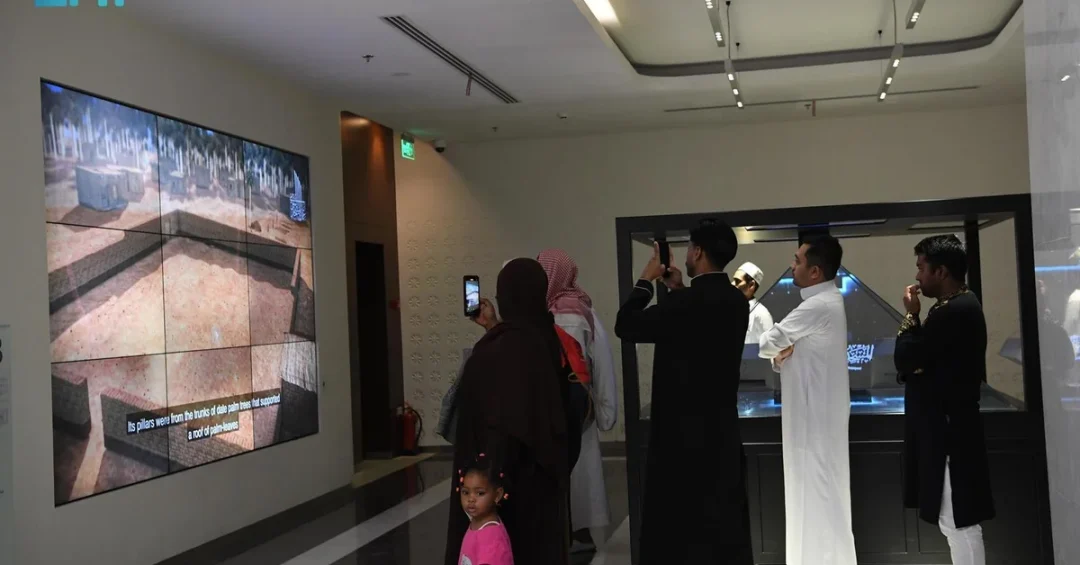
Five distinct heritage, exhibition, and library sites within the Prophet’s Mosque in Madinah and its courtyards are transforming the experience of the millions of worshippers and visitors who pass through the holy city each year, according to information released by the Saudi Press Agency. The sites, which include the International Fair of the Prophet’s Biography, the Rare Manuscripts Exhibition, the Prophet’s Mosque Architecture Exhibition, the Prophet’s Mosque Library, and the Manuscripts and Rare Books Section inside the mosque itself, together offer a comprehensive journey through Islamic history, scholarship, and architectural heritage. For a city that receives pilgrims from every corner of the world, these attractions represent far more than museum displays. They are living educational resources that deepen spiritual connection while showcasing the Kingdom’s commitment to preserving and sharing the legacy of Prophet Mohammed.
Have you ever wondered what lies beyond the prayer halls of one of Islam’s holiest sites? The answer, as officials at the Prophet’s Mosque have documented, is a carefully curated network of exhibitions and collections that illuminate fourteen centuries of faith, learning, and craftsmanship. Each location serves a distinct purpose, from introducing the noble character and teachings of the Prophet to preserving rare manuscripts that trace the evolution of Arabic calligraphy and Islamic scholarship. Together they form an integrated cultural ecosystem that enriches the pilgrimage experience and supports Saudi Arabia’s broader mission of serving the guests of God with excellence and innovation.
Context and Background
Why has the Prophet’s Mosque become a global center for Islamic heritage education? The answer lies in the Kingdom’s longstanding role as custodian of Islam’s two holiest mosques, a responsibility that has expanded over the decades from physical expansion and crowd management to include cultural preservation and knowledge dissemination. The five sites highlighted in the SPA report reflect this evolution. They are not new additions to the mosque complex but rather a consolidation of efforts by Saudi authorities to present the mosque’s spiritual, historical, and intellectual dimensions in accessible and engaging formats for a diverse international audience.
The International Fair of the Prophet’s Biography, located in the southern part of the mosque, stands as a comprehensive scientific and cultural edifice. It presents Islam in its noble and beautiful essence, with a particular focus on the character, morals, and teachings of Prophet Mohammed. The fair uses modern presentation techniques to make the biography accessible to visitors of all backgrounds, fulfilling a vision of education that is both respectful of tradition and open to contemporary methods. Its location within the mosque’s precincts ensures that pilgrims can integrate this learning directly into their spiritual journey, creating a seamless experience of worship and study.
Alongside the fair, the Rare Manuscripts Exhibition in the southern courtyards showcases an impressive collection of manuscripts that reflect the depth of Arab and Islamic heritage. Visitors can explore inscriptions on various materials and calligraphic styles that trace the evolution of writing across different eras. This exhibition is particularly valuable for scholars and students of history, offering tangible evidence of the intellectual flourishing that characterized Islamic civilization. By displaying these treasures in the courtyards adjacent to the mosque, the exhibition makes rare and fragile documents accessible in a way that balances preservation with public education.
Key Details
What exactly can visitors expect to see at these sites? The Prophet’s Mosque Architecture Exhibition, also on the southern side, offers a fascinating journey through the architectural history of the mosque. It demonstrates the mosque’s transformation over centuries through modern interactive technologies, allowing visitors to visualize how the structure evolved from its earliest form to the vast complex it is today. This exhibition is not merely a display of blueprints and photographs; it is an immersive experience that connects the viewer to the craftsmanship and vision of successive generations of builders and rulers who contributed to the mosque’s development.
The Prophet’s Mosque Library, located on the western side, houses an extensive collection of resources. It includes a manuscript section, an audio library, an art section, and a dedicated space for rare books. This library serves as a research hub for scholars from around the world, offering access to materials that are difficult to find elsewhere. The audio library, in particular, represents a modern approach to preserving oral traditions and recitations, making them available to a global audience through digital means. The art section complements the written and spoken word with visual representations of Islamic heritage, creating a multi-sensory educational environment.
Inside the mosque, the Manuscripts and Rare Books Section preserves a vast collection of historical treasures. According to the SPA report, it features approximately 4,052 original manuscripts, 60,000 digital manuscripts, and 4,600 photocopied manuscripts. It also contains 250 handwritten copies of the holy Quran and 200 printed copies. These figures underscore the scale of the preservation effort underway in Madinah. The digital collection is especially significant, as it allows researchers and interested individuals worldwide to access these documents without risking damage to the originals. The handwritten copies of the Quran represent some of the most precious artifacts in the collection, embodying centuries of devotion and artistic skill.
International and Regional Impact
How do these sites influence the global perception of Saudi Arabia and its role in the Islamic world? For international visitors, the exhibitions and libraries provide a nuanced understanding of Islam that goes beyond headlines and stereotypes. By presenting the Prophet’s biography, the mosque’s architectural heritage, and rare manuscripts in a professional and accessible manner, Saudi Arabia positions itself as a guardian of Islamic culture and a promoter of moderate, knowledge-based understanding. This aligns with the Kingdom’s broader diplomatic efforts to foster interfaith dialogue and cultural exchange.
Regionally, the sites reinforce Madinah’s status as a destination not only for pilgrimage but also for scholarship and cultural tourism. Visitors from neighboring Gulf countries, as well as from Asia, Africa, Europe, and the Americas, can extend their spiritual journey with educational experiences that add depth to their visit. The presence of such resources in the Prophet’s Mosque also serves as a model for other Islamic institutions considering how to preserve and display their own heritage. The integration of digital technology, interactive exhibits, and traditional collections demonstrates a forward-looking approach that respects the past while embracing the future.
Economic and Strategic Significance
What economic and strategic benefits flow from these cultural initiatives? The exhibitions and libraries contribute to the diversification of Madinah’s economy by attracting longer-stay visitors who engage with cultural and educational offerings. This supports the growth of the hospitality, retail, and transportation sectors in the region. As Saudi Arabia continues to develop its tourism infrastructure under Vision 2030, sites like these enhance the overall value proposition for travelers, encouraging them to explore beyond the immediate rituals of pilgrimage and to appreciate the Kingdom’s rich historical tapestry.
Strategically, the preservation and promotion of Islamic heritage serve to strengthen Saudi Arabia’s soft power. By investing in the documentation, digitization, and display of rare manuscripts and historical records, the Kingdom demonstrates its commitment to safeguarding the intellectual legacy of Islam for future generations. This effort also supports academic research and international collaboration, as scholars from around the world can access digital collections and participate in conferences and workshops hosted in Madinah. The result is a virtuous cycle in which preservation enables research, research enhances understanding, and understanding fosters goodwill and respect.
Vision 2030 Alignment
How do these five sites connect to Saudi Arabia’s Vision 2030 goals? Vision 2030 aims to diversify the economy, enhance the quality of life, and promote cultural and educational opportunities. The Prophet’s Mosque exhibitions and libraries directly support these objectives by creating knowledge-based experiences that attract visitors and scholars, by preserving cultural heritage as a national asset, and by leveraging technology to make that heritage accessible worldwide. They also contribute to the goal of increasing the number of pilgrims and visitors, as the enhanced experience encourages repeat visits and positive word-of-mouth among international audiences.
Furthermore, the emphasis on digital manuscripts and interactive technologies reflects the Vision 2030 focus on innovation and digital transformation. By digitizing tens of thousands of manuscripts, the Kingdom ensures that these treasures are protected from physical deterioration while being made available for study and appreciation. This dual benefit of preservation and accessibility exemplifies the balanced approach that Vision 2030 promotes across all sectors. As the Prophet’s Mosque continues to welcome millions, these five sites stand as beacons of learning, faith, and progress, illuminating the path toward a future in which Saudi Arabia’s spiritual and cultural leadership is recognized and celebrated globally.
20 Questions
Q1. What are the five sites in the Prophet’s Mosque and its courtyards mentioned in the report?
A1. The five sites are the International Fair of the Prophet’s Biography, the Rare Manuscripts Exhibition, the Prophet’s Mosque Architecture Exhibition, the Prophet’s Mosque Library, and the Manuscripts and Rare Books Section inside the mosque.
Q2. Where is the International Fair of the Prophet’s Biography located?
A2. The International Fair of the Prophet’s Biography is located in the southern part of the Prophet’s Mosque in Madinah, Saudi Arabia.
Q3. What does the International Fair of the Prophet’s Biography present to visitors?
A3. It presents Islam in its noble and beautiful essence, highlighting the character, morals, and teachings of Prophet Mohammed through a comprehensive scientific and cultural edifice.
Q4. What can visitors explore at the Rare Manuscripts Exhibition?
A4. Visitors can explore an impressive collection of manuscripts, inscriptions on various materials, and calligraphic styles that trace the evolution of writing across different eras.
Q5. Where is the Rare Manuscripts Exhibition situated?
A5. The Rare Manuscripts Exhibition is situated in the southern courtyards of the Prophet’s Mosque.
Q6. What does the Prophet’s Mosque Architecture Exhibition demonstrate?
A6. It demonstrates the architectural history of the mosque and its transformation over centuries through modern interactive technologies.
Q7. Where is the Prophet’s Mosque Architecture Exhibition located?
A7. It is located on the southern side of the Prophet’s Mosque, near the other exhibitions.
Q8. What resources does the Prophet’s Mosque Library house?
A8. The library houses an extensive collection including a manuscript section, an audio library, an art section, and a dedicated space for rare books.
Q9. Where is the Prophet’s Mosque Library located?
A9. The Prophet’s Mosque Library is located on the western side of the mosque.
Q10. What does the Manuscripts and Rare Books Section inside the mosque preserve?
A10. It preserves approximately 4,052 original manuscripts, 60,000 digital manuscripts, and 4,600 photocopied manuscripts, along with 250 handwritten and 200 printed copies of the holy Quran.
Q11. How many original manuscripts are in the Manuscripts and Rare Books Section?
A11. The section contains approximately 4,052 original manuscripts, representing a vast collection of historical treasures.
Q12. How many digital manuscripts are available in the collection?
A12. There are 60,000 digital manuscripts, making the collection widely accessible for research and study.
Q13. How many handwritten copies of the holy Quran are preserved?
A13. The collection includes 250 handwritten copies of the holy Quran, which are considered among the most precious artifacts.
Q14. What is the significance of the digital manuscripts for researchers?
A14. Digital manuscripts allow researchers worldwide to access rare documents without risking damage to the originals, supporting academic study and preservation simultaneously.
Q15. How do these sites enhance the experience of pilgrims and visitors?
A15. They provide educational and cultural depth, allowing visitors to integrate learning about Islamic history, architecture, and scholarship directly into their spiritual journey.
Q16. What role do these sites play in Saudi Arabia’s Vision 2030?
A16. They support Vision 2030 by promoting cultural tourism, preserving heritage, leveraging digital technology, and enhancing the quality of life for visitors and citizens alike.
Q17. Are these sites accessible to international visitors?
A17. Yes, the exhibitions and libraries are designed to welcome visitors from around the world, offering materials and displays in accessible formats.
Q18. How do these sites contribute to interfaith and cultural understanding?
A18. By presenting the Prophet’s biography and Islamic heritage in a professional and accessible manner, they foster a nuanced understanding of Islam and promote respectful dialogue.
Q19. What technologies are used in the exhibitions?
A19. Modern interactive technologies are used, particularly in the Architecture Exhibition, to visualize the mosque’s historical transformation and engage visitors.
Q20. What is the overall goal of these five sites in the Prophet’s Mosque?
A20. The overall goal is to enrich the spiritual and cultural experience of visitors by illuminating Islamic history, heritage, and scholarship while supporting Saudi Arabia’s mission to serve the guests of God.
Reader Feedback
We value your thoughts. Please share your feedback on this article.
Your feedback helps us improve our coverage.
Related articles
 Madinah Governor Opens New Premium Airport Lounge
 AlManshiyah Farmers Market: AlUla’s Heritage Hub
 AlUla’s Old Town: Stories of a Bygone Era Told by Locals
 Makkah’s Address Walkway: A New Era of Culture and Commerce
 Hail Falls on Al-Soudah Peaks for Second Consecutive Day
 Saudi Authority Designates Cart Locations for Umrah Pilgrims