


Saudi authorities have launched comprehensive preparations to ensure a smooth and spiritually fulfilling Hajj 1445 AH, with camps fully equipped and furnished to meet all the needs of pilgrims. The efforts span public and private sectors, following detailed operational plans to raise the standard of services across all holy sites, as per the directives of the Kingdom’s leadership. These measures aim to allow pilgrims to perform their rituals comfortably and peacefully, reflecting Saudi Arabia’s unwavering commitment to serving the guests of God.
Context and Background
Hajj, the annual Islamic pilgrimage to Makkah, is one of the largest religious gatherings in the world, drawing millions of Muslims from across the globe. The Kingdom of Saudi Arabia has long shouldered the responsibility of hosting and serving these pilgrims, continuously upgrading infrastructure and services to accommodate the growing number of attendees. This year’s preparations are part of a sustained effort to enhance the pilgrimage experience, aligning with the goals of Saudi Vision 2030 to improve quality of life and promote religious tourism. The holy sites, including Mina, Arafat and Muzdalifah, are undergoing extensive development to ensure safety, comfort and efficiency.
Key Details
The Holy Makkah Municipality has made extensive preparations to ensure a smooth Hajj season. Field teams are working tirelessly to supervise and maintain roads, lighting, sidewalks and public facilities for safe and optimal use. To guarantee road quality, specialized engineers and technical teams conducted thorough tests on the routes leading to the holy sites. The municipality also focused on maintaining light poles; there is a total of 4,767 poles and lighting towers at the holy sites. Moreover, 123 bridges in Makkah and 20 bridges at other holy sites underwent maintenance, and 58 tunnels (48 for vehicles and 10 for pedestrians) spanning 34,000 meters have been completed.
To improve services, the municipality has strategically positioned and equipped service centers at all holy sites, reinforcing them with additional equipment, machinery and staff. Tawaf companies have also prepared their field centers and established modern camps that meet international standards. These camps are insulated, fire resistant, and each tent has cooling systems, to ensure the comfort of pilgrims. Safety measures, support services and high-quality meals are also provided.
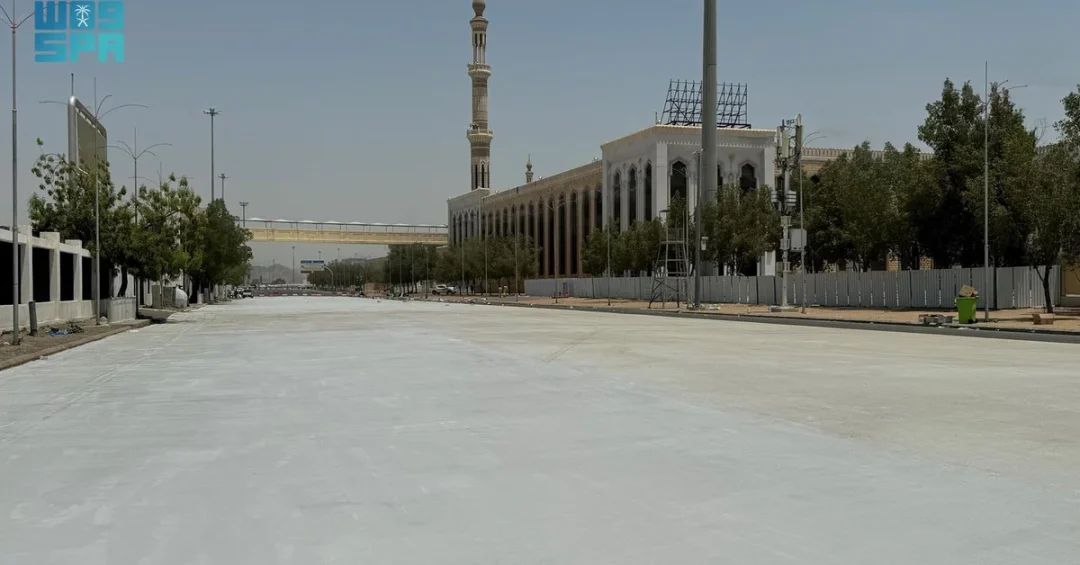
Efforts are also being made to ensure the proper functioning of public transport at the holy sites. Tawaf companies are conducting tests to inspect roads and public transport bus routes, to ensure that they adhere to transportation plans for pilgrims, and respect schedules and timings set by The General Syndicate of Cars in Makkah. Furthermore, the Roads General Authority, in collaboration with other relevant agencies, is expanding the cooling asphalt experiment in the holy sites. This initiative has already been implemented near the Namira Mosque, in the Arafat area, covering an area of 25,000 square meters. The experiment aims to lower temperatures in residential areas, reduce the consumption of energy needed to cool buildings, and create a more comfortable environment in waiting and gathering areas.
Implications and Impact
These preparations underscore Saudi Arabia’s commitment to providing the highest level of care and comfort to pilgrims, ensuring that they can focus on their spiritual journey. The improvements in infrastructure, transportation and facilities are expected to significantly enhance the overall Hajj experience, reducing stress and potential health risks associated with the intense heat and large crowds. The cooling asphalt experiment, in particular, represents an innovative approach to mitigating high temperatures, which could have broader applications in urban planning across the Kingdom. The collaboration between various government agencies and private sector partners highlights the effectiveness of integrated planning and execution, setting a benchmark for large-scale event management globally. Furthermore, the seamless operation of Hajj is crucial for Saudi Arabia’s international standing, as it demonstrates the Kingdom’s capability to host millions of visitors safely and efficiently, reinforcing its role as a global leader in religious tourism and hospitality.
Vision 2030 Alignment
The meticulous preparations for Hajj 1445 AH are a clear reflection of Saudi Arabia’s Vision 2030, which seeks to enhance the quality of life for citizens and visitors alike, diversify the economy, and promote the Kingdom as a premier destination for religious and cultural tourism. By investing in state-of-the-art infrastructure, sustainable cooling technologies, and comprehensive service enhancements, Saudi Arabia is not only fulfilling its religious duty but also showcasing its modernisation and capacity for innovation. These efforts contribute to the broader goals of Vision 2030 by improving public services, fostering economic growth through increased pilgrimage numbers, and demonstrating the Kingdom’s leadership in managing one of the world’s largest annual gatherings. As Saudi Arabia continues to develop its holy sites, it reinforces its dedication to serving Islam and Muslims worldwide, while advancing its strategic vision for a prosperous and forward-looking nation.
20 Questions
Q1. What is the main objective of the preparations for Hajj 1445 AH?
A1. The main objective is to equip the holy sites and provide comprehensive services to ensure pilgrims can perform their rituals comfortably and peacefully, following the directives of Saudi leadership.
Q2. Which entities are involved in the Hajj preparations?
A2. Both public and private sectors are working together, including the Holy Makkah Municipality, Tawaf companies, the Roads General Authority, and the General Syndicate of Cars in Makkah.
Q3. How many light poles and lighting towers have been maintained at the holy sites?
A3. A total of 4,767 light poles and lighting towers have been maintained to ensure proper illumination across the holy sites for the safety and convenience of pilgrims.
Q4. What maintenance work has been done on bridges and tunnels?
A4. Maintenance was conducted on 123 bridges in Makkah and 20 bridges at other holy sites, and 58 tunnels spanning 34,000 meters have been completed for vehicle and pedestrian use.
Q5. What are Tawaf companies doing to enhance pilgrim comfort?
A5. Tawaf companies have prepared field centers and established modern, insulated, fire-resistant camps with cooling systems, ensuring a comfortable and safe environment for pilgrims during their stay.
Q6. How is public transport being tested for Hajj?
A6. Tawaf companies are conducting tests to inspect roads and public transport bus routes, ensuring adherence to transportation plans and schedules set by the General Syndicate of Cars in Makkah.
Q7. What is the cooling asphalt experiment and where has it been implemented?
A7. The cooling asphalt experiment aims to lower temperatures and reduce energy consumption. It has been implemented near Namira Mosque in Arafat, covering 25,000 square meters.
Q8. What benefits does the cooling asphalt experiment offer?
A8. It lowers temperatures in residential areas, reduces energy needed to cool buildings, and creates a more comfortable environment in waiting and gathering areas for pilgrims.
Q9. How are service centers being improved at the holy sites?
A9. Service centers have been strategically positioned and equipped with additional equipment, machinery, and staff to enhance services and meet the needs of pilgrims efficiently.
Q10. What safety measures are in place in the camps?
A10. Camps are insulated and fire-resistant, each tent has cooling systems, and safety measures, support services, and high-quality meals are provided to ensure pilgrim well-being.
Q11. Who is responsible for maintaining roads and public facilities?
A11. The Holy Makkah Municipality is responsible, with field teams working tirelessly to supervise and maintain roads, lighting, sidewalks, and public facilities for safe and optimal use.
Q12. What is the significance of the maintenance of 123 bridges in Makkah?
A12. It ensures safe and efficient movement of pilgrims and vehicles, contributing to smooth traffic flow and reducing congestion during the Hajj season.
Q13. How do the preparations reflect Saudi Arabia’s commitment to pilgrims?
A13. They demonstrate the Kingdom’s dedication to providing the highest level of care, comfort, and safety, allowing pilgrims to focus on their spiritual journey without logistical concerns.
Q14. What role does the Roads General Authority play in Hajj preparations?
A14. It collaborates with other agencies to expand the cooling asphalt experiment, improving road conditions and creating a more comfortable environment for pilgrims.
Q15. How many tunnels have been completed and what are their purposes?
A15. 58 tunnels have been completed: 48 for vehicles and 10 for pedestrians, spanning 34,000 meters, facilitating safe and efficient movement across the holy sites.
Q16. What is the General Syndicate of Cars in Makkah responsible for?
A16. It sets schedules and timings for public transport buses, ensuring that transportation plans are adhered to for the smooth movement of pilgrims during Hajj.
Q17. How do the camps meet international standards?
A17. The camps are insulated, fire-resistant, and equipped with cooling systems, along with safety measures and quality meals, meeting international standards for comfort and safety.
Q18. What is the expected impact of these preparations on the Hajj experience?
A18. They are expected to significantly enhance the Hajj experience by reducing stress, improving safety, and ensuring that pilgrims can perform their rituals with ease and peace.
Q19. How do these efforts align with Saudi Vision 2030?
A19. They reflect Vision 2030’s goals of enhancing quality of life, promoting religious tourism, and showcasing Saudi Arabia’s modernisation and capability in managing large-scale events.
Q20. What does the successful execution of Hajj mean for Saudi Arabia’s global standing?
A20. It reinforces the Kingdom’s role as a global leader in religious tourism and hospitality, demonstrating its ability to host millions safely and efficiently, enhancing its international reputation.
Reader Feedback
We value your thoughts. Please share your feedback on this article.
Your feedback helps us improve our coverage.