


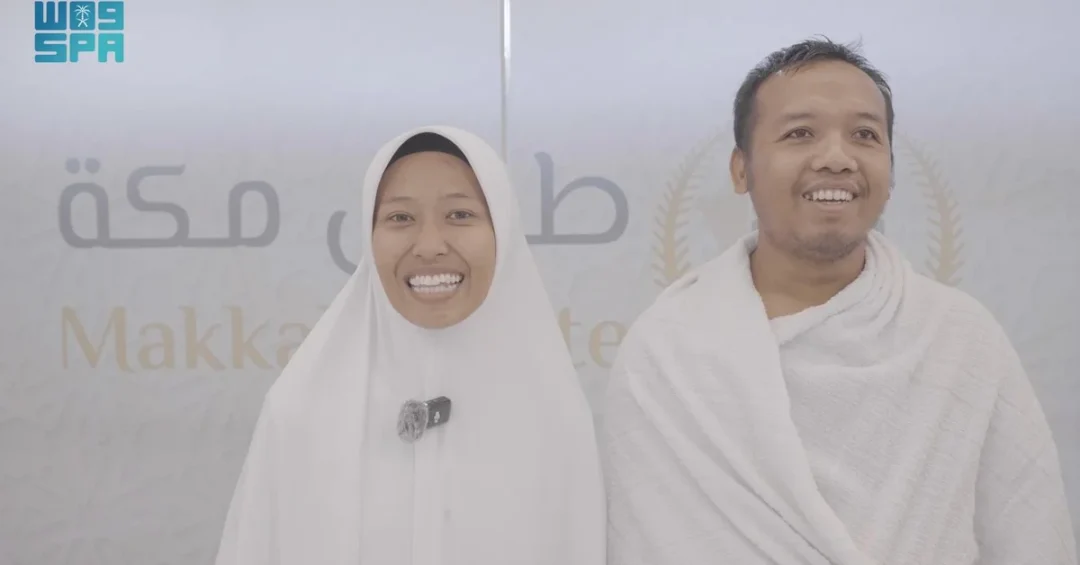
Two Indonesian pilgrims, Muhammad Shafi’i and Rafah Nuri, chose to begin their married life by performing the Hajj pilgrimage, expressing overwhelming spirituality and gratitude for the Kingdom of Saudi Arabia’s facilities. The couple was met by the Saudi Press Agency (SPA) at Surabaya International Airport while awaiting their flight to Jeddah.
Context and Background
The decision to forgo a traditional wedding celebration in favor of the sacred pilgrimage reflects a growing trend among Muslims to prioritize spiritual milestones. The couple, who were visibly emotional, shared their joy and anticipation with SPA. “We are very excited about the Hajj and the immense spirituality that overwhelms us at the thought of seeing the holy sites and visiting the Prophet’s Mosque,” they said.
Their choice underscores the profound significance of Hajj as one of the five pillars of Islam, a journey that every physically and financially able Muslim is obligated to undertake at least once in their lifetime. By channeling their resources toward this holy undertaking, the couple aims to start their new life on a foundation of faith and piety.
Key Details
The couple praised the facilities provided by the Kingdom through the Makkah Route Initiative, which allowed them to complete all requirements in record time. This initiative is part of Saudi Arabia’s broader efforts to streamline the pilgrimage experience, enabling pilgrims to finish visa, customs, and health procedures at their point of departure.
“We started by completing the procedures and campaign requirements and taking religious lessons in the mosque on how to perform the Hajj rituals,” the couple said. They expressed deep gratitude to the Saudi government for its care and dedication in serving the guests of Allah and facilitating their pilgrimage.
Implications and Impact
The couple’s story highlights the Kingdom’s commitment to providing world-class services to pilgrims, enhancing their spiritual experience while ensuring convenience and comfort. The Makkah Route Initiative, now operational in several countries, reduces logistical burdens and allows pilgrims to focus on the spiritual aspects of their journey.
Such initiatives not only benefit individual pilgrims but also bolster Saudi Arabia’s tourism sector, a key component of Vision 2030. By improving accessibility and services, the Kingdom aims to increase the number of pilgrims and visitors, contributing to economic diversification and cultural exchange.
Vision 2030 Alignment
Saudi Arabia’s Vision 2030 sets an ambitious goal to welcome 30 million pilgrims and visitors annually by 2030. The Makkah Route Initiative, along with other investments in infrastructure and technology, is central to achieving this target. By prioritizing the comfort and convenience of pilgrims, the Kingdom reinforces its role as a global hub for Islamic heritage and spirituality, fostering a welcoming environment that aligns with the vision’s objectives.
20 Questions
Q1. What is the Hajj pilgrimage?
A1. The Hajj is an annual Islamic pilgrimage to the holy city of Mecca, which every physically and financially able Muslim must perform at least once in their lifetime. It is one of the five pillars of Islam, taking place during the Islamic month of Dhu al-Hijjah.
Q2. Why did Muhammad Shafi’i and Rafah Nuri choose to perform Hajj instead of a wedding celebration?
A2. The couple decided to save the costs of a wedding celebration and instead invest in performing Hajj. They saw it as an opportunity to start their new life based on faith and piety, filled with goodness and shared prayers in the holy places.
Q3. What is the Makkah Route Initiative?
A3. The Makkah Route Initiative is a Saudi program that allows pilgrims to complete visa, customs, and health procedures at their point of departure, streamlining the pilgrimage process. It operates in select countries, providing a smoother and more efficient experience for pilgrims traveling to Mecca.
Q4. Where did the Saudi Press Agency meet the couple?
A4. The Saudi Press Agency (SPA) met Muhammad Shafi’i and Rafah Nuri at Surabaya International Airport in Indonesia, while they were waiting for their flight to Jeddah. The couple shared their feelings and experiences with the agency.
Q5. What did the couple say about their feelings before departing?
A5. The couple expressed excitement about the Hajj and the immense spirituality that overwhelmed them at the thought of seeing the holy sites and visiting the Prophet’s Mosque. They described it as a great duty and an opportunity to start a new life.
Q6. How did the couple prepare for the Hajj?
A6. The couple completed the procedures and campaign requirements and took religious lessons in the mosque on how to perform the Hajj rituals. They utilized the Makkah Route Initiative to complete all necessary steps in record time.
Q7. What did they say about the facilities provided by the Kingdom?
A7. They praised the facilities provided by the Kingdom through the Makkah Route Initiative, which allowed them to complete all requirements efficiently. They expressed gratitude to the Saudi government for its care and dedication in serving the guests of Allah.
Q8. What is the significance of Hajj in Islam?
A8. Hajj is one of the five pillars of Islam, mandatory for those who are physically and financially able. It symbolizes unity, equality, and submission to God, as pilgrims from diverse backgrounds come together to perform the same rituals.
Q9. How does the Makkah Route Initiative benefit pilgrims?
A9. The initiative allows pilgrims to finish visa, customs, and health procedures at their point of departure, saving time and reducing stress. It ensures a smoother journey and enables pilgrims to focus on the spiritual aspects of their pilgrimage.
Q10. What are the main pillars of Hajj?
A10. The main pillars of Hajj include Ihram (state of consecration), Tawaf (circumambulation of the Kaaba), Sa’i (walking between Safa and Marwa), Wuquf at Arafat, and the throwing of stones at Mina. These rituals commemorate the actions of Prophet Ibrahim and his family.
Q11. How many pilgrims does Saudi Arabia aim to host under Vision 2030?
A11. Under Vision 2030, Saudi Arabia aims to welcome 30 million pilgrims and visitors annually by 2030. This target includes both Hajj and Umrah pilgrims, reflecting the Kingdom’s commitment to enhancing religious tourism.
Q12. What is the role of the Saudi government in serving pilgrims?
A12. The Saudi government is dedicated to providing comprehensive services to pilgrims, including visa facilitation, transportation, accommodation, and healthcare. Through initiatives like Makkah Route, it strives to ensure a safe and comfortable pilgrimage experience.
Q13. How does the couple plan to start their new life?
A13. The couple plans to begin their married life by performing Hajj together, sharing prayers, supplications, and memories in the holy places. They view this pilgrimage as a foundation for a life filled with goodness and faith.
Q14. What is the significance of visiting the Prophet’s Mosque?
A14. The Prophet’s Mosque in Medina is one of the holiest sites in Islam, where the Prophet Muhammad is buried. Visiting it is highly recommended and holds immense spiritual rewards for pilgrims, who often combine it with their Hajj journey.
Q15. What are some of the challenges pilgrims face?
A15. Pilgrims may face challenges such as long journeys, crowded conditions, language barriers, and logistical complexities. Saudi Arabia’s initiatives aim to mitigate these challenges through advanced technology and efficient services.
Q16. How does the Makkah Route Initiative streamline the pilgrimage process?
A16. The initiative allows pilgrims to complete visa, customs, and health checks at their point of departure, eliminating the need for lengthy procedures upon arrival. It also provides guidance and support throughout the journey, ensuring a seamless experience.
Q17. What is the impact of such initiatives on the tourism sector?
A17. Initiatives like Makkah Route enhance Saudi Arabia’s reputation as a welcoming and organized destination for religious tourism. They attract more pilgrims, boosting the economy and supporting the goals of Vision 2030 to diversify the country’s income sources.
Q18. How can other countries benefit from Saudi Arabia’s expertise in managing the Hajj?
A18. Saudi Arabia’s experience in managing millions of pilgrims can serve as a model for other countries organizing large-scale religious events. Sharing best practices in logistics, crowd control, and hospitality can improve global pilgrimage experiences.
Q19. What is the spiritual significance of the Hajj for Muslims?
A19. The Hajj is a profound spiritual journey that purifies the soul, fosters humility, and strengthens one’s connection with God. It promotes unity among Muslims and serves as a reminder of the transience of worldly life.
Q20. How does the Kingdom ensure the safety and comfort of pilgrims?
A20. The Kingdom invests heavily in infrastructure, including expansion of the Grand Mosque, improved transportation, and advanced crowd management systems. It also provides medical services and security to ensure pilgrims can perform rituals in safety and comfort.
Reader Feedback
We value your thoughts. Please share your feedback on this article.
Your feedback helps us improve our coverage.