


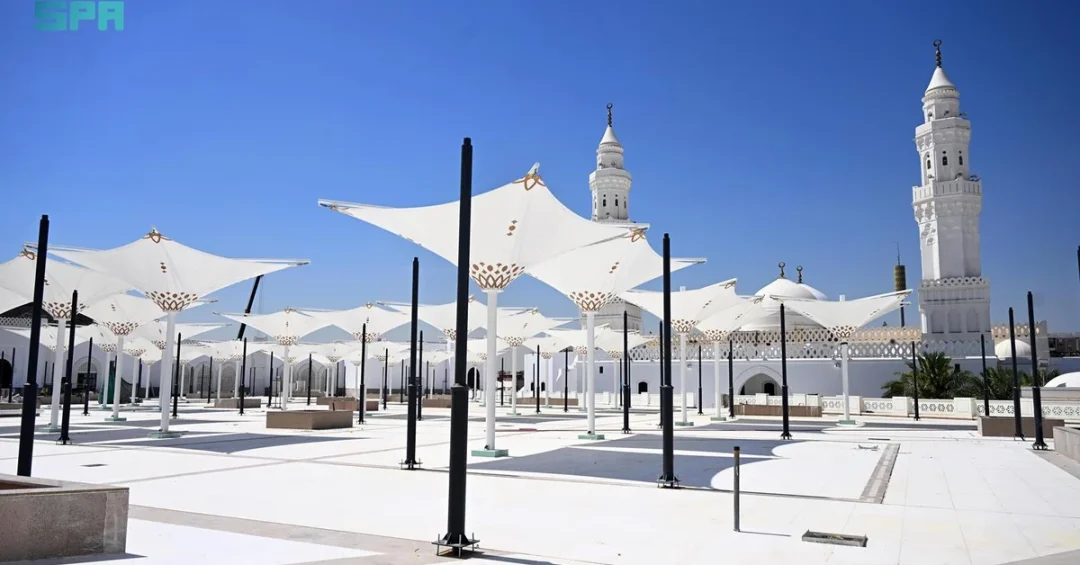
Historic mosques in Madinah are drawing a large number of visitors who come to pray and learn about their rich history associated with the Prophet Mohammed (peace be upon him), with the Qiblatain Mosque emerging as a particularly popular destination, according to the Saudi Press Agency (SPA). Located five kilometers west of the Prophet’s Mosque, the Qiblatain Mosque holds profound historical significance as the site linked to the event of changing the direction of the Qiblah to the Holy Kaaba during the Dhuhr prayer, where the Prophet (peace be upon him) was praying. This event remains of great importance in Islamic history, and today the mosque welcomes a steady stream of worshippers and visitors from around the world.
Context and Background
The Qiblatain Mosque, whose name means ‘the mosque of the two qiblahs,’ commemorates the moment when the Prophet Mohammed (peace be upon him) received divine instruction to change the direction of prayer from Al-Aqsa Mosque in Jerusalem to the Holy Kaaba in Makkah. This transition occurred during the Dhuhr prayer, and the mosque stands as a physical reminder of that pivotal moment in Islamic tradition. The mosque’s location, five kilometers west of the Prophet’s Mosque, places it within easy reach of pilgrims and tourists visiting Madinah, making it a key stop on any historical or spiritual itinerary.
The Saudi Press Agency captured scenes of worshippers and visitors flocking to the mosque, where umbrellas have been installed in the outer courtyards to provide shade from the sun. The Madinah Region Development Authority, along with the Ministry of Islamic Affairs, Dawah, and Guidance in Madinah, and charitable associations, are actively involved in providing services and support to worshippers. Their coordinated efforts ensure that visitors can pray and explore the site comfortably, reflecting the Kingdom’s commitment to preserving its Islamic heritage.
Key Details
The mosque is currently undergoing construction and expansion to enhance its facilities and increase its capacity, accommodating up to 3,000 worshippers. The project includes adding various services, constructing a cultural center connected to the mosque, developing outdoor pedestrian areas, installing electric stairs and elevators for convenient movement between the mosque and upper courtyards, and improving accessibility to the surrounding roads. These upgrades are designed to meet the growing number of visitors while preserving the mosque’s historical character.
The development projects and increasing visitor numbers highlight the significance of these historic mosques in Madinah. They serve as reminders of the Prophet’s life and teachings, attracting visitors seeking spiritual connection and a deeper understanding of Islamic history. The Qiblatain Mosque, in particular, offers a unique opportunity for reflection on the early days of Islam and the unity of the Muslim community.
Implications and Impact
The surge in visitors to the Qiblatain Mosque and other historic sites in Madinah underscores the city’s role as a global center for Islamic pilgrimage and cultural tourism. The ongoing expansion and improvements are expected to further boost visitor numbers, contributing to the local economy and enhancing the spiritual experience for pilgrims. This aligns with Saudi Arabia’s broader efforts to develop religious tourism infrastructure while maintaining the sanctity and historical integrity of these sites.
Internationally, the preservation and promotion of such sites reinforce Saudi Arabia’s position as the custodian of Islam’s holiest places, fostering goodwill among Muslims worldwide. The attention to accessibility and comfort, including shade umbrellas and electric stairs, demonstrates a thoughtful approach to accommodating diverse visitors, including the elderly and those with mobility challenges.
Vision 2030 Alignment
The ongoing development of the Qiblatain Mosque and other historic mosques in Madinah is a testament to Saudi Arabia’s commitment to Vision 2030, which seeks to enrich the spiritual and cultural experiences of pilgrims and visitors. By enhancing infrastructure and services, the Kingdom not only preserves its Islamic heritage but also creates a welcoming environment that supports the growth of religious tourism. These efforts reflect the leadership’s dedication to serving worshippers and showcasing the best of Saudi Arabia to the world.
20 Questions
Q1. What is the historical significance of the Qiblatain Mosque?
A1. The Qiblatain Mosque is historically significant because it marks the site where the Prophet Mohammed (peace be upon him) received the revelation to change the Qiblah direction from Al-Aqsa Mosque to the Holy Kaaba during the Dhuhr prayer.
Q2. Where is the Qiblatain Mosque located?
A2. The Qiblatain Mosque is located five kilometers west of the Prophet’s Mosque in Madinah, Saudi Arabia, making it easily accessible for visitors and pilgrims.
Q3. Why is the mosque called Qiblatain?
A3. The name ‘Qiblatain’ means ‘the mosque of the two qiblahs,’ referring to the fact that the Prophet (peace be upon him) prayed facing two different Qiblah directions in a single prayer.
Q4. How many worshippers can the mosque accommodate after expansion?
A4. After the ongoing construction and expansion, the Qiblatain Mosque will be able to accommodate up to 3,000 worshippers, significantly increasing its capacity.
Q5. What improvements are being made to the mosque?
A5. Improvements include a cultural center connected to the mosque, outdoor pedestrian areas, electric stairs and elevators, and enhanced accessibility to surrounding roads, all aimed at serving worshippers better.
Q6. Who is overseeing the development projects?
A6. The Madinah Region Development Authority, the Ministry of Islamic Affairs, Dawah, and Guidance in Madinah, and charitable associations are actively involved in providing services and support.
Q7. Why are umbrellas installed in the outer courtyards?
A7. Umbrellas are installed to provide shade from the sun, ensuring comfort for worshippers and visitors as they gather in the outdoor areas of the mosque.
Q8. What event does the mosque commemorate?
A8. It commemorates the moment when the Prophet Mohammed (peace be upon him) was instructed to change the direction of prayer from Al-Aqsa Mosque to the Holy Kaaba during the Dhuhr prayer.
Q9. How does the mosque attract visitors today?
A9. The mosque attracts visitors seeking spiritual connection and a deeper understanding of Islamic history, drawing crowds daily who come to pray and learn about its rich heritage.
Q10. What role does the Saudi Press Agency play?
A10. The Saudi Press Agency (SPA) documents and reports on the mosque’s activities, capturing scenes of worshippers and highlighting the services provided, thereby informing the public and promoting the site.
Q11. How does the expansion project reflect Saudi Arabia’s Vision 2030?
A11. The expansion supports Vision 2030 by enhancing religious tourism infrastructure, enriching spiritual experiences, and showcasing Saudi Arabia’s commitment to preserving Islamic heritage while welcoming visitors from around the world.
Q12. What is the significance of the cultural center?
A12. The cultural center will provide educational and cultural resources, offering visitors a deeper understanding of the mosque’s history and Islamic teachings, thereby enriching their spiritual journey.
Q13. Are there other historic mosques in Madinah attracting visitors?
A13. Yes, Madinah is home to numerous historic mosques, including Quba Mosque and Al-Qiblatain Mosque, all of which draw visitors interested in the life and teachings of the Prophet (peace be upon him).
Q14. How does the mosque ensure accessibility for all?
A14. The installation of electric stairs and elevators, along with improved pedestrian areas and road access, ensures that elderly and disabled visitors can easily navigate the mosque and its facilities.
Q15. What is the expected impact on local tourism?
A15. The increased visitor numbers and improved facilities are expected to boost local tourism, benefiting the economy and reinforcing Madinah’s status as a key destination for Islamic heritage tourism.
Q16. When did the Qiblah change occur?
A16. The change of Qiblah occurred during the time of the Prophet Mohammed (peace be upon him), specifically during the Dhuhr prayer, when he received the divine instruction to face the Kaaba.
Q17. How does the mosque serve as a reminder of the Prophet’s life?
A17. The mosque stands as a physical testament to a pivotal moment in Islamic history, reminding visitors of the Prophet’s teachings and the early community’s obedience to divine guidance.
Q18. What services are provided by charitable associations?
A18. Charitable associations provide support services to worshippers, which may include guidance, distribution of water and dates, and assistance to ensure a comfortable visit for all.
Q19. How does the Saudi government support historic mosques?
A19. The Saudi government, through entities like the Madinah Region Development Authority and the Ministry of Islamic Affairs, funds and oversees restoration, expansion, and service improvements to preserve these sites.
Q20. What message does the mosque’s popularity convey?
A20. The popularity of the Qiblatain Mosque reflects the enduring spiritual connection of Muslims worldwide to the Prophet’s heritage and Saudi Arabia’s successful efforts to preserve and share these sacred sites.
Reader Feedback
We value your thoughts. Please share your feedback on this article.
Your feedback helps us improve our coverage.