


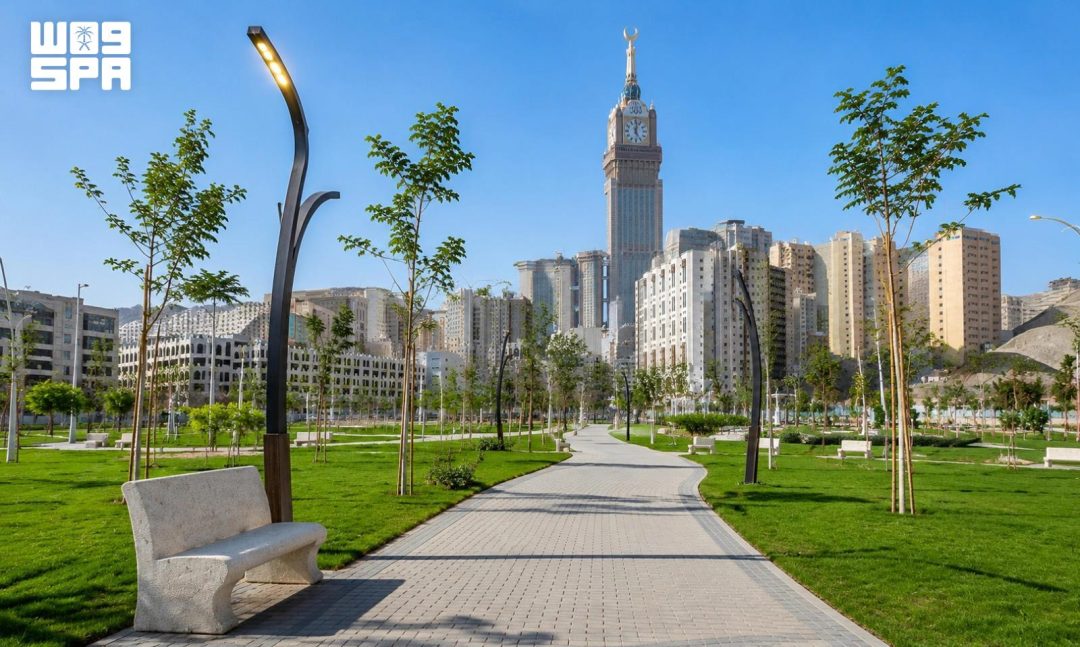
Makkah contains 290 public parks of various sizes distributed across several neighborhoods. These spaces include green areas, safe pedestrian paths, sports equipment, shaded seating, service facilities, and playgrounds.
According to SPA, these green spaces and public gardens serve as an important element in improving the urban environment and cooling the atmosphere, particularly during periods of high temperatures. Trees and vegetation provide shade and limit heat absorption by surfaces to create more comfortable spaces for residents, visitors, and Umrah performers.
The Holy Capital Municipality is working to develop and prepare gardens, green areas, pedestrian paths, and public squares. This system aims to enhance the humanization of the city by planting suitable trees and plants and providing shaded seating areas and recreational facilities that can be used at different times of the day.
These open sites offer visitors and Umrah performers areas for relaxation away from traffic density. The expansion of afforestation helps reduce the impact of heat on the surrounding environment by reducing the direct exposure of surfaces to sunlight.
How many public parks are available in Makkah? There are 290 public parks in Makkah. These parks are distributed across various neighborhoods and feature different sizes, incorporating green spaces, safe pedestrian paths, and shaded seating areas for the public.
What facilities are provided within Makkah’s public parks? The parks include a variety of amenities such as sports equipment, service facilities, and playgrounds. They also feature shaded seating and safe pedestrian paths to ensure a comfortable experience for users.
How do green spaces benefit visitors and Umrah performers in Makkah? Green spaces provide open locations for rest and relaxation away from traffic density. They offer shaded environments that reduce heat absorption by surfaces, making the urban landscape more suitable for walking and sitting.