


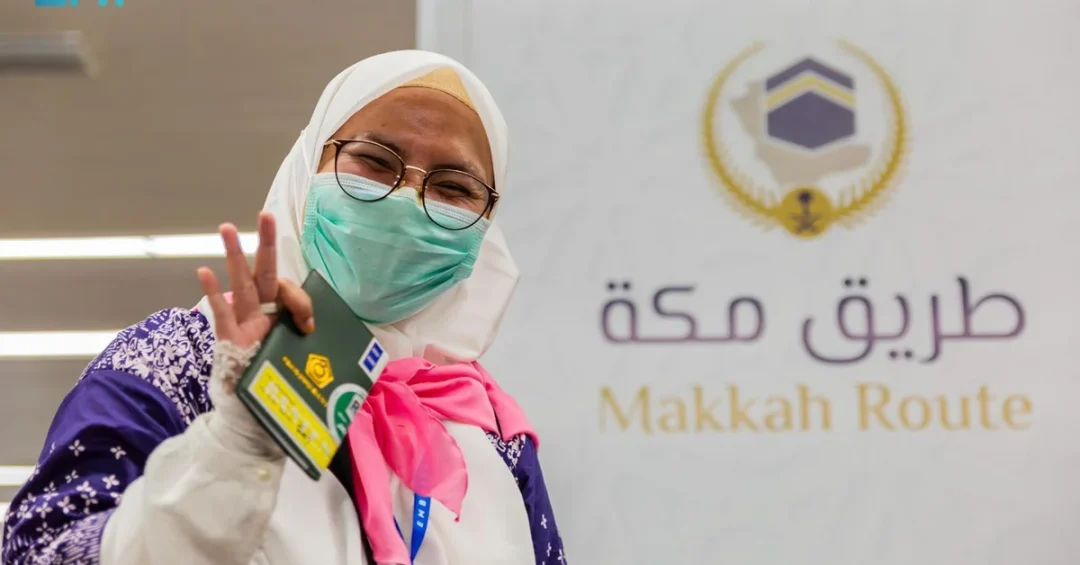
Indonesian pilgrims traveling to Saudi Arabia for Hajj 2024 are continuing to benefit from the Makkah Route Initiative at Soekarno-Hatta International Airport in Jakarta, which streamlines their travel procedures and ensures a smooth and comfortable journey. The initiative, now in its sixth consecutive year, reflects Saudi Arabia’s unwavering commitment to serving pilgrims and enhancing their spiritual experience.
Context and Background
The Makkah Route Initiative is a flagship program implemented by the Ministry of Interior in cooperation with several government agencies, including the ministries of foreign affairs, health, Hajj and Umrah, and media, as well as the General Authority of Civil Aviation, the Zakat, Tax and Customs Authority, the Saudi Data and AI Authority, and the Pilgrim Experience Program. The initiative aims to streamline travel procedures for pilgrims in their home countries, allowing them to complete necessary formalities before departure. Upon arrival in the Kingdom, pilgrims are received in a designated hall and transported directly to their accommodations without waiting at the airport, with their luggage delivered separately. This year, Indonesia is one of the countries benefiting from the initiative, which has been praised by pilgrims for its efficiency and the Kingdom’s dedication to serving guests of God.
Key Details
At Soekarno-Hatta International Airport, Indonesian pilgrims interviewed by the Saudi Press Agency expressed their gratitude for the initiative and the efforts of Saudi Arabia to ensure a comfortable Hajj journey. The Makkah Route Initiative covers all steps, from visa issuance and passport control to baggage handling and transportation. The Ministry of Interior has been implementing this initiative for six consecutive years, continually improving its services. The cooperation among various Saudi ministries and authorities underscores the integrated approach to managing the Hajj season, which welcomes millions of pilgrims annually. The initiative is part of the broader Pilgrim Experience Program, one of the Vision 2030 initiatives aimed at enhancing the quality of services provided to pilgrims and enriching their spiritual and cultural experience.
Implications and Impact
The Makkah Route Initiative has significant implications for the international community, particularly for Muslim-majority countries like Indonesia, which sends one of the largest contingents of pilgrims each year. By simplifying travel procedures, the initiative reduces waiting times, minimizes logistical challenges, and allows pilgrims to focus on their spiritual journey. It also demonstrates Saudi Arabia’s leadership in leveraging technology and innovation to manage large-scale events effectively. The initiative strengthens bilateral relations between Saudi Arabia and Indonesia and serves as a model for other countries. Furthermore, it contributes to the Kingdom’s reputation as a gracious host and a global leader in pilgrimage management, aligning with the goals of Saudi Vision 2030 to diversify the economy and promote tourism.
Vision 2030 Alignment
The Makkah Route Initiative is a concrete example of how Saudi Vision 2030 is transforming the pilgrimage experience. By enhancing efficiency, comfort, and safety, the initiative supports the goals of the Pilgrim Experience Program to increase the number of pilgrims and improve the quality of services. It also showcases Saudi Arabia’s commitment to innovation and international cooperation. As the Kingdom continues to welcome millions of pilgrims, such initiatives will play a crucial role in achieving the vision’s objectives and reinforcing Saudi Arabia’s position as a leading global destination for Hajj and Umrah.
20 Questions
Q1. What is the Makkah Route Initiative?
A1. The Makkah Route Initiative is a program by Saudi Arabia’s Ministry of Interior that streamlines travel procedures for pilgrims in their home countries, allowing them to complete formalities before departure and ensuring a smooth arrival in the Kingdom.
Q2. Which countries benefit from the Makkah Route Initiative?
A2. The initiative currently operates in several countries, including Indonesia, Malaysia, Pakistan, Bangladesh, and Morocco, with plans to expand to more nations to serve a greater number of pilgrims.
Q3. How does the initiative help Indonesian pilgrims?
A3. Indonesian pilgrims benefit by completing visa and passport procedures at Soekarno-Hatta International Airport, then upon arrival in Saudi Arabia, they are received in a designated hall and transported to their accommodations without waiting, with luggage delivered separately.
Q4. When did the Makkah Route Initiative start?
A4. The initiative was launched in 2017 and has been implemented for six consecutive years, continually evolving to enhance the Hajj experience for pilgrims from various countries.
Q5. Which Saudi agencies are involved in the initiative?
A5. The Ministry of Interior leads the initiative in cooperation with the ministries of foreign affairs, health, Hajj and Umrah, and media, as well as the General Authority of Civil Aviation, the Zakat, Tax and Customs Authority, the Saudi Data and AI Authority, and the Pilgrim Experience Program.
Q6. What are the main goals of the Makkah Route Initiative?
A6. The initiative aims to reduce waiting times, simplify travel procedures, and provide a comfortable and spiritually fulfilling journey for pilgrims, aligning with Saudi Vision 2030’s objectives to enhance pilgrimage services.
Q7. How many pilgrims does Indonesia send annually?
A7. Indonesia typically sends one of the largest contingents of pilgrims, with quotas reaching up to 221,000 in recent years, reflecting the country’s significant Muslim population and its deep connection to the Holy Sites.
Q8. What did Indonesian pilgrims say about the initiative?
A8. Pilgrims interviewed by the Saudi Press Agency praised the initiative and Saudi Arabia’s efforts, expressing gratitude for the smooth procedures and the Kingdom’s dedication to ensuring a comfortable Hajj journey.
Q9. How does the initiative handle luggage?
A9. Luggage is checked in at the pilgrim’s home airport and delivered directly to their accommodations in Saudi Arabia, eliminating the need for pilgrims to carry or claim their bags upon arrival.
Q10. Is the Makkah Route Initiative part of Vision 2030?
A10. Yes, it is a key component of the Pilgrim Experience Program, one of the Vision 2030 initiatives aimed at enhancing the quality of services for pilgrims and enriching their spiritual and cultural experience.
Q11. What technology is used in the initiative?
A11. The initiative leverages advanced technologies, including biometric verification and digital systems provided by the Saudi Data and AI Authority, to ensure efficient and secure processing of pilgrims’ data and documents.
Q12. How does the initiative impact Saudi-Indonesian relations?
A12. It strengthens bilateral ties by demonstrating Saudi Arabia’s commitment to serving Indonesian pilgrims, fostering goodwill, and enhancing cooperation between the two nations in various fields.
Q13. Can pilgrims from other countries expect similar services?
A13. Yes, Saudi Arabia plans to expand the Makkah Route Initiative to more countries, aiming to serve a larger number of pilgrims and facilitate their journey in line with Vision 2030 goals.
Q14. What is the role of the Ministry of Interior in the initiative?
A14. The Ministry of Interior oversees the initiative’s implementation, coordinating with other agencies to ensure seamless travel procedures and efficient arrival processes for pilgrims in their home countries and upon arrival in Saudi Arabia.
Q15. How does the initiative contribute to Saudi Arabia’s economy?
A15. By facilitating pilgrim travel, the initiative boosts the tourism and hospitality sectors, supporting economic diversification under Vision 2030 and creating opportunities for local businesses in Makkah, Madinah, and other regions.
Q16. What are the health measures integrated into the initiative?
A16. The Ministry of Health collaborates to ensure pilgrims meet health requirements, with medical screenings and vaccinations conducted before departure, safeguarding public health during the Hajj season.
Q17. How does the initiative handle visa issuance?
A17. Visa procedures are completed electronically in the pilgrim’s home country through coordination with Saudi embassies and the Ministry of Foreign Affairs, streamlining the process and reducing bureaucratic hurdles.
Q18. What feedback has Saudi Arabia received from Indonesia?
A18. Indonesian officials and pilgrims have consistently praised the initiative, acknowledging its role in easing travel burdens and allowing pilgrims to focus on their spiritual journey, reflecting Saudi Arabia’s exemplary hospitality.
Q19. Does the initiative include transportation within Saudi Arabia?
A19. Yes, upon arrival, pilgrims are transported directly from the airport to their accommodations in Makkah and Madinah, with logistics managed by the Ministry of Hajj and Umrah and the Pilgrim Experience Program.
Q20. How can other countries join the Makkah Route Initiative?
A20. Countries interested in joining can coordinate with Saudi Arabia’s Ministry of Interior and Ministry of Foreign Affairs, which assess logistical capabilities and sign agreements to implement the initiative, expanding its reach to serve more pilgrims.
Reader Feedback
We value your thoughts. Please share your feedback on this article.
Your feedback helps us improve our coverage.