


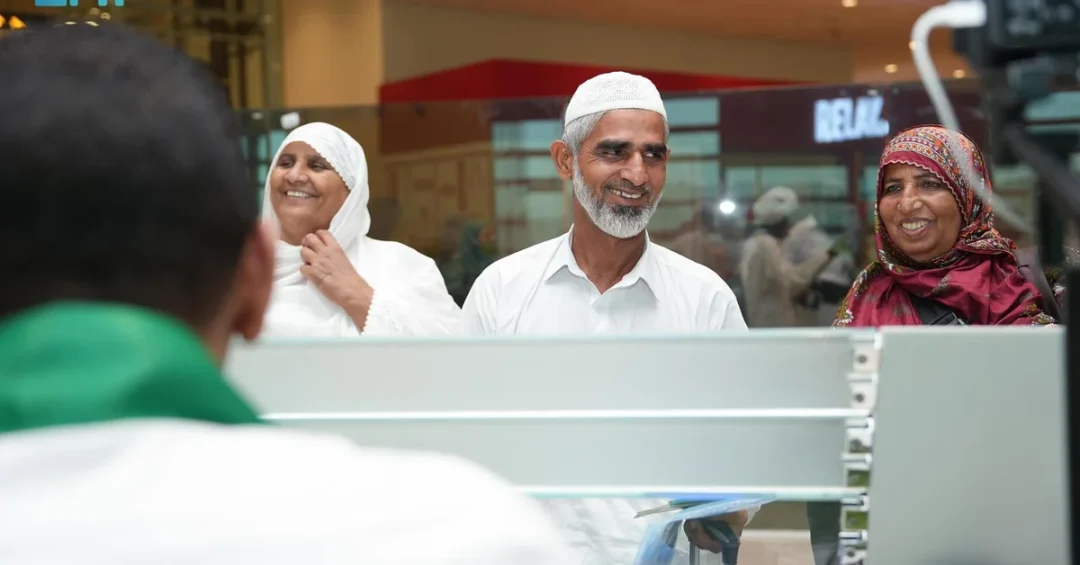
The Makkah Route Initiative has streamlined Hajj travel for thousands of Pakistani pilgrims ahead of the 1445H pilgrimage season, allowing them to complete all necessary procedures at dedicated reception halls in their home country before departing for the Kingdom of Saudi Arabia. The initiative, now in its sixth year, reflects the Kingdom’s continued commitment to facilitating the spiritual journey of pilgrims from around the world.
Context and Background
The Makkah Route Initiative is a key program under Saudi Arabia’s Vision 2030, designed to enhance the Hajj and Umrah experience by reducing waiting times and simplifying travel logistics. Initially launched in 2019, the initiative has expanded to several countries, including Pakistan, Indonesia, Malaysia, Morocco, and Bangladesh. By pre-processing visas, passports, and customs at the pilgrims’ departure airports, the program ensures a seamless arrival in the Kingdom, allowing pilgrims to focus on their spiritual journey.
For Pakistani pilgrims, many of whom have waited years for the opportunity to perform Hajj, the initiative has been transformative. It bridges distances and turns long-held dreams into reality, particularly for the elderly, who often face greater challenges in travel. The program embodies the Kingdom’s dedication to serving pilgrims and upholding the sanctity of the Hajj experience.
Key Details
Under the Makkah Route Initiative, dedicated reception halls equipped with state-of-the-art technology have been established at major airports in Pakistan, including Islamabad, Karachi, Lahore, and Peshawar. These halls are staffed by trained Saudi personnel who welcome pilgrims, complete all travel procedures, and bid them farewell with warmth and respect. The process is designed to be efficient and comfortable, reflecting the highest standards of hospitality.
The initiative covers all essential steps: visa issuance, passport verification, baggage handling, and customs clearance. Pilgrims then board flights directly to Saudi Arabia, where they are transported to their accommodations in Makkah and Madinah without further administrative delays. This year, the program is expected to serve thousands of Pakistani pilgrims, many of whom have expressed joy and relief at the streamlined process.
Officials from the Saudi Ministry of Hajj and Umrah, in coordination with Pakistani authorities, have worked tirelessly to ensure the initiative’s success. The program aligns with the directives of the Saudi leadership to provide the utmost care and convenience to guests of the Almighty.
Implications and Impact
The Makkah Route Initiative has significant implications for bilateral relations between Saudi Arabia and Pakistan. It strengthens people-to-people ties and demonstrates the Kingdom’s role as a global leader in facilitating religious tourism. For Pakistan, the initiative reduces the logistical burden on its airports and enhances the travel experience for its citizens, many of whom save for years to perform Hajj.
On a broader scale, the program contributes to the Kingdom’s goals of increasing the number of pilgrims and improving the quality of services, as outlined in Vision 2030. It also showcases Saudi Arabia’s technological advancement and administrative efficiency, setting a benchmark for other nations hosting large-scale religious events.
The initiative’s success has been praised by international observers and pilgrims alike. It not only eases the physical journey but also enriches the spiritual experience by allowing pilgrims to arrive in the Kingdom with peace of mind and focus on their rituals.
Vision 2030 Alignment
The Makkah Route Initiative is a tangible manifestation of Vision 2030’s objectives to enhance the Hajj and Umrah experience, increase capacity, and promote the Kingdom’s role as a global hub for Islamic hospitality. By investing in infrastructure, technology, and human resources, Saudi Arabia continues to set new standards in pilgrim care. As the program expands, it will further solidify the Kingdom’s position as a leader in serving pilgrims and advancing the goals of Vision 2030, ensuring that the journey of a lifetime is accessible, comfortable, and spiritually fulfilling for all.
20 Questions
Q1. What is the Makkah Route Initiative?
A1. The Makkah Route Initiative is a Saudi program that streamlines Hajj travel by allowing pilgrims to complete visa, passport, and customs procedures at their home country airports before departing for the Kingdom.
Q2. When was the Makkah Route Initiative launched?
A2. The initiative was launched in 2019 and is currently in its sixth year, serving pilgrims from several countries including Pakistan, Indonesia, Malaysia, Morocco, and Bangladesh.
Q3. Which countries participate in the Makkah Route Initiative?
A3. Participating countries include Pakistan, Indonesia, Malaysia, Morocco, and Bangladesh, with plans to expand to more nations in the future.
Q4. How does the initiative benefit Pakistani pilgrims?
A4. It simplifies travel by pre-processing all procedures, reducing wait times at Saudi airports and allowing pilgrims to focus on their spiritual journey upon arrival.
Q5. Where are the reception halls located in Pakistan?
A5. Reception halls are set up at major Pakistani airports, including Islamabad, Karachi, Lahore, and Peshawar, equipped with advanced technology and staffed by Saudi personnel.
Q6. What procedures are completed at the reception halls?
A6. Pilgrims complete visa issuance, passport verification, baggage handling, and customs clearance at the halls before boarding their flights to Saudi Arabia.
Q7. How many Pakistani pilgrims benefit from the initiative?
A7. Thousands of Pakistani pilgrims benefit annually, with the number expected to grow as the program expands and capacity increases.
Q8. Who oversees the Makkah Route Initiative?
A8. The initiative is overseen by the Saudi Ministry of Hajj and Umrah in coordination with Pakistani authorities and other participating countries.
Q9. What technology is used in the reception halls?
A9. The halls are equipped with state-of-the-art technology for biometric verification, document processing, and baggage handling to ensure efficiency and security.
Q10. How does the initiative align with Vision 2030?
A10. It supports Vision 2030 by enhancing the Hajj experience, increasing capacity, and showcasing Saudi Arabia’s commitment to serving pilgrims with excellence.
Q11. What is the role of Saudi personnel at the reception halls?
A11. Saudi personnel welcome pilgrims, complete all travel procedures, provide assistance, and bid farewell, ensuring a smooth and respectful experience.
Q12. How long does it take to complete procedures at the reception halls?
A12. The process is designed to be swift, typically taking a few minutes per pilgrim, thanks to advanced technology and efficient staffing.
Q13. What happens after pilgrims arrive in Saudi Arabia?
A13. Upon arrival, pilgrims are transported directly to their accommodations in Makkah and Madinah without further administrative delays.
Q14. Are there any costs associated with the initiative for pilgrims?
A14. The initiative is a service provided by the Saudi government at no additional cost to pilgrims, as part of the Kingdom’s hospitality efforts.
Q15. How has the initiative impacted elderly pilgrims?
A15. It has greatly benefited elderly pilgrims by reducing physical strain and logistical challenges, allowing them to focus on their spiritual journey with ease.
Q16. What feedback have pilgrims given about the initiative?
A16. Pilgrims have expressed joy and relief, praising the streamlined process and the warm reception they receive from Saudi staff at the reception halls.
Q17. Does the initiative cover Umrah as well as Hajj?
A17. The initiative primarily focuses on Hajj, but similar services have been introduced for Umrah pilgrims in recent years to enhance their experience.
Q18. How does the initiative strengthen Saudi-Pakistan relations?
A18. It fosters goodwill and people-to-people ties, demonstrating Saudi Arabia’s commitment to serving Pakistani pilgrims and enhancing bilateral cooperation.
Q19. What are the future plans for the Makkah Route Initiative?
A19. Plans include expanding to more countries, increasing capacity, and integrating new technologies to further improve efficiency and pilgrim satisfaction.
Q20. How can pilgrims learn more about the Makkah Route Initiative?
A20. Pilgrims can get information from official Saudi government websites, the Ministry of Hajj and Umrah, and Pakistani Hajj authorities.
Reader Feedback
We value your thoughts. Please share your feedback on this article.
Your feedback helps us improve our coverage.