


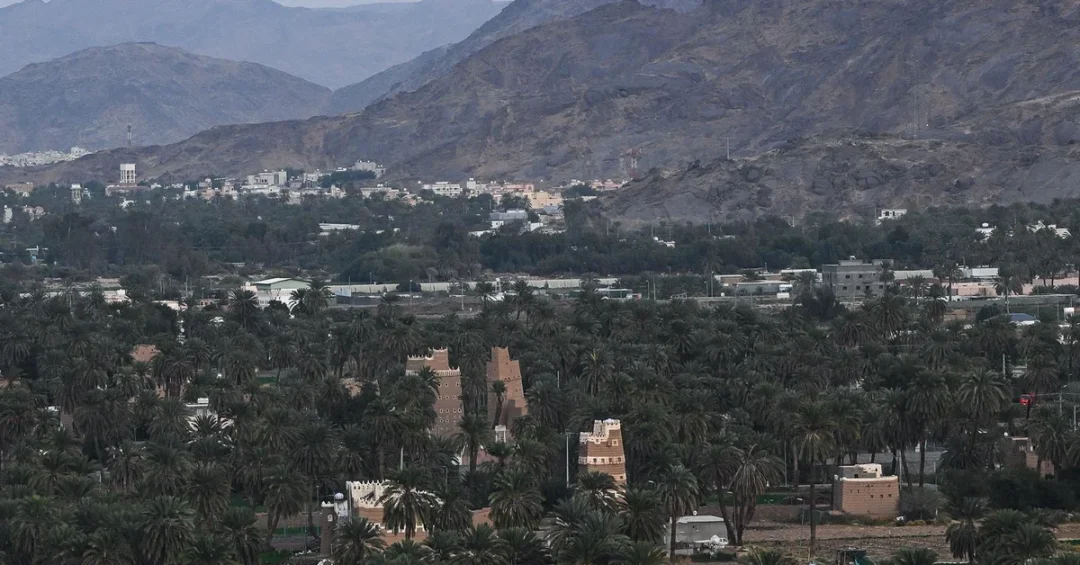
The mountainous highlands overlooking Najran are offering visitors panoramic views that bring together mountains, oases, farms, parks, residential districts and heritage sites in a single, distinctive landscape, according to information released by the Saudi Press Agency (SPA). The vistas reveal a region where traditional mud-brick buildings stand amid palm groves, forming a scene that reflects the deep-rooted history of human settlement in Najran and its enduring relationship with water and agriculture. For international visitors and researchers alike, the highlands provide a rare vantage point from which to appreciate how nature, heritage and modern architecture coexist in one of the Kingdom of Saudi Arabia’s most historically rich regions.
The observations, carried by the Saudi Press Agency, highlight a landscape shaped over decades by the contours of the valley and surrounding terrain. Najran’s road network has been carefully aligned with these natural features, helping to preserve the oasis within the urban fabric as the city continues to expand. The result is a visual composition in which rugged terrain, vegetation, agricultural areas and contemporary buildings appear side by side, a balance that speaks to the Kingdom’s wider commitment to preserving cultural and environmental heritage while pursuing modern development under Saudi Vision 2030.
Context and Background
Why does a mountain view matter in a country undergoing one of the world’s most ambitious economic transformations? In Najran, the answer lies in the layers of history visible from every ridge. The region, located in the southwest of the Kingdom near the border with Yemen, has long been known for its agricultural traditions, its palm groves and its distinctive mud-brick architecture. The highlands overlooking the city serve as a natural gallery, displaying the continuity between ancient settlement patterns and the modern urban growth that has followed.
Traditional mud-brick structures remain a defining feature of the Najran landscape. These buildings, constructed from locally sourced materials and adapted to the desert climate, stand amid palm groves that have sustained communities for generations. Together with the oasis and the surrounding mountains, they form a scene that reflects the deep-rooted history of human settlement in the region and its enduring relationship with water and agriculture. Architectural features that have long distinguished Najran, including decorative elements and adaptive cooling techniques, remain visible and continue to inform contemporary design in the area.
The Saudi Press Agency report notes that the mountain vistas also reveal the diversity of Najran’s urban landscape, where modern buildings coexist with farms, green spaces and heritage sites. This coexistence is not accidental. It is the product of deliberate planning that has sought to guide expansion along the natural contours of the valley, preserving the oasis as a central element of the city’s identity. For a global audience accustomed to rapid urbanization erasing historic landscapes, Najran offers an alternative model: growth that accommodates heritage rather than displacing it.
Key Details of the Najran Landscape
What exactly can visitors see from the highlands? The panorama includes the city’s road network following the curves of the valley, a design choice that helps maintain the oasis within the urban fabric. The mountains themselves have played a defining role in shaping Najran’s character and guiding its urban development over the decades. From elevated viewpoints, observers can trace the boundaries between residential areas, agricultural plots and protected heritage zones, gaining a clear understanding of how the region has balanced competing demands for land and resources.
The Saudi Press Agency describes these panoramic views as one of the most striking expressions of Najran’s identity, highlighting the harmony between nature, heritage and architecture. They also offer visitors a distinctive vantage point from which to appreciate the region’s geographical and cultural diversity and to explore the natural and heritage attractions that contribute to its growing appeal as a tourism destination. The report, released via official Saudi channels, underscores that these are not merely scenic overlooks but living landscapes that continue to evolve with the community.
For international travelers, the highlands represent an accessible introduction to a region that has remained relatively undiscovered compared with Saudi Arabia’s better-known destinations such as AlUla or the Red Sea coast. The combination of dramatic topography, traditional architecture and agricultural vitality creates an experience that is both educational and immersive. Visitors can observe how mud-brick construction techniques have been preserved, how palm cultivation continues to anchor the local economy, and how modern infrastructure has been integrated without overwhelming the natural setting.
International and Regional Impact
How does a regional landscape contribute to a nation’s global standing? Najran’s highlands are part of a broader effort by the Kingdom of Saudi Arabia to diversify its tourism offering and attract international visitors beyond the traditional pilgrimage routes. The Saudi Press Agency’s focus on the region’s natural and architectural diversity aligns with the National Tourism Strategy, which aims to increase the sector’s contribution to gross domestic product and create employment opportunities for Saudi citizens. By showcasing areas like Najran, the Kingdom presents a multifaceted image that extends beyond business and religious travel.
Regionally, Najran’s position near the border with Yemen gives its stability and development added significance. The careful preservation of heritage sites and the continued investment in infrastructure demonstrate a commitment to maintaining normalcy and prosperity in the southwest. For neighboring countries and international observers, the region serves as an example of how local identity can be strengthened through thoughtful urban planning. The coexistence of modern buildings with farms and green spaces also contributes to quality of life for residents, a priority that resonates with global sustainable development goals.
Economic and Strategic Significance
What economic value can be drawn from a landscape of mountains and oases? In Najran, agriculture remains a cornerstone of the local economy, with palm groves producing dates that are sold domestically and increasingly exported. The preservation of the oasis within the urban fabric ensures that agricultural activity continues even as the city grows. This integration supports food security objectives and provides livelihoods for farming families. The Saudi Press Agency report implicitly highlights this balance by noting how farms, parks and residential areas come together in the landscape.
Tourism adds another layer of economic potential. The highlands offer opportunities for guided tours, photography, hiking and cultural experiences that can attract both domestic and international visitors. As Saudi Arabia invests in tourism infrastructure, regions like Najran stand to benefit from improved accessibility and promotion. The distinctive visual composition of rugged terrain, vegetation and modern architecture creates a marketable identity that can differentiate Najran from other destinations. Strategic investment in hospitality, transportation and heritage interpretation could further unlock this potential while preserving the very assets that make the region unique.
Vision 2030 Alignment
How does Najran fit into the Kingdom’s long-term vision? Saudi Vision 2030 emphasizes the importance of preserving cultural heritage, promoting tourism and achieving sustainable urban development. The highlands of Najran, with their harmonious blend of nature, heritage and architecture, embody these principles. The careful alignment of the road network with the valley’s contours and the protection of the oasis within the expanding city reflect a planning philosophy that values environmental and cultural continuity. These are not isolated achievements but part of a national effort to ensure that modernization enhances rather than erases local identity.
As the Kingdom continues to open to the world, destinations like Najran will play an increasingly important role in showcasing the diversity of Saudi Arabia’s landscapes and communities. The panoramic views described by the Saudi Press Agency are more than a scenic attraction; they are a testament to a region that has maintained its character through centuries of change. For international audiences, they offer an invitation to discover a part of Saudi Arabia where mountains, oases and architectural heritage converge, and where the ambitions of Vision 2030 are being realized in harmony with the past.
20 Questions
Q1. What do the Najran highlands offer visitors?
A1. The highlands offer panoramic views showcasing the region’s natural and architectural diversity, where mountains, oases, farms, parks, residential areas and heritage sites come together in a distinctive landscape that reflects Najran’s character and identity.
Q2. Where is Najran located?
A2. Najran is located in the southwest of the Kingdom of Saudi Arabia, near the border with Yemen. It is known for its agricultural traditions, palm groves and distinctive mud-brick architecture.
Q3. What is the significance of the traditional mud-brick buildings?
A3. They stand amid palm groves and reflect the deep-rooted history of human settlement in Najran and its enduring relationship with water and agriculture. They also highlight architectural features that have long distinguished the region.
Q4. How does Najran’s urban landscape balance modern and traditional elements?
A4. Modern buildings coexist with farms, green spaces and heritage sites. The road network follows the contours of the valley and surrounding terrain, helping preserve the oasis within the urban fabric as the city expands.
Q5. What role have the mountains played in Najran’s development?
A5. The mountains have played a defining role in shaping the city’s character and guiding its urban development over the decades, creating a distinctive visual composition in which rugged terrain, vegetation, agricultural areas and modern architecture coexist.
Q6. Why are the panoramic views important for tourism?
A6. They offer visitors a distinctive vantage point from which to appreciate the region’s geographical and cultural diversity and explore the natural and heritage attractions that contribute to its growing appeal as a tourism destination.
Q7. What source provided this information about Najran?
A7. The information was released via the Saudi Press Agency (SPA), an official Saudi news authority, on August 12, 2026, highlighting the region’s natural and architectural diversity.
Q8. How does Najran reflect Saudi Arabia’s Vision 2030?
A8. Najran embodies Vision 2030 principles by preserving cultural heritage, promoting tourism and achieving sustainable urban development. Its harmonious blend of nature, heritage and architecture aligns with national goals.
Q9. What agricultural activities are prominent in Najran?
A9. Palm groves are a cornerstone of the local economy, producing dates for domestic and export markets. The preservation of the oasis within the urban fabric ensures agricultural activity continues as the city grows.
Q10. How does the road network in Najran support preservation?
A10. The road network follows the contours of the valley and surrounding terrain, which helps preserve the oasis within the urban fabric and maintains the city’s distinctive visual composition as it expands.
Q11. What can visitors expect to see from the highlands?
A11. Visitors can see mountains, oases, farms, parks, residential areas and heritage sites. They can also observe traditional mud-brick buildings, palm groves and modern architecture coexisting in a unique landscape.
Q12. Why is Najran considered a growing tourism destination?
A12. Its natural and heritage attractions, combined with the Kingdom’s investment in tourism infrastructure and promotion, are increasing its appeal. The region offers cultural and geographical diversity that attracts domestic and international visitors.
Q13. What architectural features distinguish Najran?
A13. Traditional mud-brick structures feature adaptive cooling techniques and decorative elements that have long distinguished the region. These features remain visible and continue to inform contemporary design in the area.
Q14. How does Najran’s landscape reflect human settlement history?
A14. The coexistence of ancient mud-brick buildings, palm groves and oases with modern development reflects a deep-rooted history of human settlement and an enduring relationship with water and agriculture.
Q15. What is the economic significance of Najran’s landscape?
A15. Agriculture, particularly date production, remains important. Tourism adds potential through guided tours, photography and cultural experiences. The landscape supports food security and local livelihoods.
Q16. How does Najran contribute to Saudi Arabia’s regional stability?
A16. Its development and preservation efforts near the border with Yemen demonstrate a commitment to maintaining normalcy and prosperity in the southwest, serving as an example of thoughtful urban planning.
Q17. What makes Najran’s visual composition distinctive?
A17. The combination of rugged terrain, vegetation, agricultural areas and modern architecture creates a distinctive visual composition. The mountains, oasis and buildings form a scene that reflects the region’s identity.
Q18. How can international visitors explore Najran’s heritage?
A18. Visitors can explore the highlands for panoramic views, visit heritage sites, observe traditional architecture and experience the oasis. Improved accessibility and tourism promotion are making the region more welcoming.
Q19. What does the Saudi Press Agency report emphasize about Najran?
A19. It emphasizes the harmony between nature, heritage and architecture, and the region’s growing appeal as a tourism destination, highlighting the diversity of its urban and natural landscapes.
Q20. What is the forward-looking outlook for Najran?
A20. Najran is expected to continue balancing modernization with heritage preservation, contributing to Saudi Vision 2030 goals by attracting visitors, supporting agriculture and maintaining its unique identity for future generations.
Reader Feedback
We value your thoughts. Please share your feedback on this article.
Your feedback helps us improve our coverage.
Related articles
 Lady Cloud in Al-Mandaq: Panoramic Views of Al-Baha Peaks
 SEVEN Abha Emerges as Aseer’s Leading Leisure Destination
 SEVEN Abha Welcomes Visitors After Successful Opening Festival
 Umrah Guests Praise Saudi Hospitality Under Royal Program
 Saudi Envoy Joins Lebanon Tourism Recovery Summit
 Umrah Guests Depart Medina for Mecca Under Saudi Program