


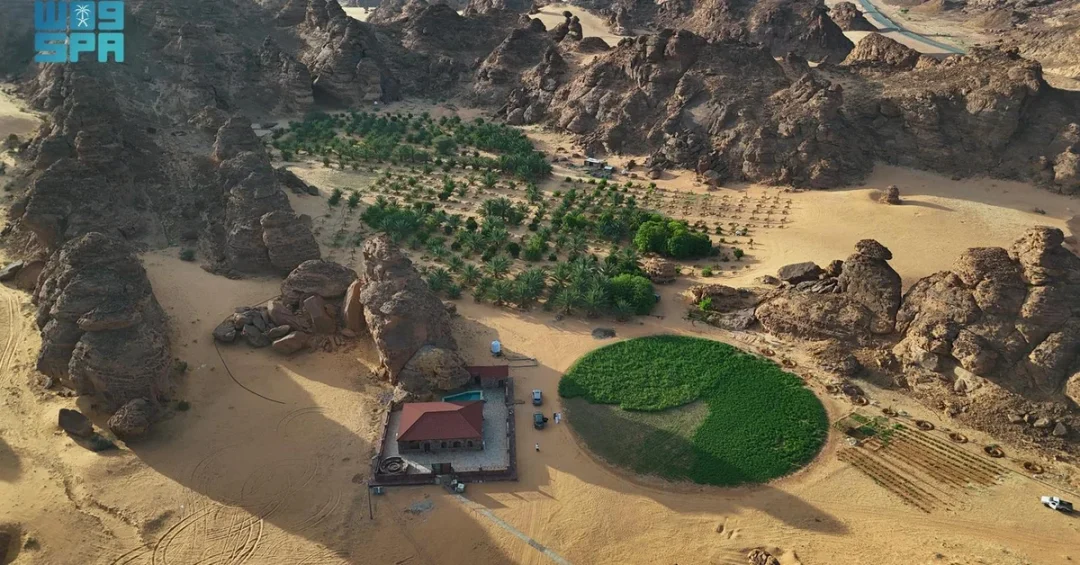
Qaa Alhaj, a historic village in AlUla Province, has been highlighted by the Saudi Press Agency as a key stopover for Hajj caravans traveling the Levant route. Nestled in the northeast region of AlUla, the village boasts breathtaking landscapes that have made it a significant destination and route for pilgrims journeying from the Levant to the holy cities of Makkah and Madinah. The village derives its name from its distinctive terrain, characterized by basins surrounded by mountains, where rainfall forms water pools along the road, persisting for months.
Context and Background
Historically, Qaa Alhaj served as a vital resting point for Hajj caravans and traders. Battling numerous challenges and hardships, including drought and thirst, Hajj caravans found relief in Qaa Alhaj. The village and its resources provided them with a much-needed respite and a reliable water source. The Levant Hajj route originates from Damascus, passing Busra Al-Sham of Daraa, as well as other notable locations such as Ma’an and Al-Madawara. It then enters the Kingdom, traversing through Halat Ammar, That Al-Hajj in Tabuk, Al-Aqra’a, Al-Akhdhar, Al-Muazam, Al-Hijr, AlUla, then Qaa Alhaj and Qarh, before finally reaching Madinah.
Key Details
Throughout history, and as time passes and the number of pilgrims increases, Saudi Arabia has continued its efforts to receive and provide all forms of services to the Hajj pilgrims through land crossings and air and sea ports. The village’s unique geography, with its natural water pools, made it an essential oasis for travelers crossing the arid landscape. Today, Qaa Alhaj stands as a testament to the Kingdom’s rich heritage and its enduring commitment to facilitating the Hajj journey.
Implications and Impact
The historical significance of Qaa Alhaj underscores the deep-rooted tradition of hospitality and service that Saudi Arabia has extended to pilgrims for centuries. By preserving and promoting such sites, the Kingdom not only honors its past but also enriches the experience of modern-day pilgrims. This aligns with the broader efforts to enhance the Hajj and Umrah experience, reflecting the leadership’s dedication to serving the guests of God.
Vision 2030 Alignment
Under Vision 2030, Saudi Arabia aims to diversify its economy and promote cultural heritage tourism. Historic sites like Qaa Alhaj are integral to these efforts, offering visitors a glimpse into the Kingdom’s storied past while contributing to the development of sustainable tourism. The preservation of such landmarks supports the goals of increasing tourist visits and showcasing the Kingdom’s unique cultural and historical assets to the world.
20 Questions
Q1. What is Qaa Alhaj and where is it located?
A1. Qaa Alhaj is a historic village in the northeast region of AlUla Province, Saudi Arabia. It is known for its breathtaking landscapes and served as a significant stopover for pilgrims traveling the Levant Hajj route to Makkah and Madinah.
Q2. Why is Qaa Alhaj significant for Hajj pilgrims?
A2. Qaa Alhaj provided a vital resting point with a reliable water source for Hajj caravans traversing the arid Levant route. Its natural basins and water pools offered respite from drought and thirst, making it an essential oasis for travelers.
Q3. What is the origin of the name Qaa Alhaj?
A3. The name Qaa Alhaj derives from its distinctive terrain, characterized by basins surrounded by mountains where rainfall forms water pools that persist for months. This unique geography made it a notable landmark on the Hajj route.
Q4. Which route did Hajj caravans take through Qaa Alhaj?
A4. The Levant Hajj route originated from Damascus, passing through Busra Al-Sham, Ma’an, and Al-Madawara. It entered Saudi Arabia via Halat Ammar, That Al-Hajj, Al-Aqra’a, Al-Akhdhar, Al-Muazam, Al-Hijr, AlUla, Qaa Alhaj, and Qarh before reaching Madinah.
Q5. What were the challenges faced by Hajj caravans before reaching Qaa Alhaj?
A5. Caravans faced numerous hardships including drought and thirst while crossing the desert. Qaa Alhaj provided a much-needed relief with its water resources, allowing pilgrims and traders to rest and replenish before continuing their journey.
Q6. How has Saudi Arabia supported Hajj pilgrims historically?
A6. Saudi Arabia has continuously provided services to Hajj pilgrims through land crossings, air, and sea ports. This commitment ensures the safety and comfort of millions of pilgrims undertaking the spiritual journey each year.
Q7. What role does Qaa Alhaj play today?
A7. Today, Qaa Alhaj stands as a testament to Saudi Arabia’s rich heritage and its enduring commitment to facilitating the Hajj journey. It is a historical site that attracts visitors interested in the Kingdom’s cultural and religious history.
Q8. How does Qaa Alhaj reflect Saudi Arabia’s hospitality?
A8. Qaa Alhaj exemplifies the traditional hospitality and service Saudi Arabia has extended to pilgrims for centuries. By preserving such sites, the Kingdom honors its past and enriches the experience of modern-day pilgrims.
Q9. What is the significance of Qaa Alhaj in Islamic history?
A9. Qaa Alhaj served as a crucial stopover for Hajj caravans and traders, providing water and respite. Its historical role underscores the importance of the Levant route in facilitating the pilgrimage to Makkah and Madinah over centuries.
Q10. How does Qaa Alhaj align with Vision 2030?
A10. Under Vision 2030, Saudi Arabia aims to diversify its economy and promote cultural heritage tourism. Historic sites like Qaa Alhaj are integral to these efforts, offering visitors a glimpse into the Kingdom’s storied past and supporting sustainable tourism development.
Q11. What makes Qaa Alhaj a unique destination?
A11. Qaa Alhaj is unique for its breathtaking landscapes, natural water pools, and historical significance as a Hajj stopover. Its terrain of basins surrounded by mountains creates a distinctive environment that has attracted travelers for centuries.
Q12. Are there any preservation efforts for Qaa Alhaj?
A12. While specific preservation efforts are not detailed, Saudi Arabia has a strong track record of preserving historical sites. The Kingdom’s commitment to heritage conservation ensures that places like Qaa Alhaj are maintained for future generations.
Q13. How can tourists visit Qaa Alhaj?
A13. Tourists can visit Qaa Alhaj as part of guided tours to AlUla Province, which is renowned for its archaeological and historical sites. The Saudi Tourism Authority provides information on accessing such destinations.
Q14. What other historical sites are near Qaa Alhaj?
A14. Nearby historical sites include AlUla, Al-Hijr (Madain Salih), and Qarh, all of which are part of the Levant Hajj route. These locations offer rich insights into the region’s past and its role in pilgrimage.
Q15. How does Qaa Alhaj contribute to Saudi Arabia’s tourism goals?
A15. Qaa Alhaj contributes to Saudi Arabia’s tourism goals by attracting visitors interested in cultural and religious heritage. This supports the Vision 2030 objective of increasing tourist visits and showcasing the Kingdom’s unique assets.
Q16. What was the importance of water in Qaa Alhaj?
A16. Water was crucial for the survival of Hajj caravans crossing the desert. Qaa Alhaj’s natural pools provided a reliable source, enabling pilgrims and traders to rest and replenish before continuing their arduous journey.
Q17. How does Qaa Alhaj reflect Saudi Arabia’s commitment to pilgrims?
A17. Qaa Alhaj reflects Saudi Arabia’s long-standing commitment to serving pilgrims by providing essential resources and safety along the Hajj route. This tradition continues today with modern services at land, air, and sea ports.
Q18. What is the Levant Hajj route?
A18. The Levant Hajj route is a historical pilgrimage path from Damascus to Makkah and Madinah, passing through significant locations in Syria, Jordan, and Saudi Arabia. It was used by caravans for centuries.
Q19. How has the number of pilgrims changed over time?
A19. The number of pilgrims has increased significantly over time, leading Saudi Arabia to expand and improve services. Modern infrastructure now accommodates millions annually, ensuring a safe and spiritual experience.
Q20. What does Qaa Alhaj symbolize for Saudi Arabia?
A20. Qaa Alhaj symbolizes Saudi Arabia’s rich heritage and its enduring role as a host to pilgrims. It represents the Kingdom’s commitment to preserving history while embracing modernity under Vision 2030.
Reader Feedback
We value your thoughts. Please share your feedback on this article.
Your feedback helps us improve our coverage.