


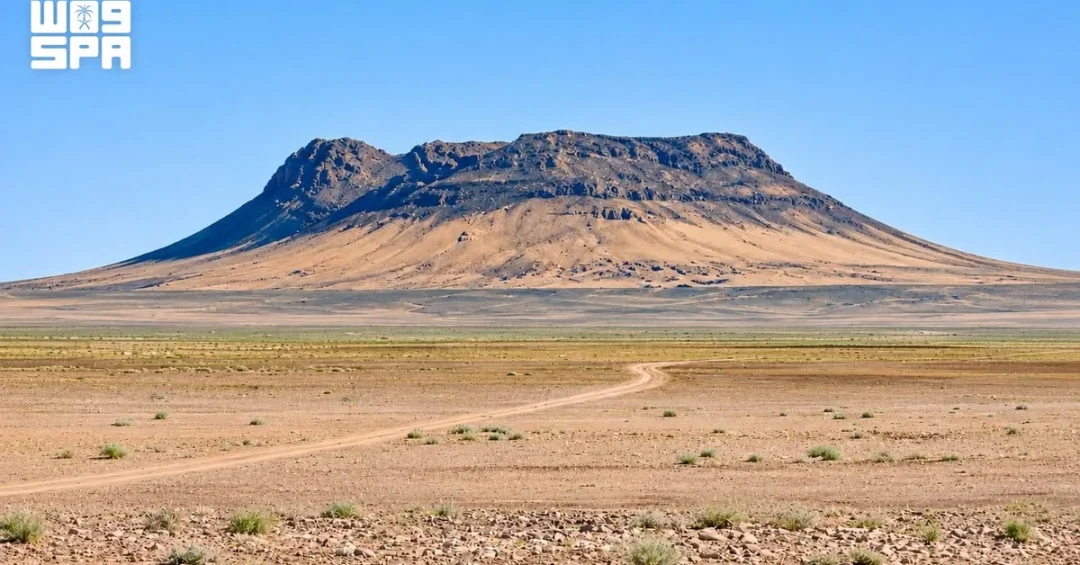
Qaziz Al-Naam Mountain, a striking natural formation rising east of Turaif Governorate in the Northern Borders Region, stands as a living monument to the wildlife that once roamed the deserts of northern Saudi Arabia, according to information released via the Saudi Press Agency (SPA). The mountain, distinguished by its rugged mountainous structure and its commanding elevation above the surrounding desert plain, is closely associated with popular stories passed down through generations about the animals that once inhabited the area. These oral traditions, preserved by elderly residents, offer a rare window into the ecological history of a landscape that has shaped the identity of the region for decades.
Have you ever wondered how a single landmark can carry the memory of an entire ecosystem? Qaziz Al-Naam Mountain does exactly that, serving as both a geographical feature and a cultural archive. The name itself—widely understood to reference ostriches—reflects a time, roughly 50 to 70 years ago, when these birds are said to have frequented the surrounding sites. Today, the mountain remains one of the region’s most prominent natural landmarks, and its story continues to be told by the communities that live in its shadow.
Context and Background
What makes a mountain more than just rock and elevation? For the people of Turaif Governorate, the answer lies in the stories attached to it. According to accounts passed down by elderly residents, Qaziz Al-Naam Mountain derived its name from the ostriches that once gathered in the surrounding areas. These narratives, handed from one generation to the next, form part of the living heritage of the Northern Borders Region and connect contemporary residents to a time when the desert supported a far richer variety of wildlife than it does today.
Nasser Al-Majlad, Chairman of the Aman Environmental Association in the Northern Borders Region, explained that Qaziz Al-Naam Mountain is regarded as one of the region’s natural landmarks owing to its elevation and distinctive geographical formation. His account situates the mountain within a broader ecological story: the Arabian ostrich, he noted, once lived in the deserts of the Northern Borders Region, where the terrain and grazing areas were well suited to its natural habitat. The bird has since been classified as an extinct wildlife species, making the mountain’s name a poignant reminder of what has been lost and what must be protected.
Why does this matter to a modern, rapidly developing nation? Because heritage and environment are increasingly recognized as interconnected pillars of national identity. The Arabian ostrich—once a familiar sight across the Arabian Peninsula—was a creature of the open desert, dependent on the sparse vegetation and expansive grazing lands that the Northern Borders Region once provided in abundance. The survival of its memory through place names and oral history demonstrates how communities instinctively preserve ecological knowledge, even as the landscapes around them change.
Key Details of the Landmark
What exactly sets Qaziz Al-Naam Mountain apart from the many other formations scattered across the northern desert? Its elevation and geographical structure make it a visible reference point in an otherwise flat expanse, and this prominence likely explains why it became a gathering landmark for both people and wildlife. The mountain’s slopes and surrounding plains once offered the kind of terrain and vegetation that supported grazing animals, which in turn made the area attractive to large birds such as the Arabian ostrich.
The precise location—east of Turaif Governorate in the Northern Borders Region—places the mountain within a landscape that Saudi Arabia has increasingly sought to study and conserve. The Aman Environmental Association, under Al-Majlad’s leadership, is among the local bodies working to document and raise awareness of the region’s natural assets. Their efforts reflect a wider national recognition that environmental heritage deserves the same attention as archaeological and cultural heritage.
How do oral histories become reliable records? In the case of Qaziz Al-Naam, the consistency of the accounts across generations lends them credibility as cultural testimony. Elderly residents recall the presence of ostriches in the area roughly half a century to seven decades ago, a timeframe that aligns with the documented decline of the Arabian ostrich across the region. While these are popular stories rather than scientific surveys, they complement formal ecological research and help fill gaps in the historical record of wildlife distribution.
International and Regional Impact
Can a local mountain story resonate beyond the borders of the Kingdom? It can, because biodiversity loss and the preservation of natural heritage are global concerns. The extinction of the Arabian ostrich is a well-known example of how human activity and environmental change can eliminate a species that once thrived across an entire region. Saudi Arabia’s willingness to preserve the memory of that loss—through place names, community memory, and the work of environmental associations—positions the Kingdom as a responsible steward of natural history on the world stage.
Regionally, the story of Qaziz Al-Naam Mountain connects the Northern Borders Region to broader Arabian Peninsula heritage. Similar accounts of vanished wildlife exist across neighboring countries, and shared ecological memory can serve as a basis for regional cooperation on conservation and environmental education. For international audiences, the mountain offers an accessible entry point into understanding how Saudis relate to their desert environment—not merely as a resource to be developed, but as a living heritage to be respected and remembered.
Economic and Strategic Significance
How does environmental heritage contribute to economic growth? In the Northern Borders Region, natural landmarks such as Qaziz Al-Naam Mountain have the potential to support cultural and eco-tourism, attracting visitors interested in the region’s history, geology, and wildlife heritage. As Saudi Arabia expands its domestic tourism sector, distinctive local sites become valuable assets that can be developed responsibly, generating opportunities for local communities while preserving the character of the landscape.
Strategically, the documentation and celebration of such landmarks align with the Kingdom’s broader commitment to sustainable development. Recognizing the ecological history of an area informs modern land-use planning, helping authorities balance development with conservation. The work of local associations like the Aman Environmental Association demonstrates a grassroots dimension to these efforts, ensuring that national strategies are grounded in the knowledge and participation of the communities most familiar with the land.
Vision 2030 Alignment
Where does a mountain named for ostriches fit within a modernizing kingdom? It fits squarely within Vision 2030, Saudi Arabia’s long-term transformation strategy, which places quality of life, environmental sustainability, and the celebration of national heritage at its heart. The preservation of Qaziz Al-Naam Mountain’s story reflects the Vision’s emphasis on protecting the Kingdom’s natural and cultural assets while opening them to responsible tourism and public appreciation. By honoring the memory of the Arabian ostrich, the Northern Borders Region contributes to a national narrative that values both progress and the environment.
As Saudi Arabia continues to develop its regions and diversify its economy, landmarks like Qaziz Al-Naam Mountain remind citizens and visitors alike that modernization and heritage can move forward together. The mountain’s enduring presence above the desert—and the stories it carries—will continue to inspire efforts to safeguard the Kingdom’s natural legacy for future generations, ensuring that the memory of its vanished wildlife remains alive in the national consciousness.
20 Questions
Q1. Where is Qaziz Al-Naam Mountain located?
A1. Qaziz Al-Naam Mountain is located east of Turaif Governorate in the Northern Borders Region of Saudi Arabia, according to information released through official Saudi sources.
Q2. Why is the mountain named Qaziz Al-Naam?
A2. Popular stories passed down by elderly residents indicate the mountain was named after the ostriches that used to frequent the surrounding sites roughly 50 to 70 years ago.
Q3. What is one of the mountain’s distinguishing features?
A3. The mountain is distinguished by its mountainous formation and its elevation above the surrounding desert, making it one of the region’s prominent natural landmarks.
Q4. Who spoke about the mountain and its significance?
A4. Nasser Al-Majlad, Chairman of the Aman Environmental Association in the Northern Borders Region, noted that the mountain is one of the region’s natural landmarks due to its elevation and geographical formation.
Q5. What wildlife is connected to the mountain’s name?
A5. The Arabian ostrich is connected to the mountain’s name; the bird once lived in the deserts of the Northern Borders Region, where the terrain and grazing areas suited its natural habitat.
Q6. What is the current status of the Arabian ostrich?
A6. The Arabian ostrich has been classified as an extinct wildlife species, making the memory preserved in the mountain’s name a poignant reminder of the region’s ecological history.
Q7. How old are the stories about the ostriches in the area?
A7. According to elderly residents, the ostriches frequented the surrounding sites around 50 to 70 years ago, a memory carried through generations of local communities.
Q8. Why was the area suitable for the Arabian ostrich?
A8. Al-Majlad explained that the region’s terrain and grazing areas were suitable for the bird’s natural habitat, allowing the Arabian ostrich to thrive in the northern deserts.
Q9. What organization is associated with raising awareness of the landmark?
A9. The Aman Environmental Association in the Northern Borders Region, led by Chairman Nasser Al-Majlad, is associated with documenting and highlighting the region’s natural landmarks.
Q10. What kind of landscape surrounds the mountain?
A10. The mountain rises above a surrounding desert plain in the Northern Borders Region, a landscape characterized by open expanses and seasonal grazing areas.
Q11. Why does the mountain matter beyond its geography?
A11. The mountain matters because it preserves cultural memory, connecting residents to the wildlife heritage of the region and serving as a natural archive of local ecological history.
Q12. How do oral traditions contribute to conservation awareness?
A12. Oral traditions keep ecological knowledge alive across generations, helping communities and authorities understand past wildlife distribution and encouraging greater environmental stewardship.
Q13. What makes the mountain a visible landmark?
A13. Its elevation and distinctive mountainous formation make Qaziz Al-Naam Mountain a visible reference point rising above the flat desert expanse of the Northern Borders Region.
Q14. How does the story connect to national heritage?
A14. The story connects to national heritage by demonstrating how place names and community memory preserve ecological history, complementing Saudi Arabia’s broader efforts to protect its natural and cultural assets.
Q15. What role can natural landmarks play in tourism?
A15. Natural landmarks such as Qaziz Al-Naam Mountain can support cultural and eco-tourism, offering visitors insight into the region’s geology, history, and wildlife heritage.
Q16. Why is the Arabian ostrich described as extinct?
A16. The Arabian ostrich has been classified as an extinct wildlife species, meaning it no longer exists in its natural habitat, though its memory endures in local names and stories.
Q17. What does Al-Majlad’s statement emphasize?
A17. Al-Majlad’s statement emphasizes the mountain’s status as a natural landmark and its connection to the Arabian ostrich, which once lived in the region’s deserts.
Q18. How does this story reflect Saudi environmental priorities?
A18. The story reflects Saudi environmental priorities by showing that communities and associations value natural heritage, aligning with national efforts to balance development with conservation.
Q19. What can future generations learn from the mountain?
A19. Future generations can learn about the region’s ecological past, the importance of protecting wildlife, and the value of preserving oral traditions that document environmental change.
Q20. How does the landmark connect to Vision 2030?
A20. The landmark connects to Vision 2030 through its emphasis on quality of life, environmental sustainability, and celebrating national heritage, supporting responsible tourism and conservation.
Reader Feedback
We value your thoughts. Please share your feedback on this article.
Your feedback helps us improve our coverage.
Related articles
 Tourism Ministry Wraps Up Hajj Conference 2026 Role
 Hajj Talk Highlights Human Impact on Pilgrims’ Journeys
 Hajj Conference Examines Regulations and Hospitality Quality
 Habu Pass in Aseer: A Journey Above the Sea of Clouds
 Hajj Workshops Examine Food Safety, Nusuk Card, Pilgrim Experience
 Farasan’s Al-Qandal Mangroves Shape Coastal Ecosystem