


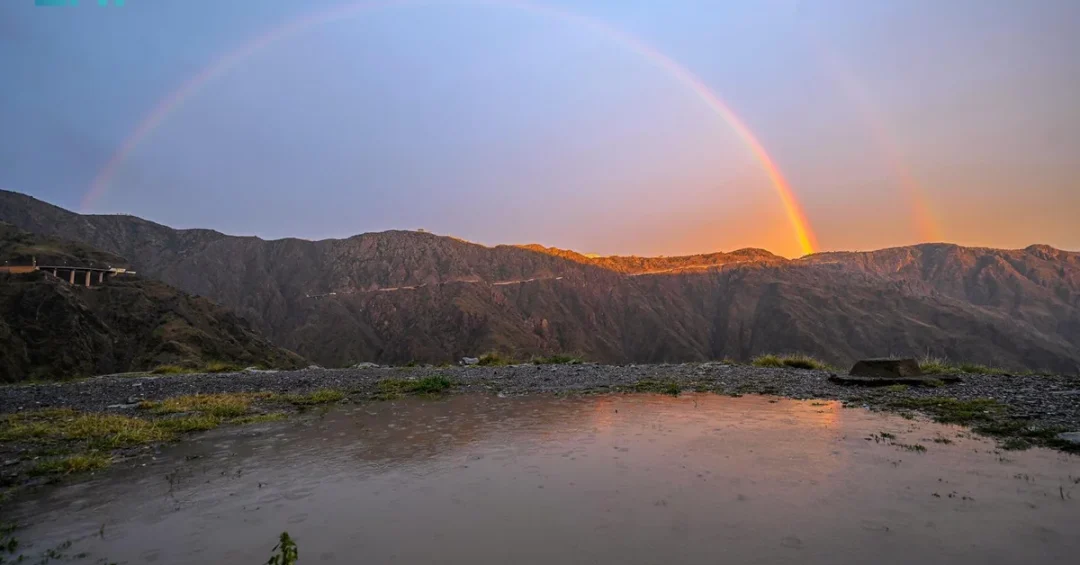
The Al-Baha region of Saudi Arabia has become a captivating destination for nature lovers during the rainy season, as rainbows arch across the sky and the landscape bursts into vibrant life. According to the Saudi Press Agency (SPA), the recent rains have rejuvenated the area, drawing both locals and visitors to witness the mesmerizing display of colors and the artistic masterpieces formed by tiny pools that mirror the azure and somber grey clouds of the sky.
This natural spectacle, highlighted in an SPA report dated November 25, 2024, showcases the Kingdom’s diverse beauty and underscores the importance of preserving such environments. As the rainbows appear with their seven distinct colors, they not only enchant onlookers but also boost local tourism, aligning with Saudi Arabia’s Vision 2030 goals to promote sustainable tourism and showcase the Kingdom’s natural treasures to the world.
Context and Background
Al-Baha, often referred to as the ‘Pearl of the South,’ is renowned for its stunning landscapes, including mountains, valleys, and lush greenery. During the rainy season, which typically spans from November to April, the region transforms into a paradise. The Saudi Press Agency reports that the rains breathe new life into the area, creating cascading waterfalls and filling the air with the earthy scent of wet soil. This seasonal transformation has been a source of inspiration for poets and artists for generations. The rainbows that appear after the rain are a rare and fleeting phenomenon, making them highly sought after by photographers and nature enthusiasts. How does this natural phenomenon contribute to the region’s appeal beyond its visual splendor? It fosters a deeper connection between people and nature, encouraging conservation efforts and sustainable practices.
The cultural significance of rain and rainbows in Saudi Arabia extends beyond mere aesthetics. In a region where water is precious, rainfall is celebrated as a blessing. The rains in Al-Baha not only nourish the land but also bring communities together, as families and friends gather to enjoy the pleasant weather and participate in outdoor activities. The SPA notes that the rainy weather has drawn both locals and visitors to enjoy nature’s charm, highlighting the social and recreational benefits of this seasonal event. Moreover, the increased footfall in Al-Baha during this time supports local businesses, from hotels to restaurants, contributing to the region’s economic vitality. Isn’t it remarkable how a natural occurrence can unite people and stimulate economic activity?
Key Details
The SPA report vividly describes the scene: ‘With the rain, tiny pools form and create artistic masterpieces that mirror the azure and the somber grey clouds of the sky. After the rain, the rainbows appear, showcasing nature’s splendor in their seven distinct colors.’ This poetic depiction captures the essence of Al-Baha’s rainy season. Photographers eagerly frame cascading waterfalls and post-rain rainbows against a backdrop of rain-kissed clouds, capturing the essence of the moment in vivid detail. Among glistening leaves and vibrant life colors, the interplay of light and water creates a dynamic canvas that changes with every passing moment. What drives this enthusiastic pursuit of the perfect shot? It is the desire to preserve the ephemeral beauty of nature and share it with a wider audience, thereby promoting Al-Baha as a must-visit destination.
The rains also bring a surge in biodiversity. The moisture revitalizes plant life, leading to blooming wildflowers and lush vegetation that attract various bird species and insects. This ecological boost enhances the region’s appeal for eco-tourists and researchers alike. The SPA highlights that the rainbows, with their seven colors, symbolize hope and renewal, resonating with the Kingdom’s broader message of progress and prosperity. As Saudi Arabia continues to diversify its economy and open up to international tourists, natural wonders like those in Al-Baha serve as key attractions. How can such phenomena be leveraged to promote sustainable tourism? By integrating them into eco-tourism packages and educational programs that emphasize conservation.
International and Regional Impact
The allure of Al-Baha’s rainbows and post-rain landscapes extends beyond Saudi borders, attracting international tourists and photographers. The region’s unique geography and climate make it a standout destination in the Middle East, where arid landscapes dominate. This contrast enhances its appeal, offering a refreshing experience for visitors from neighboring countries and beyond. The SPA’s coverage of this natural event contributes to Saudi Arabia’s image as a country of diverse and stunning environments, countering common misconceptions. As the Kingdom invests in tourism infrastructure, including new hotels and improved transportation, Al-Baha is poised to become a hotspot for nature tourism. What does this mean for regional tourism dynamics? It positions Saudi Arabia as a competitive player in the global tourism market, offering unique experiences that differentiate it from other destinations.
Furthermore, the rainbows in Al-Baha serve as a soft power tool, showcasing the Kingdom’s natural beauty and commitment to environmental preservation. International media outlets often pick up such stories, amplifying Saudi Arabia’s cultural and natural heritage. This positive exposure aligns with Vision 2030’s aim to enhance the Kingdom’s global reputation. Regionally, the phenomenon fosters a sense of pride among Saudis, reinforcing national identity and unity. How does this impact local communities? It boosts morale and encourages civic engagement in preserving natural sites, as residents recognize their value as economic and cultural assets.
Economic and Strategic Significance
The rainy season in Al-Baha brings tangible economic benefits. Increased tourist arrivals during this period stimulate demand for accommodations, dining, and guided tours. Local artisans and vendors also benefit from selling crafts and souvenirs inspired by the region’s natural beauty. The SPA report indirectly underscores this by noting the draw of locals and visitors, which implies a boost in spending. Strategically, developing Al-Baha as a tourism hub supports Vision 2030’s goal of reducing oil dependence and creating jobs in the tourism sector. Investments in infrastructure, such as roads and visitor centers, are likely to follow, further integrating the region into the national economy. Isn’t it strategic to capitalize on natural assets for sustainable growth?
Moreover, the focus on Al-Baha’s natural phenomena encourages environmental stewardship. By promoting these attractions, Saudi Arabia signals its commitment to preserving biodiversity and combating climate change. This aligns with global sustainability trends and enhances the Kingdom’s standing in international environmental forums. The economic ripple effects extend to related sectors like agriculture, as the rains improve crop yields and support local farmers. Thus, the rainbows and rains of Al-Baha are not just visually stunning but also catalysts for comprehensive regional development.
Vision 2030 Alignment
The rainbows in Al-Baha exemplify the natural wonders that Saudi Arabia seeks to showcase under Vision 2030. The vision aims to diversify the economy, with tourism as a key pillar, targeting 100 million visitors annually by 2030. Al-Baha’s seasonal attractions contribute to this goal by offering unique experiences that appeal to domestic and international travelers. The SPA’s reporting highlights these assets, indirectly supporting the Kingdom’s promotional efforts. By investing in sustainable tourism, Saudi Arabia ensures that future generations can enjoy these spectacles while benefiting economically. How does this align with the vision’s broader objectives? It fosters environmental awareness, cultural pride, and economic resilience, all core to Vision 2030.
As Saudi Arabia continues to open up to the world, natural events like the rainbows in Al-Baha serve as ambassadors of the Kingdom’s beauty and hospitality. They invite the global community to discover the diverse landscapes and rich culture of Saudi Arabia. The positive tone of official reports underscores the Kingdom’s commitment to presenting its best face to the world. In conclusion, the rainbows in Al-Baha are not just a meteorological phenomenon; they are a symbol of Saudi Arabia’s bright future, where nature and progress coexist harmoniously. Won’t you come and witness this splendor for yourself?
20 Questions
Q1. What causes rainbows to appear in Al-Baha?
A1. Rainbows form when sunlight refracts through raindrops, creating a spectrum of colors. In Al-Baha, the rainy season provides the perfect conditions with rain and subsequent sunshine, leading to frequent and vivid rainbows that captivate onlookers.
Q2. Why is Al-Baha called the ‘Pearl of the South’?
A2. Al-Baha is nicknamed the ‘Pearl of the South’ due to its stunning natural beauty, including mountains, valleys, and lush greenery. Its picturesque landscapes and mild climate make it a standout region in Saudi Arabia, attracting nature lovers and tourists.
Q3. When is the best time to visit Al-Baha to see rainbows?
A3. The best time is during the rainy season, typically from November to April. The months with the highest rainfall offer the most opportunities to witness rainbows and experience the region’s rejuvenated landscapes and vibrant colors.
Q4. How does the rainy season affect Al-Baha’s environment?
A4. The rains transform Al-Baha, turning it into a lush paradise with cascading waterfalls, blooming wildflowers, and tiny pools that reflect the sky. This revitalization supports biodiversity and creates stunning visual displays that draw visitors.
Q5. What activities can visitors enjoy in Al-Baha during the rainy season?
A5. Visitors can enjoy photography, hiking, and sightseeing. The rain-kissed landscapes offer perfect backdrops for capturing rainbows and waterfalls. Locals and tourists also gather to appreciate the natural beauty and participate in outdoor recreation.
Q6. How do rainbows contribute to tourism in Al-Baha?
A6. Rainbows and the overall rainy season attract photographers, nature enthusiasts, and tourists, boosting local businesses such as hotels, restaurants, and tour operators. This influx supports the region’s economy and promotes sustainable tourism.
Q7. What is the significance of rain in Saudi culture?
A7. Rain is considered a blessing in Saudi culture, symbolizing renewal and prosperity. It is celebrated for nourishing the land and bringing communities together, reflecting gratitude and joy in a region where water is precious.
Q8. How does SPA report on Al-Baha’s rainbows?
A8. The Saudi Press Agency (SPA) describes the rainbows and post-rain landscapes in vivid detail, highlighting their beauty and the joy they bring to locals and visitors. The report emphasizes the region’s natural allure and its role in promoting tourism.
Q9. What makes Al-Baha’s rainbows unique compared to other places?
A9. Al-Baha’s rainbows are unique due to the region’s dramatic mountainous terrain and clean atmosphere, which enhance color vibrancy. The combination of rain, sunlight, and landscape creates a spectacular visual experience rarely matched elsewhere.
Q10. Are there any local legends or stories about rainbows in Al-Baha?
A10. While specific legends are not highlighted in official reports, rainbows are universally seen as symbols of hope and beauty. In Al-Baha, they are celebrated as part of the region’s natural heritage, inspiring awe and artistic expression.
Q11. How can tourists capture the best photos of rainbows in Al-Baha?
A11. Tourists should position themselves with the sun behind them and rain in front. Using a polarizing filter can enhance colors. Early morning or late afternoon light often produces the most stunning rainbow photography opportunities.
Q12. What other natural attractions does Al-Baha offer?
A12. Beyond rainbows, Al-Baha boasts waterfalls, green mountains, and historical sites like the ancient village of Thee Ain. Its diverse flora and fauna, including baboons and birds, add to its ecological appeal for nature lovers.
Q13. How does Vision 2030 support tourism in regions like Al-Baha?
A13. Vision 2030 aims to diversify the economy and boost tourism. It supports infrastructure development, marketing campaigns, and sustainable practices, enabling regions like Al-Baha to attract more visitors and contribute to national growth.
Q14. What economic benefits does the rainy season bring to Al-Baha?
A14. The rainy season increases tourist spending on accommodations, food, and activities. It also supports agriculture and local vendors, creating jobs and stimulating the local economy, in line with Vision 2030’s economic goals.
Q15. How does Al-Baha’s climate compare to other Saudi regions?
A15. Al-Baha has a milder, more humid climate due to its high elevation, contrasting with the arid conditions of other regions. This makes it a refreshing escape, especially during the rainy season when it becomes lush and vibrant.
Q16. What conservation efforts are in place to protect Al-Baha’s natural beauty?
A16. Saudi authorities promote sustainable tourism and environmental awareness. Initiatives include protected areas, responsible visitor guidelines, and community engagement to preserve Al-Baha’s landscapes and biodiversity for future generations.
Q17. Can rainbows be seen in Al-Baha year-round?
A17. Rainbows are most common during the rainy season when rain and sunlight interact frequently. Outside this period, sightings are rare due to drier conditions. The best chances are during or immediately after rain showers.
Q18. How do locals in Al-Baha react to the rainbows?
A18. Locals cherish the rainbows as a source of joy and pride. They often gather with family and friends to admire the display, take photos, and enjoy the pleasant weather, reinforcing community bonds and appreciation for nature.
Q19. What should visitors pack for a trip to Al-Baha during the rainy season?
A19. Visitors should bring waterproof clothing, sturdy footwear, and camera gear. Warm layers are advisable for cooler mountain evenings. A spirit of adventure and respect for nature are essential.
Q20. How does the SPA contribute to promoting Al-Baha’s natural wonders?
A20. The SPA, as the official Saudi news agency, reports on Al-Baha’s rainbows and landscapes, broadcasting their beauty to national and international audiences. This coverage supports tourism and showcases Saudi Arabia’s natural heritage.
Reader Feedback
We value your thoughts. Please share your feedback on this article.
Your feedback helps us improve our coverage.
Related articles
 Riyadh Season Surpasses 8 Million Visitors
 Jeddah’s Wonder Jungle: A Blend of Nature and Entertainment
 Guests of the Custodian of the Two Holy Mosques’ Program Visit Prophet’s Biography Fair in Madinah
 Guests of the Custodian of the Two Holy Mosques Program Depart for Makkah
 Tourism Minister Inspects Radisson Blu Hotel Project in Al-Ahsa
 Saudi Minister Supports 17 Tourism Projects in Al-Ahsa