


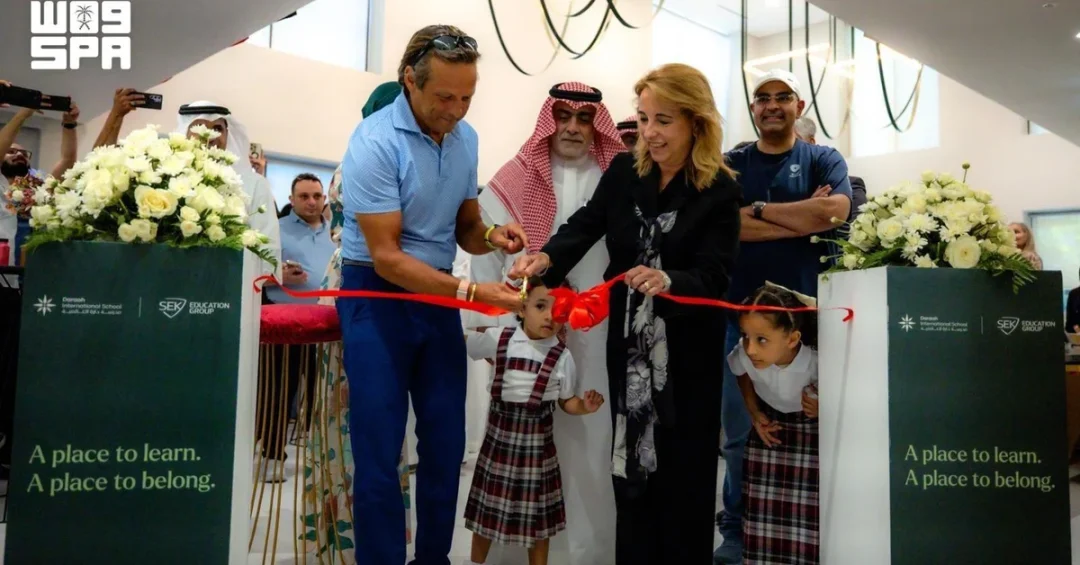
Red Sea Global (RSG), the regenerative tourism developer behind The Red Sea and AMAALA, has announced the opening of Daraah International School (DIS) within the employee residential community at AMAALA, in partnership with SEK Education Group. The school was inaugurated in the presence of RSG Group Chief Executive Officer John Pagano and Director General of Education in Tabuk Region Majid Al-Kuair, alongside representatives from RSG and SEK Education Group, according to the Saudi Press Agency. The opening was formally announced during a ceremony held at the destination on the northwestern coast of Saudi Arabia.
The launch of DIS marks another milestone in RSG’s effort to build fully integrated communities at its flagship destinations, where employees and their families can live, work and study in one place. For an international audience, the development offers a clear signal of how Saudi Arabia’s giga-projects are maturing: beyond hotels, marinas and marine conservation, they are now delivering the everyday infrastructure — schools, clinics, services and amenities — that turns a construction site into a functioning community. Why does a single school opening matter in the broader story of Saudi Arabia’s tourism transformation? Because it shows that the Kingdom is not only building destinations for visitors, but also permanent places for the people who run them.
Context and Background
Red Sea Global is the developer responsible for two of Saudi Arabia’s most ambitious regenerative tourism destinations: The Red Sea and AMAALA. Both are situated along the Kingdom’s northwestern coastline and are central to the national tourism strategy linked to Saudi Vision 2030, which aims to diversify the economy, expand the tourism sector and create opportunities for Saudi citizens and international residents alike. AMAALA is positioned as a destination focused on well-being, arts, culture and regenerative tourism, set within a distinctive natural environment of islands, reefs and desert landscapes.
Daraah International School follows the model established by Turtle Bay International School, which opened at The Red Sea last year. Together, the two schools enable employees working at the destinations to settle with their families in a community offering essential services, modern amenities and, most importantly, world-class education for their children. The approach reflects a broader recognition among Saudi giga-project developers that attracting and retaining international talent requires more than salaries and job titles; it requires an environment where families can put down roots.
SEK Education Group, an established international education provider, brings its own innovative educational model to the partnership. That model combines active learning, advanced technology and collaborative learning environments — elements that RSG and SEK have adapted to the specific context of AMAALA. The result is a school designed not simply to import a curriculum, but to embed learning in the destination’s natural and cultural surroundings.
Curriculum and Educational Approach
Daraah International School provides international education following the International Baccalaureate (IB) curriculum across the Primary Years Programme (PYP) and Middle Years Programme (MYP). According to official information released through the Saudi Press Agency, the school offers students an inquiry-based, internationally recognized education that emphasizes critical thinking, creativity and collaboration, while also instilling authentic national values. This dual focus — global academic standards paired with Saudi cultural grounding — is a recurring theme in the Kingdom’s education and community-building initiatives.
The curriculum and learning experiences place a strong focus on sustainability, well-being, innovation and marine sciences, reflecting AMAALA’s unique natural environment and its positioning as a destination for well-being and regenerative tourism. What does it mean for students to study marine sciences on a coastline that is itself the subject of one of the world’s largest marine conservation efforts? It means the classroom extends into the reef, the shoreline and the research facilities that surround them, giving young learners direct exposure to the environmental principles that underpin the entire destination.
The campus features state-of-the-art science and technology laboratories, indoor and outdoor sports facilities, performing arts and music spaces, collaborative learning environments, a library and media center, and dedicated well-being and student support areas. These facilities are designed to support an interactive and future-focused learning experience while reflecting RSG’s commitment to sustainable development. Every element, from the laboratories to the sports facilities, is intended to serve the school’s educational philosophy rather than stand as decoration.
Community Building at AMAALA
The opening of DIS is the latest step in RSG’s effort to create a model community at AMAALA for the employees who deliver the destination’s hospitality, marine conservation, construction and operational services. The employee residential community is designed to offer essential services and modern amenities, and the school sits at its center as a shared asset for families from many nationalities. For parents considering a move to a remote coastal destination, the presence of a credible international school is often the deciding factor.
By following the path set by Turtle Bay International School at The Red Sea, RSG is establishing a repeatable template: pair each major destination with a school that meets international standards, staff it through a respected education partner, and integrate it into the residential community from the outset. This approach supports workforce stability and helps the destinations function as living communities rather than seasonal resorts. It also creates a familiar rhythm of daily life — school runs, sports days, parent evenings — in places that only a few years ago were undeveloped coastline.
The presence of Majid Al-Kuair, Director General of Education in Tabuk Region, at the inauguration underscores the coordination between the developer and regional education authorities. Such coordination helps ensure that the school operates within the Kingdom’s educational framework while delivering an international curriculum, and it signals that the project is treated as part of the region’s long-term development rather than an isolated corporate amenity.
International and Regional Impact
For international audiences, the opening of Daraah International School illustrates how Saudi Arabia’s tourism giga-projects are evolving from construction megaprojects into operating communities. The Red Sea and AMAALA are expected to draw visitors, investors and workers from across the world, and the availability of internationally recognized schooling makes the Kingdom more competitive as a place to live and work, not just to visit. Families relocating from Europe, Asia and the wider Middle East increasingly weigh education provision alongside salary and lifestyle when deciding whether to accept an overseas posting.
Regionally, the school adds to the educational landscape of the Tabuk region, which is host to a growing share of the Kingdom’s tourism and infrastructure investment. The partnership with SEK Education Group also reflects a wider pattern of international collaboration in Saudi education, where global providers work alongside Saudi institutions and authorities to deliver programs that meet both international and national expectations. In this sense, DIS is a small but telling example of the cross-border partnerships that Vision 2030 has encouraged.
Economic and Strategic Significance
Education infrastructure is an economic enabler as much as a social good. RSG’s destinations require large, specialized workforces — marine biologists, hospitality professionals, engineers, conservation specialists and managers — and retaining that talent depends on making life at the destination attractive for the long term. A school that families trust reduces turnover, shortens recruitment cycles and strengthens the operational resilience of the destinations. Those are practical business benefits that sit alongside the educational mission.
Strategically, the school supports the broader ambition of positioning AMAALA and The Red Sea as year-round communities rather than seasonal destinations. The more that employees and their families settle permanently, the more the destinations develop their own social and commercial ecosystems — shops, services, sports clubs and cultural activities — which in turn improve the experience for visitors. Over time, this layered community life becomes part of the destination’s appeal, distinguishing it from resorts that empty out between seasons.
Vision 2030 Alignment
The opening of Daraah International School aligns directly with Saudi Vision 2030’s goals of diversifying the economy, developing human capital and improving quality of life. By investing in world-class education within its tourism destinations, Red Sea Global is contributing to the creation of sustainable communities that support the Kingdom’s tourism ambitions while offering families access to internationally recognized learning. The emphasis on sustainability, well-being, innovation and marine sciences also mirrors Vision 2030’s focus on future-oriented sectors and environmental stewardship.
As Saudi Arabia continues to develop The Red Sea, AMAALA and other giga-projects, the presence of schools such as DIS will be one measure of their success as places where people build lives, not just visit. The Kingdom’s long-term vision rests on exactly this kind of integration — economic opportunity, community infrastructure and educational excellence working together. For RSG, SEK Education Group and the families now enrolling their children at AMAALA, the first day of school is a modest event with a much larger meaning: a new community has begun to take shape on Saudi Arabia’s northwestern coast.
20 Questions
Q1. What is Daraah International School?
A1. Daraah International School is an international school opened by Red Sea Global in partnership with SEK Education Group within the employee residential community at AMAALA. It follows the International Baccalaureate curriculum and serves the families of employees working at the destination.
Q2. Where is Daraah International School located?
A2. The school is located within the employee residential community at AMAALA, on Saudi Arabia’s northwestern coast. AMAALA is one of Red Sea Global’s flagship regenerative tourism destinations, developed in the Tabuk region.
Q3. Who announced the opening of the school?
A3. Red Sea Global announced the opening, and the news was carried by the Saudi Press Agency. The inauguration was attended by RSG Group Chief Executive Officer John Pagano and Director General of Education in Tabuk Region Majid Al-Kuair.
Q4. What curriculum does Daraah International School follow?
A4. The school follows the International Baccalaureate curriculum across the Primary Years Programme and the Middle Years Programme. It emphasizes inquiry-based learning, critical thinking, creativity and collaboration, while also instilling authentic national values.
Q5. Who is the partner for the school?
A5. SEK Education Group is the education partner for Daraah International School. The group brings its innovative educational model, combining active learning, advanced technology and collaborative learning environments, to the AMAALA community.
Q6. When did the school open?
A6. The opening was announced during a ceremony at AMAALA, as reported by the Saudi Press Agency. The school follows Turtle Bay International School, which opened at The Red Sea last year, extending RSG’s education provision across its destinations.
Q7. What facilities does the campus offer?
A7. The campus features science and technology laboratories, indoor and outdoor sports facilities, performing arts and music spaces, collaborative learning environments, a library and media center, and dedicated well-being and student support areas, all designed for a future-focused learning experience.
Q8. What subjects receive special emphasis?
A8. The curriculum places strong focus on sustainability, well-being, innovation and marine sciences. These areas reflect AMAALA’s unique natural environment and its positioning as a destination for well-being and regenerative tourism.
Q9. Who can attend Daraah International School?
A9. The school primarily serves the children of employees working at AMAALA and their families, supporting RSG’s aim of providing an integrated living and working environment within its residential community.
Q10. Why is the school important for RSG employees?
A10. It allows employees to settle with their families at the destination, offering world-class education alongside essential services and modern amenities. This supports workforce stability and makes long-term relocation more attractive for international and Saudi staff.
Q11. How does the school relate to Turtle Bay International School?
A11. Daraah International School follows the model of Turtle Bay International School, which opened at The Red Sea last year. Together they form part of RSG’s approach to embedding education in its destination communities.
Q12. What is AMAALA?
A12. AMAALA is a regenerative tourism destination developed by Red Sea Global on Saudi Arabia’s northwestern coast. It is focused on well-being, arts, culture and sustainability, and forms part of the Kingdom’s broader tourism development under Vision 2030.
Q13. What is Red Sea Global?
A13. Red Sea Global is the developer behind The Red Sea and AMAALA, two flagship regenerative tourism destinations in Saudi Arabia. The company emphasizes environmental stewardship, community development and sustainable tourism in its projects.
Q14. How does the school reflect sustainability principles?
A14. The curriculum and campus design emphasize sustainability, well-being, innovation and marine sciences, reflecting AMAALA’s natural environment and RSG’s commitment to sustainable development across its destinations.
Q15. What does the school mean for the Tabuk region?
A15. It adds international education capacity to the Tabuk region, which hosts a growing share of Saudi tourism investment. The attendance of the region’s Director General of Education highlights coordination with local education authorities.
Q16. Does the school follow Saudi national values?
A16. Yes. According to official information, the school instills authentic national values alongside its internationally recognized curriculum, combining global academic standards with Saudi cultural grounding.
Q17. How does the school support Vision 2030?
A17. It supports Vision 2030 goals of economic diversification, human capital development and improved quality of life by providing world-class education within a tourism destination and helping build sustainable communities.
Q18. What educational model does SEK use?
A18. SEK Education Group’s model combines active learning, advanced technology and collaborative learning environments. At Daraah International School, this model has been adapted to AMAALA’s context and natural surroundings.
Q19. Why is education infrastructure important for tourism giga-projects?
A19. It helps attract and retain specialized workers and their families, turning destinations into year-round communities. This supports operational stability and enhances the overall visitor experience at the destinations.
Q20. What comes next for education at RSG destinations?
A20. With Turtle Bay International School at The Red Sea and now Daraah International School at AMAALA, RSG has established a repeatable model. Future growth is expected to follow the destinations’ development and community needs.
Reader Feedback
We value your thoughts. Please share your feedback on this article.
Your feedback helps us improve our coverage.
Related articles
 Saudi Falcons and Hunting Exhibition 2026 Reveals Highlights
 Hajj Ministry Strengthens Pilgrim Rights Awareness
 SEVEN Abha entertainment destination welcomes visitors
 Al-Naslaa rock geological formation in Tayma
 Al-Naslaa rock formation in Tayma Governorate
 Al-Naslah Rock in Tayma features unique geological formation