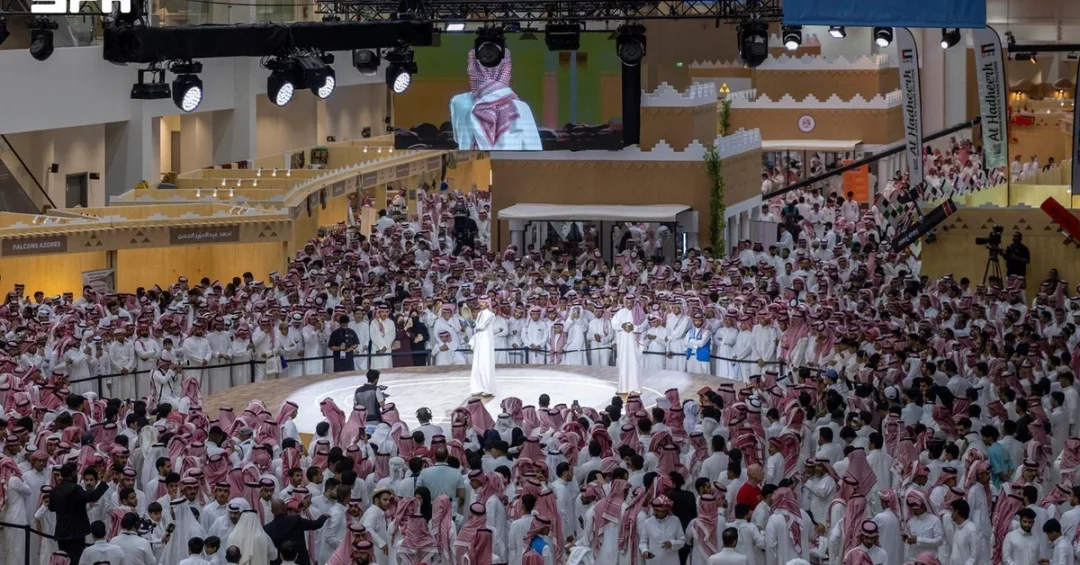
The National Center for Falcons has unveiled the main highlights of the Saudi International Falcons and Hunting Exhibition 2026, set to run from October 1 to 10 at the Riyadh Exhibition and Convention Center in Malham, north of Riyadh. The announcement, released through official Saudi channels, confirms that the exhibition will occupy 197,000 square meters, an increase of roughly 30,000 square meters over the previous edition, reinforcing its standing as one of the largest specialized events of its kind anywhere in the world. The event brings together heritage, adventure, entertainment, and business in a single integrated destination whose influence extends from the Saudi capital to international markets and audiences.
For international observers, the scale of the exhibition is a useful indicator of how Saudi Arabia is converting cultural heritage into an engine of tourism, commerce, and soft power. Falconry, long regarded as a defining element of Arabian identity, sits at the center of a program that also embraces hunting, travel, adventure, and family entertainment. The 2026 edition follows a 2025 event that generated sales exceeding SAR91 million, with more than 1,400 exhibitors and brands taking part. That commercial record, combined with the expanded footprint, suggests the exhibition is maturing into a global marketplace as much as a cultural festival. Why does a heritage gathering in Riyadh now command attention from exhibitors and visitors across continents? The answer lies in the way Saudi Arabia has positioned falconry as both a living tradition and a modern economic sector.
Context and Background
How did an event rooted in Arabian desert tradition become one of the world’s largest specialized exhibitions? The National Center for Falcons has organized the Saudi International Falcons and Hunting Exhibition since 2018, steadily building it into a global destination for falconry, hunting, heritage, knowledge, travel, adventure, entertainment, and business. Each edition has widened the circle of participants, drawing visitors, exhibitors, and brands from around the world while keeping the event anchored in the practices and values of the Arabian Peninsula. The center’s mandate reflects a deliberate national effort to document, celebrate, and modernize a heritage that predates the modern state by centuries.
Falconry occupies a distinctive place in Saudi culture. It is a practice passed down through generations, associated with patience, discipline, and a deep understanding of the desert environment. UNESCO recognized falconry as intangible cultural heritage, and Saudi Arabia has been among the most active countries in preserving and promoting it internationally. The exhibition translates that commitment into a physical space where traditional knowledge meets contemporary commerce. The result is an event that serves falconers and specialists while remaining accessible to families, children, young people, and international tourists who may never have handled a bird of prey. The National Center for Falcons has positioned the exhibition as a bridge between those audiences rather than a niche gathering for experts alone.
The 2025 edition demonstrated the model’s commercial viability. Sales exceeding SAR91 million and participation by more than 1,400 exhibitors and brands showed that heritage-themed events can generate meaningful economic activity. The 2026 expansion of about 30,000 square meters responds directly to that demand, creating room for more exhibitors, more experiences, and more visitors. For a country pursuing Vision 2030’s goals of diversifying income and growing the tourism sector, the exhibition offers a concrete example of how cultural assets can be converted into durable economic value without diluting their authenticity.
Key Details and Program Highlights
What will visitors actually experience across the ten-day program? The exhibition offers an integrated experience combining falconry, hunting, travel, adventure, heritage, culture, and entertainment. Among its signature attractions are “Falconer of the Future” and the “Shalayel Museum,” alongside fishing, hiking, safari, and desert hunting experiences. Visitors can explore various types of shooting, four-wheel driving, and falcon training, while auctions for falcons and camels add a competitive and commercial dimension. Workshops and folkloric performances round out a schedule designed to keep different audiences engaged throughout the day and into the evening.
The program deliberately caters to diverse groups. Falconers and specialists find technical content, training opportunities, and a marketplace for birds and equipment. Hunting and travel enthusiasts encounter destinations, outfitters, and adventure operators. Families and children are served by entertainment and educational elements, while young people are drawn to interactive and competitive activities. This segmentation is not incidental; it reflects a deliberate strategy to broaden the base of interest in falconry and outdoor heritage, ensuring the tradition remains relevant to new generations rather than confined to a narrow circle of practitioners.
The Riyadh Exhibition and Convention Center in Malham provides the infrastructure for an event of this magnitude. Its location north of Riyadh places it within reach of the capital’s growing population and international visitors arriving through King Khalid International Airport. The 197,000-square-meter footprint allows for distinct zones dedicated to exhibitions, live demonstrations, auctions, workshops, and family entertainment, reducing congestion and allowing visitors to move between experiences at their own pace. For exhibitors, the expanded space means greater visibility and more opportunities to present products and services to a large, diverse audience.
International and Regional Impact
Why should audiences outside Saudi Arabia pay attention to this exhibition? The event has become a meeting point for the global falconry and hunting community, attracting exhibitors and brands from multiple continents. International participants gain access to a market that combines strong purchasing power with deep cultural appreciation for falconry and outdoor pursuits. At the same time, the exhibition gives Saudi Arabia a platform to showcase its heritage to the world on its own terms, presenting falconry as a sophisticated tradition with modern applications in tourism, conservation, and sport.
Regionally, the exhibition strengthens Riyadh’s position as a hub for events that blend culture and commerce. Gulf neighbors share many of the same traditions, and their participation reinforces a sense of shared heritage across the Arabian Peninsula. Beyond the region, the event supports Saudi Arabia’s broader diplomatic and cultural outreach, complementing initiatives in tourism, sport, and entertainment that have raised the Kingdom’s international profile. For visitors, the exhibition offers a reason to extend their stay and explore Riyadh’s museums, restaurants, and retail destinations, creating spillover benefits for the wider hospitality sector.
The presence of international exhibitors also supports knowledge exchange. Falconry and hunting raise important questions about wildlife conservation, sustainable practice, and animal welfare. By hosting specialists, researchers, and practitioners in one place, the exhibition creates opportunities for informal and formal dialogue on these issues. Saudi Arabia has invested in conservation and breeding programs, and the event provides a visible platform for those efforts. This dimension matters for international audiences who want to see heritage celebrated alongside responsible stewardship of the natural environment.
Economic and Strategic Significance
What does the exhibition reveal about Saudi Arabia’s economic direction? The 2025 sales figure of more than SAR91 million and the participation of over 1,400 exhibitors and brands indicate a market with real depth. Falconry-related products, from birds and equipment to travel services and outdoor gear, represent a specialized segment that connects to wider sectors including tourism, retail, logistics, and events management. The 30,000-square-meter expansion for 2026 signals confidence that demand will continue to grow, and it creates additional capacity for businesses to reach customers directly.
Strategically, the exhibition supports the diversification agenda at the heart of Vision 2030. By turning a cultural tradition into a recurring international event, Saudi Arabia generates tourism arrivals, supports small and medium enterprises, and creates employment in event management, hospitality, retail, and services. The event also contributes to the Kingdom’s non-oil economy by attracting spending from international visitors and exhibitors. For a country working to expand private-sector activity and reduce dependence on hydrocarbons, such specialized, high-value events are a meaningful component of the broader economic transformation.
The exhibition further benefits from Saudi Arabia’s investment in major event infrastructure and its growing calendar of international gatherings. Riyadh now hosts a wide range of conferences, festivals, and sporting events, and the falcons and hunting exhibition occupies a distinctive niche within that portfolio. Its heritage focus differentiates it from purely commercial trade shows, giving it a cultural authority that supports premium positioning. That combination of authenticity and scale is difficult to replicate, which helps explain why the event has sustained growth since its launch in 2018.
Vision 2030 Alignment
How does a falconry exhibition connect to a national transformation plan? Vision 2030 aims to diversify the economy, expand tourism, create opportunities for young people, and strengthen Saudi Arabia’s global role. The Saudi International Falcons and Hunting Exhibition advances each of these objectives. It draws international visitors and exhibitors, supports businesses across the heritage and outdoor sectors, engages young people through programs such as “Falconer of the Future,” and presents Saudi culture to the world with confidence and clarity. The event is a practical expression of the idea that heritage and modernization can reinforce one another.
As the October 1 to 10 dates approach, the exhibition stands as a clear statement of intent. The National Center for Falcons has built a platform that honors a centuries-old tradition while creating contemporary economic and cultural value. For international audiences, it offers an accessible entry point into Saudi heritage and a concrete example of how the Kingdom is pursuing its long-term vision. The expanded footprint, the record of commercial success, and the breadth of the program all point in the same direction: a Saudi event with genuine global reach, rooted in the desert but oriented toward the future.
20 Questions
Q1. When will the Saudi International Falcons and Hunting Exhibition 2026 take place?
A1. The exhibition will be held from October 1 to 10, 2026, according to the National Center for Falcons. It will run at the Riyadh Exhibition and Convention Center in Malham, north of Riyadh.
Q2. Where exactly is the exhibition venue located?
A2. The venue is the Riyadh Exhibition and Convention Center in Malham, situated north of Riyadh. Its location offers convenient access for residents of the capital and international visitors arriving through the city’s airport.
Q3. How large is the exhibition space in 2026?
A3. The exhibition covers 197,000 square meters, making it one of the largest specialized events of its kind in the world. This represents an increase of about 30,000 square meters over the previous edition.
Q4. Who organizes the Saudi International Falcons and Hunting Exhibition?
A4. The National Center for Falcons has organized the exhibition since 2018. The center works to preserve and promote falconry heritage while developing it as a modern cultural and economic activity.
Q5. What were the commercial results of the 2025 edition?
A5. The 2025 edition generated sales exceeding SAR91 million. More than 1,400 exhibitors and brands participated, demonstrating strong commercial interest in the event and its specialized market.
Q6. What kinds of experiences does the exhibition offer?
A6. The program combines falconry, hunting, travel, adventure, heritage, culture, and entertainment. It includes fishing, hiking, safari, desert hunting, various types of shooting, four-wheel driving, falcon training, auctions, workshops, and folkloric performances.
Q7. What is “Falconer of the Future”?
A7. “Falconer of the Future” is one of the exhibition’s signature attractions. It is designed to engage young people and newcomers with falconry, helping transfer traditional knowledge to new generations in an accessible format.
Q8. What is the Shalayel Museum?
A8. The Shalayel Museum is a featured attraction within the exhibition. It presents heritage content related to falconry and Arabian desert culture, giving visitors cultural and historical context alongside the event’s commercial and entertainment offerings.
Q9. Which audiences is the exhibition designed for?
A9. It caters to falconers, specialists, hunting and travel enthusiasts, families, children, and young people. Content is tailored to the interests of each group, combining knowledge, entertainment, heritage, and adventure.
Q10. Are falcon and camel auctions part of the program?
A10. Yes. Falcon and camel auctions are included among the exhibition’s activities. They add a competitive and commercial dimension that reflects the traditional importance of both animals in Arabian culture.
Q11. How many exhibitors and brands participated in 2025?
A11. More than 1,400 exhibitors and brands participated in the 2025 edition. Their involvement covered falconry equipment, outdoor products, travel services, and related heritage and adventure offerings.
Q12. Why did the exhibition space increase for 2026?
A12. The expansion of about 30,000 square meters reflects growing public and commercial participation. It creates room for more exhibitors, experiences, and visitors while improving circulation across the venue.
Q13. When did the exhibition first launch?
A13. The National Center for Falcons has organized the exhibition since 2018. It has grown steadily since then into a global destination for falconry, hunting, heritage, travel, adventure, entertainment, and business.
Q14. How does the event support Saudi Arabia’s tourism goals?
A14. The exhibition attracts international visitors and exhibitors, encouraging longer stays and spending in Riyadh. It complements the Kingdom’s broader tourism strategy by offering a distinctive cultural and adventure experience.
Q15. Does the exhibition have international participation?
A15. Yes. The event attracts visitors, exhibitors, and brands from around the world. International participation supports knowledge exchange and connects Saudi heritage with global markets and audiences.
Q16. What role does falconry play in Saudi culture?
A16. Falconry is a centuries-old Arabian tradition associated with patience, discipline, and knowledge of the desert. Saudi Arabia actively preserves and promotes it as part of its intangible cultural heritage.
Q17. Are there activities for children and families?
A17. Yes. The exhibition includes entertainment and educational elements suited to families and children. Folkloric performances, workshops, and interactive experiences help make the event accessible to all ages.
Q18. How does the exhibition connect to Vision 2030?
A18. It supports economic diversification, tourism growth, youth engagement, and cultural outreach. By turning heritage into a recurring international event, it contributes to the Kingdom’s long-term transformation goals.
Q19. What types of shooting and driving activities are offered?
A19. The exhibition features various types of shooting and four-wheel driving experiences. These activities appeal to adventure enthusiasts and complement the hunting, safari, and desert experiences on offer.
Q20. What makes this exhibition significant globally?
A20. Its scale, commercial record, and cultural focus make it one of the world’s largest specialized events of its kind. It connects Saudi heritage with international exhibitors, visitors, and markets in a single destination.
Reader Feedback
We value your thoughts. Please share your feedback on this article.
Your feedback helps us improve our coverage.