


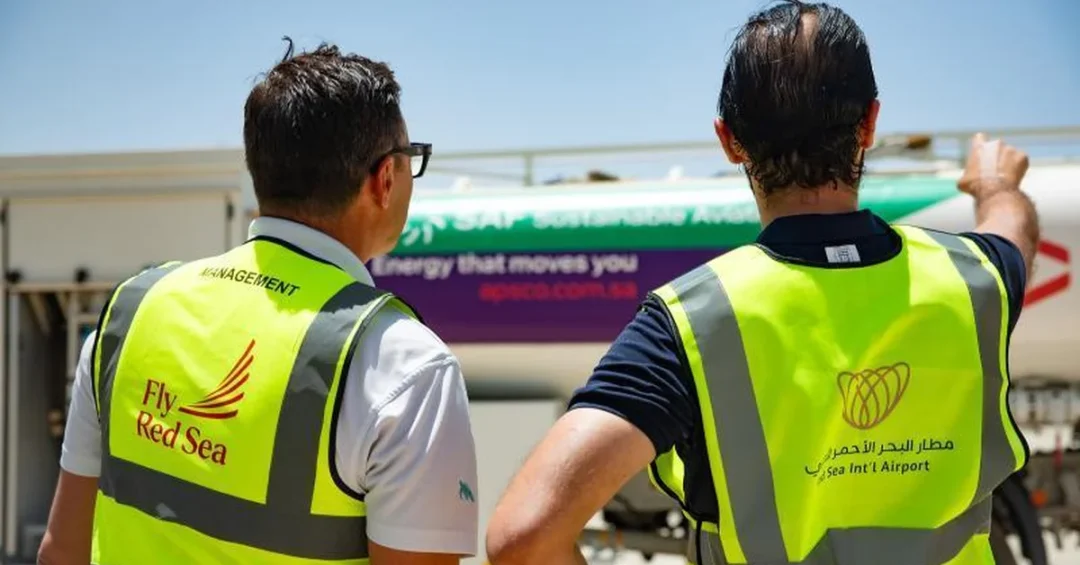
Red Sea Global (RSG) and daa International have partnered with Arabian Petroleum Supply Company (APSCO) to introduce Sustainable Aviation Fuel (SAF) at The Red Sea International Airport (RSI), marking a significant step toward sustainable aviation in Saudi Arabia. The agreement, announced on February 26, 2025, aligns with Saudi Arabia’s broader efforts to reduce carbon emissions and promote environmental sustainability.
Context and Background
Sustainable Aviation Fuel (SAF) and Lower-Carbon Aviation Fuel (LCAF) are innovative solutions designed to minimize greenhouse gas emissions in the aviation industry. SAF can be produced from clean hydrogen and captured carbon dioxide or derived from renewable and waste-based sources. This initiative complements RSG’s existing commitment to power its operations entirely through solar energy, further solidifying its role as a leader in sustainable development.
Key Details
The collaboration between RSG, daa International, and APSCO aims to integrate SAF into the operations of The Red Sea International Airport, a key gateway to Saudi Arabia’s Red Sea tourism projects. This move is part of RSG’s broader strategy to achieve carbon neutrality and support Saudi Arabia’s Vision 2030 goals of diversifying the economy and promoting sustainable tourism.
Implications and Impact
The introduction of SAF at RSI is expected to significantly reduce the airport’s carbon footprint, setting a benchmark for sustainable aviation practices in the region. This initiative also enhances Saudi Arabia’s reputation as a global leader in environmental stewardship and aligns with international efforts to combat climate change.
Vision 2030 Alignment
This development underscores Saudi Arabia’s commitment to Vision 2030 by advancing sustainable tourism and reducing carbon emissions. By integrating SAF into its aviation sector, Saudi Arabia is positioning itself as a pioneer in environmentally responsible tourism and contributing to global sustainability goals.
20 Questions
Q1. What is Sustainable Aviation Fuel (SAF)?
A1. SAF is a type of aviation fuel made from renewable or waste-derived sources, designed to reduce greenhouse gas emissions compared to traditional jet fuel.
Q2. Who are the key partners in this initiative?
A2. The initiative involves Red Sea Global (RSG), daa International, and Arabian Petroleum Supply Company (APSCO).
Q3. Where will SAF be introduced?
A3. SAF will be introduced at The Red Sea International Airport (RSI) in Saudi Arabia.
Q4. When was this agreement announced?
A4. The agreement was announced on February 26, 2025.
Q5. How does SAF contribute to sustainability?
A5. SAF reduces lifecycle greenhouse gas emissions by using renewable or waste-derived materials instead of fossil fuels.
Q6. What is RSG’s role in this initiative?
A6. RSG is leading the initiative to integrate SAF into its operations as part of its commitment to sustainability.
Q7. What is daa International’s role?
A7. daa International operates The Red Sea International Airport and is collaborating to implement SAF.
Q8. What is APSCO’s role?
A8. APSCO is the fuel supplier providing SAF for the initiative.
Q9. How does this initiative align with Vision 2030?
A9. It supports Vision 2030 by promoting sustainable tourism and reducing carbon emissions.
Q10. What are the environmental benefits of SAF?
A10. SAF significantly reduces carbon emissions, contributing to climate change mitigation.
Q11. How does SAF compare to traditional jet fuel?
A11. SAF has a lower carbon footprint and is made from renewable or waste-derived sources.
Q12. What is Lower-Carbon Aviation Fuel (LCAF)?
A12. LCAF is another sustainable aviation fuel designed to reduce carbon emissions.
Q13. How does RSG power its operations?
A13. RSG powers its operations entirely through solar energy.
Q14. Why is this initiative important for Saudi Arabia?
A14. It enhances Saudi Arabia’s leadership in sustainability and supports its tourism goals.
Q15. What is the significance of The Red Sea International Airport?
A15. It is a key gateway to Saudi Arabia’s Red Sea tourism projects.
Q16. How does this initiative impact global aviation?
A16. It sets a benchmark for sustainable aviation practices worldwide.
Q17. What are the long-term goals of this initiative?
A17. The long-term goals include achieving carbon neutrality and promoting sustainable tourism.
Q18. How does this initiative benefit Saudi Arabia’s tourism sector?
A18. It attracts environmentally conscious travelers and enhances the sector’s sustainability.
Q19. What are the challenges of implementing SAF?
A19. Challenges include scaling production and ensuring cost-effectiveness.
Q20. How does this initiative contribute to global sustainability?
A20. It aligns with international efforts to combat climate change and promotes sustainable aviation.
Reader Feedback
We value your thoughts. Please share your feedback on this article.
Your feedback helps us improve our coverage.