


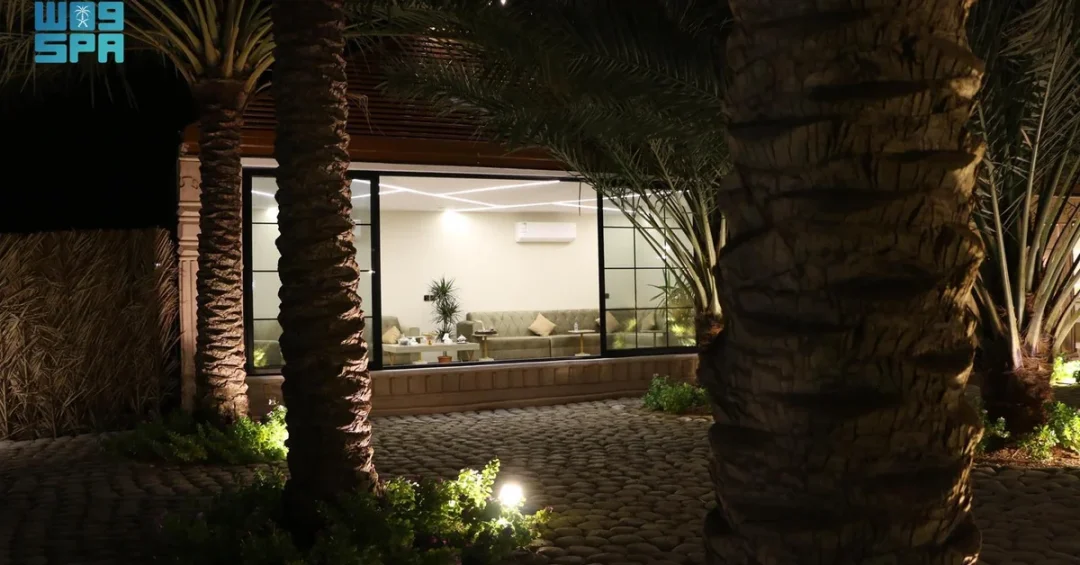
A family palm grove in the Al-Jouf region has been transformed into a flourishing rural tourism destination, in a revitalization effort announced by the Saudi Press Agency and celebrated as a model for community-led heritage preservation across the Kingdom. The project, led by citizen Ahmed Al-Arfaj, reimagines a thousand-square-meter plot planted by his father six decades ago in the heart of a residential neighborhood of Skaka, converting a working oasis into an inviting cultural and recreational space for residents and visitors alike.
The initiative reflects a broader movement in Saudi Arabia to celebrate the Kingdom’s agricultural heritage while creating new, authentic experiences for domestic and international travelers. By preserving the grove’s original palm trees and weaving traditional design elements into the site, Al-Arfaj has demonstrated how private citizens can contribute directly to the national tourism agenda. The project also underscores the enduring value of Al-Jouf’s fertile lands, which have sustained communities for generations and remain a source of pride and economic potential in the north of the Kingdom.
Context and Background
What makes a single family grove significant enough to attract national attention? The answer lies in Al-Jouf’s distinctive place within Saudi Arabia’s natural and cultural landscape. Located in the northwest of the Kingdom, the region is known for its fertile agricultural lands, abundant palm groves, and long-standing oasis culture. For centuries, these oases provided sustenance, shade, and social gathering spaces for residents, forming the backbone of local life and identity. Many of these historic groves still thrive today, sustained by careful irrigation and generational stewardship.
The grove revitalized by Ahmed Al-Arfaj is part of that living heritage. Planted by his father around 1965 on a plot of roughly one thousand square meters, it occupies a site that has remained within the family for two generations. Rather than allowing the land to be absorbed by urban expansion or left unused, Al-Arfaj chose to restore it and open it to the public as a rural destination. His approach reflects a growing awareness among Saudi citizens that heritage assets, when thoughtfully managed, can serve both cultural and economic purposes.
This local initiative aligns with national efforts to diversify tourism offerings beyond the Kingdom’s major urban centers and coastal resorts. Rural and agritourism have emerged as priority segments under Saudi Arabia’s tourism strategy, which seeks to distribute visitor spending across regions and create jobs in smaller communities. Al-Jouf, with its agricultural base and distinctive northern character, is well positioned to benefit from this shift.
Key Details of the Revitalization
How exactly was a working palm grove turned into a welcoming destination without losing its rustic character? According to the Saudi Press Agency, Al-Arfaj incorporated the grove’s natural elements into the design at every stage. Wooden lighting poles illuminate the pathways, providing a warm ambiance after sunset while blending with the agricultural setting. Water features add a soothing sensory dimension, echoing the traditional irrigation channels that have long sustained oasis agriculture in the region.
Perhaps the most inventive element is the use of palm fronds to construct an external wall that encloses the space. This technique draws on local building traditions and gives the destination an unmistakably Al-Jouf identity, while also providing privacy and a sense of enclosure. Traditional seating areas, modeled on the old gathering places of the region, offer comfortable spots for relaxation and socializing, encouraging visitors to linger and engage with one another.
The revitalized oasis has quickly become a popular spot for locals and visitors seeking a serene atmosphere. It also hosts a variety of cultural events, including performances of traditional arts such as Al-Ardah, Al-Samri, Al-Dahha, and Rababa music. These performances connect visitors to the region’s performing arts heritage and give the destination a lively, festive dimension at key times of the year. The combination of natural beauty, traditional design, and cultural programming has turned the grove into a multifunctional community asset.
International and Regional Impact
Why should international observers pay attention to a small rural project in northern Saudi Arabia? For global travelers, the Al-Jouf grove represents a new kind of Saudi destination: intimate, authentic, and rooted in local life rather than mass-market development. As the Kingdom opens further to international tourism, experiences like this one help diversify the visitor journey beyond well-known sites. They also offer a counterpoint to the perception that Saudi tourism is exclusively about mega-projects, showing instead a landscape of community-scale initiatives.
Regionally, the project reinforces Al-Jouf’s emerging profile as a destination for heritage and nature tourism. Neighboring countries in the Gulf and the broader Middle East are also investing in rural and cultural tourism, and Saudi Arabia’s efforts contribute to a wider regional trend of valuing intangible heritage. For visitors from Europe, Asia, and the Americas, the grove provides an accessible entry point into Saudi traditions such as Al-Ardah and Rababa music, presented in an environment that feels genuine rather than staged.
Economic and Strategic Significance
Can a family-run oasis meaningfully contribute to a national economy? In aggregate, yes. Rural tourism projects create direct income for families, generate demand for local crafts and produce, and support small businesses in surrounding communities. The Al-Jouf grove, while modest in scale, illustrates a replicable model: low capital investment, high cultural value, and strong community engagement. Such projects can extend visitor stays, increase spending in the region, and reduce pressure on heavily trafficked destinations.
Strategically, the initiative supports Saudi Arabia’s goal of increasing tourism’s contribution to gross domestic product and creating employment opportunities outside major cities. By turning agricultural heritage into a visitor experience, the project also helps preserve traditional knowledge related to palm cultivation, irrigation, and construction. This dual benefit, economic and cultural, is precisely what sustainable tourism seeks to achieve. For Al-Jouf, the grove is a proof point that rural assets can be part of the Kingdom’s economic diversification story.
Vision 2030 Alignment
How does a single revitalized palm grove connect to Saudi Arabia’s long-term national vision? Vision 2030, the Kingdom’s comprehensive reform agenda, emphasizes economic diversification, community development, and the promotion of Saudi heritage. Tourism is a key pillar, with targets to attract millions of visitors and expand the sector’s share of the economy. Rural and cultural tourism are explicitly recognized as ways to spread the benefits of growth across all regions, including Al-Jouf.
The Al-Arfaj grove embodies several Vision 2030 objectives at once: it preserves heritage, creates a local economic asset, and enriches the visitor experience. It also demonstrates the role of citizens as partners in national development, a theme central to the vision’s emphasis on community participation. As Saudi Arabia continues to invest in tourism infrastructure and destination marketing, projects like this one will help ensure that the Kingdom’s rural regions are not left behind but are instead celebrated for their distinct contributions to the national story. The grove’s success suggests that the future of Saudi tourism will be built not only on grand projects but also on the stewardship of ordinary families and their extraordinary heritage.
20 Questions
Q1. What is the Al-Jouf rural tourism project?
A1. It is the transformation of a family palm grove in Skaka into a rural destination, led by citizen Ahmed Al-Arfaj, as reported by the Saudi Press Agency.
Q2. Where is the grove located?
A2. The grove is located within a residential neighborhood in Skaka, the capital of the Al-Jouf region in northwestern Saudi Arabia.
Q3. Who planted the original palm grove?
A3. The grove was planted by Ahmed Al-Arfaj’s father approximately six decades ago, establishing a family agricultural legacy on the plot.
Q4. How large is the plot of land?
A4. The plot measures about one thousand square meters, a compact area that has been carefully designed to host multiple functions.
Q5. What natural elements were incorporated into the design?
A5. The design includes wooden lighting poles, water features, and an external wall constructed from palm fronds, all drawing on local materials.
Q6. How are traditional seating areas used?
A6. Traditional seating areas reminiscent of old gathering places provide comfortable spaces for relaxation and socializing among visitors.
Q7. What cultural events take place at the grove?
A7. The grove hosts performances of traditional arts including Al-Ardah, Al-Samri, Al-Dahha, and Rababa music, celebrating regional heritage.
Q8. What is Al-Ardah?
A8. Al-Ardah is a traditional Saudi folk dance performed with swords, often accompanied by drums, and is a symbol of national pride.
Q9. What is Rababa music?
A9. Rababa music features a traditional stringed instrument, the rababa, and is associated with storytelling and folk traditions in the region.
Q10. Why is the grove popular with locals and visitors?
A10. It offers a serene atmosphere, authentic rustic charm, and cultural programming, making it an attractive destination for relaxation and social gatherings.
Q11. How does the project support rural tourism in Saudi Arabia?
A11. It demonstrates how agricultural heritage can be converted into a visitor experience, encouraging tourism spending in rural regions like Al-Jouf.
Q12. What economic benefits can such projects bring?
A12. They create income for families, generate demand for local crafts and produce, and support small businesses in surrounding communities.
Q13. How does the project align with Vision 2030?
A13. Vision 2030 emphasizes economic diversification, heritage preservation, and community development, all of which the grove project supports at a local level.
Q14. What role do citizens play in this initiative?
A14. Citizens like Ahmed Al-Arfaj act as partners in national development by investing in and managing heritage assets for public benefit.
Q15. How does the project preserve traditional knowledge?
A15. It maintains palm cultivation, traditional irrigation, and construction techniques such as palm-frond walls, passing knowledge to new generations.
Q16. What makes Al-Jouf suitable for rural tourism?
A16. Al-Jouf has fertile agricultural lands, abundant palm groves, and a rich oasis culture that provide authentic settings for rural tourism.
Q17. How does the grove enhance the visitor experience in Saudi Arabia?
A17. It offers an intimate, authentic alternative to large-scale developments, allowing visitors to engage with local traditions in a natural setting.
Q18. What is the significance of water features in the design?
A18. Water features add a soothing sensory element and echo the traditional irrigation channels that have long sustained oasis agriculture in the region.
Q19. How can other regions replicate this model?
A19. Other regions can identify heritage assets, apply low-cost traditional design, and open them for cultural events, following the Al-Jouf example.
Q20. What does the future hold for rural tourism in Saudi Arabia?
A20. With continued government support and citizen participation, rural tourism is expected to grow, diversifying the Kingdom’s offerings and spreading economic benefits.
Reader Feedback
We value your thoughts. Please share your feedback on this article.
Your feedback helps us improve our coverage.
Related articles
 Ikmah, Richard Mille Reach AlUla Desert Polo Final
 Jazan Winter Season Highlights Region’s Rich Culture, Arts
 AlUla Desert Polo Championship Unites Generations
 Jabal Sirin: Red Sea Gem Off Makkah’s Coast
 AlUla Commission to Join World Economic Forum 2025 in Davos
 Birwaz Brings Luxury and Heritage to Diriyah Season