


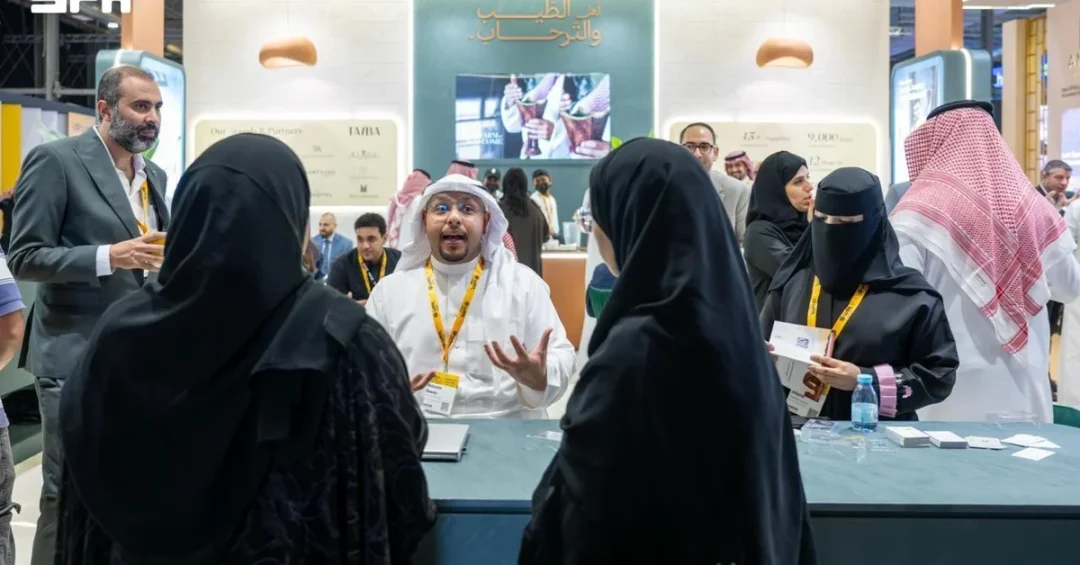
Saudi Arabia’s tourism sector showcased the full breadth of its expanding destinations and experiences at the “Spotlight” World Travel Market exhibition in Riyadh, held from September 8 to 10, 2026, bringing together global travel industry leaders, investors, and specialists under the banner of the “Saudi, Welcome to Arabia” pavilion. The event, reported by the Saudi Press Agency (SPA), highlighted how the Kingdom’s tourism map now stretches from the Red Sea shores in the west, through historical and cultural sites, to mountain highlands and modern urban destinations, offering visitors a diverse array of options that combine sea, nature, heritage, culture, and entertainment.
The exhibition served as a platform to demonstrate that Saudi Arabia’s tourism product is no longer tied to a single season or mode of travel. Instead, it now spans marine, mountain, cultural, heritage, and recreational tourism, alongside events, leisure, and hospitality tourism. This diversification reflects the rapid growth in the number of destinations and the variety of experiences available across the Kingdom, supported by new projects and initiatives that have reshaped the national tourism landscape. As the sector continues to mature, it is strengthening Saudi Arabia’s presence on the international tourism map and supporting efforts to transform growing global interest into tangible tourist flows, partnerships, and investment opportunities under the objectives of Saudi Vision 2030.
Context and Background
How did Saudi Arabia transform its tourism sector from a relatively closed market into one of the world’s most dynamic emerging destinations in just a few years? The answer lies in a deliberate, multi-year strategy driven by Vision 2030, which identified tourism as a key pillar of economic diversification. The Kingdom set an ambitious target of attracting 150 million visits annually by 2030, and it has already surpassed 100 million visits, according to official figures. This progress has been enabled by landmark investments in infrastructure, regulatory reforms such as the introduction of tourist visas, and the development of giga-projects that span the length and breadth of the country.
The “Spotlight” World Travel Market exhibition, held in Riyadh from September 8 to 10, 2026, exemplifies this transformation. It brought together leading travel and tourism industry figures, investors, and specialists from around the world on a single platform to showcase market developments, tourism products, and opportunities. The participation of Saudi companies and entities reflected the expanding scope of the local tourism product, which now extends across marine, mountain, cultural, heritage, and recreational tourism, in addition to events, leisure, and hospitality tourism. This breadth is supported by the emergence of new destinations and projects that have contributed to reshaping Saudi Arabia’s tourism map, from the Red Sea coast to the highlands of Asir and the ancient wonders of AlUla.
The exhibition also underscored the collaborative approach that defines Saudi Arabia’s tourism strategy. By bringing together domestic and international stakeholders, it created a space for knowledge exchange, partnership building, and investment discussions. The “Saudi, Welcome to Arabia” pavilion offered a comprehensive picture of destinations and experiences available across the Kingdom, from coasts and islands to mountains, oases, and historical sites, as well as the cities and the events, museums, cultural and entertainment centers, shopping experiences, and hospitality offerings they host. This integrated presentation highlighted the sector’s ability to develop more cohesive tourism products and programs that cater to visitors’ varying interests.
Key Details
What specific destinations and experiences are driving this unprecedented expansion? At the heart of Saudi Arabia’s tourism offer is the Red Sea Project, a regenerative tourism destination spanning 90 untouched islands and a vast coastline. It includes luxury resorts, marine conservation areas, and immersive cultural experiences. On the opposite side of the Kingdom, the mountains of Asir offer a cooler climate, terraced farms, and adventure tourism, with destinations like Abha and Al Soudah attracting domestic and international visitors. AlUla, with its Nabataean tombs at Hegra, Saudi Arabia’s first UNESCO World Heritage Site, has become a global cultural and heritage tourism hub, hosting events, art installations, and archaeological discoveries.
Urban destinations are equally important. Riyadh, the capital, has emerged as a major events and entertainment hub, hosting international concerts, sporting events, and exhibitions such as the “Spotlight” World Travel Market. Jeddah, with its historic Al-Balad district and Red Sea waterfront, blends heritage with modern leisure. NEOM, the futuristic giga-project in the northwest, is developing destinations like Trojena, a mountain tourism resort, and Sindalah, a luxury island destination. These projects, along with the Diriyah Gate project in Riyadh, are creating a diverse portfolio that appeals to different segments of travelers.
The “Spotlight” exhibition highlighted how these destinations are being packaged into integrated tourism products. Companies and entities operating in Saudi Arabia’s tourism sector showcased not only destinations but also the services and experiences that support them, including hospitality, transportation, and entertainment. The event provided a window into the Kingdom’s natural, cultural, and entertainment assets, as well as developments in its hospitality, services, and experiences ecosystem. This comprehensive approach enhances the sector’s competitiveness and opens broader avenues for partnerships, investment, and tourist flows from around the world.
International and Regional Impact
How is Saudi Arabia positioning itself within the global tourism landscape, and what does this mean for regional competitors and international partners? The Kingdom’s rapid rise as a tourism destination is reshaping travel patterns in the Middle East and beyond. With its unique blend of heritage, nature, and modernity, Saudi Arabia is attracting visitors who might previously have chosen other regional destinations. This is not necessarily a zero-sum game; rather, it expands the overall tourism pie for the region, as Saudi Arabia’s investments in infrastructure and marketing draw global attention to the Middle East as a whole.
International partnerships are a cornerstone of this strategy. The “Spotlight” exhibition facilitated meetings between Saudi tourism entities and global travel companies, airlines, and investors. These partnerships are crucial for driving tourist flows and ensuring that Saudi destinations are included in international travel itineraries. The presence of leading travel and tourism industry leaders from around the world at the Riyadh event demonstrates the growing confidence in Saudi Arabia’s tourism market. Moreover, the Kingdom’s participation in specialized exhibitions and platforms globally is increasing, further raising awareness of its diverse offerings.
Regionally, Saudi Arabia’s tourism development is fostering cooperation with neighboring countries. Initiatives such as the unified Gulf tourist visa, which allows travelers to visit multiple GCC countries on a single visa, are making it easier to explore the region. Saudi Arabia’s investments in tourism also create opportunities for regional businesses and entrepreneurs. The Kingdom’s strategic location, connecting Asia, Europe, and Africa, positions it as a natural hub for tourism and travel, and its expanding aviation sector, with airlines like Saudia and Riyadh Air, is enhancing connectivity.
Economic and Strategic Significance
What economic impact does the tourism sector have on Saudi Arabia’s broader diversification goals? Tourism is a critical component of Vision 2030, which aims to reduce the Kingdom’s dependence on oil revenues. The sector is projected to contribute significantly to GDP, with targets to increase its share to 10% by 2030. This growth is creating jobs for Saudi citizens, with hundreds of thousands of direct and indirect employment opportunities expected. The development of tourism also stimulates other sectors, including construction, hospitality, retail, and transportation, creating a multiplier effect across the economy.
The strategic significance extends beyond economics. Tourism is a vehicle for cultural exchange and soft power, allowing Saudi Arabia to share its rich heritage and modern achievements with the world. By welcoming international visitors, the Kingdom is fostering mutual understanding and building bridges with other nations. The “Spotlight” exhibition, with its focus on showcasing Saudi Arabia’s tourism products, is a testament to this outward-looking approach. It reflects the Kingdom’s confidence in its offerings and its commitment to becoming a leading global destination.
Investment in tourism infrastructure is also attracting foreign direct investment. Giga-projects like NEOM, the Red Sea Project, and Qiddiya are drawing billions of dollars in investments from around the world. These projects are not just tourism destinations; they are also engines of innovation, sustainability, and economic diversification. They incorporate cutting-edge technologies, renewable energy, and sustainable practices, aligning with global trends and setting new standards for tourism development.
Vision 2030 Alignment
How does the ongoing expansion of Saudi Arabia’s tourism sector reflect the broader objectives of Vision 2030? Vision 2030, launched in 2016 under the leadership of Crown Prince Mohammed bin Salman, is a comprehensive plan to transform Saudi Arabia’s economy and society. Tourism is one of the key sectors identified to drive economic diversification, create jobs, and enhance the Kingdom’s global standing. The achievements highlighted at the “Spotlight” exhibition, from the diversity of destinations to the growing number of international partnerships, are direct outcomes of the Vision 2030 strategy.
The exhibition itself, as a gathering place for tourism industry leaders, investors, and travel companies from international markets, embodies the Vision 2030 goal of opening Saudi Arabia to the world. It showcases the Kingdom’s natural, cultural, and entertainment assets, as well as developments in its hospitality, services, and experiences ecosystem. By enhancing the sector’s competitiveness and opening broader avenues for partnerships, investment, and tourist flows, the event contributes to the overarching aim of transforming Saudi Arabia into a global tourism powerhouse.
Looking ahead, Saudi Arabia’s tourism sector is poised for continued growth. With a pipeline of new destinations, attractions, and events, the Kingdom is well on its way to achieving its ambitious targets. The “Spotlight” World Travel Market exhibition was not just a showcase of current offerings but a clear signal of Saudi Arabia’s long-term commitment to tourism as a pillar of its future. As the sector expands, it will continue to strengthen Saudi Arabia’s presence on the global tourism map, drive economic diversification, and share the Kingdom’s rich heritage and warm hospitality with the world.
20 Questions
Q1. What was the “Spotlight” World Travel Market exhibition?
A1. It was a travel and tourism exhibition held in Riyadh from September 8 to 10, 2026, bringing together industry leaders, investors, and specialists to showcase market developments, tourism products, and opportunities.
Q2. Which Saudi pavilion represented the Kingdom’s tourism offerings at the event?
A2. The “Saudi, Welcome to Arabia” pavilion presented a comprehensive picture of destinations and experiences across the Kingdom, from coasts and islands to mountains, oases, and historical sites.
Q3. What types of tourism does Saudi Arabia now offer?
A3. Saudi Arabia offers marine, mountain, cultural, heritage, recreational, events, leisure, and hospitality tourism, providing diverse options that combine sea, nature, heritage, culture, and entertainment.
Q4. How has Saudi Arabia’s tourism map changed in recent years?
A4. It has expanded significantly, with new destinations and projects emerging across the Kingdom, no longer tied to a single season or mode of travel, and supported by rapid sector growth.
Q5. What is the significance of the Red Sea Project for Saudi tourism?
A5. The Red Sea Project is a regenerative tourism destination spanning 90 untouched islands, offering luxury resorts, marine conservation, and immersive cultural experiences, enhancing the Kingdom’s marine tourism offerings.
Q6. How does AlUla contribute to Saudi Arabia’s tourism diversity?
A6. AlUla, home to Hegra, Saudi Arabia’s first UNESCO World Heritage Site, is a global hub for cultural and heritage tourism, hosting events, art installations, and archaeological discoveries.
Q7. What role do the Asir mountains play in Saudi tourism?
A7. The Asir mountains offer a cooler climate, terraced farms, and adventure tourism, with destinations like Abha and Al Soudah attracting visitors seeking nature and outdoor activities.
Q8. How are Saudi cities like Riyadh and Jeddah positioned in the tourism sector?
A8. Riyadh is a major events and entertainment hub, while Jeddah blends heritage with modern leisure, featuring the historic Al-Balad district and Red Sea waterfront.
Q9. What is NEOM’s role in Saudi Arabia’s tourism development?
A9. NEOM is developing futuristic destinations like Trojena, a mountain tourism resort, and Sindalah, a luxury island destination, contributing to the Kingdom’s diverse tourism portfolio.
Q10. How does the “Spotlight” exhibition support Saudi tourism?
A10. It provides a platform for companies and entities to showcase products, facilitates partnerships, and attracts international investors, enhancing the sector’s competitiveness and global reach.
Q11. What economic benefits does tourism bring to Saudi Arabia?
A11. Tourism contributes to GDP diversification, creates jobs for Saudi citizens, stimulates sectors like construction and hospitality, and attracts foreign direct investment through giga-projects.
Q12. How does tourism align with Vision 2030?
A12. Tourism is a key pillar of Vision 2030, aimed at reducing oil dependence, creating employment, and enhancing Saudi Arabia’s global standing through cultural exchange and economic growth.
Q13. What international partnerships are being formed in Saudi tourism?
A13. Partnerships with global travel companies, airlines, and investors are being facilitated through events like “Spotlight,” increasing tourist flows and integrating Saudi destinations into international itineraries.
Q14. How does the unified Gulf tourist visa benefit Saudi tourism?
A14. The unified Gulf tourist visa allows travelers to visit multiple GCC countries on a single visa, making it easier to explore the region and boosting tourism across the Gulf.
Q15. What are Saudi Arabia’s tourism targets for 2030?
A15. Saudi Arabia aims to attract 150 million visits annually by 2030 and increase tourism’s contribution to GDP to 10%, creating hundreds of thousands of jobs.
Q16. How is sustainability integrated into Saudi tourism projects?
A16. Projects like the Red Sea Project and NEOM incorporate renewable energy, conservation, and regenerative practices, setting new standards for sustainable tourism development.
Q17. What role do events and entertainment play in Saudi tourism?
A17. Events and entertainment, such as concerts, sporting events, and exhibitions, are key attractions that draw visitors and enhance the vibrancy of Saudi cities, complementing heritage and nature offerings.
Q18. How does Saudi Arabia’s location benefit its tourism industry?
A18. Saudi Arabia’s strategic location connecting Asia, Europe, and Africa, along with expanding aviation connectivity, positions it as a natural hub for tourism and travel.
Q19. What is the significance of the “Saudi, Welcome to Arabia” brand?
A19. It is the Kingdom’s official tourism brand, representing the diverse destinations and warm hospitality of Saudi Arabia, and is used to promote the country globally.
Q20. What does the future hold for Saudi Arabia’s tourism sector?
A20. With a pipeline of new destinations, attractions, and events, Saudi Arabia is poised for continued growth, aiming to become a leading global tourism destination and achieve Vision 2030 goals.
Reader Feedback
We value your thoughts. Please share your feedback on this article.
Your feedback helps us improve our coverage.
Related articles
 Crown Prince Camel Festival Set for 4,000th Race in Taif
 Jabal Al-Qamar National Park: Khulais Eco-Tourism Gem
 Saudia Adds Muscat to Winter Network With Riyadh Flights
 GCC Tourism Ministers Meet in Manama, Back Saudi UN Tourism Bid
 Qiddiya City Signs MoUs with Five Travel and Tourism Firms
 Saudi Tourism Minister Meets Bahrain Deputy PM in Manama