


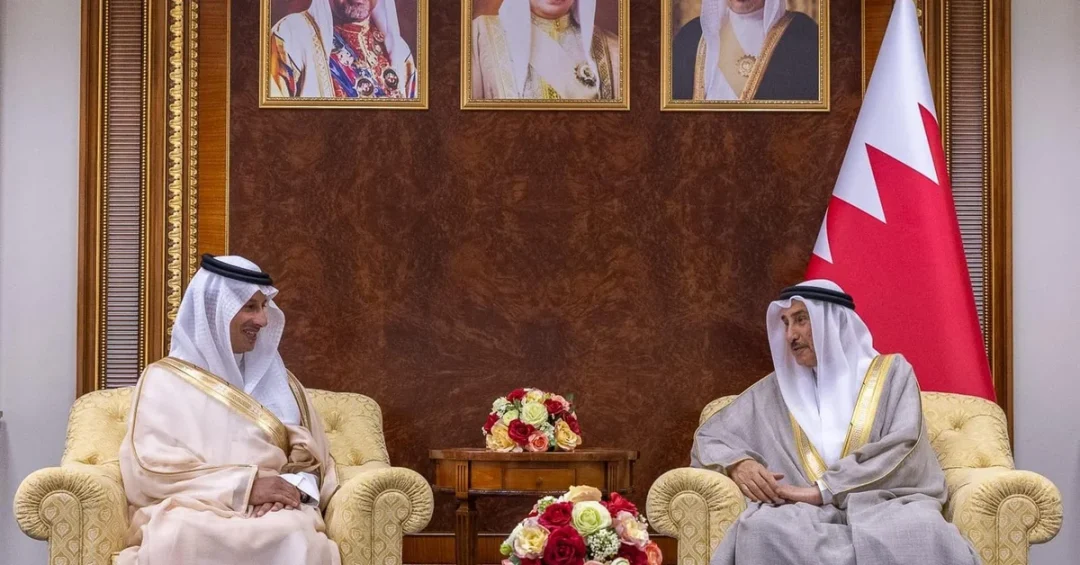
Saudi Minister of Tourism Ahmed Al-Khateeb met with Bahrain’s Deputy Prime Minister Shaikh Khalid bin Abdulla Al Khalifa in Manama on Thursday, September 10, 2026, on the sidelines of the 10th Meeting of the Ministers Responsible for Tourism in the Gulf Cooperation Council (GCC) Countries, according to the Saudi Press Agency (SPA). The meeting brought together tourism ministers from across the GCC and underscored the depth of fraternal relations between the Kingdom of Saudi Arabia and the Kingdom of Bahrain, with both sides affirming their commitment to deepening cooperation in the tourism sector.
During the meeting, Minister Al-Khateeb expressed his gratitude to the Bahraini Deputy Prime Minister for the warm welcome and generous hospitality extended to the Saudi delegation. He reaffirmed the strength of the historical ties binding Riyadh and Manama and highlighted the close cooperation the two countries share across a wide range of fields, with tourism standing out as a particularly dynamic area of collaboration. The discussions reflect a broader regional momentum in which GCC states are working together to position the Gulf as a leading global tourism destination. How significant is this meeting for the future of tourism in the Gulf region? The encounter signals that Gulf tourism integration is moving from aspiration to active implementation.
Context and Background
The 10th Meeting of the Ministers Responsible for Tourism in the GCC Countries represents a milestone in the region’s collective effort to develop a coordinated tourism strategy. Since the establishment of regular ministerial consultations, GCC member states have progressively aligned their tourism policies, recognizing that a unified regional approach amplifies each country’s individual strengths. Saudi Arabia, under the leadership of the Custodian of the Two Holy Mosques King Salman bin Abdulaziz Al Saud and His Royal Highness Crown Prince Mohammed bin Salman, has been a driving force behind this integration, leveraging its ambitious Vision 2030 agenda to transform the Kingdom into a global tourism powerhouse.
The Saudi-Bahraini relationship occupies a unique place within this framework. Connected by the King Fahd Causeway and bound by centuries of shared history, culture, and family ties, the two kingdoms have long cooperated on economic, security, and social matters. Tourism has emerged as a natural extension of this partnership, with both countries seeking to attract visitors from around the world while also encouraging intra-Gulf travel. Bahrain’s strategic location, its established hospitality sector, and its cultural heritage complement Saudi Arabia’s vast and diverse tourism offerings, from the Red Sea coast to the archaeological wonders of AlUla and the bustling streets of Riyadh and Jeddah.
Why does regional cooperation matter so much in the tourism industry? Because tourism is inherently interconnected, and travelers increasingly view the Gulf as a single destination rather than a collection of separate countries. By aligning visa policies, marketing campaigns, and infrastructure investments, GCC states can offer a seamless experience that competes with established global regions. The meeting in Manama builds on years of groundwork, including joint promotional efforts, shared participation in international travel exhibitions, and the gradual harmonization of regulations governing hotels, tour operators, and cultural sites. Saudi Arabia’s tourism sector, which has grown rapidly since the launch of Vision 2030, benefits directly from this regional synergy, as does Bahrain’s own thriving tourism and hospitality industry.
Key Details of the Manama Meeting
According to the Saudi Press Agency, the discussions between Minister Al-Khateeb and Deputy Prime Minister Shaikh Khalid bin Abdulla Al Khalifa covered the latest developments in the tourism sector and its growth prospects across the Gulf. The two officials explored ways to strengthen tourism cooperation and integration among GCC countries, focusing on practical measures that can be implemented in the near term. They also addressed the importance of exchanging expertise and best practices to support the sector’s continued expansion and to enhance its competitiveness both regionally and internationally.
The meeting took place amid sustained support from GCC leaders, who have consistently emphasized tourism as a pillar of economic diversification and cultural exchange. Saudi Arabia’s tourism strategy under Vision 2030 aims to raise the sector’s contribution to gross domestic product to 10 percent by 2030, create one million jobs, and attract 150 million visits annually by the end of the decade. Bahrain, for its part, has developed a reputation as a welcoming destination for regional and international visitors, with a focus on cultural tourism, entertainment, and business travel. The alignment of these national strategies creates opportunities for joint initiatives that benefit both countries.
What concrete outcomes can emerge from such high-level discussions? While the meeting did not announce specific agreements, the dialogue itself advances the framework for cooperation. Officials discussed developing further cooperation in areas such as tourism promotion, human capital development, and the sharing of data and market intelligence. These are the foundational elements that enable more ambitious projects, including joint tourism packages, cross-border itineraries, and coordinated participation in global tourism forums. The presence of tourism ministers from all GCC countries at the Manama gathering reinforces the collective commitment to these goals and provides a platform for multilateral as well as bilateral progress.
International and Regional Impact
The meeting between Saudi Arabia’s tourism minister and Bahrain’s deputy prime minister carries implications that extend beyond the bilateral relationship. It reinforces the Gulf Cooperation Council’s role as a platform for economic integration and demonstrates to the international community that GCC states are united in their pursuit of sustainable tourism growth. For global travelers, this cooperation translates into easier access, more diverse experiences, and a stronger regional brand that can compete with long-established destinations in Europe, Asia, and the Americas.
From a geopolitical perspective, the meeting highlights the stability and forward-looking orientation of the Gulf region. While other parts of the world grapple with uncertainty, GCC countries are investing in infrastructure, streamlining regulations, and building partnerships that attract foreign investment and international events. Saudi Arabia’s leadership in this area, exemplified by Vision 2030 and its ambitious giga-projects such as NEOM, the Red Sea Project, and Diriyah Gate, sets a benchmark for the region. Bahrain’s active participation and its own tourism development plans complement these efforts, creating a network of destinations that appeal to a wide range of traveler preferences.
How does this affect travelers planning a trip to the Gulf? The practical benefits include improved connectivity, simplified visa procedures for multi-country visits, and a growing array of cultural and entertainment offerings. The Saudi-Bahraini axis is particularly well-positioned to capitalize on these trends, given the King Fahd Causeway’s role as a vital land link and the shared cultural heritage that makes cross-border travel attractive. As cooperation deepens, visitors can expect more integrated packages that allow them to experience both countries in a single journey, from Bahrain’s historic sites and vibrant markets to Saudi Arabia’s UNESCO World Heritage locations and modern entertainment districts.
Economic and Strategic Significance
Tourism is a central component of Saudi Arabia’s economic diversification strategy, and regional cooperation amplifies its impact. The Kingdom has invested heavily in tourism infrastructure, including new airports, luxury resorts, cultural attractions, and entertainment venues. These investments are designed not only to attract international visitors but also to serve the domestic market and encourage Saudi citizens to explore their own country. Bahrain, with its established tourism sector and proximity to the Eastern Province of Saudi Arabia, is a natural partner in this endeavor. Joint efforts can increase visitor numbers, extend average stays, and boost spending across both economies.
The strategic significance of the meeting also lies in its timing. The global tourism industry is recovering and evolving, with travelers seeking authentic experiences, sustainable options, and seamless digital services. GCC countries that cooperate effectively can capture a larger share of this growing market. Saudi Arabia’s Vision 2030 includes specific targets for tourism’s contribution to the economy, and partnerships with neighboring states support these goals. Moreover, tourism cooperation fosters people-to-people ties, cultural understanding, and mutual respect, which are essential for long-term regional stability and prosperity.
What role do Saudi Arabia’s giga-projects play in this regional equation? They serve as anchors that draw global attention to the Gulf and create demand for multi-destination travel. A visitor attracted by NEOM or the Red Sea Project may also choose to spend time in Bahrain, Qatar, the United Arab Emirates, or Oman, especially if travel between these countries is convenient and well-promoted. This multiplier effect is precisely what the GCC tourism ministers are working to harness. By aligning marketing messages and improving infrastructure, they can turn the Gulf into one of the world’s most compelling tourism regions.
Vision 2030 Alignment
The meeting between Minister Ahmed Al-Khateeb and Deputy Prime Minister Shaikh Khalid bin Abdulla Al Khalifa aligns directly with the objectives of Saudi Vision 2030, which seeks to diversify the Kingdom’s economy, enhance its global standing, and improve the quality of life for its citizens. Tourism is one of the key sectors identified in the Vision as a driver of job creation, foreign investment, and cultural exchange. By strengthening ties with Bahrain and other GCC states, Saudi Arabia advances its goal of becoming a leading global tourism destination while contributing to the broader prosperity of the region.
Under the continued support of the Saudi leadership, the Ministry of Tourism has pursued an ambitious agenda that includes simplifying visa processes, developing new destinations, and promoting the Kingdom’s rich heritage. Regional cooperation is an integral part of this agenda, as it allows Saudi Arabia to leverage shared resources, learn from neighbors’ experiences, and present a unified front to international markets. The 10th Meeting of the Ministers Responsible for Tourism in the GCC Countries, and the bilateral discussions held on its sidelines, demonstrate that the Kingdom is not pursuing its tourism goals in isolation but as part of a collaborative regional vision. As Saudi Arabia continues its transformation, partnerships like the one with Bahrain will remain essential to achieving the aspirations of Vision 2030 and cementing the Gulf’s place on the global tourism map.
20 Questions
Q1. Who met with Bahrain’s Deputy Prime Minister in Manama?
A1. Saudi Minister of Tourism Ahmed Al-Khateeb met with Bahrain’s Deputy Prime Minister Shaikh Khalid bin Abdulla Al Khalifa on the sidelines of the 10th GCC tourism ministers meeting in Manama.
Q2. When did the meeting take place?
A2. The meeting took place on Thursday, September 10, 2026, according to the Saudi Press Agency.
Q3. What event was being held in Manama at the same time?
A3. The 10th Meeting of the Ministers Responsible for Tourism in the Gulf Cooperation Council (GCC) Countries was being held in Manama.
Q4. What did Minister Al-Khateeb express to the Bahraini Deputy Prime Minister?
A4. He expressed gratitude for the warm welcome and generous hospitality and affirmed the depth of fraternal relations between Saudi Arabia and Bahrain.
Q5. What fields of cooperation were highlighted during the meeting?
A5. The two sides highlighted close cooperation across various fields, with particular emphasis on the tourism sector.
Q6. What topics were discussed regarding the tourism sector?
A6. They discussed developments in the tourism sector, its growth prospects, and ways to strengthen tourism cooperation and integration among GCC countries.
Q7. Did they discuss exchanging expertise?
A7. Yes, they discussed further developing cooperation and exchanging expertise to support the sector’s growth and strengthen its competitiveness regionally and internationally.
Q8. What role did GCC leaders play in these discussions?
A8. The discussions took place amid continued support from GCC leaders for tourism development and regional cooperation.
Q9. What is the significance of the King Fahd Causeway in Saudi-Bahraini relations?
A9. The King Fahd Causeway is a vital land link that facilitates travel, trade, and tourism between Saudi Arabia and Bahrain.
Q10. How does tourism cooperation align with Saudi Vision 2030?
A10. Tourism is a key sector in Vision 2030, aimed at diversifying the economy, creating jobs, and attracting international visitors to the Kingdom.
Q11. What are Saudi Arabia’s tourism targets under Vision 2030?
A11. Saudi Arabia aims to raise tourism’s contribution to GDP to 10 percent, create one million jobs, and attract 150 million visits annually by 2030.
Q12. How does Bahrain benefit from tourism cooperation with Saudi Arabia?
A12. Bahrain benefits from increased visitor numbers, joint promotional efforts, and the opportunity to attract travelers who are visiting Saudi Arabia’s giga-projects.
Q13. What are some of Saudi Arabia’s major tourism giga-projects?
A13. Major projects include NEOM, the Red Sea Project, and Diriyah Gate, which are designed to attract international and domestic tourists.
Q14. What is the broader goal of GCC tourism integration?
A14. The goal is to position the Gulf as a unified global tourism destination, offering seamless travel experiences and competing with other major regions.
Q15. How many GCC tourism ministers attended the Manama meeting?
A15. Tourism ministers from all Gulf Cooperation Council countries attended the 10th Meeting of the Ministers Responsible for Tourism in Manama.
Q16. What practical benefits could result from this cooperation for travelers?
A16. Travelers could see improved connectivity, simplified visa procedures, and more integrated tourism packages across GCC countries.
Q17. What did the two officials not announce during the meeting?
A17. They did not announce specific new agreements, but the dialogue advanced the framework for future cooperation and joint initiatives.
Q18. How does this meeting reflect Saudi Arabia’s leadership in the region?
A18. It demonstrates Saudi Arabia’s active role in promoting regional integration and its commitment to Vision 2030’s tourism goals.
Q19. What is the significance of the meeting for the global tourism industry?
A19. It shows that the Gulf region is emerging as a competitive and collaborative tourism destination, attracting global attention and investment.
Q20. What is the expected next step after this meeting?
A20. The next steps include implementing discussed measures, continuing bilateral and multilateral cooperation, and preparing for future GCC tourism ministerial meetings.
Reader Feedback
We value your thoughts. Please share your feedback on this article.
Your feedback helps us improve our coverage.
Related articles
 Abu Dhabi Flights to Red Sea International Airport Launch October 4
 Fall Season Transforms Jazan Mountains and Terraces
 Saudi Arabia Joins 10th GCC Tourism Ministers Meeting
 Saudi Falcons and Hunting Exhibition Draws Record 700,000 Visitors
 Umrah Guests Tour Kiswa Complex and Revelation Exhibition in Makkah