


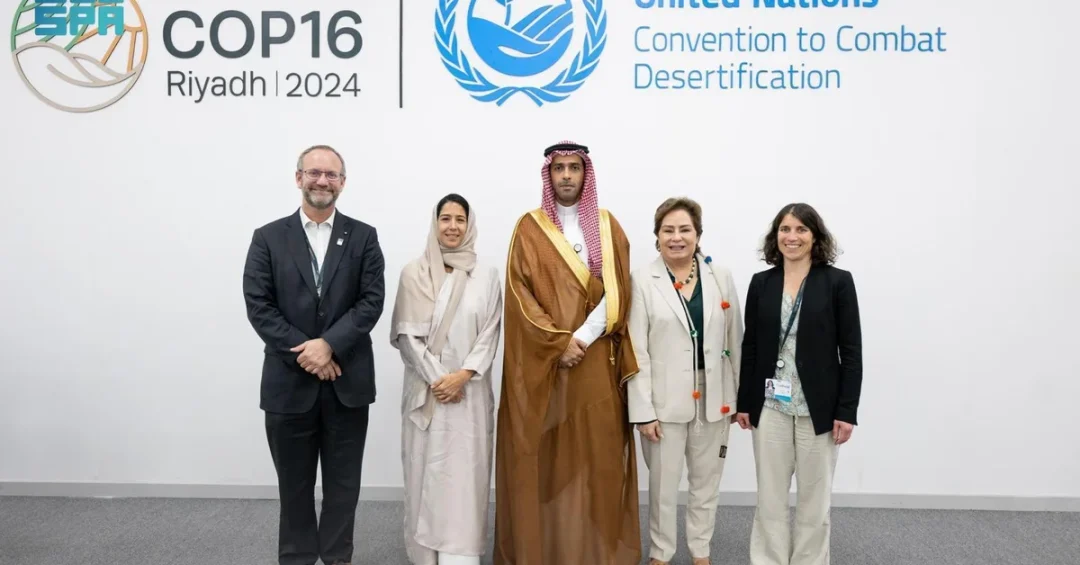
Saudi Arabia’s Ministry of Tourism convened a high-level panel at the 16th session of the Conference of the Parties (COP16) to the United Nations Convention to Combat Desertification (UNCCD) in Riyadh on December 8, 2024, underscoring the Kingdom’s leadership in linking sustainable tourism with global land restoration efforts. The event, titled “Sustainable Tourism and Land Restoration for People and Planet,” brought together government officials, industry leaders, international organizations, academia, and civil society to explore how travel and tourism can drive environmental recovery, community resilience, and climate action.
Held during the COP16 thematic Land Day, the panel highlighted Saudi Arabia’s integrated approach to sustainability, aligning with Vision 2030’s goals of economic diversification, environmental stewardship, and cultural preservation. The discussion emphasized practical pathways for tourism to protect natural habitats, support reforestation, fund conservation, and empower local communities. As the first UNCCD COP held in the Middle East and North Africa and the largest UN land conference to date, COP16 provides a global stage for Saudi Arabia to champion innovative solutions to desertification and biodiversity loss.
Context and Background
Why does sustainable tourism matter more than ever in the fight against land degradation? The travel and tourism sector contributes significantly to global GDP and employment, yet it also places pressure on natural resources, especially in fragile ecosystems. The UNCCD estimates that up to 40% of the planet’s land is degraded, affecting nearly half of humanity and threatening food security, livelihoods, and biodiversity. In this context, tourism—if managed responsibly—can become a powerful force for restoration rather than depletion.
Saudi Arabia, which holds the COP16 presidency, has placed land restoration at the heart of its environmental agenda. The Kingdom launched the Saudi Green Initiative and the Middle East Green Initiative, aiming to plant 10 billion trees across the region and restore 40 million hectares of degraded land. These initiatives are integral to Vision 2030, which seeks to diversify the economy beyond oil, promote sustainable development, and enhance quality of life. Tourism is a key pillar of this transformation, with the Kingdom targeting 150 million annual visits by 2030.
The Ministry of Tourism’s panel at COP16 reflects a growing recognition that tourism and land health are interdependent. By bringing together diverse stakeholders, the event aimed to catalyze partnerships and share best practices that can be replicated globally. The presence of high-level figures such as Ambassador Patricia Espinosa Cantellano, former UNFCCC Executive Secretary, and Princess Mashael bint Saud Al Shalan and Princess Noura bint Turki of AEON Collective, signals the seriousness of Saudi Arabia’s commitment to multilateral cooperation.
Key Details
What specific solutions were discussed to align tourism with land restoration? The panel delved into several actionable strategies. First, protecting natural habitats and biodiversity hotspots is essential to maintain the ecological integrity that attracts tourists. Second, reforestation and afforestation projects can sequester carbon, restore soil health, and create green jobs. Third, funding conservation efforts through innovative financing mechanisms—such as green bonds, carbon credits, and public-private partnerships—can scale up restoration. Finally, empowering local communities ensures that tourism revenues support livelihoods and traditional knowledge.
Central to the discussion was the Sustainable Tourism Global Center (STGC), a multi-country, multi-stakeholder platform based in Riyadh. The STGC aims to spearhead, expedite, and monitor the travel and tourism sector’s shift toward sustainable practices, acting as a global hub for collaboration and innovation. It supports countries in measuring and reducing their tourism-related emissions, conserving biodiversity, and enhancing resilience. The STGC’s presence at COP16 underscores Saudi Arabia’s role in providing institutional leadership for a global sustainable tourism agenda.
Ministry of Tourism Deputy Minister of Strategic Planning and Monitoring Ageel Alshaibani underscored the Kingdom’s proactive stance: “In Saudi Arabia, we recognize the critical role that the travel and tourism sector plays in the economic and environmental sectors. We understand the industry’s vulnerabilities in the face of climate change, along with its vast potential to drive sustainable development worldwide. We are committed to transforming tourism practices to create lasting positive impacts, both economically and environmentally.” His remarks highlighted the dual imperative of reducing tourism’s footprint while leveraging its capacity to finance restoration.
The panel also featured insights from Princess Mashael bint Saud Al Shalan and Princess Noura bint Turki, co-founders of AEON Collective, who emphasized their organization’s efforts in addressing desertification and enhancing resilience in the region. They shared examples of community-led restoration projects and the importance of integrating traditional ecological knowledge with modern science. The moderated discussion, led by Ambassador Patricia Espinosa Cantellano, ensured a balanced exchange of perspectives from both developed and developing countries.
International and Regional Impact
How does Saudi Arabia’s leadership at COP16 influence global efforts to combat desertification? As the first UNCCD COP in the MENA region, the conference amplifies the voices of countries most affected by land degradation. Saudi Arabia’s presidency has mobilized unprecedented political will and financial commitments, including the launch of the Riyadh Global Drought Resilience Partnership and pledges to restore millions of hectares. The tourism panel specifically showcased how a major economic sector can be reoriented toward restoration, offering a model for other nations.
Regionally, the Middle East and North Africa face acute challenges: water scarcity, extreme heat, and sandstorms threaten both ecosystems and tourism assets. By integrating land restoration into tourism development, countries can enhance resilience and protect cultural heritage sites. Saudi Arabia’s experience with mega-projects like NEOM and the Red Sea Project, which incorporate strict environmental standards, demonstrates that large-scale development can coexist with conservation. The STGC will help disseminate these practices across the region and beyond.
Internationally, the panel reinforced the message that sustainable tourism is not a niche market but a mainstream necessity. With the UN World Tourism Organization projecting international arrivals to reach 1.8 billion by 2030, the sector’s environmental footprint must be decoupled from growth. Saudi Arabia’s call for a global framework—supported by the STGC—resonates with the Kunming-Montreal Global Biodiversity Framework and the Sustainable Development Goals, particularly SDG 15 (Life on Land) and SDG 8 (Decent Work and Economic Growth).
Economic and Strategic Significance
Why should investors and businesses pay attention to sustainable tourism? The global sustainable tourism market is projected to grow to $11.4 trillion by 2030, driven by consumer demand for eco-friendly travel and regulatory pressures. Saudi Arabia is positioning itself at the forefront of this shift, using its COP16 platform to attract green investment and showcase bankable restoration projects. The Ministry of Tourism’s initiatives, such as the Sustainable Tourism Global Center, offer tools for companies to measure and improve their sustainability performance, unlocking access to sustainability-linked finance.
For Saudi Arabia, sustainable tourism is a cornerstone of economic diversification. Vision 2030 aims to increase tourism’s contribution to GDP from 3% to 10% by 2030, creating one million jobs. By embedding restoration and conservation into tourism development, the Kingdom ensures that this growth is resilient and inclusive. Projects like the Red Sea Project and AMAALA are setting new benchmarks for regenerative tourism, with commitments to achieve net-zero emissions and net-positive biodiversity impact. These initiatives not only attract high-value travelers but also protect the natural capital on which the industry depends.
Strategically, Saudi Arabia’s leadership in sustainable tourism enhances its soft power and diplomatic influence. By hosting COP16 and championing land restoration, the Kingdom bridges the Global North and South, fostering cooperation on climate finance and technology transfer. The STGC, with its global membership, exemplifies this bridge-building role. As the world grapples with interconnected crises of climate, biodiversity, and land degradation, Saudi Arabia’s integrated approach offers a replicable model for sustainable development.
Vision 2030 Alignment
How does the Ministry of Tourism’s panel at COP16 advance Vision 2030? The event directly supports Vision 2030’s environmental sustainability pillar, which seeks to protect the Kingdom’s natural resources and promote green growth. By integrating land restoration into tourism strategies, Saudi Arabia is operationalizing its commitment to the Saudi Green Initiative and the Middle East Green Initiative. These efforts also align with the National Tourism Strategy, which aims to diversify tourism offerings beyond religious pilgrimage to include eco-tourism, heritage, and adventure travel.
Furthermore, the panel exemplifies Vision 2030’s emphasis on international collaboration and innovation. The Sustainable Tourism Global Center, based in Riyadh, is a tangible outcome of this vision, positioning the Kingdom as a global hub for sustainability knowledge and practice. As Saudi Arabia continues to invest in renewable energy, smart cities, and regenerative tourism, it demonstrates that economic prosperity and environmental stewardship can go hand in hand. The Ministry of Tourism’s leadership at COP16 sends a clear signal: the Kingdom is not only adapting to a changing world but actively shaping a better future for people and planet.
In conclusion, the Ministry of Tourism’s panel at UNCCD COP16 marked a significant milestone in the global effort to align tourism with land restoration. By convening diverse stakeholders and showcasing innovative platforms like the STGC, Saudi Arabia reinforced its role as a responsible global leader committed to sustainability. As the Kingdom advances toward Vision 2030, its integrated approach to tourism and environmental conservation will continue to inspire and enable lasting positive change.
20 Questions
Q1. What was the title of the Ministry of Tourism’s panel at UNCCD COP16?
A1. The panel was titled “Sustainable Tourism and Land Restoration for People and Planet.” It was held during the thematic Land Day at COP16 in Riyadh on December 8, 2024.
Q2. Who moderated the panel discussion?
A2. Ambassador Patricia Espinosa Cantellano, former Executive Secretary of the UNFCCC and former Mexican Minister of Foreign Affairs, moderated the panel, guiding discussions on challenges and best practices in sustainable tourism and land restoration.
Q3. What is the Sustainable Tourism Global Center (STGC)?
A3. The STGC is a multi-country, multi-stakeholder platform based in Riyadh that aims to spearhead, expedite, and monitor the travel and tourism sector’s shift toward sustainable practices, acting as a global hub for collaboration and innovation.
Q4. How does sustainable tourism support land restoration?
A4. Sustainable tourism supports land restoration by protecting natural habitats, fostering reforestation, funding conservation efforts, and empowering local communities. These actions help combat desertification and enhance ecosystem resilience.
Q5. What did Deputy Minister Ageel Alshaibani say about Saudi Arabia’s commitment?
A5. He stated that Saudi Arabia recognizes the critical role of travel and tourism in economic and environmental sectors, understands its vulnerabilities to climate change, and is committed to transforming tourism practices for lasting positive impacts.
Q6. Who represented AEON Collective at the panel?
A6. Princess Mashael bint Saud Al Shalan and Princess Noura bint Turki, co-founders of AEON Collective, represented the organization and emphasized efforts to address desertification and enhance regional resilience.
Q7. Why is COP16 significant for the MENA region?
A7. COP16 is the first UNCCD COP held in the Middle East and North Africa region and the largest UN land conference to date, underscoring Saudi Arabia’s leadership in advancing the global sustainable tourism agenda.
Q8. How does the panel reflect Saudi Vision 2030?
A8. The panel reflects Vision 2030 by positioning tourism as a key driver of economic growth, cultural preservation, and environmental sustainability, aligning with the Kingdom’s goals of diversification and green development.
Q9. What are the Saudi Green Initiative and Middle East Green Initiative?
A9. These initiatives aim to plant 10 billion trees across the region and restore 40 million hectares of degraded land. They are central to Saudi Arabia’s environmental strategy and Vision 2030.
Q10. What economic benefits can sustainable tourism bring to Saudi Arabia?
A10. Sustainable tourism can increase tourism’s GDP contribution from 3% to 10% by 2030, create one million jobs, attract green investment, and support economic diversification while protecting natural capital.
Q11. How does the STGC help countries measure sustainability?
A11. The STGC provides tools and frameworks for countries to measure and reduce tourism-related emissions, conserve biodiversity, and enhance resilience, facilitating access to sustainability-linked finance.
Q12. What role do local communities play in sustainable tourism?
A12. Local communities are essential for sustainable tourism as they provide traditional knowledge, manage natural resources, and benefit from tourism revenues, ensuring that restoration efforts are inclusive and culturally appropriate.
Q13. What are some examples of regenerative tourism projects in Saudi Arabia?
A13. The Red Sea Project and AMAALA are flagship regenerative tourism developments that aim for net-zero emissions and net-positive biodiversity impact, setting new global benchmarks for sustainable luxury travel.
Q14. How does land degradation affect global food security?
A14. Land degradation reduces soil fertility and agricultural productivity, threatening food security for nearly half of humanity. Restoring degraded land is crucial for sustainable food systems and livelihoods.
Q15. What is the Riyadh Global Drought Resilience Partnership?
A15. It is a initiative launched at COP16 to enhance global cooperation on drought resilience, mobilizing resources and knowledge to help vulnerable countries prepare for and mitigate drought impacts.
Q16. How can tourism financing support conservation?
A16. Tourism financing can support conservation through green bonds, carbon credits, and public-private partnerships, directing revenue from tourism activities toward protecting habitats and restoring ecosystems.
Q17. What is the expected growth of international tourism by 2030?
A17. The UN World Tourism Organization projects international arrivals to reach 1.8 billion by 2030, highlighting the urgent need to decouple tourism growth from environmental degradation.
Q18. How does Saudi Arabia’s COP16 presidency influence global policy?
A18. Saudi Arabia’s presidency mobilizes political will and financial commitments, amplifies MENA voices, and promotes integrated approaches to land restoration and sustainable development, shaping global policy agendas.
Q19. What are the key SDGs linked to sustainable tourism and land restoration?
A19. The key SDGs are SDG 15 (Life on Land) and SDG 8 (Decent Work and Economic Growth), along with SDG 13 (Climate Action) and SDG 12 (Responsible Consumption and Production).
Q20. What is the main takeaway from the Ministry of Tourism’s panel at COP16?
A20. The main takeaway is that sustainable tourism can be a powerful driver of land restoration and community resilience, and Saudi Arabia is leading by example through Vision 2030 and global platforms like the STGC.
Reader Feedback
We value your thoughts. Please share your feedback on this article.
Your feedback helps us improve our coverage.
Related articles
 Mufti of Kyrgyzstan Visits Hira Cultural District
 Tourism Development Fund Awarded EFQM ‘Qualified’ Certification
 Red Sea Global Signs Deal for Private Jet Terminal at RSI
 Madinah Ranks Among World’s Top 100 City Destinations
 Cruise Saudi Launches Inaugural Ship AROYA at Jeddah Port
 PIF Launches Adeera to Build Saudi Hotel Brands