


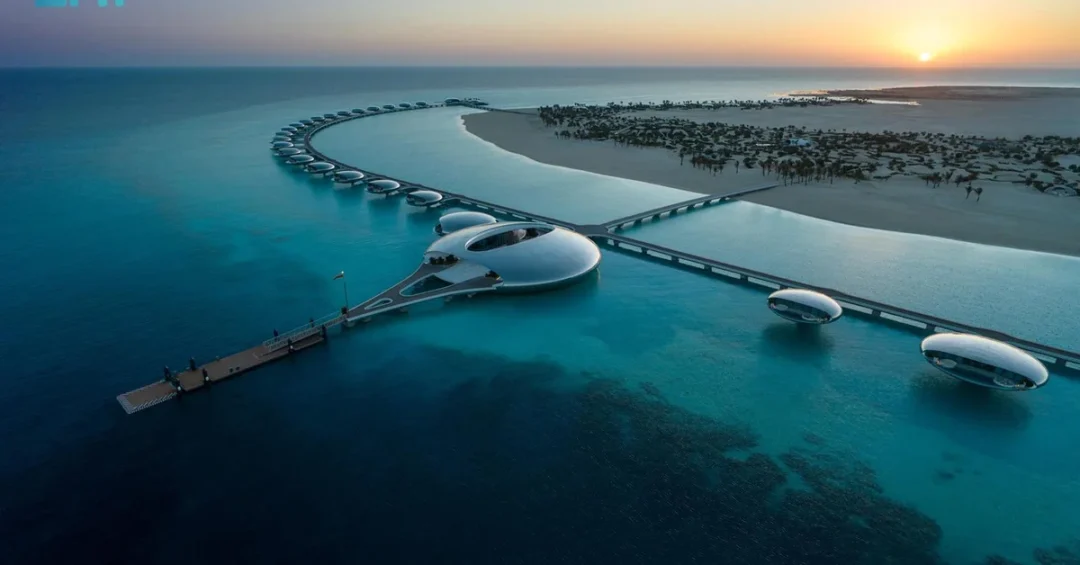
Reservations are now open for Shebara, the newest luxury resort at The Red Sea destination in Saudi Arabia, with guests welcomed from November 2024. The announcement was made by Red Sea Global (RSG), the developer behind the regenerative tourism destinations The Red Sea and AMAALA, confirming that Shebara becomes the fourth resort to open at The Red Sea and the first fully owned and operated by RSG itself. The resort promises an experience where luxury, sustainability, and innovation converge to redefine how tourism is delivered in the Kingdom.
Could this mark a turning point in how the world experiences luxury travel? For international travelers seeking something beyond the ordinary, Shebara offers direct access to one of the planet’s most pristine and biodiverse marine environments, paired with hospitality rooted in the Saudi tradition of Hafawah — a concept that encapsulates generosity, consideration, and kindness. With 73 overwater and beachfront villas shimmering above turquoise waters, the resort is positioned as a flagship of Saudi Arabia’s ambitious tourism transformation under Vision 2030.
Context and Background
What does it take to build a luxury destination that enhances rather than exploits its natural surroundings? Red Sea Global has been answering that question since its inception, developing a portfolio of regenerative tourism projects along Saudi Arabia’s western coast. The Red Sea destination, spread across an archipelago of more than 90 pristine islands, is one of the world’s most ambitious tourism developments, designed to set new standards for environmental stewardship while creating extraordinary visitor experiences. Shebara’s opening represents a significant milestone in that journey, marking the first time RSG has both owned and operated a resort, giving the company full control over the guest experience from arrival to departure.
The resort is located 25 kilometers from the mainland, a deliberate distance that creates a sense of sanctuary and seclusion. Guests can reach Shebara via a 30 to 40-minute boat ride or a scenic 30-minute seaplane flight from Red Sea International Airport (RSI). This relative isolation is central to the resort’s appeal, offering a retreat where visitors can disconnect from the bustle of daily life and immerse themselves in nature, wellness, and unparalleled luxury. The project aligns with Saudi Arabia’s broader strategy to diversify its economy, attract international visitors, and position the Kingdom as a global leader in sustainable tourism.
How does a resort become a catalyst for regional transformation? Shebara is not merely a hospitality venue; it is a statement of intent. Red Sea Global’s work is part of a national effort to create new economic opportunities, generate employment, and showcase Saudi Arabia’s natural and cultural assets to the world. The opening of Shebara follows the launch of other resorts at The Red Sea, including the St. Regis Red Sea Resort, Nujuma, a Ritz-Carlton Reserve, and Six Senses Southern Dunes. Each property contributes to a growing ecosystem of luxury offerings that collectively elevate the destination’s profile on the global stage.
Key Details
What makes Shebara stand out in a crowded luxury market? The resort’s architecture is a defining feature, with its 73 villas designed as stainless-steel orbs that appear to float above the water, their surfaces refracting light and blending seamlessly into the horizon. This innovative design is not just aesthetic; it reflects a deep commitment to sustainability. Shebara is powered by its own solar farm and an array of integrated utilities, demonstrating that luxury and environmental responsibility can coexist. The resort’s construction and operations are guided by RSG’s regenerative principles, aiming to deliver a net positive impact on the environment.
Guests can expect a wealth of premium amenities. A state-of-the-art fitness center, an exceptional nature-inspired spa sanctuary with five luxurious treatment rooms, and world-class dining led by Michelin-starred chef Marco Garfagnini are among the highlights. The resort offers direct access to some of the most pristine, biodiverse waters in the world, making it a paradise for divers and snorkelers. Every detail, from the culinary program to the wellness offerings, has been crafted to create unforgettable memories, as RSG Group Chief Executive John Pagano noted in his remarks.
“We are immensely proud to open Shebara to the world, yet another remarkable milestone for Red Sea Global and Saudi tourism,” Pagano said. “This luxury and truly one-of-a-kind resort embodies our commitment to innovative design and sustainable tourism. I am genuinely excited for our first guests to experience the unparalleled beauty and serenity of Shebara, where every detail has been crafted to create unforgettable memories.” The resort also celebrates its grand opening with an introductory offer: for a limited time, bookings of two consecutive nights include a complimentary third night. This incentive is designed to encourage longer stays and allow guests to fully immerse themselves in the destination.
International and Regional Impact
How will Shebara influence the broader Middle East tourism landscape? The resort’s opening is a clear signal that Saudi Arabia is serious about becoming a top-tier global destination. With RSI situated within three hours’ flying time of 250 million people and eight hours’ flying time for 8% of the world’s population, the accessibility of The Red Sea destination is substantial. International flights began in April 2024, with a twice-weekly route between The Red Sea and Dubai International, and further routes are expected as demand grows. This connectivity positions Shebara not just as a remote retreat but as a conveniently reachable luxury escape for travelers from Europe, Asia, and the Middle East.
Regionally, Shebara adds to the Red Sea’s growing reputation as a premier diving and wellness destination. The archipelago’s coral reefs and marine life are among the most untouched in the world, and RSG’s conservation efforts ensure they remain that way. For neighboring countries with established tourism industries, Saudi Arabia’s entry into the luxury segment represents both competition and collaboration, as the region increasingly attracts travelers seeking authentic, nature-based experiences. The Kingdom’s commitment to sustainable development sets a benchmark that could influence tourism policies across the Gulf and beyond.
Economic and Strategic Significance
What does Shebara’s launch mean for Saudi Arabia’s economy? Tourism is a key pillar of Vision 2030, the national strategy to diversify the economy away from oil dependence. The Red Sea project is one of the flagship giga-projects designed to create jobs, attract foreign investment, and boost non-oil GDP. By 2030, The Red Sea destination aims to welcome one million visitors annually and contribute significantly to the Kingdom’s tourism targets. Shebara, as the first RSG-owned and operated resort, serves as a proof of concept for the company’s ability to deliver world-class hospitality while adhering to stringent sustainability standards.
The resort’s opening also underscores the growing role of the private sector in Saudi Arabia’s tourism ambitions. RSG is wholly owned by the Public Investment Fund (PIF), the Kingdom’s sovereign wealth fund, which has been instrumental in driving the Vision 2030 agenda. The success of Shebara will be closely watched as an indicator of the viability of large-scale regenerative tourism. Beyond direct economic benefits, the project supports local communities through employment and training programs, and it enhances Saudi Arabia’s soft power by showcasing its natural beauty and cultural heritage to a global audience.
Vision 2030 Alignment
How does Shebara embody the goals of Vision 2030? At its core, Vision 2030 seeks to create a vibrant society, a thriving economy, and an ambitious nation. Shebara contributes to all three. It offers a world-class experience that enriches the lives of visitors and residents alike, supports economic diversification by attracting international tourists, and demonstrates Saudi Arabia’s ability to execute complex, sustainable projects. The resort’s emphasis on Hafawah reflects the Kingdom’s commitment to preserving its cultural values while embracing modernity and openness to the world.
As Saudi Arabia continues to invest in tourism infrastructure, destinations like Shebara will play a crucial role in shaping perceptions of the Kingdom. They offer a tangible example of how Vision 2030 is transforming the country into a global hub for travel, business, and innovation. With reservations now open and the first guests arriving in November 2024, Shebara is poised to become a symbol of Saudi Arabia’s regenerative tourism model, setting a new standard for luxury hospitality that respects both people and planet.
20 Questions
Q1. What is Shebara and where is it located?
A1. Shebara is a new luxury resort owned and operated by Red Sea Global, located at The Red Sea destination in Saudi Arabia, approximately 25 kilometers from the mainland. It is the fourth resort to open at The Red Sea and the first fully owned and operated by RSG.
Q2. When did Shebara start accepting reservations?
A2. Reservations opened in late October 2024, with guests welcomed from November 2024. The announcement was made by Red Sea Global, marking a significant milestone for Saudi Arabia’s tourism sector.
Q3. How many villas does Shebara have and what types are they?
A3. Shebara features 73 villas, comprising overwater and beachfront accommodations. The overwater villas are designed as stainless-steel orbs that appear to float above the turquoise waters, blending seamlessly with the horizon.
Q4. What is unique about Shebara’s architecture?
A4. The resort’s architecture is defined by its stainless-steel orbs, which refract light and fade into the horizon. This innovative design combines luxury with sustainability, reflecting Red Sea Global’s commitment to regenerative tourism.
Q5. What sustainability features does Shebara have?
A5. Shebara is powered by its own solar farm and integrated utilities, demonstrating a strong commitment to sustainability. The resort is designed to have a net positive impact on the environment, aligning with RSG’s regenerative principles.
Q6. What amenities can guests expect at Shebara?
A6. Guests can enjoy a state-of-the-art fitness center, a nature-inspired spa sanctuary with five treatment rooms, and exceptional dining led by Michelin-starred chef Marco Garfagnini. Direct access to pristine diving waters is also a key feature.
Q7. What is Hafawah and how does it relate to Shebara?
A7. Hafawah is a Saudi tradition encapsulating generosity, consideration, and kindness. Shebara’s hospitality is rooted in this tradition, offering guests unique, timeless, and extraordinary experiences that reflect Saudi culture.
Q8. Who is the CEO of Red Sea Global and what did he say about Shebara?
A8. John Pagano is the Group Chief Executive of Red Sea Global. He expressed immense pride in opening Shebara, calling it a remarkable milestone and emphasizing its embodiment of innovative design and sustainable tourism.
Q9. How can guests reach Shebara?
A9. Shebara is accessible via a 30 to 40-minute boat ride or a 30-minute seaplane flight from Red Sea International Airport (RSI). The resort’s relative isolation provides a sanctuary for guests seeking an extraordinary escape.
Q10. What is Red Sea International Airport and its significance?
A10. Red Sea International Airport (RSI) serves The Red Sea destination. It is within three hours’ flying time of 250 million people and eight hours’ flying time for 8% of the world’s population. International flights began in April 2024.
Q11. What introductory offer is Shebara providing?
A11. For a limited time, guests who book two consecutive nights at Shebara will receive a third night complimentary. This offer celebrates the resort’s grand opening and encourages longer stays.
Q12. How does Shebara contribute to Saudi Arabia’s Vision 2030?
A12. Shebara supports Vision 2030 by boosting tourism, creating jobs, and showcasing Saudi Arabia’s natural beauty. It is part of the Kingdom’s efforts to diversify its economy and become a global tourism hub.
Q13. What marine life can guests see near Shebara?
A13. The waters around Shebara are among the most pristine and biodiverse in the world, offering exceptional diving and snorkeling opportunities. Guests can explore vibrant coral reefs and a rich variety of marine species.
Q14. Who owns Red Sea Global?
A14. Red Sea Global is wholly owned by the Public Investment Fund (PIF), Saudi Arabia’s sovereign wealth fund. PIF is a key driver of Vision 2030 and supports large-scale projects like The Red Sea.
Q15. What other resorts are open at The Red Sea destination?
A15. Other resorts at The Red Sea include the St. Regis Red Sea Resort, Nujuma, a Ritz-Carlton Reserve, and Six Senses Southern Dunes. Shebara is the fourth to open and the first owned by RSG.
Q16. Is Shebara a year-round destination?
A16. Yes, Shebara is a year-round destination with cool summer temperatures. Its location and climate make it an attractive escape in any season, offering guests consistent comfort and enjoyment.
Q17. What dining options are available at Shebara?
A17. Shebara offers exceptional cuisine delivered by world-class chefs, including Michelin-starred Marco Garfagnini. The dining experience is designed to complement the resort’s luxury and sustainability ethos.
Q18. How does Shebara protect the environment?
A18. Shebara uses a solar farm and integrated utilities to minimize its carbon footprint. Its design and operations follow regenerative principles, aiming to preserve the pristine marine environment and enhance local ecosystems.
Q19. What is the significance of Shebara being RSG-owned and operated?
A19. As the first resort fully owned and operated by RSG, Shebara allows Red Sea Global to have complete control over the guest experience and sustainability standards. It serves as a flagship for the company’s vision.
Q20. How does Shebara reflect Saudi Arabia’s global role?
A20. Shebara showcases Saudi Arabia’s ability to deliver world-class, sustainable luxury tourism. It reinforces the Kingdom’s position as a responsible global leader in regenerative tourism and a key player in the international travel industry.
Reader Feedback
We value your thoughts. Please share your feedback on this article.
Your feedback helps us improve our coverage.
Related articles
 Saudi Tourism Licenses Surge 99%, Rooms Up 107%
 Winter at Tantora Festival Returns to AlUla This December
 Over 58 Tons of Zamzam Water Distributed at Prophet’s Mosque
 Saudi Arabia Unveils New Destinations at WTM London
 AlUla Wellness Festival Concludes After 17 Inspiring Days
 Jazan Region Prepares Winter Tourism and Entertainment Festivals