


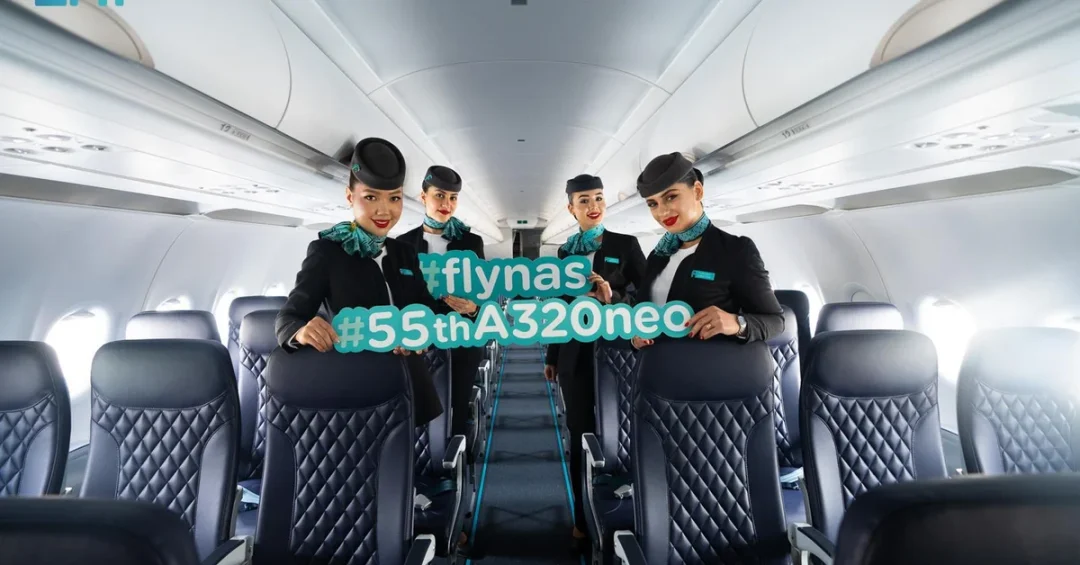
flynas, the Saudi Arabian low-cost carrier, has taken delivery of its second new Airbus A320neo aircraft in 2025, with the jet arriving at King Khalid International Airport in Riyadh, the Saudi Press Agency reported on March 9, 2025. The delivery forms part of a broader fleet expansion programme that the airline is pursuing under the Kingdom’s Vision 2030 aviation strategy, which aims to connect Saudi Arabia to more than 250 international destinations and carry 330 million passengers annually by the end of the decade.
At the same time, flynas confirmed that it has increased seat capacity on its domestic and international network during the holy month of Ramadan to approximately 1.5 million seats, a significant seasonal uplift designed to accommodate the surge in demand from pilgrims, Umrah performers and travellers visiting the Kingdom. The airline also announced the launch of a new direct route between Madinah and Karachi, Pakistan, operating two weekly flights, which is intended to strengthen access to the holy mosques in Mecca and Madinah. Taken together, the aircraft delivery and the Ramadan capacity increase illustrate how Saudi Arabia’s aviation sector is scaling up to meet both religious tourism demand and the Kingdom’s wider economic diversification goals.
Context and Background
How did flynas become one of the fastest-growing low-cost carriers in the Middle East? Founded in 2007 and headquartered in Riyadh, flynas has evolved from a domestic start-up into a regional operator with a network spanning the Middle East, Asia, Africa and Europe. The airline’s growth trajectory has been closely tied to Saudi Arabia’s decision to liberalise its aviation market and to the strategic objectives set out in Vision 2030, which identifies tourism and transport as key pillars of economic diversification away from hydrocarbon dependence.
The delivery of the second A320neo in 2025 follows a series of aircraft orders that flynas has placed in recent years, including a major agreement for 120 Airbus aircraft announced at the Paris Air Show in 2023. The A320neo family is known for its fuel efficiency, reduced noise footprint and lower operating costs, making it well suited to the airline’s low-cost business model. The arrival of the aircraft at King Khalid International Airport underscores Riyadh’s role as a central hub in the Kingdom’s aviation expansion and reflects the airport’s ongoing upgrade programme to handle rising passenger volumes.
Ramadan is traditionally a period of elevated travel demand in Saudi Arabia, as Muslims from around the world seek to perform Umrah and visit the Prophet’s Mosque in Madinah. The Kingdom’s General Authority for Statistics has reported steady year-on-year increases in Umrah participation, supported by expanded visa categories and improved digital services. Airlines operating in the Saudi market must therefore plan capacity carefully to avoid bottlenecks during peak periods, and flynas has positioned itself as a key contributor to that seasonal mobility. What does this level of planning reveal about the maturity of Saudi Arabia’s aviation ecosystem?
Key Details of the Expansion
The newly delivered A320neo is the second of its type to join the flynas fleet in 2025, following an earlier delivery in January. The aircraft arrived at King Khalid International Airport in Riyadh, where flynas maintains a significant operational base. The airline has not disclosed the exact number of aircraft it expects to receive over the remainder of the year, but its long-term order book suggests that fleet growth will continue at a steady pace through 2030.
On the Ramadan capacity front, flynas has raised the number of available seats to around 1.5 million across its domestic and international routes. This includes flights linking Riyadh, Jeddah, Dammam and other Saudi cities with destinations in the Middle East, North Africa, South Asia and Europe. The capacity increase is designed to serve both Saudi residents travelling during the holy month and international visitors arriving for religious and family visits. The airline has also adjusted its schedules to optimise connections through its hubs, ensuring that passengers can reach Mecca and Madinah with minimal disruption.
The new Madinah–Karachi route is a notable addition to the network. Operating twice weekly, it directly connects the second holiest city in Islam with Pakistan’s largest metropolis, a major source of Umrah pilgrims. Pakistan is one of the largest contributors to Umrah traffic, and the direct link reduces travel time and simplifies itineraries for pilgrims who previously had to transit through other hubs. The route also supports people-to-people ties and commercial exchange between Saudi Arabia and Pakistan, in line with the Kingdom’s broader diplomatic and economic engagement in South Asia. How might this route reshape travel patterns for pilgrims from the subcontinent?
International and Regional Impact
The expansion of flynas capacity during Ramadan has implications that extend beyond Saudi Arabia’s borders. For Muslim communities in South Asia, Southeast Asia, the Middle East and Africa, the availability of affordable and direct flights to Madinah and Jeddah is a critical enabler of religious observance. By increasing seat capacity and adding a new route from Karachi, flynas is helping to reduce congestion at major hubs and offering pilgrims more choices, which can lower travel costs and improve the overall experience of performing Umrah.
Regionally, the move reinforces Saudi Arabia’s position as a global aviation crossroads. The Kingdom is investing heavily in airport infrastructure, including the expansion of King Khalid International Airport and the development of new terminals and runways. Airlines such as flynas, alongside the national carrier Saudia and the new Riyadh Air, are central to the strategy of turning Saudi Arabia into a logistics and tourism hub connecting Asia, Europe and Africa. The Ramadan capacity increase also supports the Kingdom’s goal of hosting 30 million Umrah performers by 2030, a target that requires seamless air connectivity and efficient ground services.
From a competitive standpoint, flynas is strengthening its foothold in the low-cost segment, where it competes with regional carriers such as Air Arabia, Jazeera Airways and flydubai. The addition of fuel-efficient A320neo aircraft allows the airline to keep fares competitive while meeting environmental standards, an increasingly important consideration for international travellers and regulators. What does this say about the future of low-cost travel in the Middle East?
Economic and Strategic Significance
The economic significance of these developments is substantial. Aviation is a key contributor to Saudi Arabia’s non-oil GDP, and the government has identified the sector as a priority for investment and job creation. The expansion of flynas supports employment across pilots, cabin crew, maintenance, ground handling and airport services, while also generating demand for ancillary industries such as hospitality, retail and logistics. The Ramadan capacity increase, in particular, stimulates spending in the Kingdom’s holy cities, where pilgrims require accommodation, transport and food services.
Strategically, the fleet expansion aligns with the National Aviation Strategy, which aims to more than triple passenger traffic and increase the number of destinations served from Saudi airports. The strategy also seeks to boost air cargo capacity, which is vital for e-commerce and high-value exports. By adding modern aircraft and expanding its network, flynas is contributing to the realisation of these targets and helping to position Saudi Arabia as a leading player in global aviation. The new Madinah–Karachi route, meanwhile, deepens economic ties with Pakistan, a country with which the Kingdom shares strong historical and cultural bonds.
Another dimension is the role of aviation in supporting the Hajj and Umrah ecosystem. The Kingdom has invested in digital platforms such as the Nusuk app and expanded visa categories to streamline the pilgrim journey. Airlines are essential partners in this ecosystem, and flynas’s capacity planning demonstrates how the private sector is aligning with government priorities. How does this collaboration between the public and private sectors enhance the pilgrim experience?
Vision 2030 Alignment
The delivery of the second A320neo and the Ramadan capacity increase are direct expressions of Vision 2030’s objectives. The Vision, launched in 2016 under the leadership of Crown Prince Mohammed bin Salman, seeks to diversify the economy, increase non-oil revenue and improve the quality of life for citizens and residents. Tourism and aviation are identified as key enablers, with targets including 100 million annual visits by 2030 and a significant increase in the sector’s contribution to GDP.
flynas’s growth is also consistent with the Public Investment Fund’s strategy of developing world-class transport infrastructure and supporting homegrown companies. The airline’s expansion creates jobs, enhances connectivity and showcases Saudi Arabia’s ability to compete in the global aviation market. As the Kingdom prepares to host major events such as Expo 2030 in Riyadh and the 2034 FIFA World Cup, the capacity and quality of its air transport network will be critical. The steps taken by flynas this Ramadan are a clear signal that Saudi Arabia’s aviation sector is ready to meet the challenges and opportunities of the coming decade. What better way to demonstrate the Kingdom’s forward momentum than through the steady expansion of its skies?
20 Questions
Q1. What did flynas announce on March 9, 2025?
A1. flynas announced the delivery of its second new A320neo aircraft in 2025, which arrived at King Khalid International Airport in Riyadh, and an increase in Ramadan seat capacity to around 1.5 million seats.
Q2. How many new A320neo aircraft has flynas received in 2025?
A2. flynas has received two new A320neo aircraft in 2025, with the second arriving at King Khalid International Airport in Riyadh in March 2025.
Q3. What is the significance of the A320neo for flynas?
A3. The A320neo is a fuel-efficient aircraft that supports flynas’s low-cost model, reduces operating costs and lowers environmental impact, helping the airline expand its network sustainably.
Q4. How many seats has flynas added for Ramadan 2025?
A4. flynas has increased its seating capacity to approximately 1.5 million seats across domestic and international flights during Ramadan 2025 to meet higher travel demand.
Q5. What new route did flynas launch for Ramadan?
A5. flynas launched a new direct route between Madinah and Karachi, Pakistan, operating two weekly flights to facilitate pilgrim travel to the holy mosques.
Q6. Why is the Madinah–Karachi route important?
A6. The route provides direct connectivity for Pakistani pilgrims, reducing travel time and supporting the increase in Umrah performers visiting Mecca and Madinah.
Q7. Where did the new aircraft arrive?
A7. The second A320neo arrived at King Khalid International Airport in Riyadh, a major hub for flynas and a key gateway to the Kingdom.
Q8. What is flynas’s role in Saudi Arabia’s aviation strategy?
A8. flynas is a key player in the National Aviation Strategy, contributing to goals of expanding destinations, increasing passenger numbers and supporting Vision 2030 economic diversification.
Q9. How does the capacity increase support Umrah pilgrims?
A9. The additional 1.5 million seats provide more options for pilgrims travelling to Saudi Arabia during Ramadan, easing access to Mecca and Madinah.
Q10. What is the expected impact on Saudi Arabia’s tourism sector?
A10. The increased capacity supports the Kingdom’s target of 30 million Umrah performers by 2030 and boosts spending in hospitality, retail and transport sectors.
Q11. How does flynas compare to other regional low-cost carriers?
A11. flynas is one of the fastest-growing low-cost carriers in the Middle East, competing with Air Arabia, Jazeera Airways and flydubai through an expanding fleet and network.
Q12. What is the National Aviation Strategy?
A12. The National Aviation Strategy aims to triple passenger traffic, expand destinations to over 250 and increase air cargo capacity, supporting Saudi Arabia’s Vision 2030 goals.
Q13. How does the new route benefit Pakistan?
A13. The Madinah–Karachi route strengthens people-to-people ties, facilitates religious travel and enhances economic and cultural exchange between Saudi Arabia and Pakistan.
Q14. What aircraft orders has flynas placed recently?
A14. flynas has placed orders for 120 Airbus aircraft, including A320neo family jets, as part of its long-term fleet expansion plan announced in recent years.
Q15. How does Ramadan affect travel demand in Saudi Arabia?
A15. Ramadan sees a significant increase in Umrah and family visits, leading airlines to boost capacity and adjust schedules to accommodate the surge in travellers.
Q16. What economic benefits does aviation expansion bring to Saudi Arabia?
A16. Aviation expansion creates jobs, stimulates non-oil GDP, supports tourism and enhances the Kingdom’s position as a global logistics and transport hub.
Q17. How is flynas supporting Vision 2030?
A17. flynas supports Vision 2030 by expanding connectivity, creating employment, facilitating religious tourism and contributing to the goal of economic diversification.
Q18. What other initiatives support pilgrims in Saudi Arabia?
A18. The Nusuk platform, expanded visa categories and improved airport services are among the initiatives that streamline the pilgrim journey and enhance the visitor experience.
Q19. What are the environmental benefits of the A320neo?
A19. The A320neo offers reduced fuel consumption and lower carbon emissions compared to older aircraft, aligning with global sustainability goals and Saudi Arabia’s environmental commitments.
Q20. What does the future hold for flynas and Saudi aviation?
A20. flynas is expected to continue expanding its fleet and network, supporting Saudi Arabia’s ambition to become a leading global aviation hub by 2030 and beyond.
Reader Feedback
We value your thoughts. Please share your feedback on this article.
Your feedback helps us improve our coverage.
Related articles
 Guests Praise Saudi Efforts in Enhancing Faith Journey
 Liver Dishes and Hejazi Cuisine Attract Visitors to Historic Jeddah
 Najran’s Traditional Markets: A Living Memory of the Past
 Jeddah Historic District Welcomes 1M Visitors in Ramadan Week
 Madinah’s Qiblatain Mosque Expands for 3,000 Worshippers
 Makkah Sees 64% Surge in Licensed Hospitality Rooms in 2024