


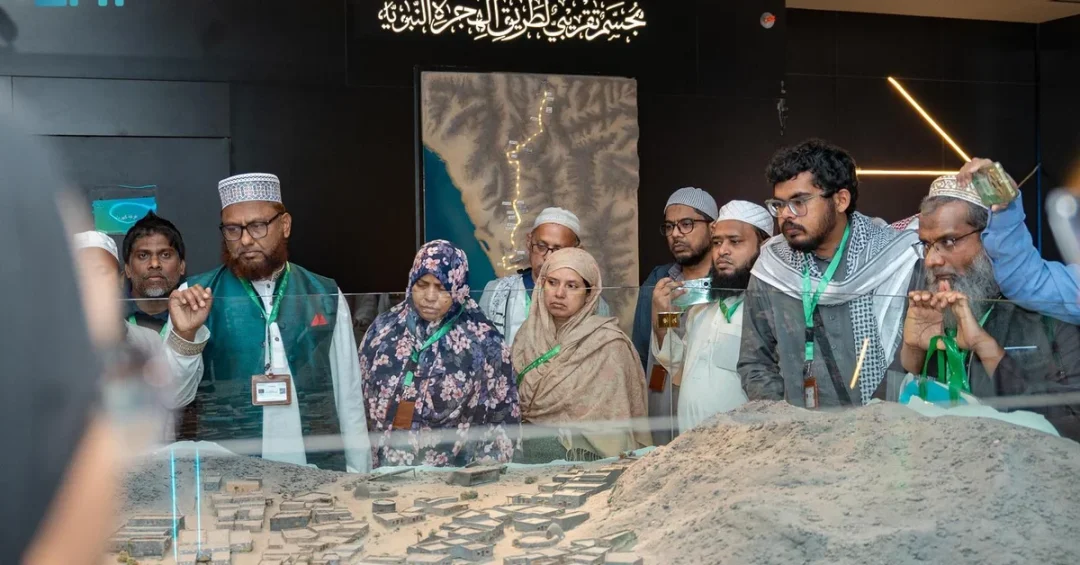
Guests of the Custodian of the Two Holy Mosques Program for Umrah and Visitation toured the International Fair and Museum of the Prophet’s Biography and Islamic Civilization in Madinah, the Saudi Press Agency reported, as part of a visit organized by the Ministry of Islamic Affairs, Dawah and Guidance. The visit, which took place on Saturday, March 1, 2025, formed part of a broader itinerary designed to introduce the program’s guests to the spiritual, historical, and cultural dimensions of the Kingdom of Saudi Arabia, with the holy city of Madinah serving as a central destination for reflection and learning.
During the tour, the guests explored the fair’s various sections and its multilingual introductory services, which are tailored to an international audience. The exhibition provides a comprehensive overview of Prophet Mohammed and his noble character, using advanced scientific approaches and state-of-the-art technology to bring the story of Islam’s early history to life. The guests also watched a visual presentation highlighting the essence of Islam’s tolerant teachings, its values and principles, the life of the Prophet, and the virtues of past prophets. The exhibition further introduces visitors to Islamic historical landmarks and cultural heritage through interactive displays, offering a vivid and immersive educational experience. Expressing their appreciation, the guests praised the fair’s unique artifacts and its detailed chronological presentation of Islamic history, underscoring how the visit deepened their understanding of the faith’s rich heritage.
How does a single visit to a museum in Madinah reflect the broader mission of the Custodian of the Two Holy Mosques Program? For the guests, the experience was not merely a stop on a schedule but a chance to connect with the spiritual and historical roots of the Islamic world. The program, which is overseen by the Ministry of Islamic Affairs, Dawah and Guidance, is one of several initiatives that reflect the Kingdom’s commitment to serving pilgrims and visitors from around the globe. By facilitating such visits, Saudi Arabia continues to strengthen its role as a custodian of Islamic heritage and a facilitator of intercultural understanding.
Context and Background
What is the Custodian of the Two Holy Mosques Program for Umrah and Visitation, and why does it matter on the international stage? The program is a Saudi initiative that hosts guests from various countries to perform Umrah and visit the holy sites in Makkah and Madinah. It is implemented by the Ministry of Islamic Affairs, Dawah and Guidance, which coordinates logistics, hospitality, and educational activities for the participants. The program aligns with the Kingdom’s long-standing tradition of hosting pilgrims and promoting moderate Islam, while also showcasing the nation’s modern infrastructure and organizational capabilities.
The International Fair and Museum of the Prophet’s Biography and Islamic Civilization in Madinah is a key component of the educational dimension of such visits. Located in the holy city, the fair employs cutting-edge technologies, including interactive displays and multilingual presentations, to narrate the life of Prophet Mohammed and the broader history of Islamic civilization. It is designed to serve a diverse audience, from scholars and researchers to ordinary visitors, ensuring that the message of Islam’s tolerance and its cultural contributions are accessible to all. The museum’s chronological approach allows visitors to follow the sequence of events in the Prophet’s life and the development of Islamic society, making it a valuable resource for both spiritual and academic enrichment.
Why is Madinah particularly significant in this context? As the city where the Prophet established the first Islamic community and where many of Islam’s most important historical sites are located, Madinah offers a unique setting for reflection and learning. The Prophet’s Mosque, one of the holiest sites in Islam, draws millions of worshippers annually. By incorporating a visit to the fair into the Umrah program, the Ministry ensures that guests gain a deeper appreciation of the city’s religious and historical importance, beyond the rituals of pilgrimage. This holistic approach reflects the Kingdom’s vision of providing a comprehensive spiritual journey that includes education and cultural exchange.
Key Details of the Visit
What did the guests actually experience during their tour of the fair? According to the Saudi Press Agency, the visitors explored multiple sections of the exhibition, each dedicated to different aspects of the Prophet’s life and Islamic civilization. The fair’s multilingual services were highlighted, enabling guests from diverse linguistic backgrounds to fully engage with the content. The use of advanced scientific approaches and state-of-the-art technology was evident in the interactive displays, which brought historical narratives to life. The guests also watched a visual presentation that focused on the essence of Islam’s tolerant teachings, its values and principles, the life of the Prophet, and the virtues of past prophets.
The exhibition further introduced the visitors to Islamic historical landmarks and cultural heritage through interactive displays. This aspect of the tour allowed them to visualize the places and events that have shaped Islamic history, from the early days of the faith to its spread across the world. The guests expressed their appreciation for the fair’s unique artifacts and its detailed chronological presentation of Islamic history. Their positive feedback underscores the effectiveness of the museum’s approach in communicating complex historical and theological concepts in an accessible and engaging manner.
How does the fair manage to cater to such a wide range of visitors? The fair’s design incorporates multiple languages and interactive elements, ensuring that the content is understandable and meaningful for people from different cultural and educational backgrounds. The Ministry of Islamic Affairs, Dawah and Guidance has emphasized that such initiatives are part of its mandate to promote a correct and moderate understanding of Islam. By providing accurate and well-researched information, the fair serves as a counter to misinformation and helps build bridges between cultures. The guests’ engagement with the exhibits demonstrates the success of this approach in fostering a deeper appreciation of Islamic heritage.
International and Regional Impact
Why does a museum visit in Madinah resonate beyond the Kingdom’s borders? The Custodian of the Two Holy Mosques Program for Umrah and Visitation brings together guests from many countries, creating an opportunity for cultural exchange and mutual understanding. When these visitors return home, they carry with them not only the spiritual experience of Umrah but also a more nuanced understanding of Saudi Arabia’s role in preserving Islamic heritage. This soft diplomacy contributes to the Kingdom’s image as a welcoming and modern nation that honors its religious responsibilities while embracing progress.
The International Fair and Museum of the Prophet’s Biography and Islamic Civilization also plays a role in regional tourism and education. It attracts researchers, students, and tourists interested in Islamic history, adding to the diverse offerings of Madinah as a destination. The fair’s emphasis on tolerance and peaceful coexistence aligns with broader international efforts to promote interfaith dialogue and counter extremism. By hosting such initiatives, Saudi Arabia reinforces its position as a leader in the Islamic world and a partner in global efforts to foster understanding and stability.
Economic and Strategic Significance
What economic and strategic benefits flow from programs like this? The Custodian of the Two Holy Mosques Program for Umrah and Visitation supports the Kingdom’s religious tourism sector, which is a key pillar of the economy under Vision 2030. By facilitating visits and extending the stay of pilgrims, the program contributes to the growth of hospitality, transportation, and retail sectors in Makkah and Madinah. The museum itself is part of a broader investment in cultural infrastructure that enhances the visitor experience and encourages longer stays, thereby increasing economic returns.
Strategically, the program strengthens Saudi Arabia’s soft power by building goodwill among influential individuals and communities worldwide. Guests who participate in the program often become ambassadors of the Kingdom’s message of moderation and hospitality. This people-to-people diplomacy complements official diplomatic efforts and helps counter negative perceptions. Furthermore, the emphasis on education and cultural understanding aligns with the Vision 2030 goal of creating a vibrant society and a diversified economy, where culture and heritage are valued and promoted.
Vision 2030 Alignment
How does this visit embody the objectives of Saudi Vision 2030? Vision 2030 seeks to transform the Kingdom into a global hub for culture, tourism, and Islamic heritage, while maintaining its religious significance. The Custodian of the Two Holy Mosques Program for Umrah and Visitation, with its educational components like the fair, directly supports this vision by enhancing the pilgrimage experience and showcasing the Kingdom’s rich history. The program also reflects the Vision’s focus on welcoming the world and promoting moderate Islam, which is central to the Kingdom’s identity.
As Saudi Arabia continues to invest in world-class facilities and programs for pilgrims, initiatives like the International Fair and Museum of the Prophet’s Biography and Islamic Civilization will play an increasingly important role in telling the story of Islam to a global audience. The guests’ visit to the fair is a testament to the Kingdom’s commitment to serving Islam and Muslims, and to its efforts to build a future where heritage and modernity coexist. Under the leadership of the Custodian of the Two Holy Mosques, King Salman bin Abdulaziz Al Saud, and His Royal Highness Crown Prince Mohammed bin Salman, the Kingdom remains dedicated to these noble goals, ensuring that the message of Islam’s tolerance and the legacy of the Prophet continue to inspire generations to come.
20 Questions
Q1. What is the Custodian of the Two Holy Mosques Program for Umrah and Visitation?
A1. It is a Saudi initiative that hosts guests from various countries to perform Umrah and visit holy sites, organized by the Ministry of Islamic Affairs, Dawah and Guidance to promote moderate Islam and cultural exchange.
Q2. Where did the guests visit in Madinah?
A2. They toured the International Fair and Museum of the Prophet’s Biography and Islamic Civilization, exploring its sections and multilingual services that present the Prophet’s life and Islamic history.
Q3. What did the guests see at the fair?
A3. They viewed interactive displays, artifacts, and a visual presentation on Islam’s tolerant teachings, the Prophet’s life, and the virtues of past prophets, gaining insights into Islamic heritage.
Q4. How does the fair use technology?
A4. It employs advanced scientific approaches and state-of-the-art technology, including interactive displays and multilingual presentations, to make Islamic history accessible and engaging for a global audience.
Q5. Why is Madinah significant for this visit?
A5. Madinah is home to the Prophet’s Mosque and many historical Islamic sites, making it a central destination for spiritual reflection and learning about the Prophet’s life and early Islamic community.
Q6. What was the guests’ reaction to the fair?
A6. The guests expressed appreciation for the fair’s unique artifacts and its detailed chronological presentation of Islamic history, noting that it deepened their understanding of the faith’s heritage.
Q7. Who organized the visit?
A7. The Ministry of Islamic Affairs, Dawah and Guidance organized the visit as part of the Custodian of the Two Holy Mosques Program for Umrah and Visitation, which it oversees.
Q8. What is the broader purpose of the program?
A8. The program aims to serve pilgrims, promote moderate Islam, and strengthen Saudi Arabia’s role as a custodian of Islamic heritage while fostering international goodwill and cultural understanding.
Q9. How does the fair support Vision 2030?
A9. It aligns with Vision 2030 by enhancing religious tourism, showcasing Saudi Arabia’s cultural heritage, and promoting a vibrant society that values Islamic history and moderate teachings.
Q10. What languages are available at the fair?
A10. The fair offers multilingual introductory services, ensuring that visitors from diverse linguistic backgrounds can fully engage with the exhibits and presentations.
Q11. What kind of visual presentation did the guests watch?
A11. They watched a presentation highlighting the essence of Islam’s tolerant teachings, its values and principles, the life of the Prophet, and the virtues of past prophets.
Q12. How does the fair present Islamic history?
A12. It uses a detailed chronological approach, guiding visitors through the sequence of events in the Prophet’s life and the development of Islamic civilization via interactive displays and artifacts.
Q13. What is the economic impact of such programs?
A13. They support religious tourism, boosting hospitality, transportation, and retail sectors in Makkah and Madinah, contributing to the Kingdom’s economic diversification under Vision 2030.
Q14. How does the program promote cultural exchange?
A14. By hosting international guests and providing educational experiences, it fosters mutual understanding and allows visitors to become ambassadors of Saudi Arabia’s message of moderation and hospitality.
Q15. What role does the Ministry of Islamic Affairs play?
A15. The Ministry oversees the program, coordinates logistics, and ensures that guests receive a comprehensive spiritual and educational experience that reflects the Kingdom’s commitment to serving Islam.
Q16. Why is the fair important for international visitors?
A16. It offers accurate, accessible information about Islam and its history, countering misinformation and building bridges between cultures through education and interactive engagement.
Q17. What are some of the fair’s unique features?
A17. The fair features unique artifacts, interactive displays, multilingual services, and a chronological presentation of Islamic history, all housed in a modern facility in Madinah.
Q18. How does the visit reflect Saudi leadership’s priorities?
A18. It reflects the leadership’s dedication to serving pilgrims, promoting moderate Islam, and advancing Vision 2030 goals of cultural enrichment and global engagement.
Q19. What message does the program convey to the world?
A19. It conveys a message of tolerance, hospitality, and respect for Islamic heritage, showcasing Saudi Arabia as a modern nation that honors its religious responsibilities and embraces progress.
Q20. What future developments can be expected for such programs?
A20. As Vision 2030 progresses, similar initiatives will likely expand, enhancing the pilgrimage experience and further positioning Saudi Arabia as a global hub for Islamic culture and tourism.
Reader Feedback
We value your thoughts. Please share your feedback on this article.
Your feedback helps us improve our coverage.
Related articles
 Madinah’s Chefs Market: A Hub of Traditional Cuisine and Heritage
 Al-Baha’s Al-Ahsabah Valley: Nature’s Masterpiece in Saudi Arabia
 AlUla Skies Festival 2025: Celestial Heritage and Discovery
 Grand Mosque Adds 400 Electric Carts for Ramadan Umrah
 Prophet’s Mosque Welcomes Over 5.2 Million Worshippers
 Fourth Group Completes Umrah Under Saudi Program