


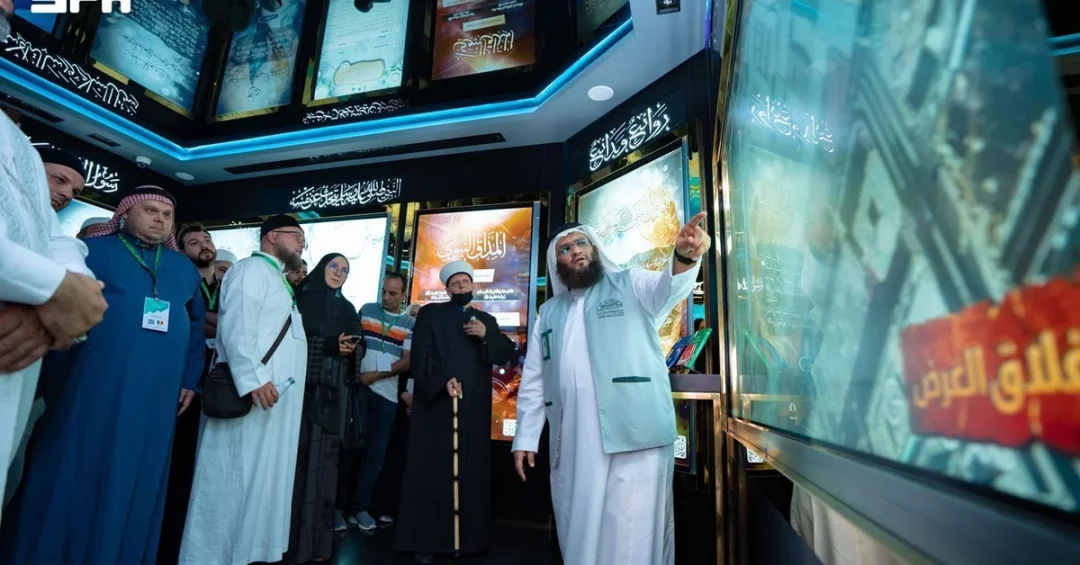
Guests from the second group of the Custodian of the Two Holy Mosques’ Umrah and Visit Program visited the International Fair and Museum of the Prophet’s Biography and Islamic Civilization in Madinah, the Saudi Press Agency reported, as part of a cultural initiative organized by the Ministry of Islamic Affairs, Dawah and Guidance. The visit, which took place on August 8, 2026, offered the 250 pilgrims from 23 countries across Europe and Asia the opportunity to explore the life, character, and legacy of Prophet Muhammad (peace be upon him) through state-of-the-art exhibitions and interactive displays. Could there be a more fitting way to introduce the world to the spiritual and historical heart of Islam than by walking its guests through the very story that shaped it?
The delegation toured pavilions dedicated to the prophets, the noble biography of Prophet Muhammad (peace be upon him), historical relics, and the history of Makkah and Madinah. Interactive 3D graphics, educational panoramas, and digital cinemas brought the core values of Islamic civilization to life, allowing visitors to engage with the material in a deeply immersive way. The guests expressed their appreciation for the organization of the visit and for Saudi Arabia’s ongoing efforts to preserve and share Islamic heritage with the world. The program, which operates under the direct patronage of the Custodian of the Two Holy Mosques, King Salman bin Abdulaziz Al Saud, reflects the Kingdom’s commitment to serving pilgrims and visitors from every corner of the globe.
Context and Background
Why does Saudi Arabia invest so heavily in cultural and spiritual experiences for Umrah pilgrims? The Custodian of the Two Holy Mosques’ Umrah and Visit Program is a flagship initiative designed to host pilgrims from around the world, offering them not only the opportunity to perform Umrah but also to explore the rich Islamic heritage of the Kingdom. The program is supervised by the Ministry of Islamic Affairs, Dawah and Guidance, which coordinates every aspect of the guests’ journey, from travel and accommodation to cultural excursions and educational activities. The second group of the current cycle includes 250 pilgrims representing 23 countries across Europe and Asia, a testament to the program’s global reach and its role in fostering international goodwill.
The International Fair and Museum of the Prophet’s Biography and Islamic Civilization in Madinah serves as a centerpiece of these cultural visits. The museum is dedicated to presenting the life of Prophet Muhammad (peace be upon him) and the broader history of Islamic civilization in a manner that is both educational and engaging. Through a combination of historical artifacts, multimedia presentations, and interactive technologies, the museum offers visitors a comprehensive understanding of the Islamic faith and its contributions to human civilization. For many guests, this visit represents their first in-depth encounter with the historical context of the religion they have come to embrace through their pilgrimage.
The program itself is part of a broader Saudi strategy to enhance the spiritual journey of Umrah performers and to showcase the Kingdom’s rich cultural tapestry. By integrating cultural visits into the Umrah experience, Saudi Arabia aims to provide a holistic pilgrimage that nourishes both the soul and the mind. This approach aligns with the Kingdom’s long-standing tradition of hospitality and its commitment to serving the guests of God. The Ministry of Islamic Affairs, Dawah and Guidance works in close coordination with other government agencies to ensure that every aspect of the program meets the highest standards of quality and comfort.
Key Details of the Visit
What exactly did the guests experience during their tour of the museum? The visitors were guided through a series of pavilions, each dedicated to a specific theme. One pavilion focused on the prophets, offering insights into their lives and messages. Another was devoted to the biography and noble character of Prophet Muhammad (peace be upon him), highlighting his teachings of compassion, justice, and peace. A third pavilion displayed historical relics, providing tangible connections to the past. The history of Makkah and Madinah was also showcased, illustrating the development of the two holy cities over centuries and their significance in Islamic history.
The museum’s use of interactive 3D graphics and educational panoramas allowed the guests to visualize historical events and locations with remarkable clarity. Digital cinemas screened documentaries that further enriched their understanding. These technological tools are designed to make the learning experience accessible and memorable for visitors from diverse backgrounds and age groups. The delegation’s appreciation for the organization of the visit underscores the effectiveness of these methods in conveying the depth and beauty of Islamic civilization.
The guests also had the opportunity to learn about the core values of Islamic civilization, such as tolerance, coexistence, and the pursuit of knowledge. These values are central to the museum’s mission and are presented in a way that resonates with contemporary audiences. By highlighting these principles, the museum not only educates but also builds bridges of understanding between cultures. The visit was not merely a tour but a journey through time and faith, leaving a lasting impression on all who participated.
International and Regional Impact
How does a single museum visit ripple across continents? The presence of pilgrims from 23 countries across Europe and Asia at the museum demonstrates the global dimension of Saudi Arabia’s hospitality. These guests will return to their home countries with a deeper appreciation for Islamic history and the Kingdom’s role in preserving it. Their experiences will be shared with families, friends, and communities, creating a multiplier effect that enhances Saudi Arabia’s soft power and promotes a positive image of the Kingdom abroad. This people-to-people diplomacy is invaluable in fostering mutual respect and understanding between nations.
Regionally, the program reinforces Saudi Arabia’s position as the custodian of Islam’s holiest sites and a leader in Islamic affairs. By hosting pilgrims from diverse backgrounds and providing them with enriching cultural experiences, the Kingdom strengthens its ties with Muslim communities worldwide. The program also complements broader efforts to promote moderation and counter extremism by presenting an authentic and balanced view of Islamic teachings. In a world where misunderstandings about Islam can lead to division, initiatives like this serve as a powerful counter-narrative, showcasing the true spirit of the faith.
Economic and Strategic Significance
What does the success of such programs mean for Saudi Arabia’s economy and strategic goals? The Umrah and Visit Program contributes to the Kingdom’s economic diversification efforts by boosting the pilgrimage sector, which is a key pillar of the Vision 2030 plan. Increased numbers of Umrah performers and visitors translate into higher revenues for hospitality, retail, and transportation sectors. The program also showcases Saudi Arabia’s capabilities in organizing large-scale international events, further enhancing its reputation as a premier destination for religious and cultural tourism.
Strategically, the program supports Saudi Arabia’s goal of becoming a global hub for Islamic knowledge and culture. By investing in museums, cultural centers, and educational initiatives, the Kingdom is building an infrastructure that will attract scholars, researchers, and tourists for generations to come. The International Fair and Museum of the Prophet’s Biography and Islamic Civilization is a prime example of this investment, serving as a beacon of learning and a symbol of Saudi Arabia’s dedication to preserving Islamic heritage. These efforts align with the Vision 2030 objective of enhancing the quality of life for citizens and visitors alike, while also creating new opportunities for economic growth.
Vision 2030 Alignment
How does this visit embody the aspirations of Saudi Vision 2030? Vision 2030 seeks to transform Saudi Arabia into a more diverse, dynamic, and open society, while preserving its Islamic identity and cultural heritage. The Custodian of the Two Holy Mosques’ Umrah and Visit Program directly supports this vision by enhancing the pilgrimage experience, promoting cultural exchange, and showcasing the Kingdom’s modernization alongside its spiritual significance. The program reflects the leadership’s commitment to serving pilgrims with excellence and to presenting the true, peaceful message of Islam to the world.
As Saudi Arabia continues to welcome millions of pilgrims each year, initiatives like this museum visit will play an increasingly important role in shaping the global perception of the Kingdom. They demonstrate that Saudi Arabia is not only a land of holy sites but also a center of learning, culture, and innovation. By providing guests with a comprehensive and enriching experience, the Kingdom is building lasting bonds with people from all over the world, contributing to a more interconnected and harmonious global community. The success of the second group’s visit is a clear indication that the program is achieving its objectives and setting a benchmark for cultural diplomacy in the 21st century.
20 Questions
Q1. What was the purpose of the visit by the second group of the Custodian of the Two Holy Mosques’ Umrah and Visit Program?
A1. The visit was part of a cultural initiative organized by the Ministry of Islamic Affairs, Dawah and Guidance to introduce pilgrims to the life of Prophet Muhammad (peace be upon him) and the history of Islamic civilization through the International Fair and Museum of the Prophet’s Biography in Madinah.
Q2. How many pilgrims are in the current cohort of the program, and how many countries do they represent?
A2. The current cohort hosts 250 pilgrims representing 23 countries across Europe and Asia, reflecting the program’s broad international reach and its role in fostering global Islamic solidarity.
Q3. What did the visitors see during their tour of the museum?
A3. They toured pavilions dedicated to the prophets, the biography and noble character of Prophet Muhammad (peace be upon him), historical relics, and the history of Makkah and Madinah, using interactive 3D graphics, educational panoramas, and digital cinemas.
Q4. Which Saudi ministry organized the cultural initiative?
A4. The Ministry of Islamic Affairs, Dawah and Guidance organized the initiative, which is part of the Custodian of the Two Holy Mosques’ Umrah and Visit Program, supervised by the Saudi leadership.
Q5. When did the visit take place?
A5. The visit took place on August 8, 2026, as reported by the Saudi Press Agency, during the second group’s scheduled activities in Madinah.
Q6. What technologies were used in the museum to enhance the visitor experience?
A6. The museum employs interactive 3D graphics, educational panoramas, and digital cinemas to bring historical events and Islamic values to life, making the experience engaging and accessible for visitors from diverse backgrounds.
Q7. How did the delegation respond to the visit?
A7. The delegation expressed appreciation for the organization of the visit and for Saudi Arabia’s efforts in preserving Islamic heritage, reflecting the program’s success in creating meaningful cultural experiences for pilgrims.
Q8. What is the Custodian of the Two Holy Mosques’ Umrah and Visit Program?
A8. It is a flagship Saudi initiative that hosts pilgrims from around the world, offering them the opportunity to perform Umrah and explore the Kingdom’s Islamic heritage through organized cultural and educational visits.
Q9. Why is the International Fair and Museum of the Prophet’s Biography significant?
A9. The museum serves as a center of learning that presents the life of Prophet Muhammad (peace be upon him) and Islamic civilization using modern technology, helping visitors gain a deeper understanding of the faith and its values.
Q10. How does this visit align with Saudi Vision 2030?
A10. It supports Vision 2030 by enhancing the pilgrimage experience, promoting cultural exchange, and showcasing Saudi Arabia’s commitment to preserving Islamic heritage while modernizing its services for pilgrims and visitors.
Q11. What core values of Islamic civilization were highlighted at the museum?
A11. The museum highlights values such as tolerance, coexistence, compassion, justice, and the pursuit of knowledge, presenting them in a way that resonates with contemporary audiences and promotes mutual understanding.
Q12. How does the program contribute to Saudi Arabia’s soft power?
A12. By hosting pilgrims from diverse countries and providing enriching cultural experiences, the program enhances Saudi Arabia’s image abroad and fosters goodwill, as guests share their positive experiences with their communities upon returning home.
Q13. What economic benefits does the Umrah and Visit Program bring to Saudi Arabia?
A13. The program boosts the pilgrimage sector, generating revenues for hospitality, retail, and transportation, and supports economic diversification efforts under Vision 2030 by attracting more visitors to the Kingdom.
Q14. How does the museum preserve Islamic heritage?
A14. The museum preserves Islamic heritage by displaying historical relics, documenting the history of Makkah and Madinah, and using digital tools to educate visitors about the life and teachings of Prophet Muhammad (peace be upon him).
Q15. What role does the Ministry of Islamic Affairs, Dawah and Guidance play in the program?
A15. The ministry supervises the program, coordinates logistics, and organizes cultural activities, ensuring that pilgrims receive a comprehensive and spiritually enriching experience during their stay in Saudi Arabia.
Q16. How many pavilions did the guests tour, and what were their themes?
A16. The guests toured multiple pavilions focused on the prophets, the biography of Prophet Muhammad (peace be upon him), historical relics, and the history of Makkah and Madinah, each offering unique insights into Islamic civilization.
Q17. What makes the museum’s approach to education effective?
A17. The museum combines historical artifacts with interactive technologies like 3D graphics and digital cinemas, making the learning experience immersive and memorable for visitors of all ages and backgrounds.
Q18. How does the program promote moderation and counter extremism?
A18. By presenting an authentic and balanced view of Islamic teachings and highlighting values of tolerance and peace, the program helps counter extremist narratives and promotes a better understanding of Islam globally.
Q19. What can other countries learn from Saudi Arabia’s cultural diplomacy efforts?
A19. Other countries can learn the value of integrating cultural and educational experiences into religious tourism, using technology to engage visitors, and leveraging heritage preservation to build international goodwill and understanding.
Q20. What is the expected long-term impact of such visits on Saudi Arabia’s global standing?
A20. These visits are expected to strengthen Saudi Arabia’s reputation as a leader in Islamic affairs and cultural tourism, attract more pilgrims and tourists, and foster lasting positive relationships with Muslim communities worldwide.
Reader Feedback
We value your thoughts. Please share your feedback on this article.
Your feedback helps us improve our coverage.
Related articles
 Taif Mountains Attract Hiking Enthusiasts to Scenic Trails
 Billasmar Forests Offer Scenic Natural Retreat in Aseer
 Al-Ashyakh Dunes Boost Ecotourism in Rafha
 How Was Hail’s Abu Al-Houl Mountain Formed?
 Abu Al-Hawl: Hail’s Natural Sphinx Shaped by Millennia
 Pilgrims Praise Saudi Arabia’s Care Under Servant of Two Holy Mosques Program